Mao Xue Wang: The Bowl That Sounds Worse Than It Tastes
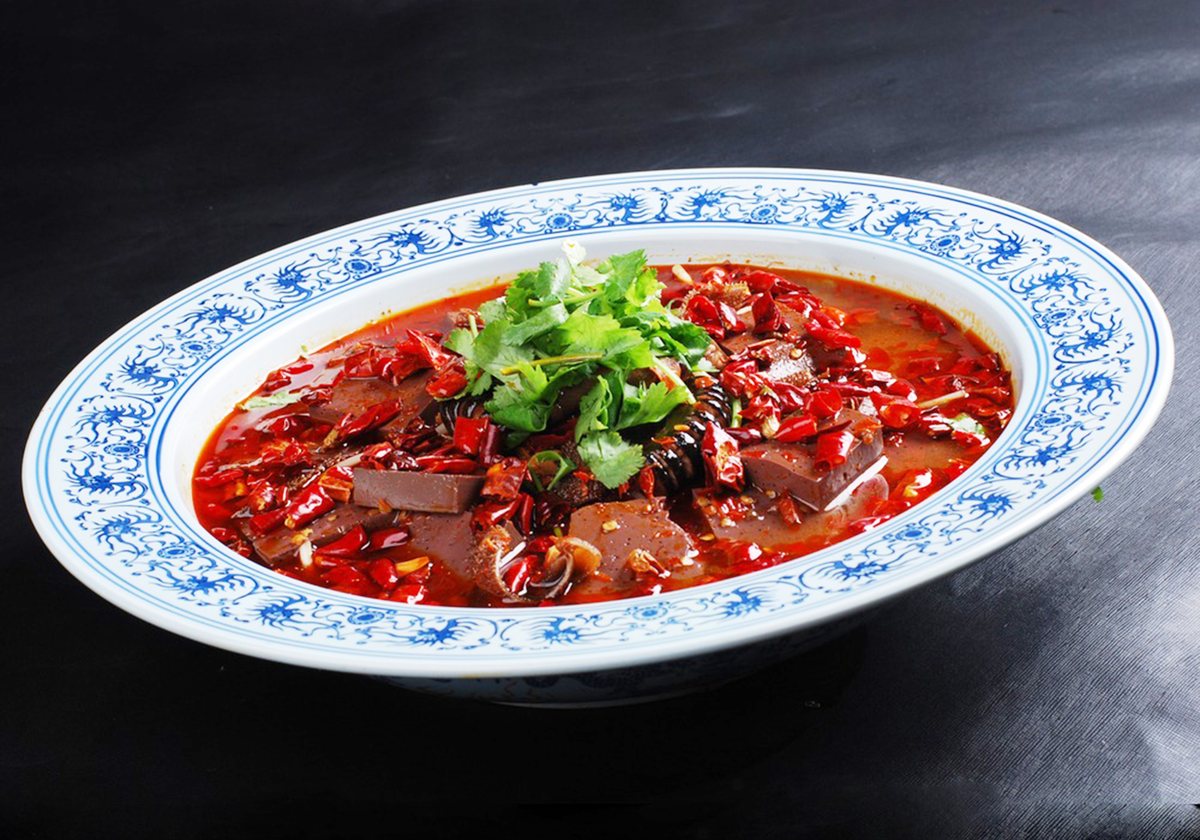
The waiter sets it down and the surface is still moving. Not boiling — breathing, a slow shiver running across an inch of red oil, and underneath it, things: dark cubes the colour of wet slate, a raft of pale honeycomb, curls of something that looks like a mushroom stem but isn't. Then he tips a small ladle of smoking oil over the dried chilies piled in the middle, and the whole table stops talking, because that sound (a hard crackle that keeps on cracking, like a fuse finding its way) means the bowl has just been finished and is now at its best, for about four minutes.
My friend pushed it toward me in Chongqing in 2017 and said, in English, at volume, "blood." Then he laughed at my face.
He was right to laugh, and I was wrong to flinch. Mao xue wang (毛血旺, máo xuè wàng) has the worst name-to-taste ratio of any dish I know. The 毛 in it is Chongqing dialect for rough, unpolished, thrown together. The 血旺 is the part that needs explaining: 血 alone, "blood," is bad luck to say at a table, so butchers and cooks call it 旺 — prosperity. Blood, renamed as abundance, because you don't say the word.
Here is what nobody tells you before your first bowl: duck blood curd (鸭血, yāxuè) is not a liquid and never was. It is blood whipped with a little salt and water so it cannot clot into lumps, then left alone until the protein sets like a custard, then simmered whole and cut into blocks. It is roughly nine parts water. It tastes of almost nothing at first, then faintly of iron and broth, and it has a texture that no other food in Chinese cooking has — softer than tofu, smoother than silken tofu, closer to the inside of a poached egg, gone the instant your tongue presses it.
People who can eat a rare steak and a runny yolk will refuse this. People who order chicken feet without blinking will refuse this. I have watched both happen at the same table.
How a dock lunch became a bowl
Ciqikou, in the 1940s, was a working river port, and the men unloading boats needed hot food that cost almost nothing. Offal was the cheapest thing in the market. A vendor there — the story credits a woman selling from a stall by the wharf — simmered blood curd and scraps of tripe in a pot of chili and bean paste and sold it by the ladle. The trick was the 豆瓣酱: fry Pixian bean paste until the oil goes scarlet, and even a bowl of leftovers gets a backbone. Dock food, then restaurant food, then a Chongqing signature.
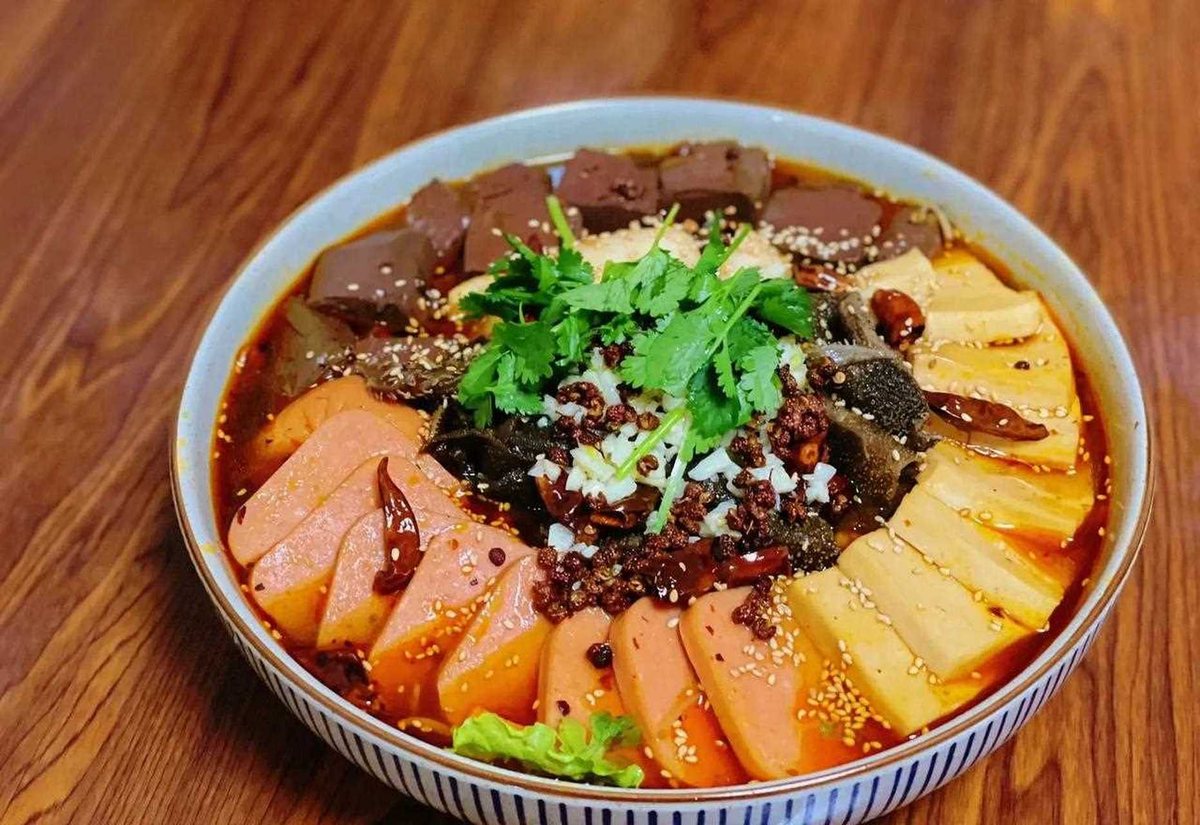
What goes in now depends on the kitchen, and the argument about it is endless. Duck blood, always. Beef tripe, the honeycomb kind, ideally the thick dark leaves rather than the bleached white ones. 黄喉 (huánghóu), the aorta, sliced into ribbons that squeak. Luncheon meat, cubed and fried first so the edges go crisp. Soybean sprouts at the bottom to soak up the oil. Dried tofu skin. Sometimes eel. In one version I had in Shapingba there were pieces of crisp fried pork belly in it, which is not traditional and which I have thought about since.
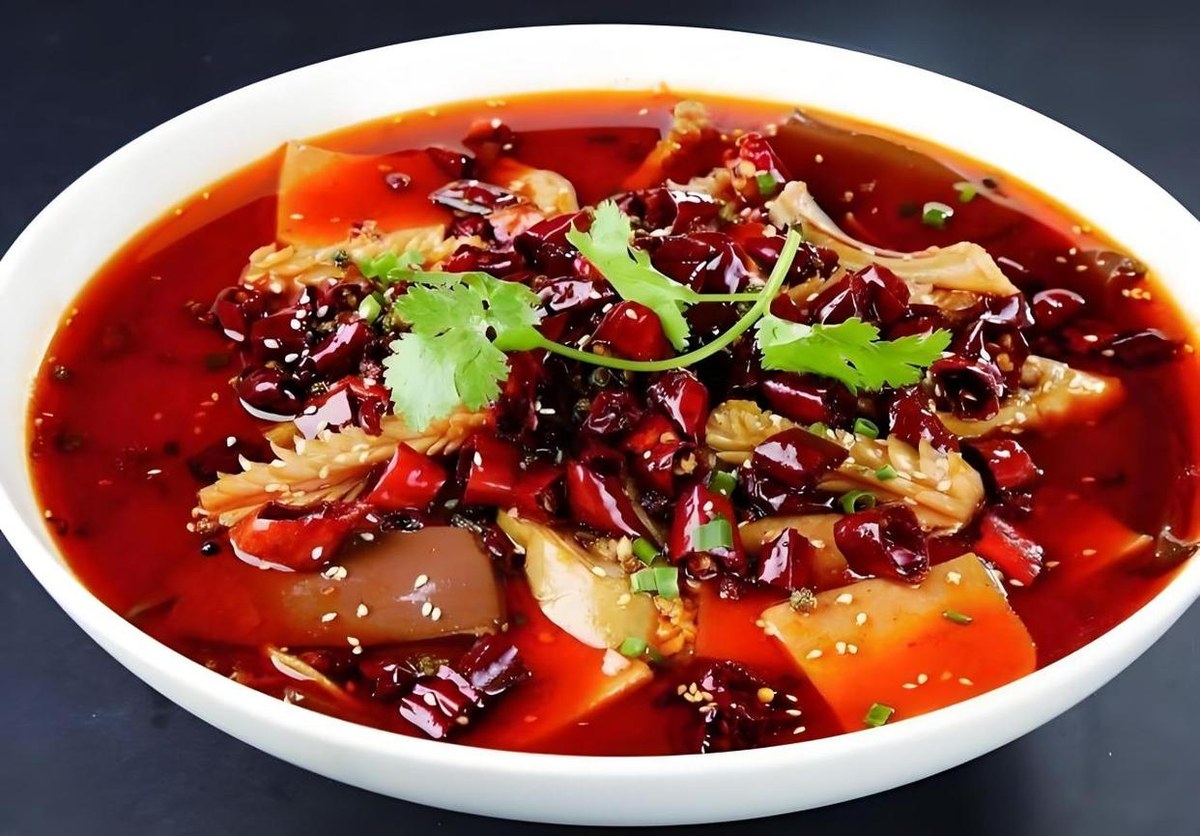
The liquid is not a soup, and this is the single most important thing to understand. It is a broth thickened by chili and oil, and later by the starch from the vegetables, and it is there to season the things in it, not to be drunk.
Where it goes wrong
Bad mao xue wang fails in three specific ways, and once you know them you can spot the bowl from across the room.
The first is the blood. Cheap kitchens use pig blood with too much coagulant, and it comes out rubbery — you press it and it presses back, then bounces. Proper duck blood gives way without any resistance at all. If your chopsticks have to work, the bowl is already over.
The second is the tripe. Bleached, bagged tripe has no smell, no beef, and a uniform crunch like a plastic straw. Fresh honeycomb tripe tastes of the animal and gives you two textures in one piece, soft in the honeycomb pockets, snapping in the walls.
The third is the broth, and it is the most common failure outside Sichuan. Order this in a city where nobody is watching and you get red water: chili powder stirred into stock at the last minute, thickened with starch until it coats a spoon like paint, so the whole thing is one flat note of heat. A real bowl has layers — the fermented bean, the bone stock under it, the fresh green heat of the chilies, the numbing top note arriving a second late.
And the version with everything removed, the one that shows up on hotel menus abroad, is worse than all of them: a few cubes of blood, pork belly, no tripe, no aorta, mild enough for anyone, which is exactly the point and exactly the problem. A bowl with no offal in it is not being polite. It's a different dish.
Four minutes, in order
Eat it in a sequence, because the bowl is not static. The tripe is first to go — it sits in hot oil and keeps cooking, going from a snap to an elastic band in the time it takes to talk about the weather. Fish the honeycomb out immediately and eat it. Then the aorta, same reason. Then the blood, which is patient and holds its heat like a stone, so by the time you get to it, it will take the roof off your mouth. Press it against the side of the bowl, let the steam out, wait. Then the luncheon meat, then the sprouts at the bottom, which by now are dark and soft and taste like the whole bowl concentrated.
The oil stays behind. Nobody drinks it. If you want to cut the heat, drink soy milk, not water and not beer — fat puts the fire out and water only spreads it around. In Chongqing they finish with 冰粉, cold jelly in brown sugar syrup, and after a bowl of this you will understand why.
Order 微辣 the first time. I did not, and spent the second half of the meal with my ears ringing, which I have since decided was part of the experience and would still not recommend.
In Shanghai I have one shop that does it properly, down a staircase off a side street, six tables, no English, and the bowl arrives in a stainless basin with a chipped rim. I go when it's raining, because on a wet night in Shanghai there is nothing else I want: oil still ticking, chilies going soft, a cube of blood collapsing on my tongue, and the small insult of having to wait thirty seconds for it to cool.
Half the work is the blood and half is the bean paste, and both are things you can buy or make badly. If enough of you ask, I'll write the home version up properly. Recipe coming soon.
💬 Comments