Chairman Mao's Red-Braised Pork: The Braise Without Soy Sauce
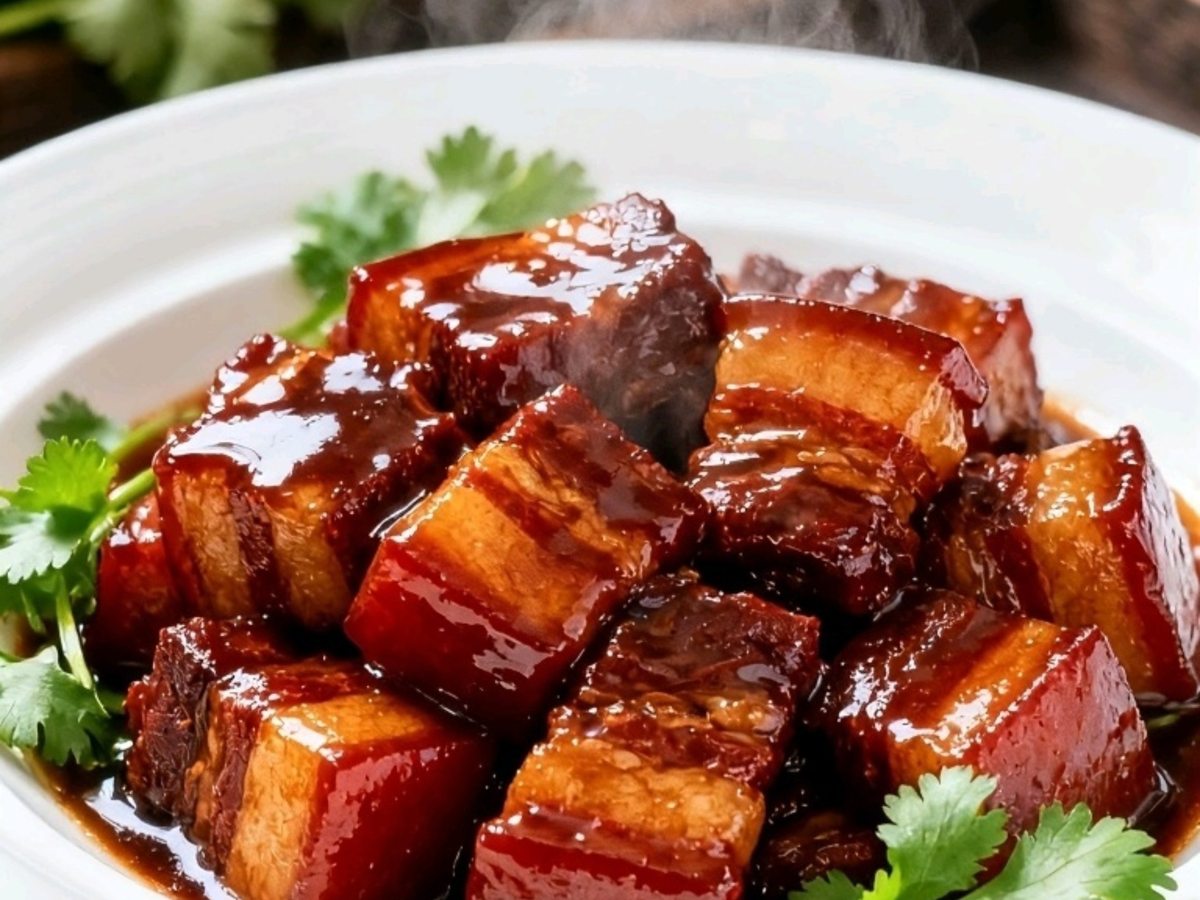
The smell finds you before the pot does. A braise should announce itself with soy sauce — that dark, salty, faintly scorched sweetness that means pork has been sitting in a pot for an hour. This one doesn't. This one starts as sugar melting in a dry pan, a smell like cotton candy giving up, turning to caramel, then to something a breath short of burnt. Only then does the meat go in.
You are watching someone make Chairman Mao's Red-Braised Pork (毛氏红烧肉, máo shì hóngshāo ròu), and the first thing you need to know is that there is no soy sauce in it. Not a drop. That deep mahogany — the color every recipe blog will tell you comes from dark soy — comes from sugar cooked until it turns to glass, then to smoke.
Everybody's grandmother makes red-braised pork. Mine did, in a Shanghai kitchen that ran on rock sugar and dark soy, and hers came out nearly black, glossy as lacquer, sweet enough that the fat read as dessert. That is the dish I grew up calling hóngshāo ròu — the one that means home and Sunday and the good pot.
The Mao version is a different animal. It comes from Hunan, the province Mao Zedong was born in, and it is hotter, stingier with its sweetness, and built on a trick most people outside China have never heard of. The story goes that Mao's personal chef, Cheng Ruming (程汝明, Chéng Rǔmíng), dropped soy sauce from the recipe entirely — some say the chairman didn't care for it, some say Cheng just found a better way. Either way, Cheng built the color the way you build a roux: sugar, alone in the pan, cooked past amber into a red-brown the Chinese call táng sè (糖色), "sugar color." That is the whole secret of the dish, and it is a secret worth protecting.
I'll tell you why. First, the pork.
It has to be belly — wǔhuā ròu (五花肉), "five-flower meat," the cut that layers lean and fat into five alternating bands. Anything else and you are making stew. The belly gets cut into cubes and blanched, and then it meets the caramel. Cold pork hitting hot sugar makes a sharp hiss, then a wet sizzle as the fat starts to render. Then the magic: each cube turns red-brown from the sugar itself, not from a bottle, and the caramel clings to the meat instead of coloring the sauce around it.
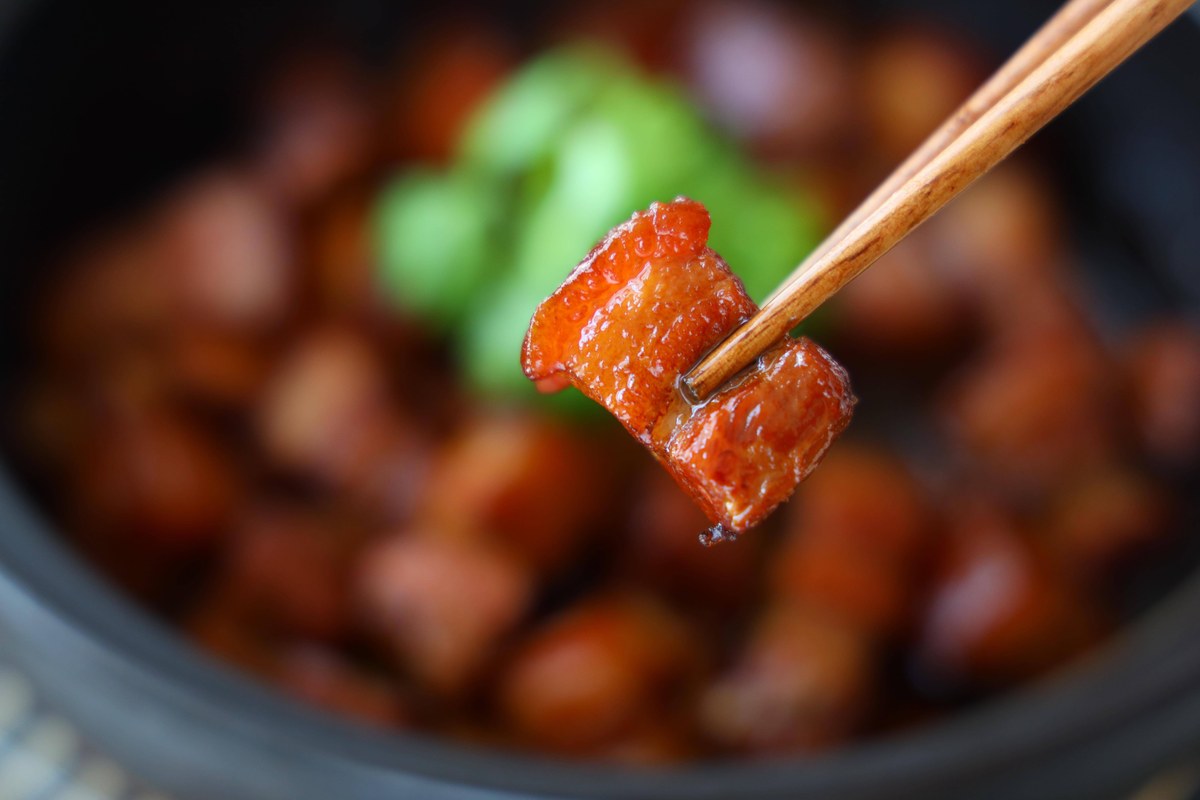
Next come the aromatics. Ginger, scallion, a star anise or two, and the thing that splits this dish from every other red-braised pork on earth: dried red chilies, whole, split open, their seeds rattling loose into the pot. Shanghai's version wants to sweeten you. Mao's wants to argue with you. The Hunan heat is not the numbing málà of Sichuan; it is a slow, dry burn that sits at the back of your throat and dares you to reach for the next cube.
The pork braises for an hour, maybe two. The sugar deepens. The fat — which started out as a threat — gives up completely and turns into something you can push apart with the edge of a spoon. By the end the cubes are glossy, trembling, the color of a varnished violin, sitting in a sauce that is barely there: enough to coat, never enough to drown.
Now the part where I get opinionated, because every dish has a bad version and this one's bad version is everywhere in the West.
The fake is the one from a lazy takeout kitchen: cubes of pork in a thin brown liquid, colored with soy sauce the color of mud, sweetened with corn syrup, no chilies anywhere, tasting faintly of the fridge. It is not braised, it is boiled. The fat has not surrendered; it is just warm. And it is almost always called "Mao's" or "Chairman's" as a marketing shrug, even though nothing about it would survive ten minutes in a Hunan kitchen. If the sauce looks like gravy and tastes like teriyaki, send it back.
The subtler lie is red-braised pork drowned in sugar until it is candy. The Shanghai version I grew up with walks right up to that line and sometimes crosses it. The Mao version never does, because the heat cuts the sweet. That balance — caramel against chili — is the entire point of the dish, and it is the first thing to break when somebody gets lazy.
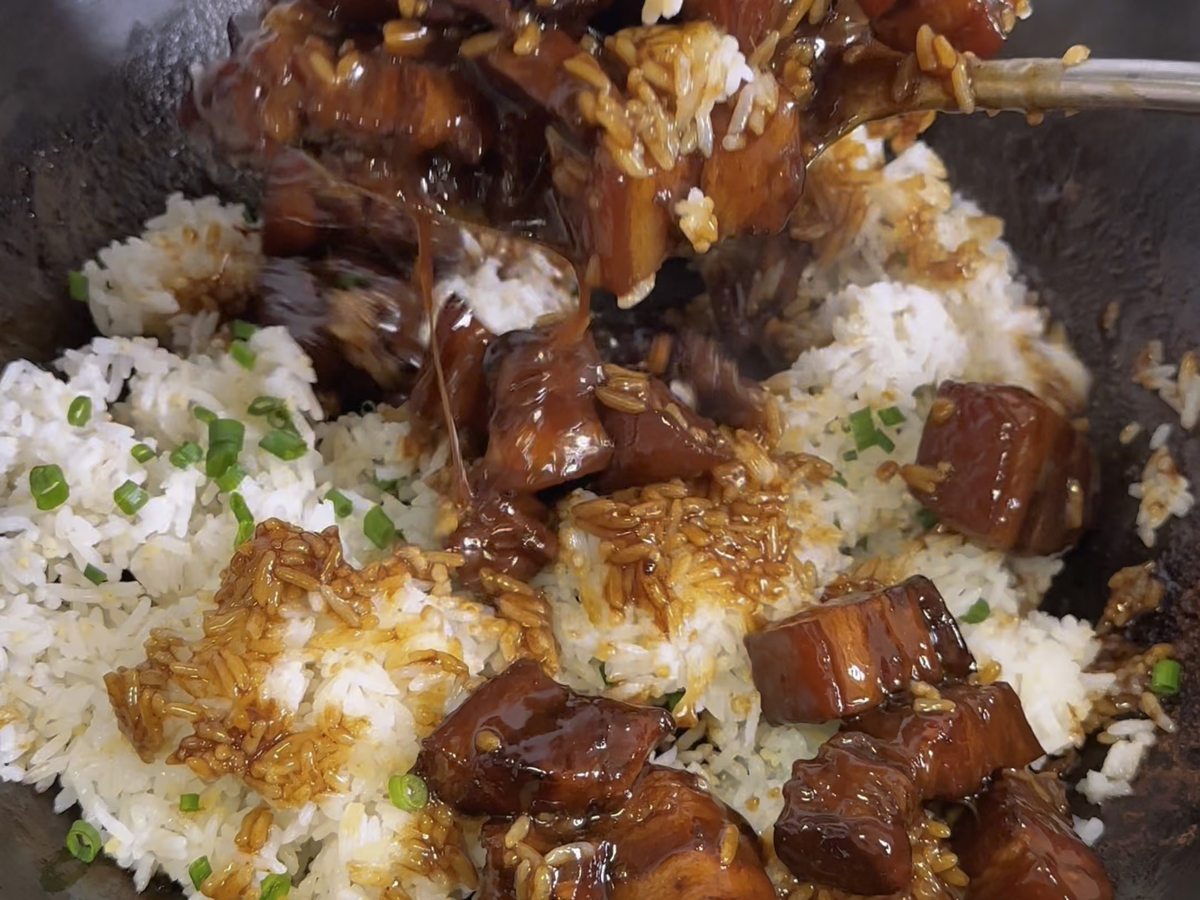
How to eat it: over plain white rice, one cube per spoonful, no daintiness. The right cube is the one that has been sitting at the bottom, because it has soaked up the most sauce. Chase it with rice, let the starch cut the richness, then let the chili catch up a beat later. Some people spoon the braising liquid over their rice and stir until every grain is stained red-brown. I am one of those people. It is the closest thing to a ritual I still keep.
I have made this once, in an American kitchen with an electric stove that refused to hold a proper caramel, and I burned the sugar twice before I hit táng sè. The smell that filled the apartment — caramel and smoke and dried chili — was so exactly the smell of a Hunan kitchen that I stood over the pot and stopped being homesick for a full hour. That is the thing about this dish. It does not taste like a place on a map. It tastes like a person who refused to do it the easy way.
💬 Comments