Mao-Style Red-Braised Pork: No Dark Soy, All Caramel
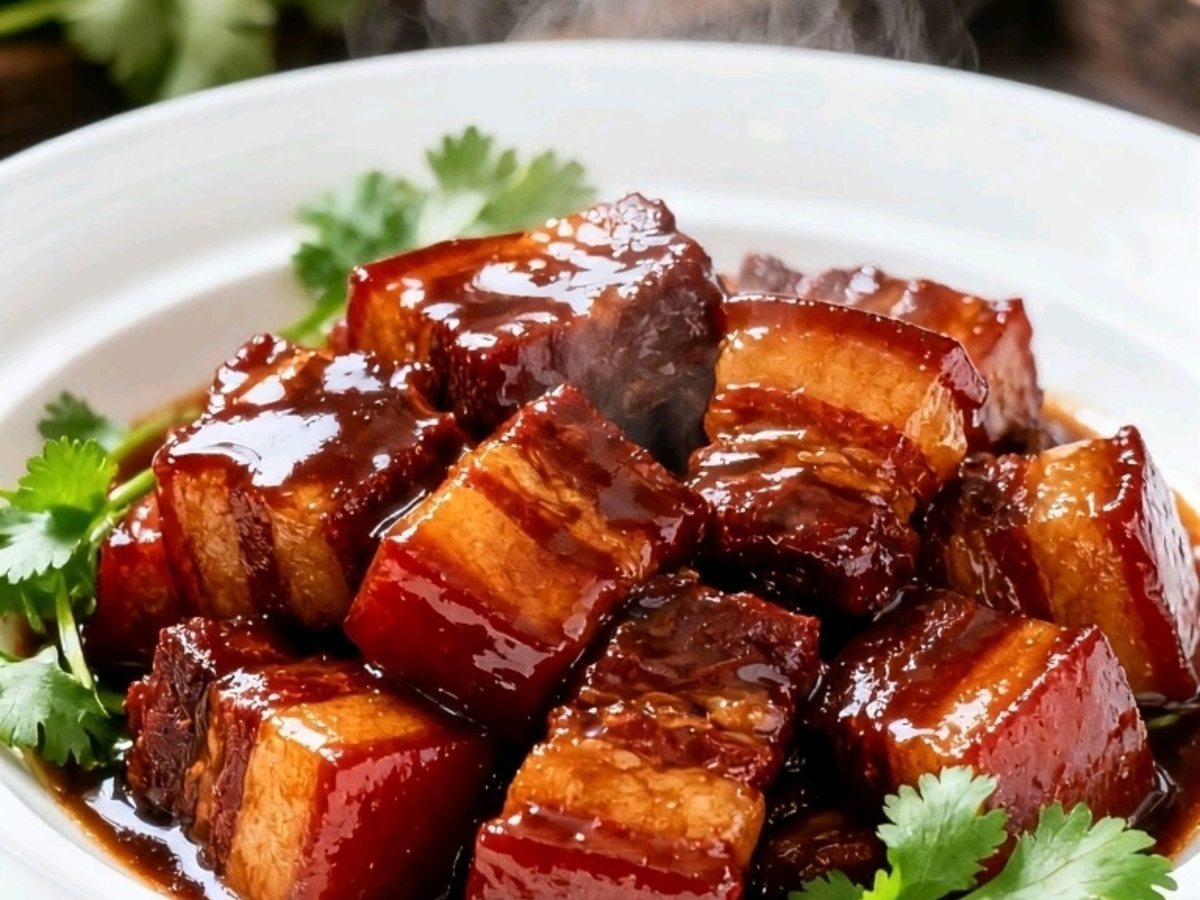
Editor’s Note: This is the kitchen companion to Chairman Mao's Red-Braised Pork: The Braise Without Soy Sauce. Quantities, temperatures and the failure points are below. Read the technique once before you shop.
What Makes the Hunan Version Different
Two red-braised porks, two logics. The Shanghai version I grew up with blanches the belly and keeps dark soy within reach to correct the colour. The Hunan version, the one associated with Mao’s household cooks in Xiangtan, does neither. No dark soy goes into the pot, and the pork is never blanched. Colour comes from rock sugar taken further than a Shanghai cook would dare, to a deep amber that is almost red, and the raw cubes are seared hard before any liquid comes near them.
Why sear instead of blanch? Blanching cleans, but it leaves water in the skin. Searing in a dry wok drives that water off, browns the skin so it holds its shape, and renders surface fat for the caramel to grip.
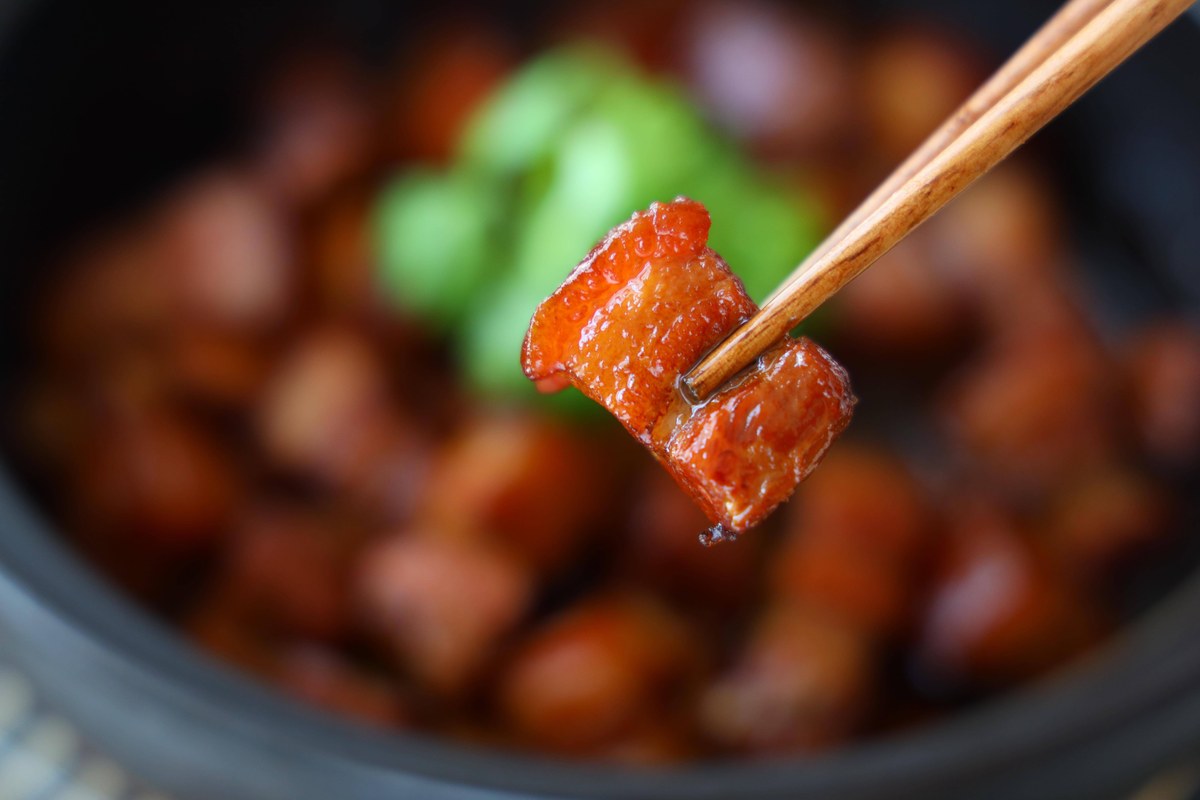
The finish differs too. Hunan versions are drier and stickier: less water in the pot, higher heat at the end, a glaze that pulls into strings on the chopsticks. The chillies and cassia sit behind the caramel rather than in front of it. Why this matters: the dish should taste of pork and caramel first, with dried chilli arriving at the back of the throat a second later.
Fifty grams of sugar to five hundred of pork is a high ratio, higher than the Shanghai recipe. With no soy for colour and less liquid to dilute it, the sugar does the work of both.
Ingredients
For the pork
- 500g pork belly, skin on, one slab 4–5cm thick with five distinct layers
- 1 tbsp (15ml) neutral oil, for the wok
For the caramel
- 50g rock sugar, in lumps about 1cm across
- 2 tbsp (30ml) water
For the braise
- 2–3 dried chillies (3g), torn in half, seeds shaken out
- 1 small cassia stick (3cm)
- 20g ginger, sliced 3mm thick
- 2 scallions (40g), cut into 5cm lengths
- 1 tbsp (15ml) Shaoxing wine
- 2 tbsp (30ml) light soy sauce
- 200ml hot water
- 1/2 tsp (3g) fine salt
To finish
- 1 tsp (5ml) Chinkiang vinegar, optional, if the glaze tastes flat
- 1 tsp (5ml) sesame oil, off the heat
Substitution notes: If the only belly you can find is pre-cut and thin, buy 700g and shorten the wok stage to 25 minutes, because thin slices give up their water and tighten faster. Fresh red chillies can replace the dried ones: use 2 small ones, split lengthways, added with the ginger, though the dried version gives a rounder heat. A bamboo steamer can stand in for the clay pot; set the covered bowl of pork in the basket over boiling water for 30 minutes, which is gentler than a wok and needs no watching.
Do not swap the light soy for dark soy to deepen the colour. That single change makes a different dish.
Prep: Choosing the Slab and Cutting It
1. Judge the slab (no time, but do it first)
A good belly for this dish is 4 to 5cm thick and shows five bands: skin, fat, a thin sheet of lean, fat, and a deeper band of lean at the bottom. Hold it up. The layers should run roughly parallel along the whole length, without one end collapsing into pure fat. The skin should be about 5mm thick, pale and dry. Ask for the rib-end piece rather than the flank end; it holds its shape for 40 minutes in a wok.
2. Cut into 3cm cubes (8 minutes)
Chill the slab for 20 minutes, then cut 3cm strips and 3cm cubes, keeping the skin on every piece. Cut slightly larger than you think you need, because they shrink about a fifth. Do not trim the fat cap; that fat bastes the lean layers from the inside during the second stage.
3. Dry and temper the meat (10 minutes)
Pat every face dry and leave the cubes at room temperature for ten minutes. Cold pork drops the wok temperature and steams instead of browning, and wet pork will not brown at all. With no blanching step, this drying is the only defence against a grey, watery sear.
Step by Step: Wok First, Clay Pot Second
Step 1: Sear the pork dry (8 to 10 minutes)
Heat a wok over high heat until a drop of water skitters across the surface, then add the oil and swirl. Lay the cubes in skin side down, in one layer, working in batches if needed. Leave them three minutes without moving, until the skin blisters in spots. Turn and brown the other faces, two minutes each. Lift the pork out and pour off all but 2 tbsp of the fat.
Step 2: Caramelise the sugar to deep amber (5 to 6 minutes)
Turn the heat to medium. Add the rock sugar and the two tablespoons of water to the fat in the wok. Swirl as it melts, then stop touching it. You are going past Shanghai amber: 175 to 180°C, the colour of dark honey, and the smell is closer to burnt sugar than to toffee. This takes about 40 seconds longer than you are comfortable with. Why this matters: the deep amber supplies the red that dark soy would otherwise give, and the window between that colour and bitterness is only a few seconds. Pull the wok off the heat at that point.
Step 3: Coat the pork (3 minutes)
Return the cubes and turn them in the caramel over medium heat until every face is coated and the sugar darkens further against the hot meat. The pan will look alarmingly dark. It is correct.
Step 4: Aromatics, then 200ml of water (5 minutes)
Push the pork aside. Add the ginger, scallions, chillies and cassia to the clear space and stir for 45 seconds, until the chillies smell toasted but not sharp. Add the Shaoxing, let it hiss, then the light soy, then the hot water. Scrape the caramel off the bottom, add the salt, and bring to a bare simmer.
Step 5: Forty minutes in the wok (40 minutes)
Cover with the lid ajar and hold at 92 to 95°C. The liquid should look barely willing to boil. At 20 minutes, turn the cubes and check the level: down by a third is right, down by half means you add 50ml of hot water. This dish finishes dry, but not dry before the meat is ready.
Step 6: Thirty minutes in a clay pot or steamer (30 minutes)
Transfer to a small clay pot, or a heatproof bowl set in a steamer. Cook covered at the barest simmer for 30 minutes, or steam for 30 minutes over rolling water. Both are gentler than a wok and let the collagen finish converting.
Step 7: Tighten the glaze (3 to 4 minutes)
Uncover, turn the heat to high, and reduce until the sauce coats the cubes and pulls into a thin thread when you lift one. Tilt the pot and spoon the glaze over rather than stirring, which keeps the crust intact. Add the sesame oil and the optional vinegar off the heat.
Key Pitfalls
The caramel tasted bitter and the pot looked ruined. Deep amber and black are ten seconds apart at 180°C. Rescue it before the meat goes in: slide the wok off the heat, add 50ml of hot water (never cold, which erupts), swirl, and taste. If a sharp note remains, add 10g more rock sugar and 1 tsp of vinegar and simmer 30 seconds; the acid cuts the burnt edge. If it still tastes of ash, pour it out and start again.
The cubes fell apart and the lean layers shredded. The wok stage ran too hot or too long. This pork is cooked to the point where a chopstick meets resistance, not to collapse. Keep 92 to 95°C for the 40 minutes and let the clay pot finish the job rather than rescue it.
The sauce was thin and the pork sat in liquid. Too much water went in, usually from deglazing out of habit. This version wants 200ml, not 500ml. If you overshot, uncover and boil hard for five minutes before the clay pot stage.
The dish tasted of chilli and not of caramel. The chillies went in too early and scorched, or you used more than three. Toast them for under a minute and fish them out at the clay pot stage if the heat is where you want it.
The skin was slippery and the fat greasy on the tongue. The sear was too gentle, so the skin never rendered. The wok must be hot enough that a water drop skitters before the pork goes in, and the skin needs a full three minutes face down without being moved.
The cubes looked dark but the meat inside was pale. The caramel coated the outside but the braise was too short for it to penetrate. Thirty minutes in the second vessel is the minimum. Cut one open; the lean should be light brown to the centre.
The glaze turned sticky and set hard in the bowl. You reduced past the thread stage with a high sugar ratio. Add 3 tbsp of hot water, return to a low heat, and swirl until it loosens. Serve immediately; this glaze sets within four minutes at room temperature.
Serving Suggestions
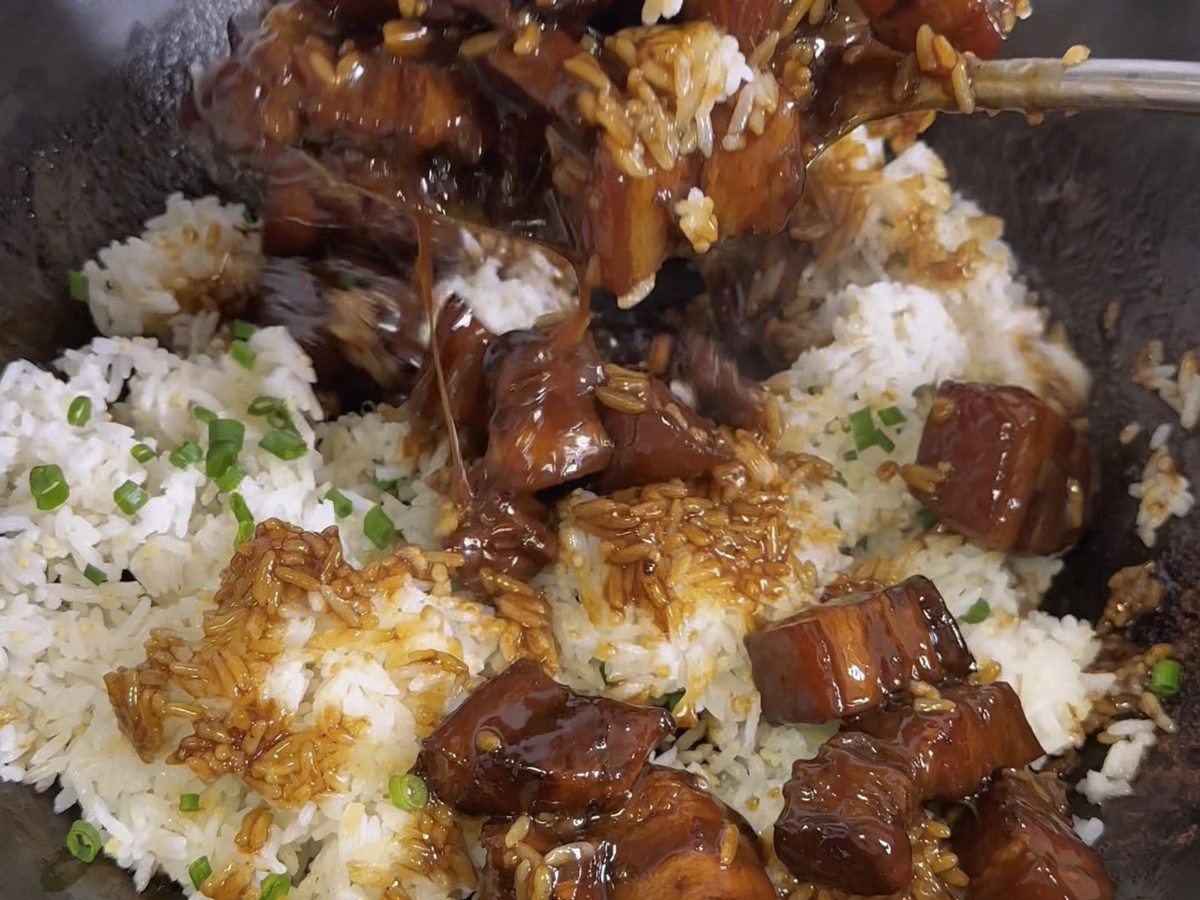
Spoon it over white rice while the glaze is still fluid, three or four cubes per person, and let the sauce stain the rice. The classic Hunan accompaniment is stir-fried greens with nothing but salt and a little lard, or pickled beans, which cut the sugar.
Cold water or baijiu, not wine. The leftovers are worth planning for: cool them in the pot, refrigerate, and the next day the glaze is a firm jelly that melts back over low heat in six minutes. Do not freeze; the skin goes spongy.
This is the companion recipe to Chairman Mao's Red-Braised Pork: The Braise Without Soy Sauce. Read the story, then cook the dish.
💬 Comments