Mango Pomelo Sago: The Cantonese Classic That's Younger Than You Are
A bowl of it arrives cold enough to have fogged the glass above it. Pale gold, the colour of a ripe mango held up to a lamp. Under the surface, suspended, a hundred small translucent pearls. On top, loose segments of pomelo, each one a bundle of tiny teardrops packed together like fish roe. You take a spoonful and get three textures at once: silky, springy, and something that pops. Then a second later an edge of bitterness at the back of your throat. That bitterness is the point of the dish. It is also the first thing every bad version removes.
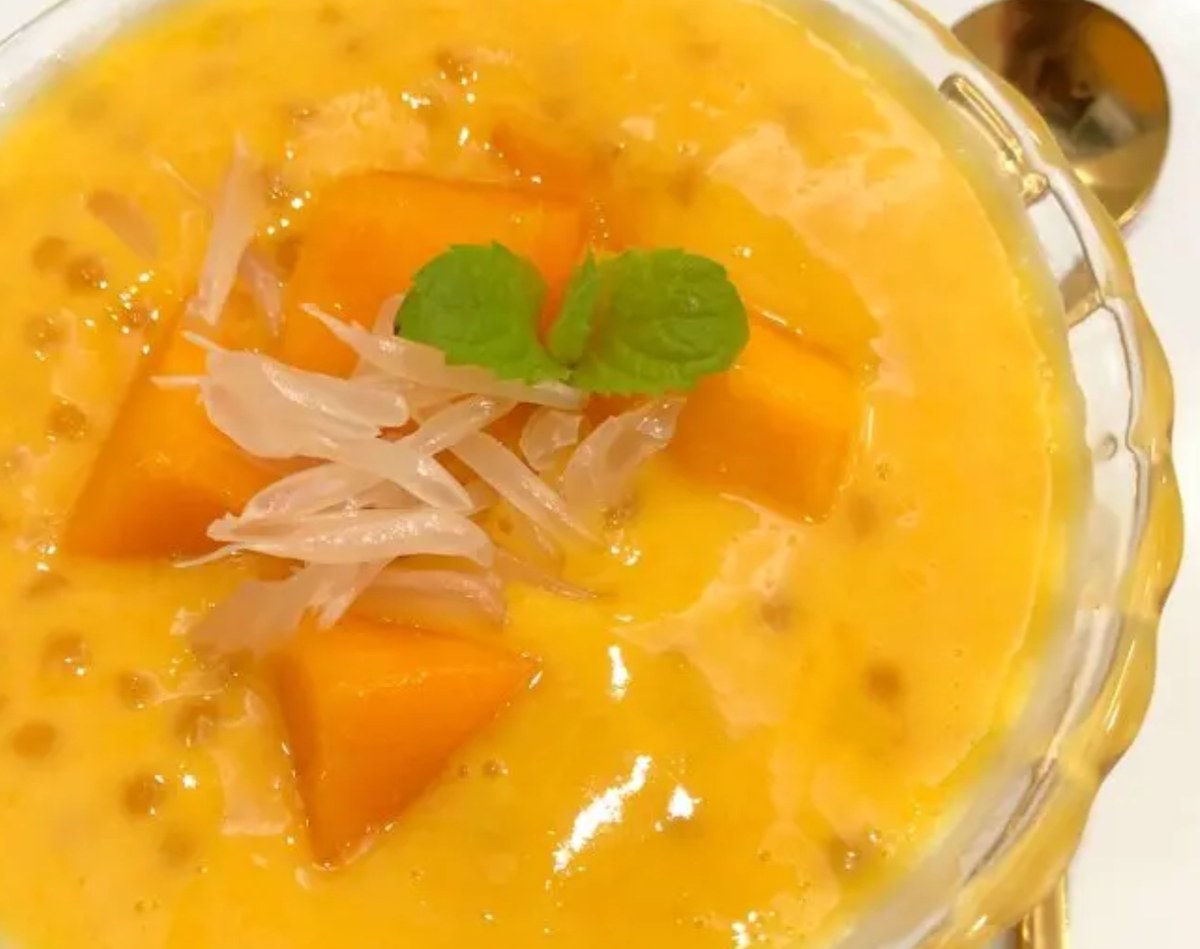
Here is what most people get wrong before the second spoon. Mango Pomelo Sago (杨枝甘露, yángzhī gānlù) is not an old Cantonese dessert. It has no dynasty behind it, no peasant origin story, no grandmother in Shunde. It was created in 1984 in the kitchen of a Hong Kong banquet restaurant called 利苑 (Lei Garden), which makes it forty-two years old — younger than the compact disc, younger than the first Macintosh, younger than most of the people who order it in a shopping mall.
The name, though, is ancient, and that is probably why everyone assumes the dessert is too. Yángzhī gānlù borrows from Buddhist iconography: the willow branch (杨枝) and the sweet dew (甘露) that Guanyin sprinkles over the world to ease suffering. A Hong Kong restaurant naming a mango dessert after a bodhisattva's mercy is either very funny or very Hong Kong, and I have never been able to decide which.
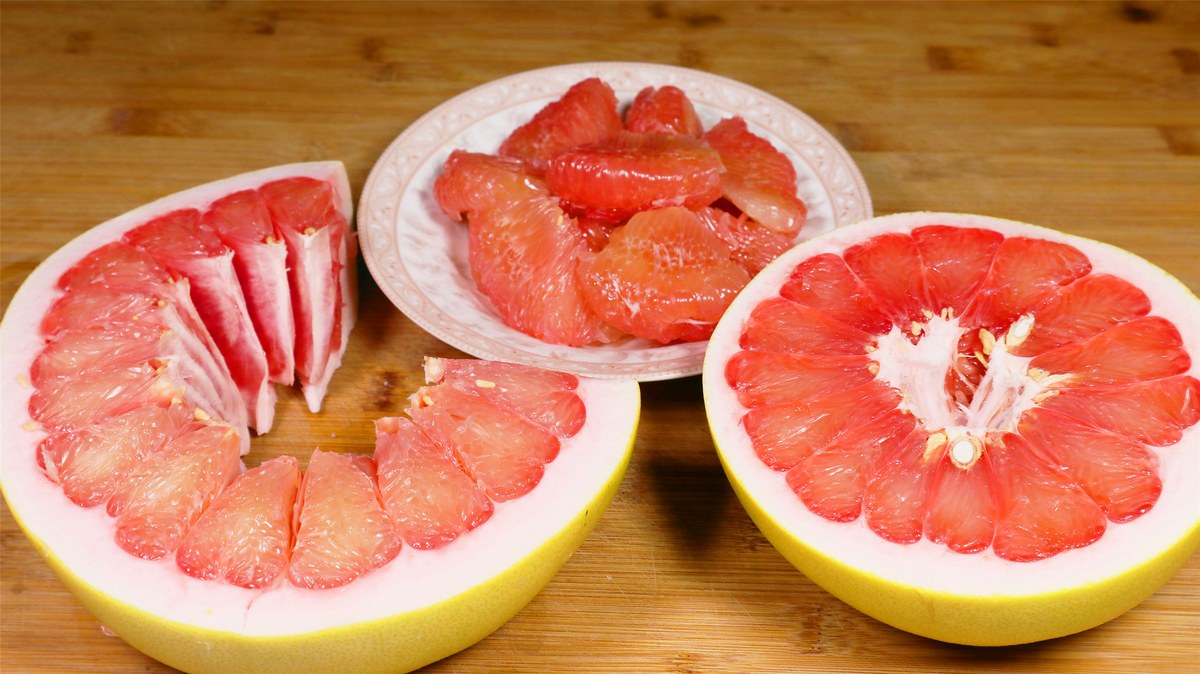
Four things do the work. Ripe mango, blended loose with evaporated milk (淡奶, dànnǎi), the tinned, faintly caramelised milk that every Hong Kong dessert kitchen keeps within arm's reach. Sago (西米, xīmǐ), the little starch pearls, boiled until the centre turns just clear and then shocked cold, so they stay bouncy instead of collapsing into paste. Pomelo (沙田果, shātiányòu), broken down by hand into individual vesicles, never chopped and never blended, because a blended pomelo is just bitter juice. And sugar, less of it than you would expect, since the sweetness is supposed to come from the fruit.
What makes it a dessert rather than a smoothie is that nothing is allowed to average out. Most cold Chinese sweets are a single texture — a jelly, a paste, a sweet soup. This one stacks three in a single spoon and asks them to stay separate. The sago gives resistance. The cream carries the fruit. The pomelo pops, then wipes the sugar off your tongue with that bitter finish. Get the balance wrong in either direction and it collapses — too much cream and you are eating baby food, too much pomelo and you are eating medicine.
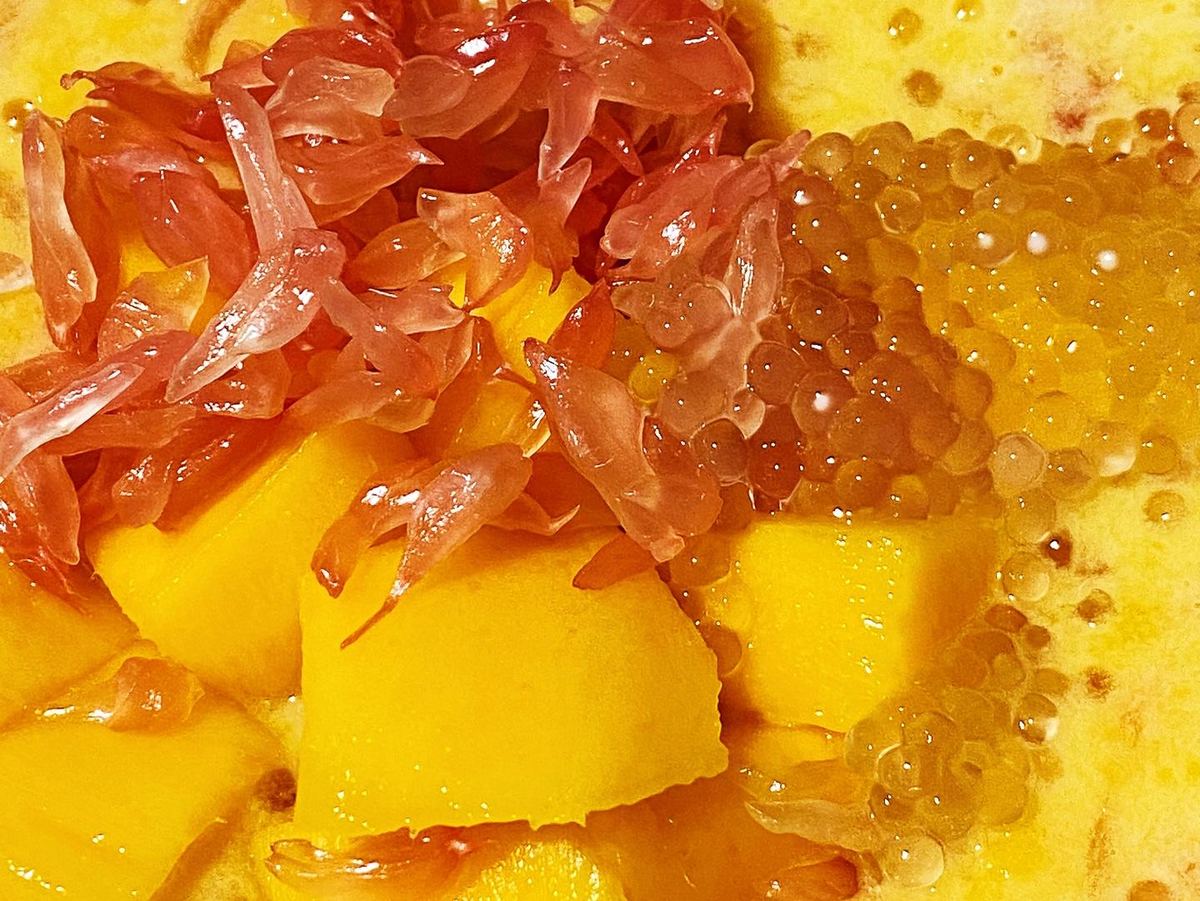
There are five fakes, and you have probably met two of them. The worst is the blender version, where the pomelo goes into the jug with everything else; the colour comes out right and there is no bite anywhere in the bowl. Second is sago that cooked five minutes too long, or sat in syrup on a counter all afternoon, going gluey until the pearls fuse into something that coats your tongue like paste. Third is the substitution: canned mandarin segments or navel orange standing in for pomelo, sweet and waterlogged, no pop and no bitterness. People do that because pomelo is annoying to peel, which is exactly why a three-dollar cup that manages it should make you suspicious.
Fourth is the dessert-bar version: a scoop of mango ice cream, a squirt of condensed milk, grass jelly, popping boba, coconut cubes, a mint leaf. The dish has four ingredients and needs none of them. Fifth is the bottle on the supermarket shelf, mango syrup and yellow colouring. Highlighter yellow is a warning sign. A ripe mango is gold with a green shadow underneath, not radioactive.
Two tests, both with a spoon. Look at the colour first, and then look for the pearls — they should be visible, suspended, separate, not sunk into a sludge at the bottom. Then take one spoonful that contains both a pearl and a segment of pomelo, and eat them together. A good bowl does something in the mouth that no other dessert in the Cantonese repertoire does, sweet and bitter in the same two seconds, cold cream against popping fruit. And do not stir. Stirring is the single most common mistake, because the moment you mix the pomelo through the cream, the bitterness spreads and you have made a bowl of slightly sad mango soup.
In Hong Kong you order it at the end of a banquet, after the roast goose and the fried rice have done their damage, or at midnight in a sugar-water shop (糖水铺, tángshuǐ pù) where the tables are laminate and the menu is a laminated card with forty items on it. The chain 许留山 (Hui Lau Shan) is the reason it went mass-market, and you can still get it in a plastic cup in a mall. That version is fine. It is not the same thing.
I think about pomelo every autumn because of a sheet of newspaper. Mid-Autumn in Shanghai meant a pomelo on the balcony, and my grandmother would peel one sitting on spread-out newsprint, working the pith off it in strips. The pith is thicker than the fruit and takes longer to remove than the fruit takes to eat. Mango, in the Shanghai of my childhood, was a gift fruit: one or two at a time, sitting in tissue paper inside a box. This dessert is the only place those two fruits meet. The first one I ever had was in a Hong Kong-style dessert shop off Huaihai Road, in a tall glass, and I remember being annoyed that the bitterness was so small and so hard to find.
Forty years is long enough for a dish to be invented, exported, sweetened, blended, bottled and ruined. There is no poet attached to this one and no emperor, no village that claims it, no recipe anyone's great-grandmother guarded. Just a good idea, which is why there is nothing to stop a kitchen from faking it. The version worth eating is still dull to describe: cold cream, springy pearls, and a fruit that fights back.
💬 Comments