Luosifen: The Noodle That Conquered China by Smell Alone
The smell gets there before the bowl does. That's the thing nobody warns you about. You're standing outside a shop in Liuzhou, ten feet from the door, and something hits you — sour, funky, a little swampy, with a low note of fermented things that have been quietly working on themselves for weeks. Your nose recoils. Your stomach, against all logic, leans in.
That smell is the sour bamboo shoot (酸笋, suān sǔn), and it is the entire point.
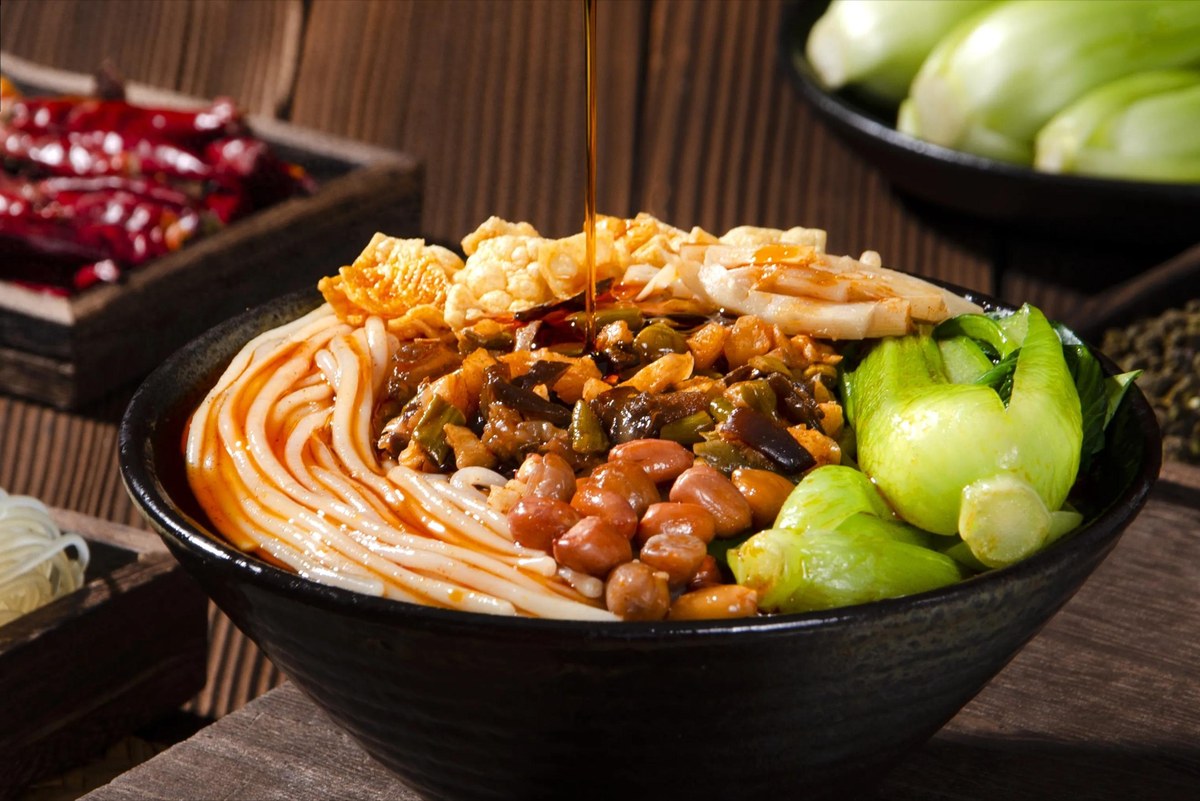
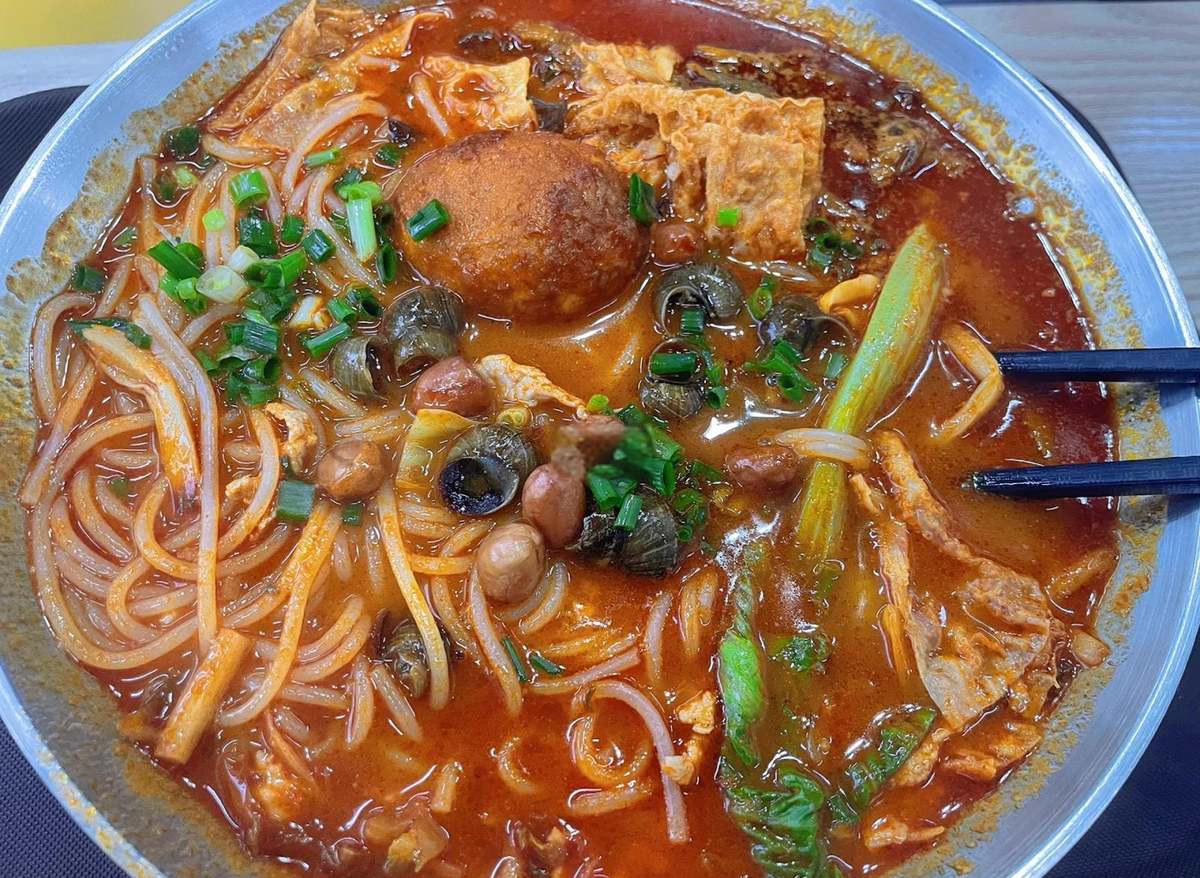
The bowl lands. Rice noodles, white and slippery, coiled in a broth the color of rust. Fried yuba (腐竹, fǔzhú) floating like wreckage. Wood ear fungus, peanuts, a soft-boiled egg halved down the middle. And over all of it, a slick of chili oil that glows under the shop lights like a warning.
I was twenty-seven the first time, dragged there by a Guangxi coworker who watched my face with the expression of a man lighting a firecracker he'd already lit a hundred times. I took a breath. I took a spoonful. And I understood something that took me years to put into words: the dishes that smell the worst are often the ones that love you the most.
Luosifen (螺蛳粉, luósīfěn) is a bowl of contradictions. It stinks and it comforts. It's a regional working-class breakfast and a national obsession that went viral so hard the government got involved. It's named for snails, tastes like sour bamboo shoots, and might be the most divisive food in China.
The Architecture of a Stink
I've debugged distributed systems for thirteen years. The best ones survive because every component is doing something the others can't, and the failure of any one part is catastrophic and obvious. Luosifen is the same — six components, zero redundancy, and if you remove any one, it's not luosifen anymore.
The noodles. Rice noodles, thin, white, with a spring that holds against hot broth. Not wheat. The rice noodle is neutral, a clean slate — which matters, because the broth is about to write all over it.
The broth. This is the secret nobody tells you: it's made from river snails and pork bones, simmered for hours, and then — the twist — the snails themselves usually get taken out before serving. The snail is in the name and barely in the bowl. What it leaves behind is a deep, mineral, river-bottom richness you can't get from bones alone.
The sour bamboo shoots. Here's the stink. Fresh bamboo shoots fermented in salt, sometimes with a little chili, until they turn sour and faintly sour-funky. This is the smell that clears the room. It's also the flavor that makes the whole bowl make sense — sour against the fat, fermented against the heat. Skip the bamboo shoots and you've made spicy noodle soup, which is fine, but it isn't luosifen.
The chili oil. Red, glossy, made with dried chilies and a heavy hand. It floats on top and stains everything it touches. You can order it mild. Nobody from Liuzhou respects you if you do.
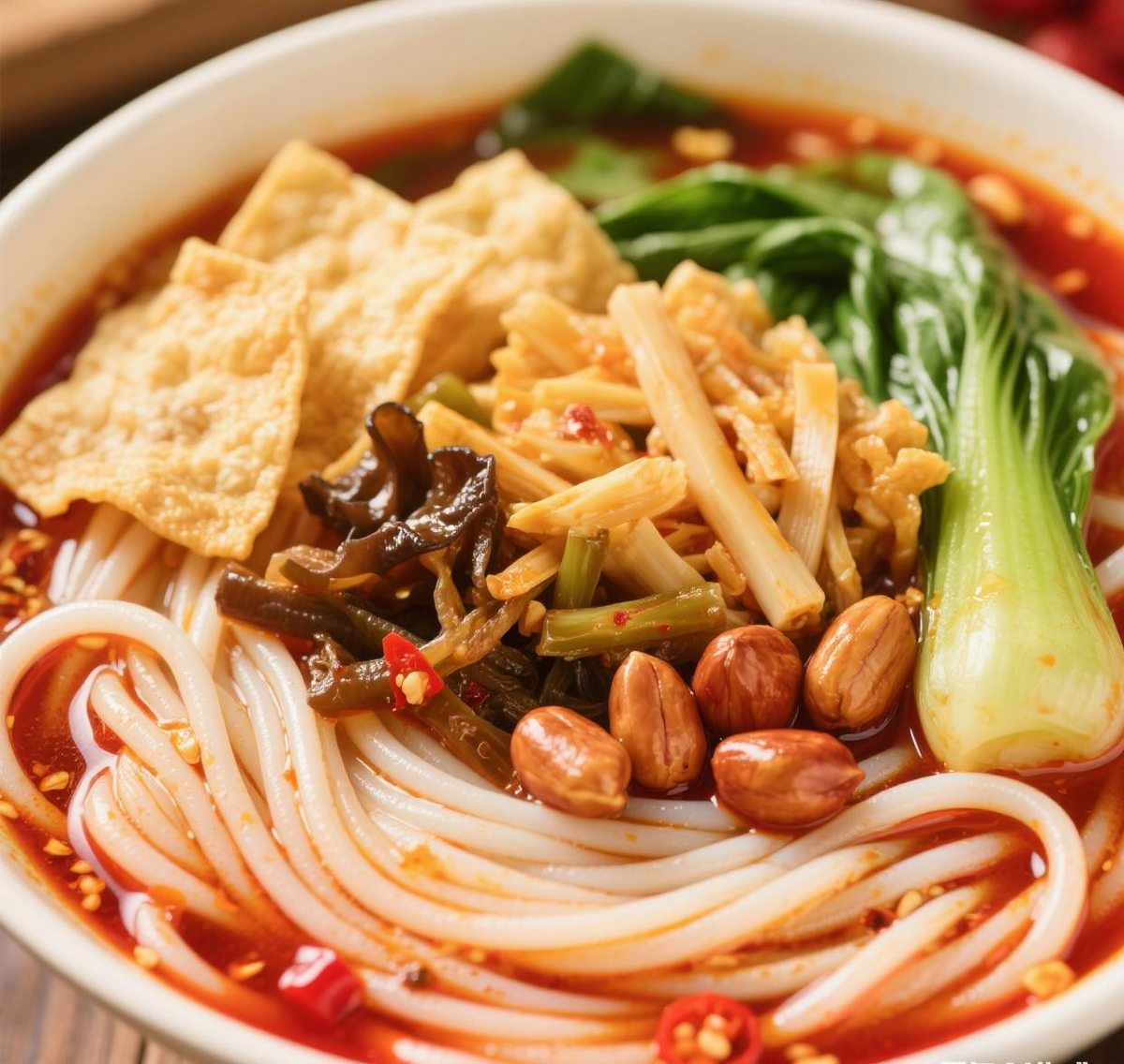
The toppings. Fried yuba that soaks up broth and goes half-crisp, half-soft. Wood ear for the crunch. Peanuts for the salt. A soft-boiled egg, if you're eating well. They're not garnish. They're the texture map.
A good bowl of luosifen should smell like it's been up to something, and taste like it was worth it.
The Origin
The dish came out of Liuzhou, in Guangxi, some time in the 1970s or 80s — the stories disagree on who and exactly when, which is usually a sign the truth is a bunch of people doing the same obvious thing at once. Take the region's river snails, simmer them into a broth, add rice noodles and whatever's cheap, and serve it for a few yuan. That's the whole invention. Then the internet found it.
The Enemies of Luosifen
The Deodorized Version. Restaurants and instant-packet makers sometimes dial back the sour bamboo shoot because they're afraid the smell scares off customers. That's like removing the ghost from a ghost story. The smell is the dish. A luosifen that doesn't stink has had its spine removed.
The Just-Spicy Version. Some places crank the chili oil and forget the sour. The result is a red bowl of heat with no architecture — no sour to answer the fat, no funk to anchor the burn. Spicy is easy. Sour-funky is the actual craft.
The Instant Packet, Boiled Wrong. The supermarket packets are actually a miracle of food science — Liuzhou ships them by the millions, and some are genuinely good. But boil the noodles to death, skip the bamboo shoots because you're scared, and microwave the broth, and you get a sad ghost of the thing. The packet deserves better.
The right luosifen: fresh or properly-cooked rice noodles, a broth with that river-bottom depth, sour bamboo shoots that announce themselves from across the room, and chili oil you can feel in your sinuses. You eat it fast, you slurp it loudly, and you don't apologize to the person sitting next to you.
Luosifen vs Guilin Rice Noodles
Same province, same white rice noodles, two completely different personalities. Guangxi produces both, and outsiders constantly mix them up.
| Luosifen | Guilin Rice Noodles | |
|---|---|---|
| Smell | Sour, funky, room-clearing | Mild, fragrant, friendly |
| Broth | Snail and bone, red with oil | Pork and beef, clear-ish |
| Heat | Chili oil, aggressive | Usually none, or light |
| Signature | Sour bamboo shoots | Brined vegetables, peanuts |
| Vibe | Loud, divisive, viral | Quiet, daily, comforting |
| Soul | The stink | The comfort |
The simplest test: close your eyes and smell the bowl. If it smells like it's plotting something, it's luosifen. If it smells like a hug, it's Guilin rice noodles. Both are Guangxi. Only one requires a warning label.
How to Eat It
You eat luosifen the way you eat anything that announces itself before it arrives: fast, and without dignity. Slurp the noodles — it's not just allowed, it's the correct way to cool them and pull air through the broth. Chase each mouthful with a peanut or a strip of yuba. Do not, under any circumstances, blow your nose into the same napkin you're using to dab the chili oil. This is a dish that demands your full, messy attention.
My Guangxi coworker, the one who'd lit that firecracker, had a rule about it: if you can still smell the bowl on your hands an hour later, you ordered the right thing. I still smell it on my hands some days, out of nowhere, and it always makes me want to go back.
I'll save the home-cooking breakdown for another post. Getting the snail broth right — simmering river snails and pork bones until they turn into that mineral, river-bottom depth — that deserves its own deep dive. Recipe coming soon.
💬 Comments