Liangpi: No Skin, No Noodles, and Better for It
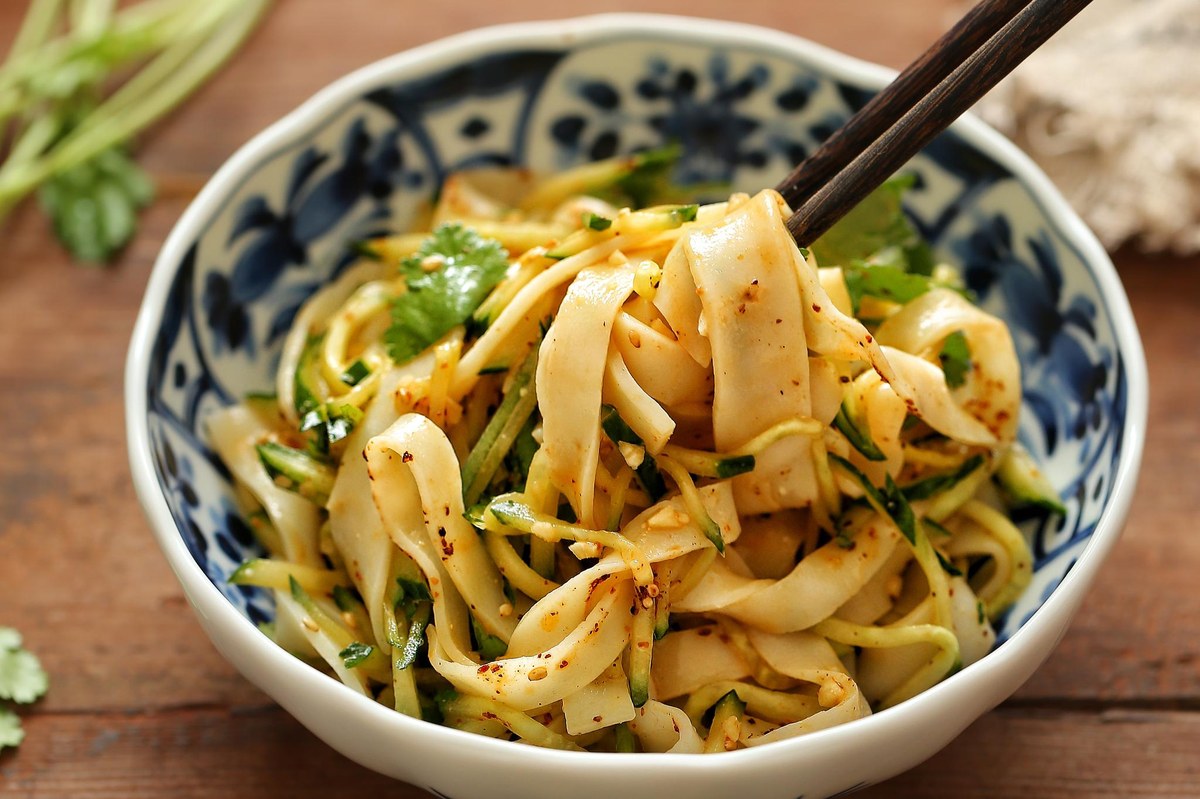
Liangpi (凉皮, liángpí) means "cold skin." There is no skin in it. English menus call it cold noodles; there are no noodles in it either. What you actually get, for about three dollars on a Shaanxi street corner, is a bowl of cold, translucent wheat-starch ribbons stained red with chile oil — and it is the single best thing you can eat when the thermometer reads 38 and the air tastes like dust.
The stall I keep going back to in Xi'an doesn't really have a name. A woman works a steel tray over a pot of boiling water. She ladles in a scoop of something that looks like skim milk, tilts the tray until it runs edge to edge, sets it on the water, claps the lid on. Ninety seconds. Then she lifts it out, floats the tray in a basin of cold water, and peels off a sheet thin enough to read the street through. Slap onto an oiled board. Cleaver down — thwack, thwack, thwack, quick and even — and the sheet becomes a pile of ribbons the width of your finger.
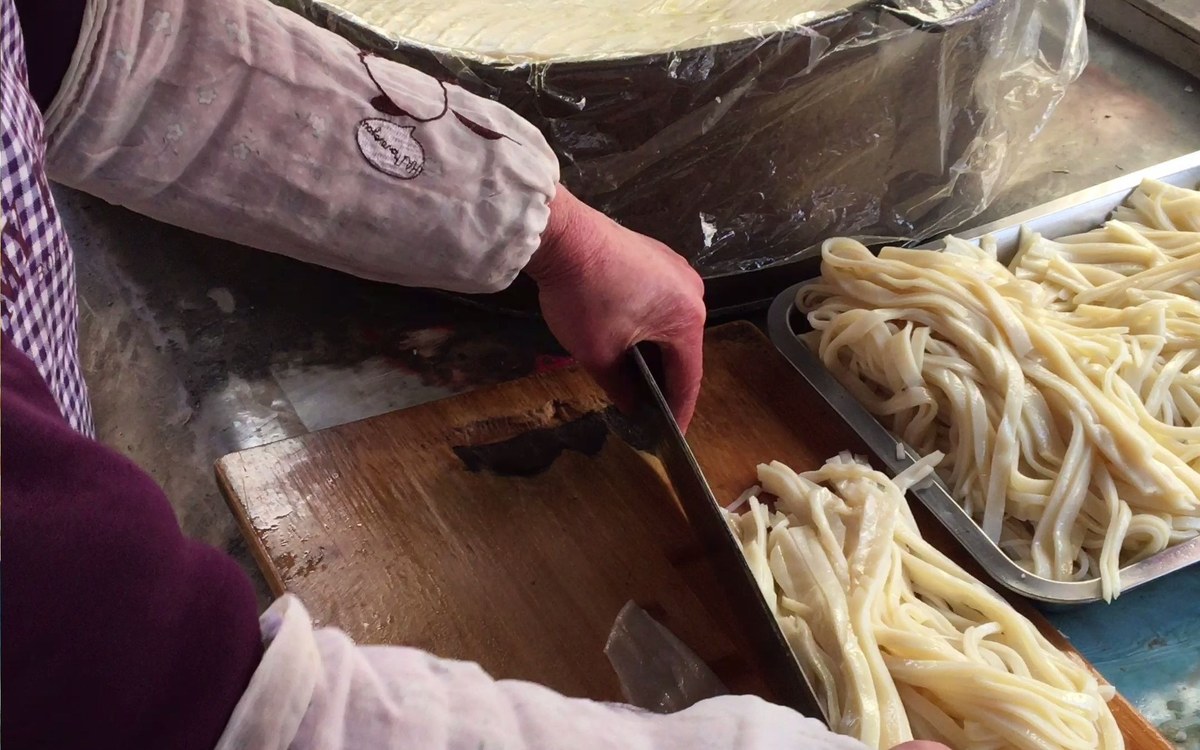
The whole thing takes four minutes and costs less than a bottle of water at home. It also tastes of nothing much on its own: cool, faintly sweet, a little springy, the way a good rice noodle tastes before anyone dresses it. That is the point. Liangpi is a delivery system for vinegar and chile oil, and it knows it.
Here's the part nobody explains on the menu. That milky liquid isn't flour paste. It's starch that has been washed out of a dough, and the washing is the entire dish.
You knead flour and water into a firm dough, rest it, then rinse it in a basin again and again, squeezing it like a sponge. The water goes milky, then milky again, then almost clear. What's left in your hands is a gray, stringy, deeply unappetizing wad: gluten, 面筋 (miànjīn). The milky water gets covered and left alone for four hours, or overnight. The starch sinks. You pour the water off the top, and at the bottom of the basin sits a dense white slurry. That's liangpi. It's the same idea as making cornstarch at home, except here you eat the starch and throw nothing away.
Steam the slurry in thin layers, brush each sheet with oil so the next one lifts cleanly, then cut. Meanwhile the gluten wad gets steamed into a spongy brown loaf and cubed, and those cubes go on top of the bowl. One dough, two dishes. The thing that would be waste in any other kitchen turns out to be the best texture in the bowl — the cubes drink chile oil like bread and give you something to chew between slippery mouthfuls of starch.
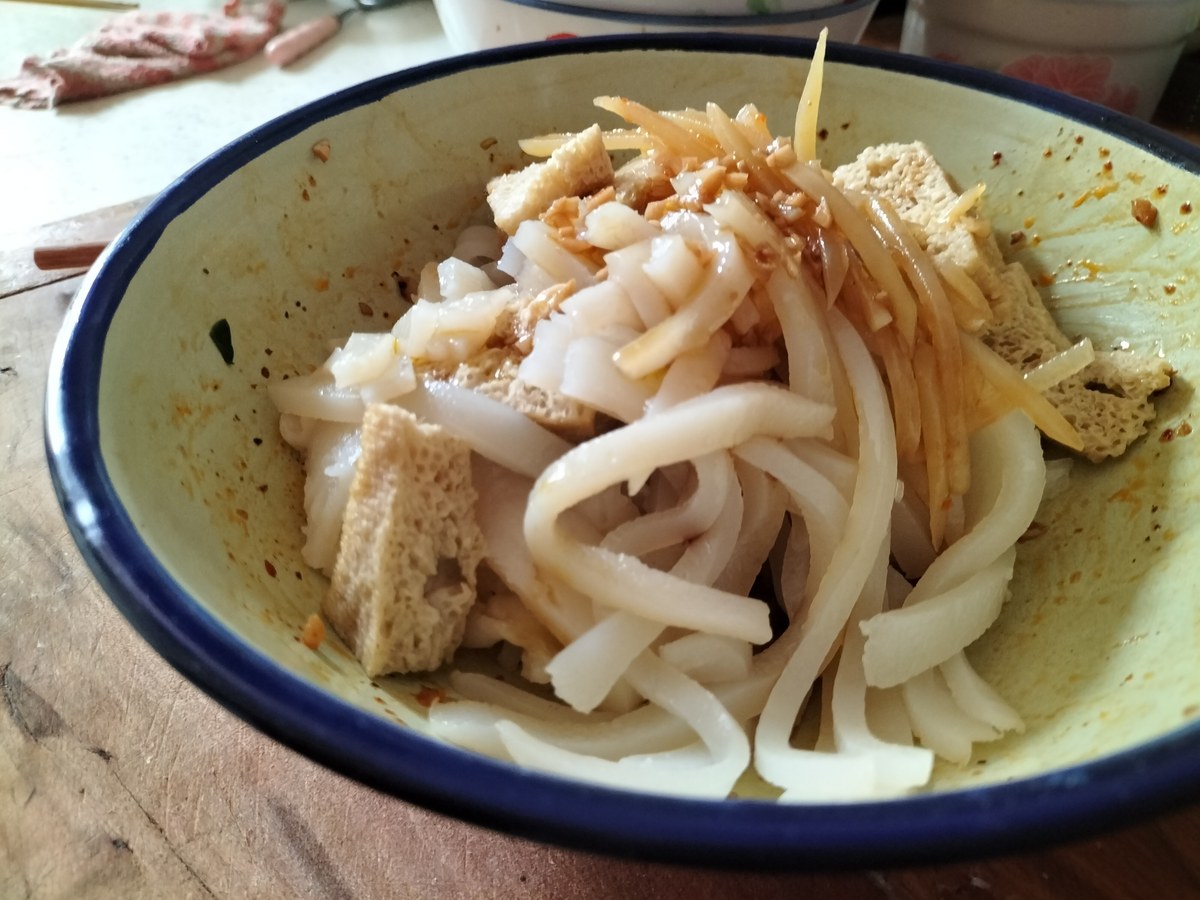
Get the thickness wrong and the whole thing dies. Two millimeters is right. Thicker and the ribbon goes gummy and glues itself to your teeth. Thinner and it tears the moment you lift it. The test a Xi'an auntie taught me: hold a ribbon up and try to read a newspaper through it. If you can, she did it right.
Hanzhong, in the south of Shaanxi, claims the dish. The story goes that a noodle shop in the Qing dynasty left a batch of dough soaking in a basin too long, the starch separated out, and rather than throw it away somebody steamed the water. Xi'an disputes everything with Hanzhong on principle, but the technique is the same in both places: rinse, settle, steam, cut, dress.
What makes me angry isn't bad liangpi. It's liangpi that is confidently something else. The American "cold noodles with sesame sauce" — fat rice noodles, peanut butter, a confetti of shredded carrot — is a salad wearing this dish's coat. The sweet versions, where somebody put a tablespoon of sugar in the dressing, are dessert. The tubs sold pre-dressed and refrigerated for hours are the worst of all: the starch drinks the vinegar, swells, and goes chalky and stiff, so you're chewing cold rubber. And machine-cut squares, all identical, no ragged edge anywhere — a ragged edge is what holds the sauce. Uniformity is the enemy of lunch.
The dressing is where a shop shows its hand. Chile oil — 油泼辣子 (yóupōlàzi), hot oil poured over coarse chile flakes and left to sit until it's dark red and smells faintly of smoke. Black vinegar, sharp enough to make you blink. Garlic water, not minced garlic: crushed garlic steeped in cold water and strained, so it coats every ribbon instead of landing in one bitter mouthful. Salt water. Sometimes a spoon of sesame paste, sometimes a pinch of MSG, both defensible. Then blanched bean sprouts for crunch, shredded cucumber for cold, and the gluten cubes.
Hanzhong cuts the sheets wider, calls the dish 面皮 (miànpí), and pours the chile oil on heavier. Gansu's version, 酿皮 (niàngpí), is thicker, tan-colored, and comes with a dab of mustard that hits the back of your nose. Xinjiang serves liangpi under the sauce left over from big-plate chicken. One technique, four arguments, no losers.
Eat it wrong and you'll decide the dish is bland, because the sauce sits at the bottom of the bowl doing nothing. Reach in with chopsticks, lift from underneath, turn the pile ten or fifteen times, high, letting the ribbons fall back through the air so they coat themselves. Every strand should be brown-red before the first bite.
Then eat one gluten cube first, not last. It tells you how hot that batch of chile oil is in a single chew, which beats finding out mid-mouthful in front of people.
Order a 肉夹馍 (ròujiāmó) beside it and a bottle of 冰峰 (bīngfēng), Xi'an's orange soda, cold enough to hurt your throat. That's lunch, and in Xi'an it still costs less than a coffee in Shanghai.
Finish with the liquid at the bottom of the bowl. Two spoons of vinegar and chile, warm by now from sitting in the sun, and it's the only honest way to end the meal.
A friend from Xi'an once told me he judges a liangpi shop by his shirt. If it's still clean when the bowl is empty, he says, you didn't mix it hard enough. I've tested this. He's right, and I've ruined two white shirts proving it.
The bowl comes back empty and slick and red, and for ten minutes the heat stops mattering. That's the trick of the dish: not that it's cold, but that it tastes like it was built for the exact day you're having.
So — Hanzhong's wide, heavy sheets, or Xi'an's thin ribbons? I've eaten my way through both sides of that argument and I still order from whichever shop has the shorter line.
💬 Comments