Chop Suey: The Dish Named After a Man Who Never Ate It
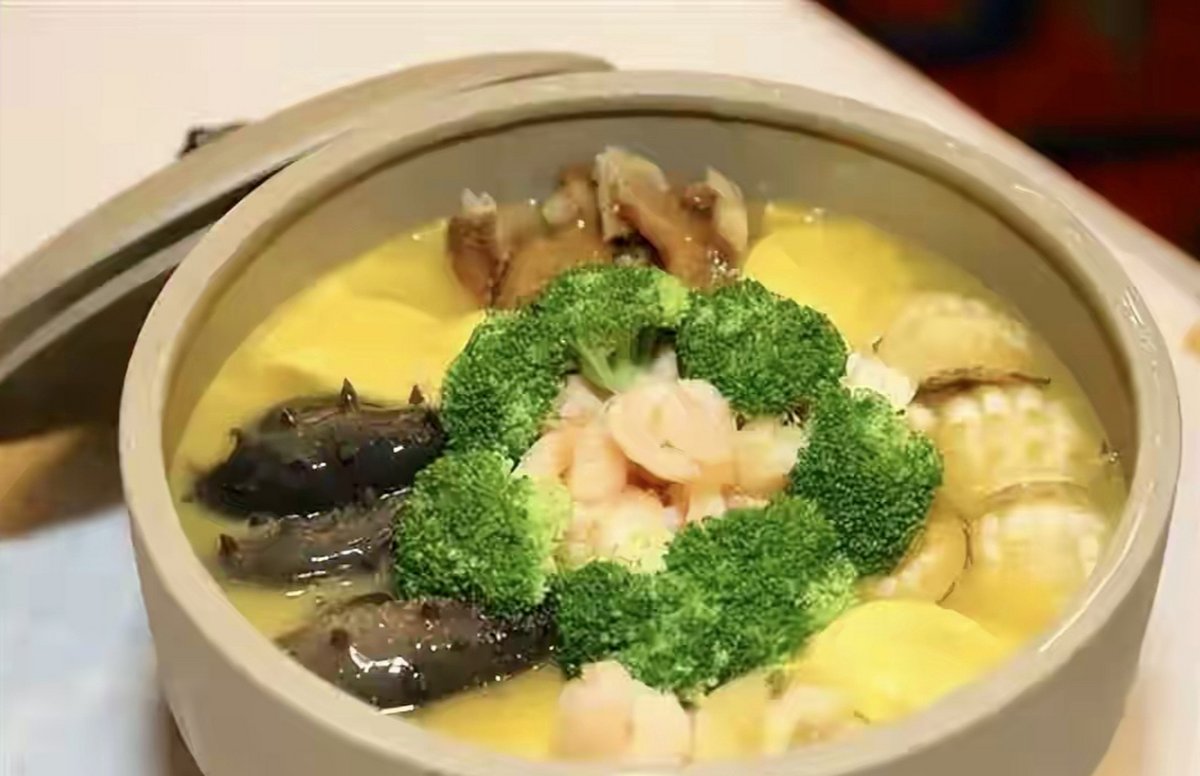
The pot lands on the table and the lid comes off, and the smell arrives in a single column: Jinhua ham, dried scallop, a breath of Shaoxing wine burning off at the top. Under the surface, something dark and gelatinous shifts in the broth. My colleague in Hefei doesn't look up. "Start with the fish maw," she says. "It's the only thing in there that can't wait."
The menu called it 李鸿章大杂烩 (Lǐ Hóngzhāng dà zá huì), Li Hongzhang's big hodgepodge. I had seen that name before, but not on a table in Anhui. I had seen it in a foil carton, on a Tuesday, in California.
Here's the part that took me years to untangle: chop suey and Li Hongzhang's hodgepodge share a name and almost nothing else. And the man both are named after never ate either one of them.
The viceroy and the wok
In August 1896 Li Hongzhang (李鸿章, Lǐ Hóngzhāng) got off a steamship in New York. He was seventy-three, viceroy of Zhili, on his way home from the tsar's coronation, and for six weeks he was the most famous Chinese man in America. Reporters followed him to the docks, to his hotel, to the doors of restaurants.
What got printed was this: the viceroy's people needed a meal, a Chinatown kitchen was short on supplies, and the cook dumped the odds and ends into one wok. Asked what the dish was, somebody said 杂碎 (zá suì) — the bits, the giblets, the leftovers. The papers ran it. Inside a year, chop suey was selling in New York, Chicago, St. Louis.
There's no record of Li eating the stuff. What actually happened is duller and better. Chop suey was immigrant food, invented by cooks from Taishan as cheap filling meals for railroad crews and laundrymen who missed home. Nobody put it on a banquet table. A famous man's name turned it into a story, and stories sell better than food.
What was actually in the pot
The Hefei version is a banquet dish, and its trick is that a hodgepodge is not a free-for-all. You build it in order, the way you'd build a stock, because that's what it is underneath.
Stock first: chicken, pork bone, a slice of Jinhua ham, simmered until it tastes like more than the sum of three things. Then the ingredients that give — sea cucumber (海参, hǎishēn), fish maw (鱼肚, yúdù), pork tripe. Collagen, all of it, turning the broth silky without a spoonful of starch. Then the ones that hold: winter bamboo, shiitake, a little squid for snap. Quail eggs go in last so the yolks stay whole. Nothing in that pot exists to make it look bigger.
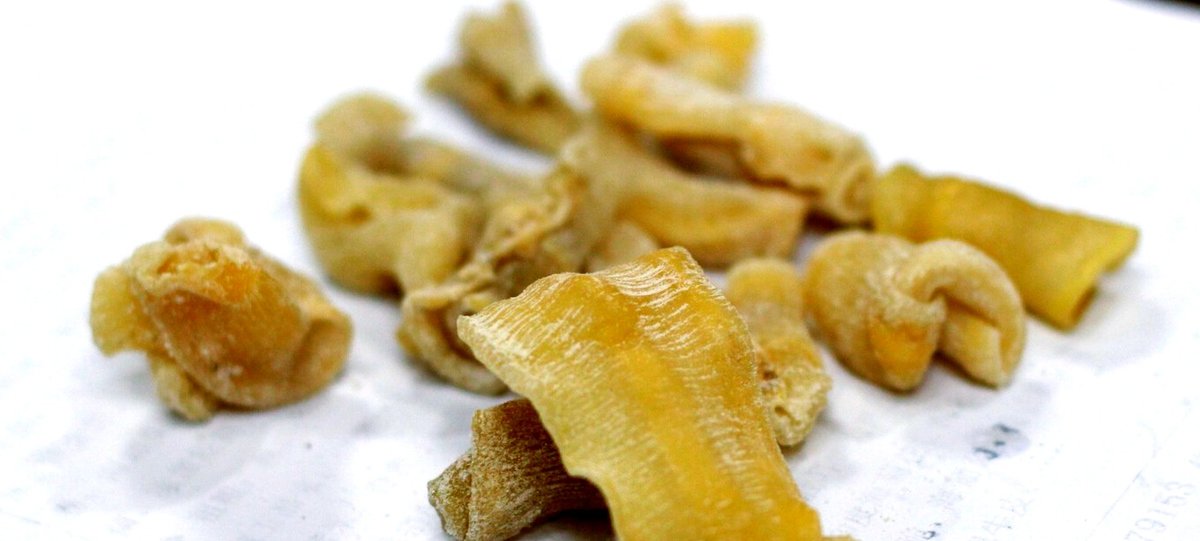
You can feel the order in your mouth. Fish maw is soft the way a dumpling skin is soft, with nothing inside it, and it carries the ham and the wine with it. Sea cucumber squeaks against your teeth and then gives up entirely. A quail egg arrives cool in the middle of all that heat and resets your palate for the next spoon.
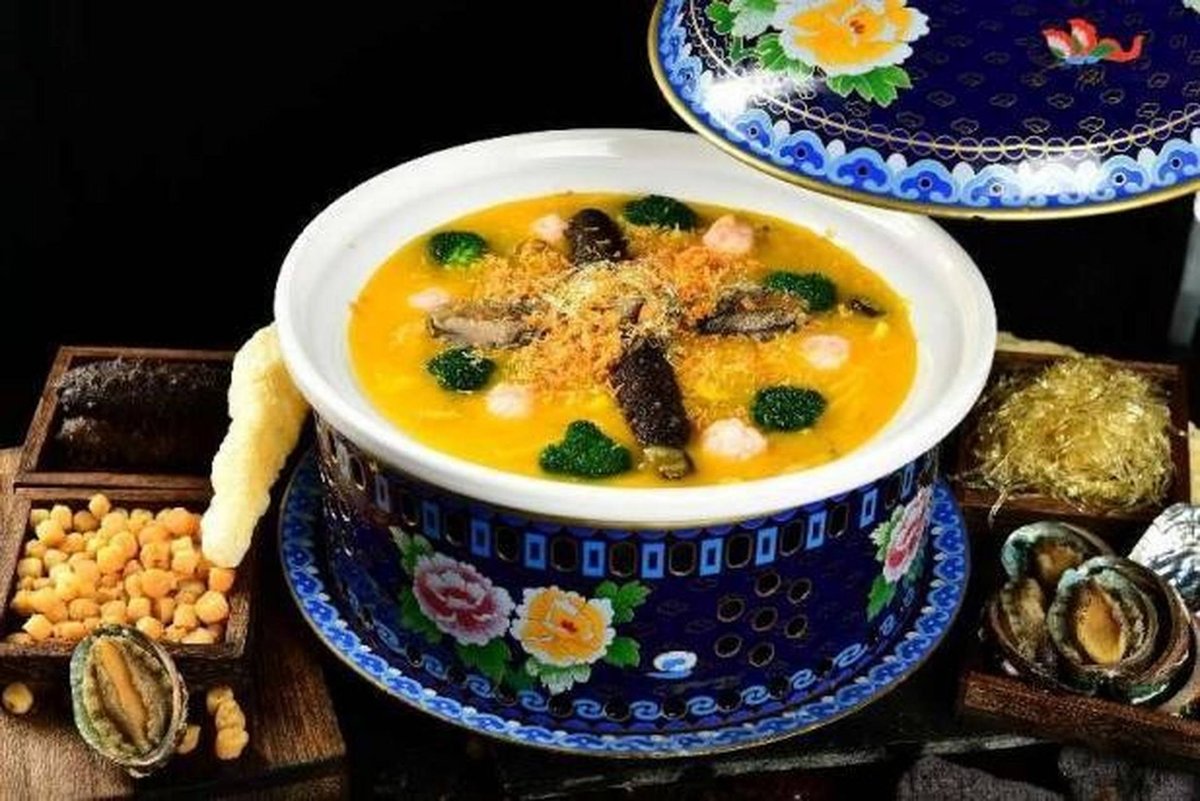
That's what the dish is for. Not a showpiece, a pot that keeps four generations at one table for two hours, where every spoonful is a different thing to chew. My friend's grandmother watched me fish out a second piece of sea cucumber and said, in the tone of someone settling a debt, "Now you know what the fuss is about."
How it went wrong
American chop suey is the famous failure. Bean sprouts, celery, onion, a cornstarch sauce the colour of wet cardboard, and a texture identical from the first bite to the last: wet crunch, wet crunch, wet crunch. No stock, so no depth. No collagen, so no body. It's a photocopy of a photocopy of a dish nobody in China was cooking. If a takeout box of it is your whole idea of Chinese food, I understand why you're suspicious of us.
The second failure happens at home, usually at a banquet that needs to look expensive. Frozen fish balls. Imitation crab. Squid rings from a bag. Glass noodles to fill the pot. Every ingredient is standing in for something else, and none of them can give the broth anything, so the cook adds bouillon and calls it a day. You taste the shortcut in the first spoon: salty and thin at the same time.
The third failure is the tourist one. Near Li's old residence in Hefei, the same pot shows up on menus as 全家福 (quán jiā fú), "whole family happiness," at three times the price, with the sea cucumber counted out loud at the table. Same dish. Less nerve.
How to eat it
Order it for four people minimum. The pot is the point, and a single portion in a shallow bowl is a different, sadder genre of food.
Eat the fish maw first, while the broth is at full heat. It goes flat as it cools, and no amount of reheating brings it back. Use a spoon, not chopsticks, and get broth in it.
Keep plain rice on the side. The pot is saltier than it tastes in the first thirty seconds; by the fourth spoon you'll want the rice, and by the tenth you'll be glad it's there.
Don't add chili oil. I did that once, in my twenties, in a different city, and I've thought about it since. The whole architecture of this dish is ham and dried scallop and time. Chili doesn't sharpen it, it just stands in front of it.
Drink the broth at the end, when everything in the pot has given up what it had. That's the part the pot was built for.
My mother made a version of this every January with whatever survived the New Year cooking: a few quail eggs, half a block of ham, fish maw from a vacuum pack. She never called it Li Hongzhang's anything. She called it 大杂烩, big mixed pot, and the joke in our house was that the recipe changed every year and nobody complained. There is no fixed recipe. That's not a flaw. A pot that can absorb whatever the kitchen has and still taste like a decision rather than an accident — that's the most useful thing a Chinese cook can own.
Chop suey and 大杂烩 mean the same two words: odds and ends. One of them ended up a punchline in a foil box. The other is still a banquet dish in a clay pot, and the difference is stock, patience, and one expensive ingredient nobody can fake. If you've eaten the real one, tell me which spoon did it for you: the fish maw, the sea cucumber, or the broth at the very bottom.
💬 Comments