Laziji: The Dish Where You Hunt for Chicken in a Mountain of Chilies
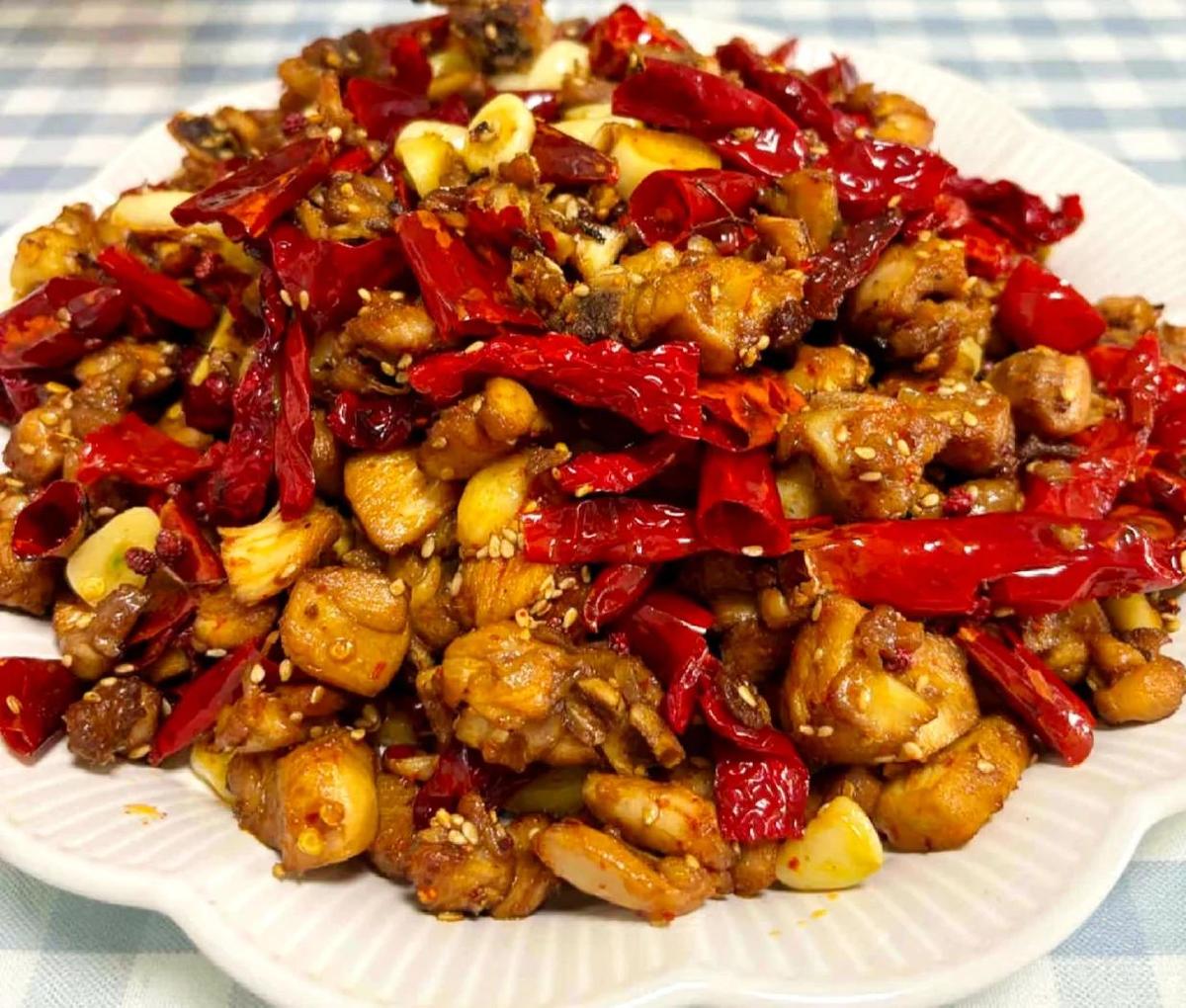
The plate lands on your table and you laugh. You can’t help it. It’s a joke and a threat and an invitation all at once: a small mountain of dried red chilies, piled so high the chicken pieces underneath are just a conspiracy theory. The smell arrives separately, almost late: hot oil, toasted cumin, the back-of-throat prickle of Sichuan peppercorns volatilizing in the air above the wok. A few whole star anise are in there. Ginger slices the size of guitar picks. The oil still crackles.
This is Laziji (辣子鸡, là zǐ jī), Chongqing-style spicy chicken. You are not being served chicken with chilies. You are being served chilies, and somewhere in that red avalanche there is chicken, and finding it is the entire game. I was twenty-four, three years into my first job at Microsoft, on a weekend trip to Chongqing with coworkers who all swore this particular restaurant on a hillside in Nanshan was worth the two-hour cab ride. They were right. It was.
The Architecture of a Bite
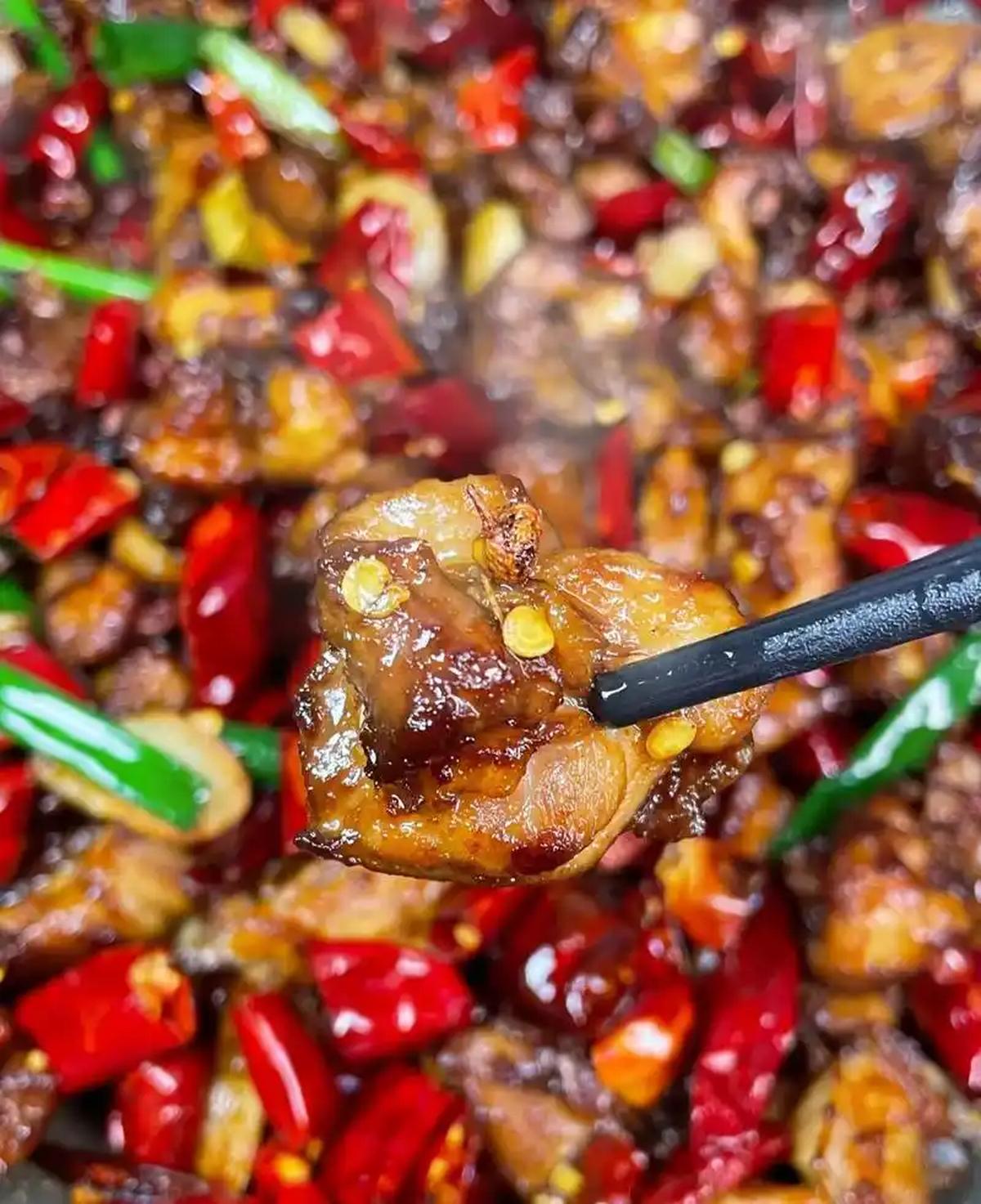
Here’s what happens when you finally excavate a piece: your fingertips register heat first — not the chili heat, actual thermal heat, because you are too impatient to wait. Then the crust gives way with a shatter that is halfway between fried chicken and pork crackling. Inside, the meat is dark meat, leg or thigh, bone-in, cut small. It is still juicy. It is still hot.
The flavor hits in three waves. First wave: cumin — toasted whole seeds crushed rough, not the pre-ground sadness that sits in Western supermarket jars for six years. Second wave: the chilies — èr jīng tiáo for color and fruitiness, cháo tiān jiāo for the punch that makes your scalp sweat. Third wave: huājiāo, creeping in late, numbing your tongue just enough that you can take another bite, and another, and then you’ve eaten twelve pieces and you’re not sure when you became the kind of person who does this.
I’ve spent thirteen years writing code at Microsoft, Google, and NVIDIA. Laziji is the debugging of Chinese food: you inspect every red pixel on the plate, you isolate the target, you extract it. The satisfaction is the same. A good plate of Laziji is a treasure hunt that burns your mouth and you don’t care.
Who Invented This
Laziji came out of Geleshan, a forested ridge outside Chongqing, in the early 1990s. A restaurant called Lín Zhōng Lè (林中乐) started serving chicken buried in a mountain of local dried chilies — a move so visually absurd that people drove up the mountain just to see if it was real. It was real. It was also good. The style spread through Chongqing, then through China, then to every Sichuan restaurant with nerve enough to put it on the menu.
That’s it. That’s the history. A restaurant on a hill. A stunt that became a classic.
The Enemies of Laziji
You will encounter bad Laziji. You will encounter it often.
The first enemy is the vegetable smuggler. This is the restaurant that gives you a plate of chicken stir-fried with bell peppers, onions, and carrots, then calls it Laziji. That’s not Laziji. That’s a lie with a garnish. Real Laziji contains no vegetables except garlic, ginger, and scallions. The chilies are not a vegetable. The chilies are the terrain.
The second enemy is the thick batter. Some kitchens coat the chicken in a heavy dredge, turning it into popcorn chicken in red pajamas. Wrong. The coating should be light — a dusting of cornstarch, maybe a quick pass through egg white. The chicken, not the crust, is the point.
The third enemy is pre-ground everything. Cumin from a jar marked 2019. Chili flakes that smell like old textbooks. Sichuan peppercorn powder that lost its zing during the Obama administration. You need whole dried chilies. You need whole cumin seeds, toasted and crushed. You need Sichuan peppercorns that still feel like something when you hold them.
How to Eat It
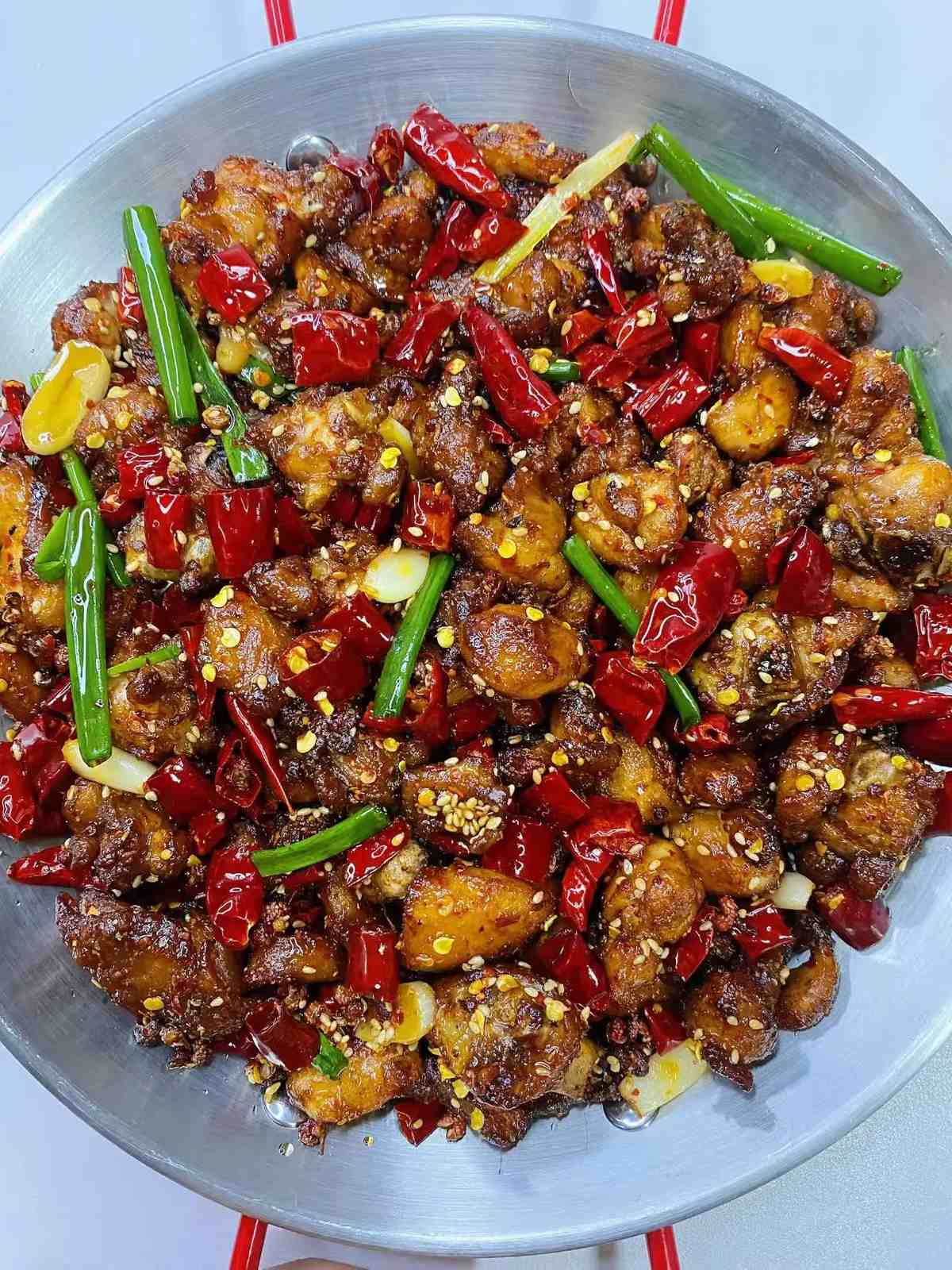
You eat Laziji with chopsticks and a bowl of white rice. The rice is not optional — it is your fire extinguisher, your reset button, the thing that lets you go back in for more. Do not eat the dried chilies whole unless you have something to prove and no meetings tomorrow.
The proper technique: dig from the bottom. The best pieces settle there, oil-soaked and heavy. Lift your find, shake off the excess pepper husks, place it on your rice. Let the oil bleed into the grains. Eat. Repeat until the plate is mostly chili ghosts and you have burned a small but satisfying hole through your stomach lining.
My grandmother, who grew up eating Shanghainese food and regarded Sichuan cooking with the suspicion of someone whose spice tolerance tops out at white pepper, tried Laziji exactly once. She picked out three pieces of chicken, ate them with her eyes watering, and said: “This is not food. This is a test.” Then she reached for a fourth piece. That’s Laziji. It’s not reasonable. It’s not balanced. It is a plate of dried chilies that happens to contain chicken, and it will make you sweat through your shirt and order another one.
Out of space for today — I’ll save the home-cooking breakdown for another post. Doing Laziji justice at home means nailing oil temperature, chicken cut size, and the exact ratio of èr jīng tiáo to cháo tiān jiāo. That deserves its own deep dive. Recipe coming soon.
💬 Comments