La Zi Ji: Finding the Chicken in the Chilies
Editor’s Note: This is the kitchen companion to Laziji: The Dish Where You Hunt for Chicken in a Mountain of Chilies. Quantities, temperatures and the failure points are below. Read the technique once before you shop.
Why the Chicken Is Fried Twice and the Chillies Go In Last
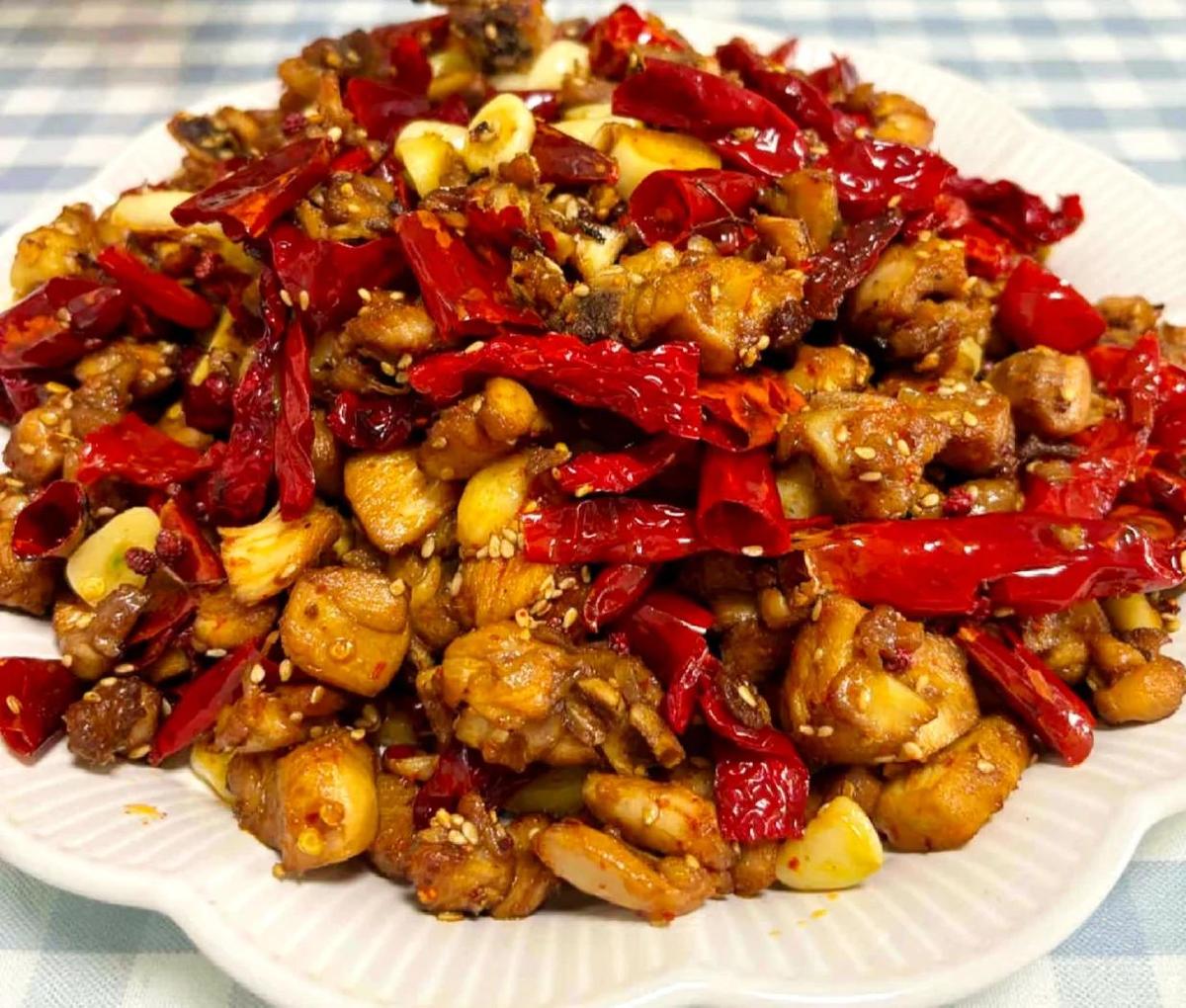
La zi ji is built on a joke the diner is let in on. The plate arrives as a mountain of dried red chillies with the chicken somewhere underneath, which is why the name is often translated as “find the chicken.” The ratio runs about two parts chilli to one part chicken by volume, and that is not a joke either: the chillies are meant to be eaten.
Start with thigh, not breast. Boneless thigh with the skin on carries enough fat between the muscle bundles to stay juicy through two trips into hot oil. Breast has almost none, and at 190°C it gives up its water in under a minute and turns to string. Cut the thigh into 2cm cubes, all the same size, and leave the skin on for the second fry, where it crisps.
The marinade does two jobs. Shaoxing, light soy, salt and white pepper season the meat; the egg white and 1 tbsp of starch form a thin film around each cube. That film is what a Sichuan cook calls velveting. It holds water in during the first fry and becomes the crisp shell in the second. Twenty minutes is enough. Longer in the salt and the texture turns spongy.
The double fry is not a flourish. The first, at 160°C for 90 seconds, cooks the chicken through and sets the coating without browning it. Then the cubes rest for five minutes on a rack, steam escapes the crust, and the surface dries. At 190°C for 45 seconds, the second fry drives off the last surface water and browns the starch. Why this matters: a single fry at 190°C browns the outside before the centre is cooked, and a single fry at 160°C leaves a pale crust that goes limp in the chilli toss.
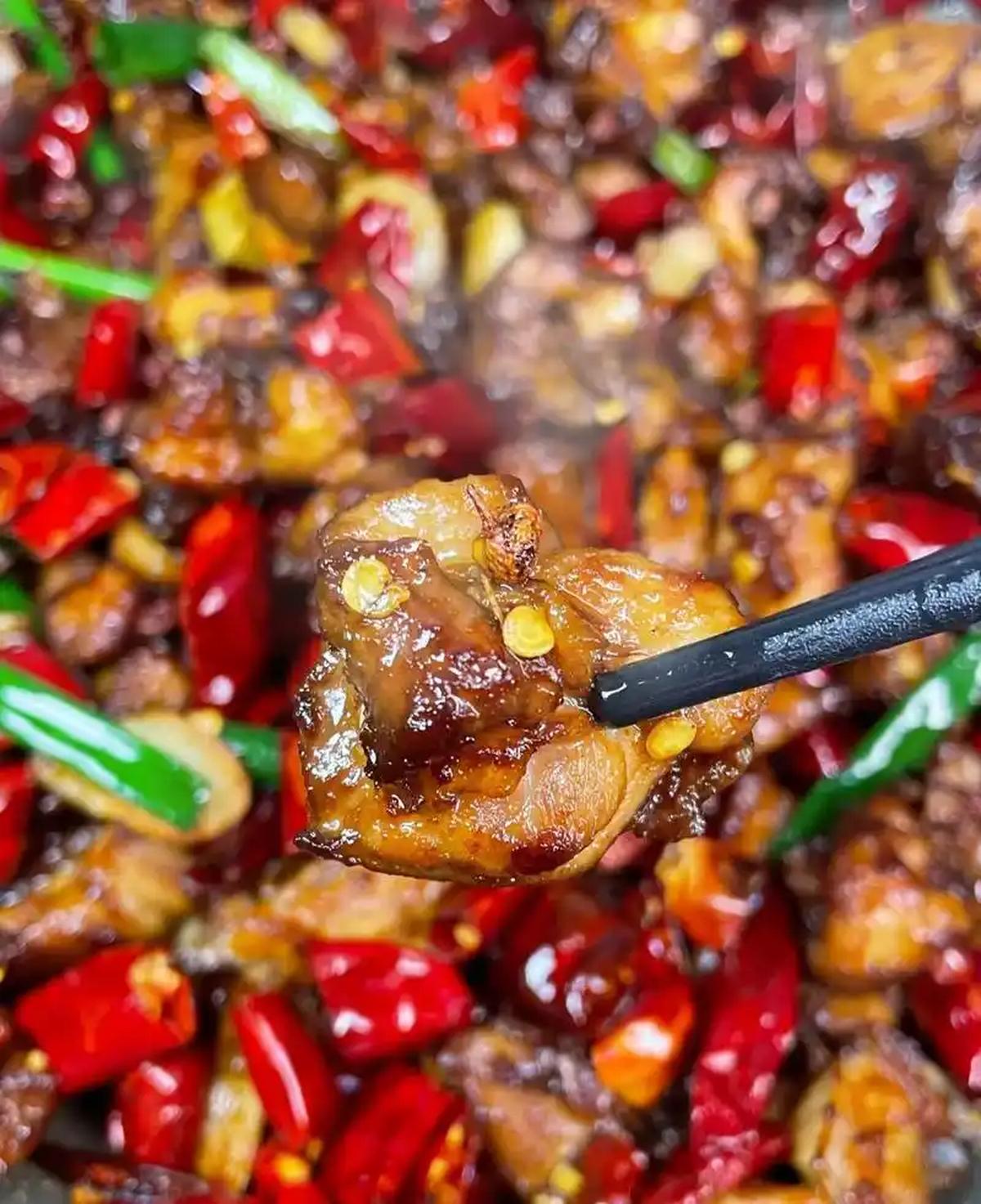
The chillies are where most home cooks go wrong, and it is a heat problem. Dried pods are thin and have almost no water left, so above 180°C they scorch in fifteen seconds and turn the dish acrid. They go in at low heat with the garlic, ginger and spring onion for a full 60 seconds, stirring constantly, until the oil smells sweet and toasty. The tablespoon of Sichuan pepper goes in with them, and its citrus note blooms in the gentler heat.
The last thirty seconds are the only time chicken and chillies share the wok. A teaspoon of sugar and a drizzle of sesame oil go in, everything is tossed twice, and it is done. The sugar is not for sweetness; it rounds the salt and pulls the chilli aroma forward. Any longer and the crust softens in the steam the chillies release.
Ingredients
For the chicken
- 500g boneless chicken thigh, skin on, cut into 2cm cubes
- 1 tbsp (15ml) Shaoxing wine
- 1 tbsp (15ml) light soy sauce
- 1 tsp (5g) fine salt
- 1 tsp (2g) ground white pepper
- 1 egg white (30g)
- 1 tbsp (10g) cornstarch
- 600ml neutral oil, for frying
For the chilli base
- 80g dried erjingtiao chillies (about 2 cups), snipped into 3cm lengths and seeded
- 1 tbsp (6g) Sichuan pepper
- 6 cloves garlic (20g), sliced 2mm thick
- 20g ginger, cut into thin julienne
- 4 spring onions (60g), cut into 4cm lengths
- 1 tbsp (15ml) neutral oil, for the aromatics
To finish
- 1 tsp (4g) caster sugar
- 1 tbsp (15ml) sesame oil
- 1 tsp (5g) toasted sesame seeds
- 1/4 tsp (1g) fine salt, to taste
Substitution notes: Erjingtiao chillies are long, wrinkled and moderately hot, with a fruity smell. Without them, use 50g of chile de árbol for heat plus 30g of a mild dried pepper such as guajillo for volume and colour. Do not use fresh chillies; the chewy texture of the dried pods is part of the dish.
No Shaoxing wine: dry sherry at the same volume. No Sichuan pepper: 2 tsp of ground white pepper, though the numbing quality will be missing. To shallow-fry instead, use 400ml of oil and three batches, keeping the temperature with a thermometer.
Prep: Twenty Minutes, Mostly Marinating
1. Cube the chicken and marinate it (20 minutes)
Cut the thigh into 2cm cubes, trimming large flaps of fat but leaving the skin. Stir with the Shaoxing, light soy, salt and white pepper for 30 seconds, until the liquid is absorbed and the meat feels tacky. Add the egg white, stir, then the cornstarch, until each cube wears a thin even film. Leave for 20 minutes.
2. Snip and seed the chillies (6 minutes)
Snip each chilli into 3cm lengths over a bowl, shaking the seeds out. Eighty grams looks excessive; it is about two packed cups, and it is correct.
3. Cut the aromatics and set up (5 minutes)
Slice the garlic 2mm thick, julienne the ginger, cut the spring onions into 4cm lengths with whites and greens apart. Measure the sugar and sesame seeds into dishes. Line a tray with paper and set a rack over a second tray, with a spider beside the wok.
Step by Step: Twelve Minutes, Two Frying Passes
Step 1: First fry at 160°C (90 seconds)
Heat the 600ml of oil to 160°C. Add the chicken in two batches so the temperature does not fall below 150°C. Fry each batch for 90 seconds, separating the cubes with the spider for the first ten seconds, then leaving them alone. They come out pale gold and firm. Lift onto the rack, not onto paper, so the undersides do not steam.
Step 2: Rest the chicken (5 minutes)
Leave the cubes on the rack for five minutes while the oil comes up to 190°C. The interior finishes cooking, the surface dries, and the starch sets into a shell that will crisp rather than blister. Skip this and the second fry has to work twice as hard, and the crust goes patchy.
Step 3: Second fry at 190°C (45 seconds)
Fry the chicken again, all of it at once, for 45 seconds. It hisses hard and darkens to a deep gold. Do not walk away; at this temperature the line between gold and burnt is about ten seconds. Drain on the rack. The cubes should sound like gravel when you stir them.
Step 4: The aromatics go in at low heat (60 seconds)
Pour off all but 1 tbsp of the oil and let the wok cool for a minute. Set it over low heat, add the 1 tbsp of fresh oil, then the garlic, ginger, spring onion whites, chillies and Sichuan pepper. Stir constantly for a full 60 seconds. Why this matters: dried pods have no water left to buffer heat, so sixty seconds at low heat is the entire margin. The chillies darken one shade and smell toasty; if they smell sharp, lift the wok off the burner for a few seconds.
Step 5: Thirty seconds with the chicken (30 seconds)
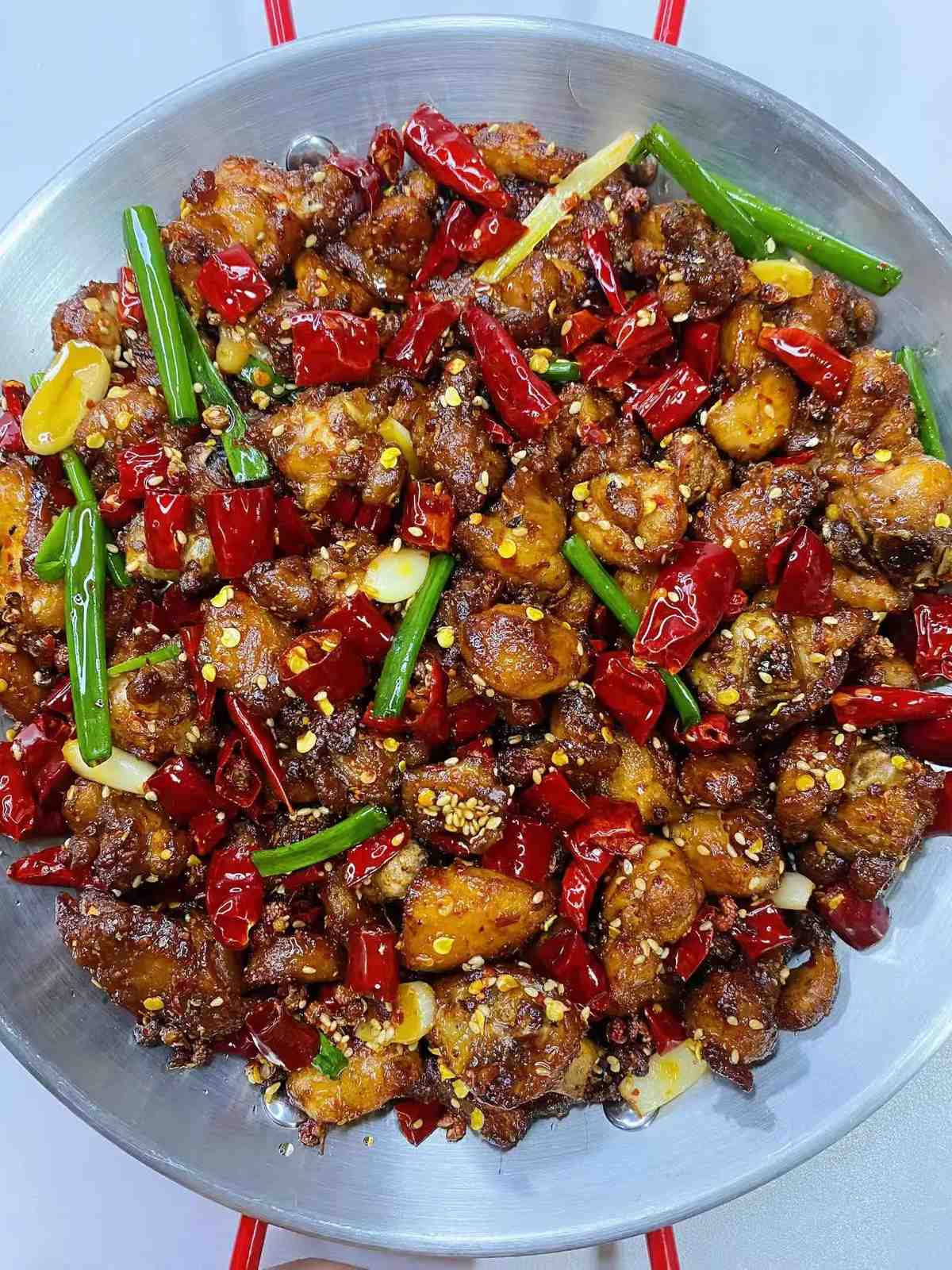
Turn the heat to high, add the chicken, sugar and 1/4 tsp of salt, and toss for 30 seconds, until the sugar dissolves and every cube is freckled with chilli. Drizzle the sesame oil around the rim, add the spring onion greens, toss once, and tip onto a plate. Scatter the sesame seeds and serve at once.
Key Pitfalls
The chicken was dry and stringy inside. You used breast, or the cubes were under 2cm, or the first fry ran long. Thigh with the skin on, uniform 2cm cubes, and 90 seconds at 160°C is the whole margin. A small cube overcooks in the second fry no matter how fast you work.
The crust slid off and floated in the oil. The chicken was wet when the starch went on, or the oil was below 150°C. Pat the cubes dry before marinating, add the starch last, and wait for the oil to reach temperature before the first batch goes in.
The dried chillies tasted burnt and the dish was bitter. They hit oil above 180°C. Dried pods have almost no water left to absorb heat, so they scorch in seconds. Fry them at low heat for 60 seconds with the garlic and ginger, and keep them moving the whole time.
The dish was not spicy at all. Old chillies lose their capsaicin and their aroma. Buy pods that are pliable rather than brittle and smell sharp when the bag opens, and use the full 80g. Leave a third of the seeds in if you want it to bite.
The chicken came out greasy rather than crisp. The oil dropped when the cold chicken went in, or you crowded the wok. Fry in two batches, let the oil return to temperature between them, and do not skip the five-minute rest that dries the crust.
The chicken was pink at the centre. The cubes were larger than 2cm, or the first fry was rushed at too high a heat. Cut them to size, hold 160°C for the full 90 seconds, and cut the largest cube open before the second fry.
The dish was too salty to eat. Light soy, marinade salt and finishing salt add up. The 1 tsp in the marinade is doing the work; taste before adding the 1/4 tsp, and remember the chillies carry salt from the oil and deliver it in bursts.
Serving Suggestions
Serve it with plain steamed rice and nothing that competes, because the plate already carries a lot of aroma. In Chengdu it comes with pickled mustard greens or cucumber in garlic, something cool and crunchy. Eat the chillies too; they are chewy, faintly sweet and meant to go with the chicken.
Cold beer, or a light roasted oolong that stands up to the chilli oil. Leftovers lose their crust: reheat in a 200°C oven for four minutes rather than a pan, which steams them.
This is the companion recipe to Laziji: The Dish Where You Hunt for Chicken in a Mountain of Chilies. Read the story, then cook the dish.
💬 Comments