Lanzhou Beef Noodles: The Five-Color Morning Ritual That Built a City
It’s 6:14 in the morning and Lanzhou is seven degrees Celsius. The high-desert cold cuts through whatever jacket you brought, and the sky is still the color of spent charcoal.
Then you hear it. Thwack. A wet slap of dough hitting steel, echoing down an alley off Zhangye Road. You follow the sound. You always follow the sound.
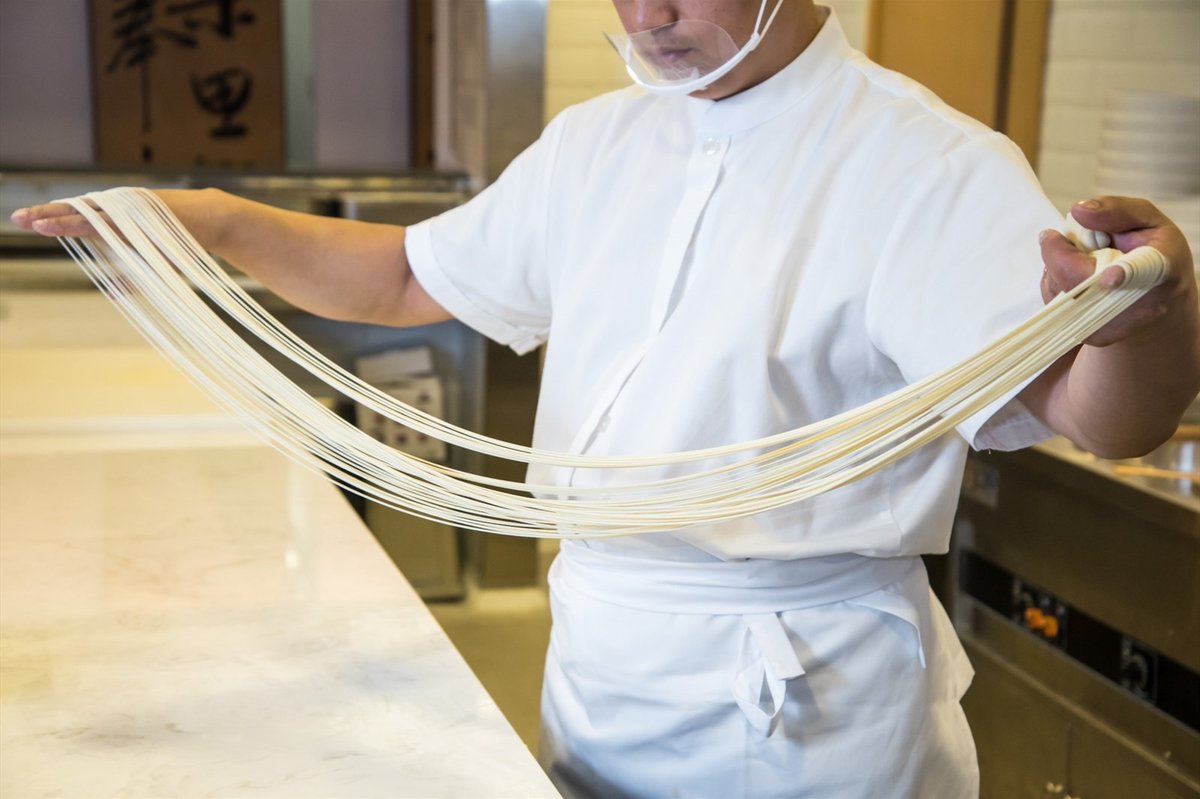
Inside a shop the size of a parking space, a Hui Muslim man in a white skullcap is working a rope of dough the length of his arm. He folds it, twists it, slams it against the counter, then stretches — one smooth motion that turns flour and alkaline water into a curtain of yellow strands. The motion takes four seconds. Behind him, a cauldron the size of a bathtub. Beef bones, star anise, cassia bark, and white cardamom have been simmering in there since 4am. The steam condenses on the window and drips down like the shop is sweating.
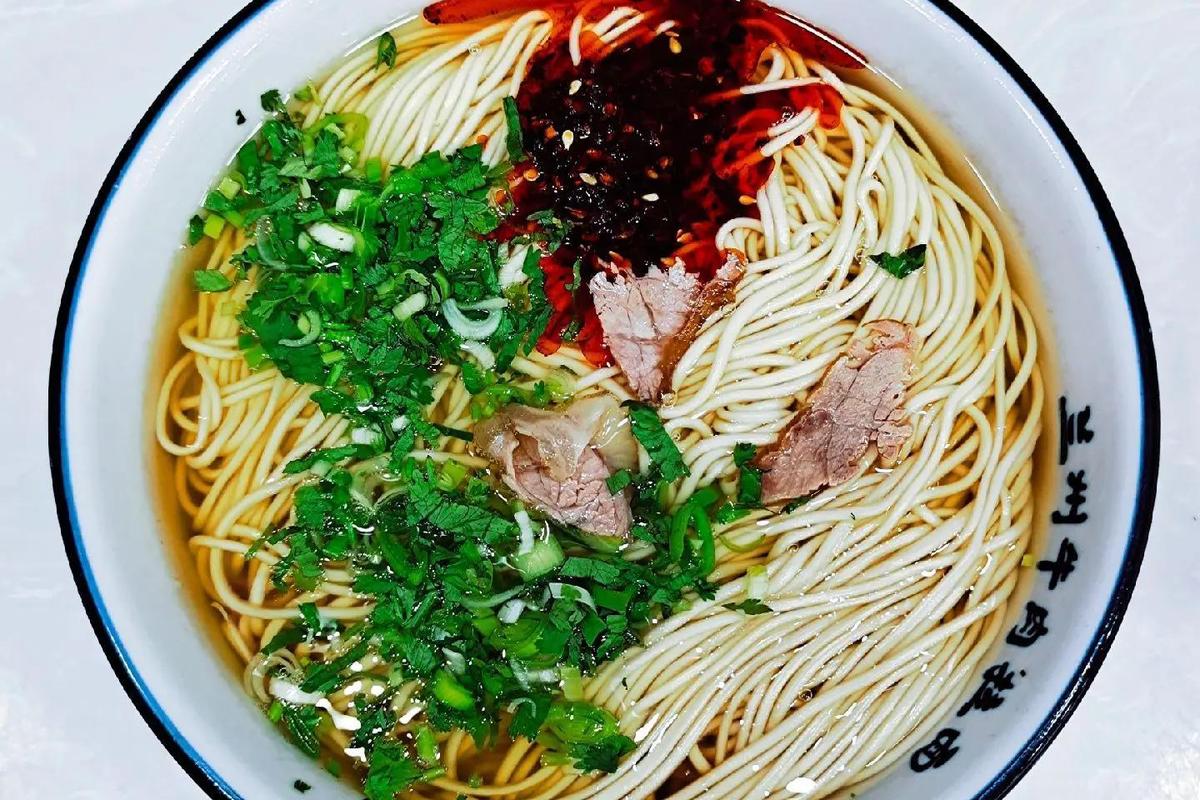
A taxi driver is already at the counter, hands still in his jacket pockets, chin tucked against the cold. The bowl lands in front of him without ceremony. Clear broth. White radish slices fanned like half-moons around the rim. Red chili oil pooling at the surface in lazy spirals. Green cilantro and garlic sprouts scattered across the top. Yellow noodles coiled in the deep — alkaline, elastic, barely visible through the amber liquid. Five colors, one bowl, eight yuan.
This is Lanzhou Beef Noodles (兰州牛肉面, Lánzhōu niúròu miàn). It’s not lunch. It’s not dinner. It’s the reason this city wakes up.
The Five-Color Architecture
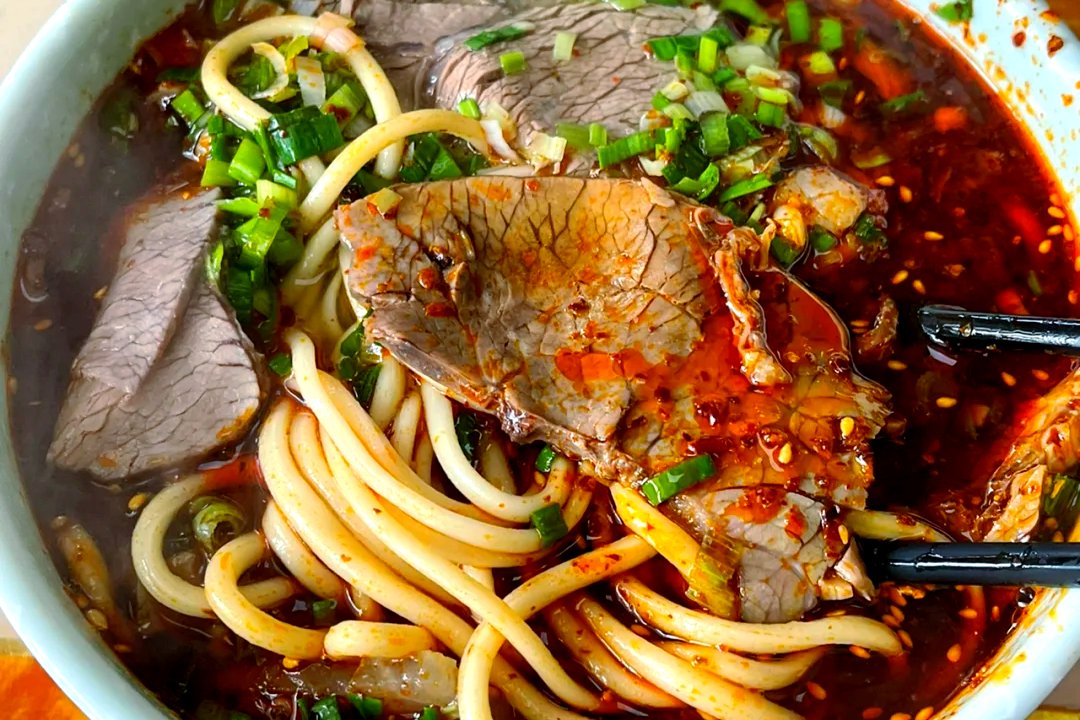
Every bowl of Lanzhou Beef Noodles is judged against a standard so strict it reads like an engineering specification: 一清二白三红四绿五黄 — clear first, white second, red third, green fourth, yellow fifth. A Lanzhou native can glance at your bowl from across the shop and tell you which number you failed. I learned this the hard way at a noodle shop near Lanzhou University in 2015, three years into my Microsoft stint, visiting a colleague’s hometown. I asked for extra chili. The proprietor — a woman in her sixties with forearms like bridge cables — looked at me the way a Parisian baker looks at someone who asks for ketchup on a baguette. “First taste the broth,” she said. “Then we talk about extra chili.”
She was right. The broth is the thing.
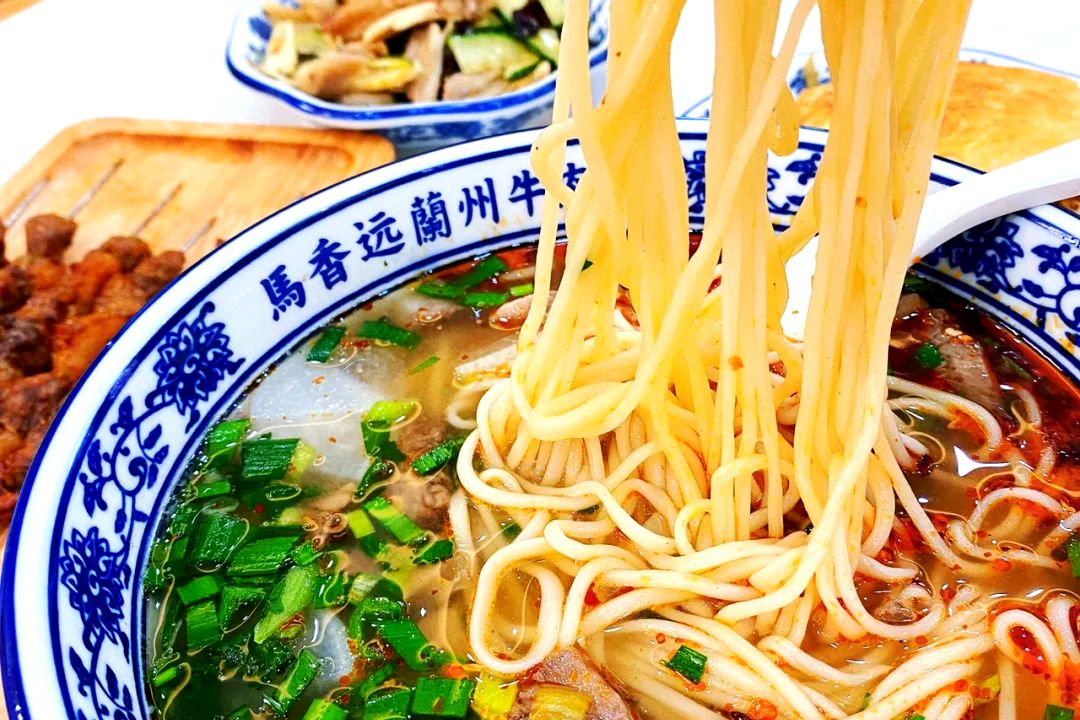
You lift a tangle of noodles with your chopsticks. These are peng hui noodles — wheat flour worked with alkaline ash water (蓬灰, péng huī), an old-school leavening agent made from burnt desert plants. The alkali gives the dough its yellow tint and that distinctive spring, the way the noodles resist your bite for exactly half a second before giving way. They don’t go soft in the soup. They don’t bloat. They wait for you.
Broth first. Press the spoon through the chili oil and lift. The liquid is amber-clear, the color of weak tea held up to sunlight. You blow once and sip. Beef. Warmth spreading down your chest. Star anise humming underneath. White pepper pricking the back of your throat. A sweetness that’s not sugar — it’s marrow, extracted over hours of low simmering. The chili oil (辣椒油, làjiāo yóu) is not here to hurt you. It’s here to perfume. The oil carries toasted sesame, crushed red pepper, and a whisper of Sichuan peppercorn that registers as warmth, not electricity. Lanzhou is not Chengdu. The heat doesn’t attack. It settles.
Then the beef. Sliced so thin it’s translucent, poached separately and laid across the top. Lean shank, no gristle. It absorbs chili oil the way a cloth absorbs spilled water. You don’t chew it so much as you press it against the roof of your mouth and let it dismantle itself into strands.
I spent thirteen years at Microsoft, Google, and NVIDIA. I’ve debugged kernel panics that made more sense than this broth. The ingredients are simple. The result is not.
The Man Who Boiled Bones at 4am
In 1915, a Hui Muslim named Ma Baozi (马保子) started selling noodles from a cart on the streets of Lanzhou. His innovation was stupidly simple and completely revolutionary: he used a separate pot for the broth and the noodles, keeping the soup clear instead of cloudy with starch. He called it “hot pot noodles” (热锅子面). Workers paid a few fen and ate standing. Within a decade, Ma had a shop with a line out the door.
The Enemies of Lanzhou Beef Noodles
A bowl of these noodles outside the Yellow River basin is a gamble. Here’s what you’re up against.
The most common betrayal: 青海拉面 (Qinghai Lamian). Walk into any Chinese city, find a shop that says “Lanzhou Lamian” on the sign, and check the menu. If they serve dapanji (大盘鸡), lamb skewers, and five kinds of fried rice, you are not in a Lanzhou noodle shop. You are in a Qinghai Lamian restaurant. The Hui Muslim families from Hualong county in Qinghai province have opened tens of thousands of noodle shops across China under the Lanzhou name. Their broth is made differently — leaner, less aromatic, sometimes reinforced with MSG in a way Ma Baozi would have thrown a cleaver at. The noodle technique is the same. The broth is not. Lanzhou locals will tell you the difference in one slurp.
Then there’s instant noodle versions. If your Lanzhou Beef Noodles came with a foil lid you peeled back, you did not eat Lanzhou Beef Noodles.
And the mall food court version: pre-portioned noodle cakes dunked in broth concentrate, three sad beef slices, a cilantro sprig wilting from heat-lamp exposure. This is not food. This is a cry for help.
Real Lanzhou Beef Noodles has:
- Clear beef broth, simmered a minimum of four hours from shin bones, oxtail, and whole spices. Never cloudy. Never thickened. The clarity is the flex.
- Hand-pulled alkaline noodles, pulled to order, never pre-made. The dough rests for at least two hours before pulling. The peng hui alkaline water gives it color and chew.
- Chili oil that is fragrant first, hot second. Lanzhou chili oil uses coarsely crushed chilies steeped in rapeseed oil at low temperature with sesame, star anise, and cinnamon. It should perfume the bowl, not assassinate it.
- Beef shank, sliced paper-thin and laid across the top cold. It warms in the broth. If the beef sinks to the bottom, the slicer wasn’t paying attention.
- White radish (白萝卜, bái luóbo), sliced thin and poached in the broth until translucent. Sweetens as it cooks. Counterbalances the chili.
- The five colors, visible from across the shop — clear broth, white radish, red chili oil, green herbs, yellow noodles — or you send it back.
How to Eat It
Go in the morning. Not at noon, not at dinner. Lanzhou noodle shops start serving at 6am and the best ones sell out of broth by 2pm. The soup that’s been simmering since 4am tastes different at 7am than it does at 1pm — brighter, cleaner, the fat still suspended rather than separating. You want the 7am bowl.
Order ròu dàn shuāng fēi (肉蛋双飞) — “meat and egg double fly.” Extra beef plus a tea egg on the side, braised in soy and star anise, its shell cracked so the marinade seeps through and stains the white marbled brown. Peel it between bites. The yolk dissolves into the broth when you spoon it in.
Choose your noodle width. If you don’t specify, you’ll get èr xì (二细) by default — round, slightly thicker than spaghetti, the everyman’s choice. But try máo xì (毛细) once: noodles so thin they cook in fifteen seconds, so fine they dissolve on your tongue like wet silk. Or jiǔ yè (韭叶), flat and ribbon-like, the width of a chive leaf. Or dà kuān (大宽), the widest, a single noodle the size of a belt. Each width drinks the broth differently. Each has its adherents.
Slurp. This is not optional. You cannot eat hand-pulled noodles quietly. The slurp aerates the broth, carries the chili oil into your nasal cavity, cools the noodles as they enter. A silent noodle eater is a noodle eater who doesn’t understand the assignment.
Don’t leave broth in the bowl. I don’t care if you’re full. The last spoonful at the bottom — the one with the chili sediment and the dissolved beef fragments and the faint sweetness of radish that’s been steeping the whole meal — that’s the one worth getting out of bed for. My colleague’s mother, the one who scolded me about extra chili, put it this way: “The first ten spoonfuls are breakfast. The last one is proof.”
Cooked all the noodles? Try our Dan Dan Noodles feature for what happens when Sichuan gets its hands on wheat — same pull, different fire.
💬 Comments