Kung Pao Chicken: The Stir-Fry That Made Sichuan Famous
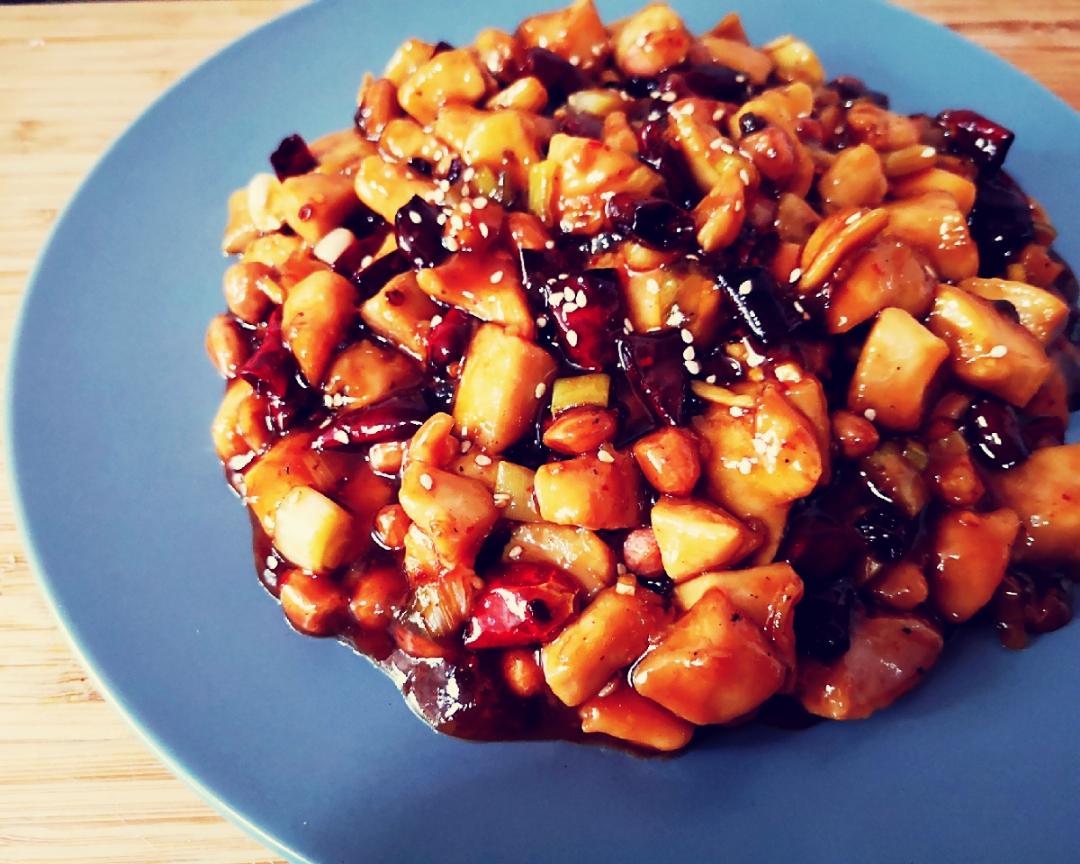
The wok hits the gas burner and the whole kitchen snaps to attention.
You’re twelve, standing in a Sichuan alleyway restaurant the size of a shipping container. Your father just ordered in rapid-fire dialect and the cook, a man with forearms like bridge cables, is already moving — oil shimmering, garlic hitting steel, then the dried chilies go in and the air turns into pepper spray. Everyone within ten meters starts coughing. Your mother pulls a tissue from her sleeve and hands it to you without looking away from her tea.
This is what Kung Pao Chicken (宫保鸡丁, gōngbǎo jīdīng) is supposed to feel like before you even taste it — a sensory ambush that starts with sound and smell and doesn’t let go until you’re scraping the last peanut from the bowl.
The Architecture of a Bite
I spent thirteen years writing code at Microsoft, Google, and NVIDIA before I quit to chase the 25th frame — the thing between the frames that makes them move. Kung Pao Chicken works the same way. The components are simple. The space between them does the work.
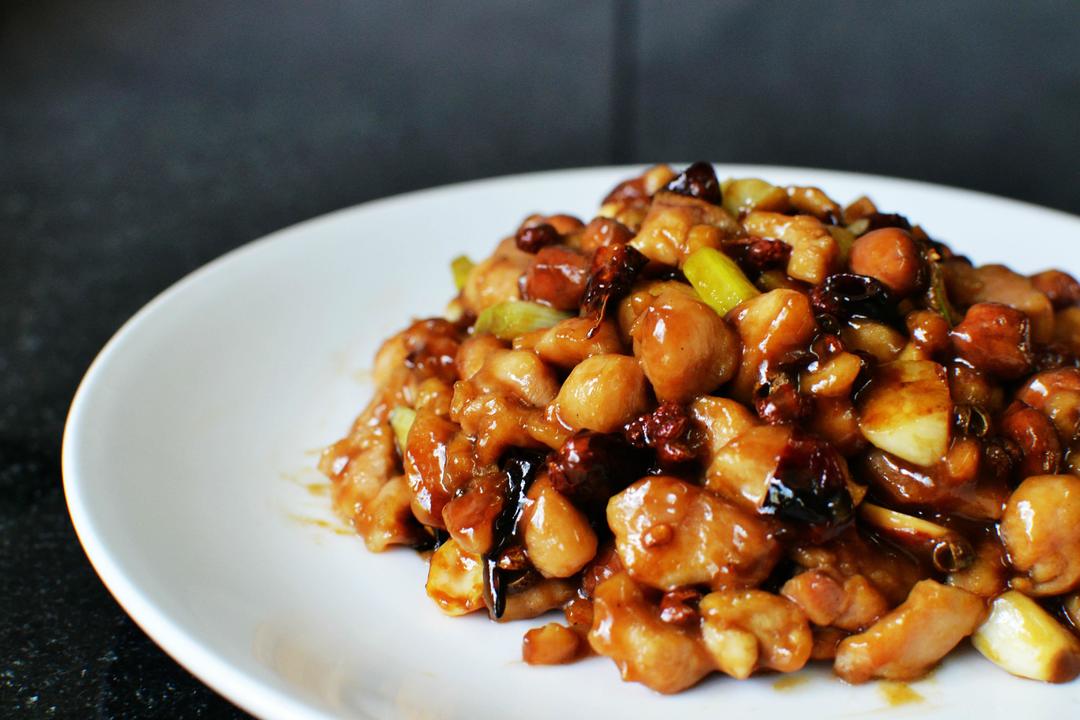
You spear a cube of chicken thigh with your chopsticks. It’s been velveted — egg white and cornstarch worked into the meat until it submits, then a brief pass through hot oil — so the exterior has a whisper of crispness while the inside stays absurdly tender. The sauce clings to every surface: dark soy, Chinkiang black vinegar, sugar, the nutty depth of sesame oil. You chew once and the peanuts arrive — roasted, still warm, giving you that earthy crack right when your tongue registers the heat.
And then the Sichuan peppercorns (花椒, huājiāo) kick in.
Not burn-you-alive heat. Something stranger. Your lips go electric, like someone pressed a 9-volt battery to your tongue. The sensation has a frequency — it vibrates around 50Hz, the same tingle you get from a poorly-grounded chassis. That’s málà (麻辣), the numbing-spicy double act unique to Sichuan cuisine. You’ll hate it for exactly three seconds. Then you’ll reach for another bite before you finish swallowing the first one.
The sound matters too. Peanuts crack under your molars. Scallions snap wetly. Chili segments shatter like brittle glass. A good plate of Kung Pao Chicken is loud.
The Governor’s Chicken
Kung Pao isn’t a cooking technique. It’s a title.
Ding Baozhen (丁宝桢) was Gōngbǎo (宫保) — “Palace Guardian,” the Qing dynasty equivalent of a cabinet minister with a sword. Serious man. Serious job. And one completely unserious obsession: a private chef who could make diced chicken with peanuts exactly the way he liked it.
When dinner guests asked what they were eating, someone said “Gōngbǎo’s chicken.” The name stuck. Ding died in 1886 and bequeathed China, entirely by accident, the stir-fry that would outlive every dynasty.
The Enemies of Kung Pao Chicken
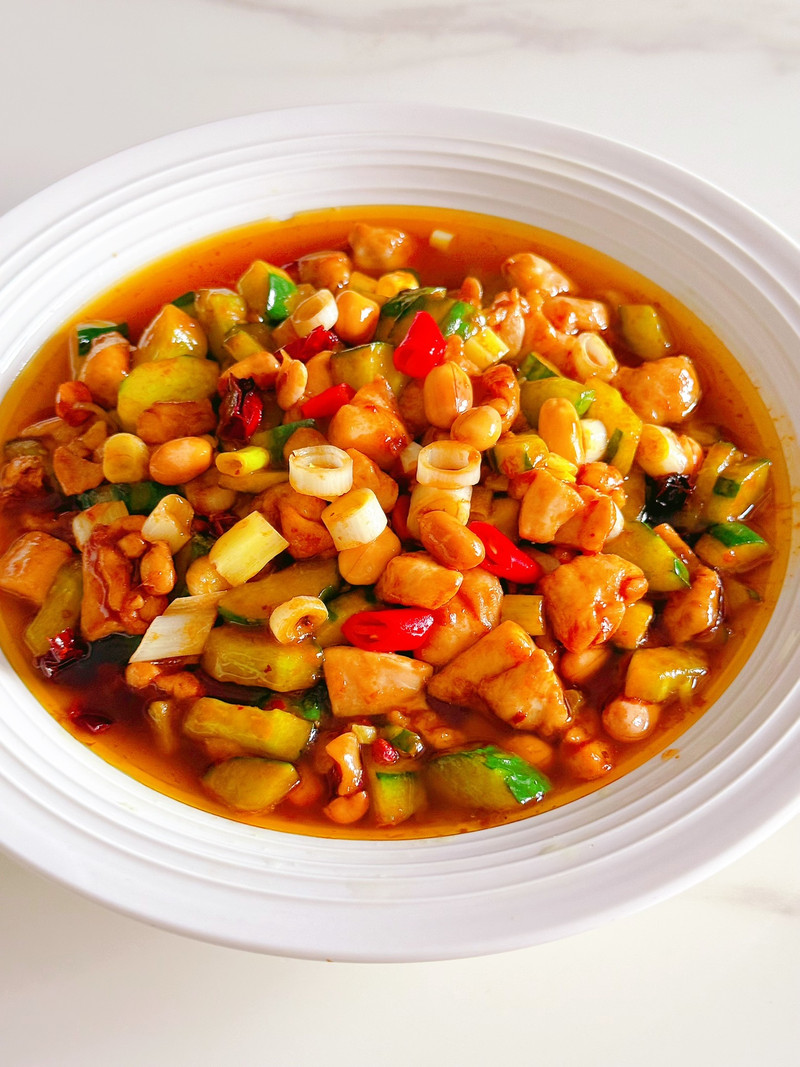
A lot of what calls itself Kung Pao Chicken outside China is a lie. Walk into a suburban Chinese-American restaurant and you’ll see it: bell peppers. Carrots diced into perfect orange cubes. Water chestnuts for “texture.” A brown gloop that tastes like corn syrup with a chili flake waved over it from a distance of three feet.
This is not Kung Pao Chicken. This is a hostage situation.
The bell peppers are the worst offender — they weep water into the wok, steaming the chicken instead of stir-frying it. The carrots add a sweetness curve that fights the vinegar. The water chestnuts are just filler, the edible equivalent of a loading spinner. And the sauce? If your Kung Pao Chicken sauce contains hoisin, ketchup, or orange juice, you are eating someone’s Pinterest board, not a Sichuan classic.
Real Kung Pao Chicken has exactly:
- Chicken thigh, diced small, never breast. Breast dries out the instant it hits the wok. Thigh has fat, and fat carries flavor across the málà threshold.
- Dried facing-heaven chilies (朝天椒, cháotiān jiāo), snipped into segments, seeds kept in. These are not for heat alone — they’re for fragrance. A well-fried chili segment tastes smoky and almost sweet before the burn arrives.
- Sichuan peppercorns, whole, toasted dry and added late so the aromatic oils don’t burn off. This is non-negotiable. No Sichuan peppercorns, no Kung Pao Chicken. You’re eating something else.
- Peanuts, fried or roasted, dropped in at the very end. Timing is everything. Add them too early and they go soft. Soft peanuts in Kung Pao Chicken are a tragedy.
- Scallions, just the white and pale-green parts, cut into thumb-length sections. They cook for maybe fifteen seconds.
- The sauce: soy sauce, Chinkiang black vinegar (镇江香醋, Zhènjiāng xiāngcù), sugar, Shaoxing wine (绍兴酒, Shàoxīng jiǔ), sesame oil, cornstarch slurry. That’s six ingredients. Seven if you count the water in the slurry. No hoisin. No oyster sauce. No ketchup. No nonsense.
The Guizhou Question
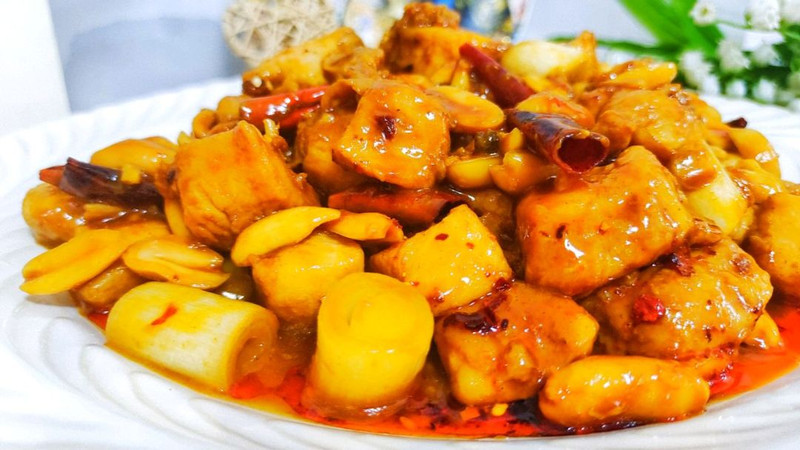
Ding Baozhen was born in Guizhou. His family kitchen made this dish with ciba chili paste — fermented, dark, a slower burn than Sichuan’s whole dried chilies. When Ding moved to Sichuan to govern, his chef swapped the paste for whole facing-heaven chilies, whole peppercorns, whole peanuts. The Sichuan version is what went global.
Two provinces claim it. The man himself probably never worried about either one — he just wanted his chicken.
How to Eat It
Over rice. Always over rice.
The sauce pools at the bottom of the bowl, soaking into the grains, turning them a deep caramel brown. Build every spoonful: a chunk of chicken, a peanut, a chili segment if you’re feeling dangerous, and enough rice to carry the sauce.
Eat the chilies. Nobody told you this, so I’m telling you now. They’ve been fried in hot oil — the raw capsaicin edge rounds off, the seeds toast, the flesh crisps. They taste like smoke and caramel and regret. They’re the reason you’ll wake up tomorrow thinking about this dish.
Don’t save leftovers. Kung Pao Chicken does not improve overnight. The peanuts go soft. The sauce separates. The málà fades. This dish demands to be eaten in the fifteen-minute window between “too hot to touch” and “why didn’t I order more.”
My father used to say the best meals are the ones where you’re already planning your next visit before you’ve paid the bill. Kung Pao Chicken is that meal. Every time.
Want to cook this? Here’s our step-by-step Kung Pao Chicken recipe .
💬 Comments