How to Cook Kung Pao Chicken: The Real Way
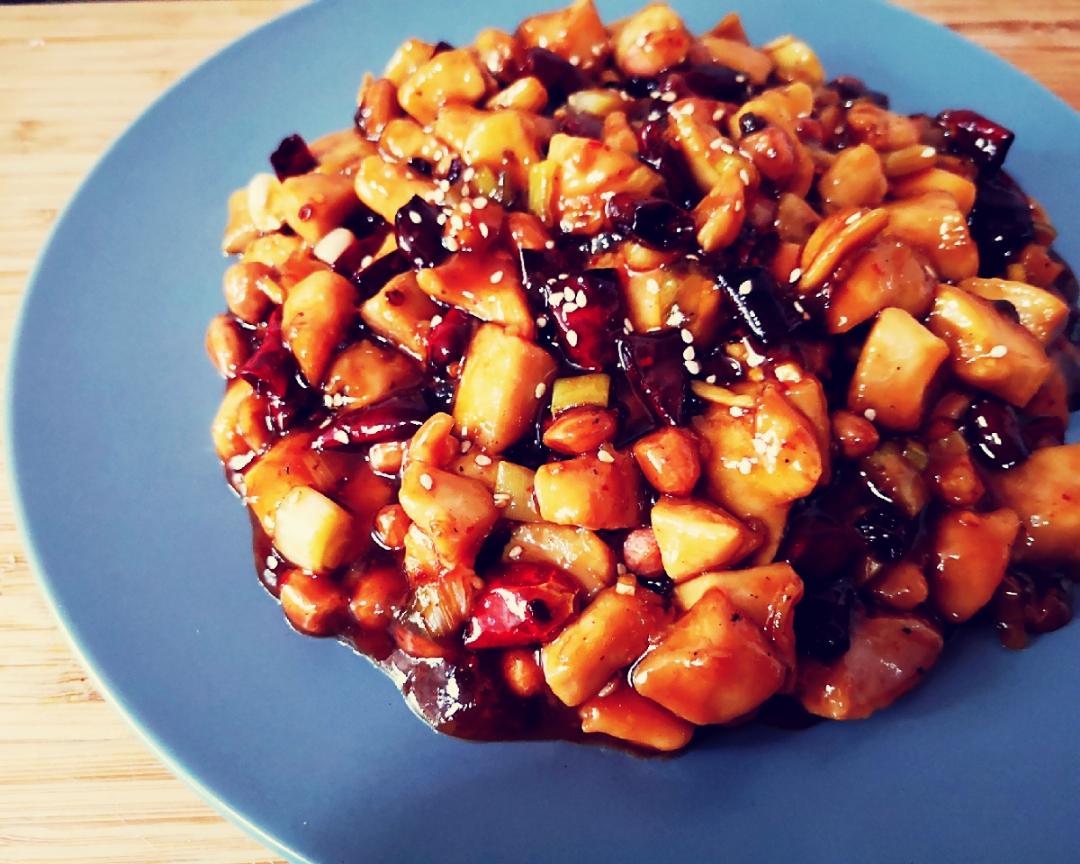
Editor’s Note: Since launching this column, we’ve heard one request more than any other: the stories are great, but how do we actually cook these? Today we’re fixing that — six classic recipes, dropping at once. Here’s how to make 宫保鸡丁的正宗做法。 Read the story behind this dish: Kung Pao Chicken: The Stir-Fry That Made Sichuan Famous
If you’ve only ever eaten Kung Pao Chicken from a fluorescent-lit takeout box — the one with bell peppers, diced carrots, and a sauce that tastes vaguely of ketchup — forget everything you know. Real 宫保鸡丁 is an entirely different animal: a lightning-fast stir-fry where chicken, peanuts, chilies, and Sichuan peppercorns collide in a sweet-savory-numbing sauce that has nothing to hide behind. This recipe is the one that Sichuan grandmothers would recognize. It takes about 30 minutes start to finish, demands a hot wok and sharp knife, and will ruin takeout Kung Pao for you permanently.
Ingredients
For 2–3 servings, served over rice.
The Chicken & Marinade
- 300g boneless chicken thigh (about 2 large thighs) — breast will dry out; thigh has the fat that carries the málà
- 1 egg white
- 2 tsp cornstarch
- 1 tsp Shaoxing wine (绍兴酒)
- ¼ tsp salt
- 1 tsp light soy sauce
The Sauce
- 2 tbsp light soy sauce
- 1½ tbsp Chinkiang black vinegar (镇江香醋) — substitute: half rice vinegar + half balsamic in a pinch
- 1 tbsp dark soy sauce
- 2 tsp sugar
- 1 tsp cornstarch mixed with 2 tbsp water (slurry)
- 1 tsp sesame oil
The Aromatics & Crunch
- 8–12 dried facing-heaven chilies (朝天椒), snipped into 2cm segments, seeds kept
- 1½ tsp whole Sichuan peppercorns (花椒)
- 3 scallions, white and pale-green parts only, cut into 2cm sections
- 3 cloves garlic, thinly sliced
- 1 thumb-sized piece of ginger (about 10g), thinly sliced
- ⅓ cup roasted unsalted peanuts
- 3 tbsp neutral oil (peanut or canola), for stir-frying
Substitution notes: If you can’t find facing-heaven chilies, _ árbol chilies are the closest Western equivalent — fruity and medium-hot. Avoid Thai bird’s eye chilies, which are more heat than fragrance. For Sichuan peppercorns, there is no substitute. If you don’t have them, you’re making a different dish.
Prep: 15 Minutes of Knife Work That Changes Everything
1. Cut the chicken
Slice each thigh into 1.5 cm strips, then cut across into cubes. Uniformity matters — if pieces are different sizes, some will overcook while others stay raw. Dicing small (smaller than you think) gives you that perfect ratio of crispy exterior to tender interior.
2. Marinate
In a bowl, combine chicken cubes, egg white, cornstarch, Shaoxing wine, salt, and light soy. Massage with your hand for 60 seconds — you’re working the egg white and cornstarch into the meat fibers. This is velveting (上浆), the technique that gives Chinese stir-fried meat its silky texture. Cover and set aside for 10–15 minutes while you prep everything else.
3. Mix the sauce
Combine all sauce ingredients except the cornstarch slurry in a small bowl. Stir to dissolve the sugar. Have the slurry ready in a separate small dish. Pre-mixing the sauce is non-negotiable — once the wok is hot, there’s no time to measure.
4. Arrange your mise en place
Line up everything next to your wok in this order: oil → chicken → garlic/ginger → chilies & Sichuan peppercorns → scallions → sauce → slurry → peanuts. Stir-frying happens in seconds, not minutes. You’re not cooking — you’re assembling at high speed.
Step-by-Step: The Stir-Fry
Step 1: Sear the chicken (1–2 minutes)
Heat your wok over high heat until it smokes lightly. Add 2 tbsp oil and swirl to coat. Add the marinated chicken in a single layer. Do not touch it for 30 seconds — let a crust form. Then stir-fry vigorously, breaking up any clumps, until the outside is opaque and just barely cooked through (still slightly pink inside is fine; it’ll finish in the sauce). Remove to a plate. Wipe the wok clean.
Why this matters: Velveting works because the cornstarch-egg white coating seals against hot oil instantly. If you crowd the wok or stir too early, the temperature drops and the chicken steams instead of searing.
Step 2: Toast the aromatics (20 seconds)
Add the remaining 1 tbsp oil to the wok over medium heat. Add garlic and ginger. Stir for 10 seconds until fragrant — they should sizzle and release their scent but not brown. Browning means bitterness.
Step 3: Fry the chilies and Sichuan peppercorns (30 seconds)
Add the dried chili segments and whole Sichuan peppercorns. Stir constantly. The chilies will darken rapidly to a deep crimson, and the peppercorns will release their numbing, citrusy fragrance. If the chilies start turning black, you’re too hot — lift the wok off the flame. You want them toasted, not burnt.
Why whole peppercorns: Sichuan peppercorns contain volatile aromatic oils that vanish if ground in advance or cooked too long. Whole peppercorns added at this stage bloom in the oil and release their magic slowly throughout the dish.
Step 4: Return the chicken (30 seconds)
Crank the heat back to high. Return the chicken to the wok. Toss everything together for 30 seconds so the chicken picks up the chili-peppercorn oil.
Step 5: Sauce and slurry (30 seconds)
Pour the pre-mixed sauce around the sides of the wok — not directly onto the chicken — so it hits hot metal and caramelizes slightly before coating the meat. Toss to combine. Then pour in the cornstarch slurry while stirring continuously. The sauce will go from thin and liquid to glossy and clinging in about 10 seconds. Keep moving; cornstarch-thickened sauces can break if they sit still.
Why around the sides: This is the Chinese technique of 锅边淋入 (pouring along the wok edge). It flash-cooks the soy sauce, developing a deeper, slightly smoky flavor before it mixes in.
Step 6: Scallions and peanuts (15 seconds)
Add the scallion sections and peanuts. Toss 3–4 times — literally 10–15 seconds. The scallions should still be bright green and snappy. The peanuts should stay crisp. Cut the heat immediately.
Soggy peanuts are the #1 mistake. They go in last and the wok comes off the heat almost immediately afterward.
Step 7: Plate immediately
Transfer to a serving dish. Drizzle with an extra ½ tsp of sesame oil if you’re feeling luxurious. Serve over steamed white rice, with the sauce pooling around the edges.
Key Pitfalls (Read Before You Cook)
- Using chicken breast. Breast has no fat and no forgiveness. It dries out the instant it hits heat. Thigh is mandatory.
- Adding bell peppers, carrots, or water chestnuts. These are not ingredients in Sichuan Kung Pao Chicken. They’re American-Chinese filler that releases water into the wok and dilutes the sauce. Leave them out.
- Leaving out Sichuan peppercorns. Without 花椒, you lose the numbing málà sensation — the whole point of the dish. This isn’t optional.
- Adding peanuts too early. Soft peanuts are a textural tragedy. They go in at the final moment.
- Overcooking the sauce. Cornstarch-thickened sauces break if left on heat too long. Once it glosses up, you’re on the clock.
- Slow prep. Stir-frying is all speed. If you’re measuring soy sauce while the garlic burns, you’ve already lost. Mise en place is everything.
Serving Suggestions
Serve over steamed jasmine rice — the sauce soaks into the grains and turns them glossy brown. For a full Sichuan meal, pair with:
- Cold cucumber salad (拍黄瓜): smashed cucumbers with garlic, vinegar, and chili oil — a cool counterpoint to the málà heat.
- Egg drop soup (蛋花汤): simple and quick, balances the richness.
- Stir-fried greens (炒青菜): gai lan or bok choy with a whisper of garlic.
And yes — eat the chilies. They’ve been fried in oil, their raw heat rounded off into something smoky and almost sweet. They’re the surprise reward that keeps you reaching for another bite.
This recipe is the practical companion to our feature article: Kung Pao Chicken: The Stir-Fry That Made Sichuan Famous . Read it for the story of Ding Baozhen, the Qing dynasty official whose private chef accidentally created a global icon.
💬 Comments