Kou Shui Ji: The Sichuan Chicken Dish With the Rudest Name in Chinese Food
I was twenty-two, in Chengdu for a hackathon, and my teammate — a local kid who wrote kernel drivers the way most people breathe, dragged me to a restaurant where the menu was hand-painted on the wall. He ordered seven dishes without asking me. The fifth one arrived and I stared at it.
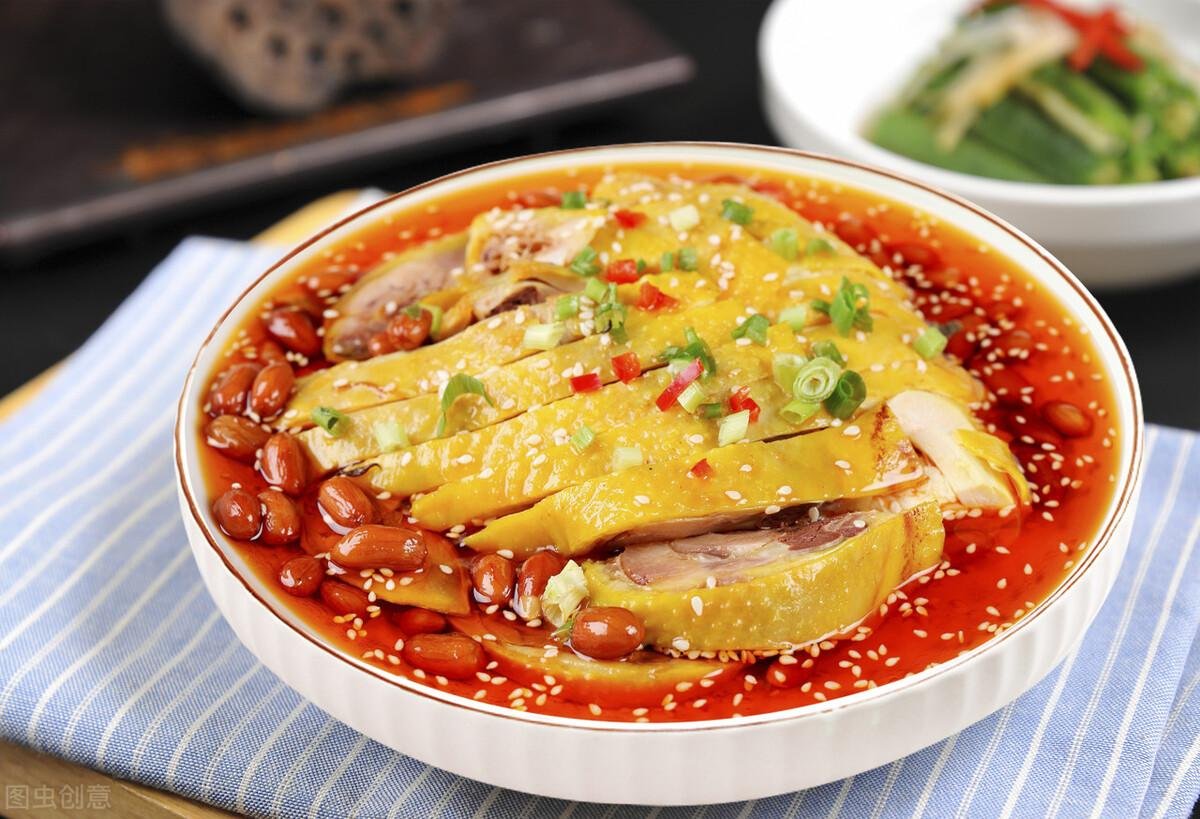
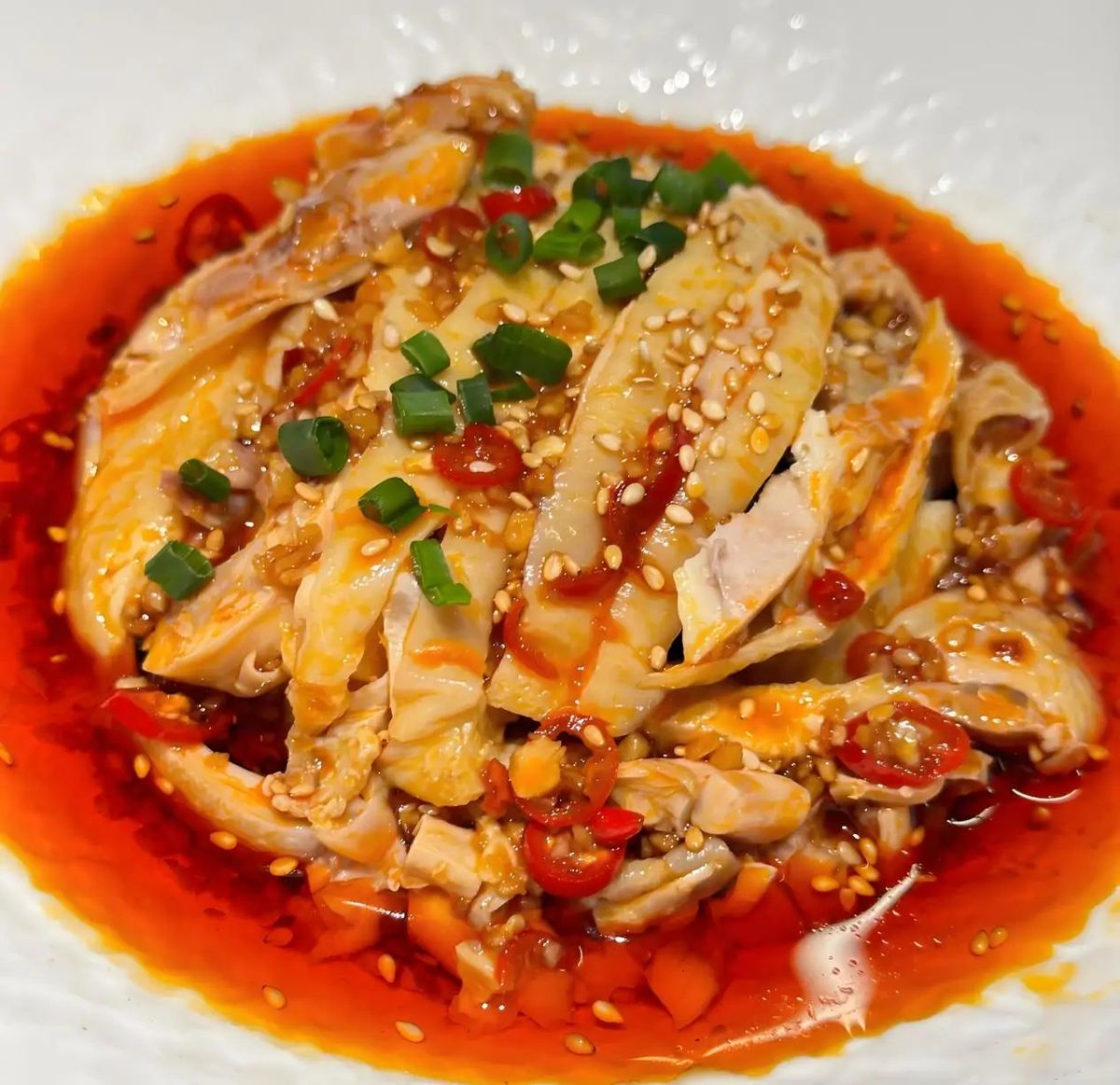
A whole chicken leg, chopped crosswise into slices, bone and skin intact, arranged on a shallow white plate. The plate held about a centimeter of chili oil — a red so deep it looked like it was generating its own light. Sesame seeds floated on the surface like a constellation. Chopped scallions scattered across. And the smell: roasted chili oil, toasted Sichuan peppercorn, aged vinegar, all hitting at once like a chord in a minor key. The dish was ice cold. But the oil shimmered like it was still on the burner.
"That's 口水鸡," he said. "Saliva chicken."
I stared.
"No, really. Mouthwatering chicken. It's so good your mouth waters before it's even on the table."
I picked up a piece. The skin slipped just slightly against the meat. Cold but yielding. I bit down. The chicken was tender in that specific way only poached-then-shocked chicken gets — firm enough to register, soft enough to dissolve. Then the sauce hit. Chili first, clean and sharp. Then the Sichuan peppercorn, that electric buzz spreading across my tongue. Then vinegar cutting through, sesame smoothing everything out, a ghost of rock sugar dissolved into oil.
I didn't speak for about thirty seconds. My teammate watched with the expression of someone who knew exactly what was happening.
Kou Shui Ji (口水鸡, kǒu shuǐ jī) is the least polite dish in Sichuan cuisine. It arrives cold. It delivers fire. It has the rudest name in Chinese food. And it might be the best chicken I've ever eaten.
The Architecture of a Bite
I've debugged distributed systems at three tech giants over thirteen years. The best architectures are the ones where every component does one job and nothing else. Kou Shui Ji has seven. No overlap. Every single one earns its place.
The chicken: whole leg, poached in water with ginger, scallion, and Shaoxing wine — the holy trinity of Chinese meat prep. Then plunged into ice water. The thermal shock stops the cooking dead. The meat stays tender. The skin tightens into gelatin that's silky, not rubbery. You cannot skip the skin. The skin is where the texture lives.
The temperature: cold. Refrigerator cold. Not room temperature. This is the trick. The chicken is cold. The chili oil reads as hot, spicy hot, and the temperature contrast makes every bite feel like two dishes fighting for control of your mouth.
The chili oil: homemade, always. Dried heaven-facing chilies (朝天椒, cháotiān jiāo) bloomed in rapeseed oil at exactly the right temperature. Too hot and they scorch. Too cool and the oil stays flat — all heat, no depth. Factory-bottled chili oil can't fake this because it was made six months ago in a facility that has never seen this dish.
The Sichuan peppercorn: ground fresh. Pre-ground peppercorn loses its numbing power within weeks. The active compound degrades. Fresh-ground hits your tongue like a nine-volt battery. Stale hits like nothing.
The sesame paste: Chinese roasted sesame paste (芝麻酱, zhīmajiàng), not tahini. Darker, nuttier, more savory. It thickens the sauce and rounds out the edges. Without it, the sauce is just angry oil.
The vinegar: black Chinkiang vinegar (镇江香醋, Zhènjiāng xiāngcù). Aged, complex, faintly sweet. Cuts through the fat. Wakes up everything else.
The garnish: toasted sesame seeds, scallions, sometimes crushed peanuts. Not decoration. Texture. The seeds pop. The scallions stay fresh. The peanuts crunch against slick oil and silky meat.
A good plate of Kou Shui Ji makes your mouth feel like it's been temporarily rewired.
The Origin
A street vendor in Chengdu started selling this in the early twentieth century. Nobody agrees on exactly who. The name came from customers: the smell alone made their mouths water. 口水 literally means "saliva." It's the least elegant name in Chinese cuisine. It's also the most honest.
The Enemies of Kou Shui Ji
The Warm Version. If your Kou Shui Ji arrives warm, send it back. The contrast between cold meat and chili oil is the entire architecture. Without it, you're eating spicy chicken salad in a puddle of lukewarm regret.
The Bottled Chili Oil Version. Some restaurants use commercial chili oil — the stuff in jars with a cartoon chef on the label. One-dimensional: heat and nothing else. No smokiness. No depth. The sauce needs at least five ingredients working together. If it looks like red water with chili flakes floating on top, leave.
The Boneless, Skinless Version. I've seen "healthy" Kou Shui Ji made with chicken breast, skin removed, no bones. This is not health food. This is Sichuan. The skin delivers the gelatin. The bones keep the meat moist during poaching. Boneless skinless Kou Shui Ji is a salad with chili oil. Call it that.
The No-Numbing Version. If your tongue doesn't buzz, the dish is missing Sichuan peppercorn. Some places omit it because they think foreigners can't handle the sensation. That's cowardice dressed as hospitality.
The right Kou Shui Ji: cold chicken on the bone, skin intact, submerged in a pool of homemade chili oil the color of brake lights. Fresh-ground Sichuan peppercorn buzzing on your tongue. Sesame paste adding body. Black vinegar adding bite. Scallions and sesame seeds on top. No rice. No vegetables. This dish stands alone.
How to Eat It
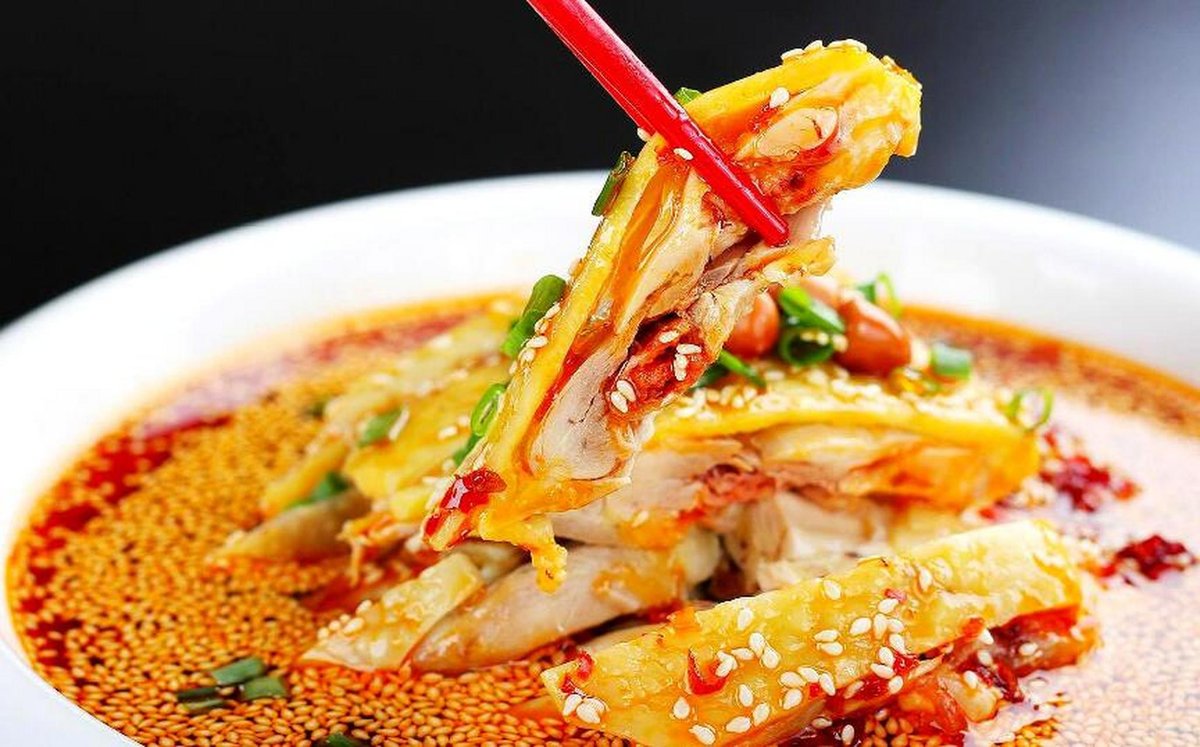
You eat Kou Shui Ji with chopsticks and zero dignity. Pick up a piece — bone and all — drag it through the oil at the bottom of the plate, and put the whole thing in your mouth. The meat comes off the bone with a gentle pull. Don't fight it. Let the numbing build. Let the heat stack.
I once watched a table of German tourists eat this with forks, carefully separating meat from skin, dabbing oil onto napkins. They said it was "quite spicy." They missed every point. The oil IS the dish. The skin IS the dish. The mess IS the dish.
My grandmother never made Kou Shui Ji — she was Shanghai through and through, Sichuan food was a foreign country to her. But she had one rule, delivered in Shanghainese over whatever she'd cooked that night: 伐要怕龌龊 — don't be afraid of the mess. The best food demands your hands, your attention, your willingness to look undignified in public. Kou Shui Ji is the proof.
I'll save the home-cooking breakdown for another post. Getting the chili oil right — blooming those dried chilies at exactly the right temperature without scorching them — that deserves its own deep dive. Recipe coming soon.
💬 Comments