Kou Shui Ji: The Chicken You Serve Cold
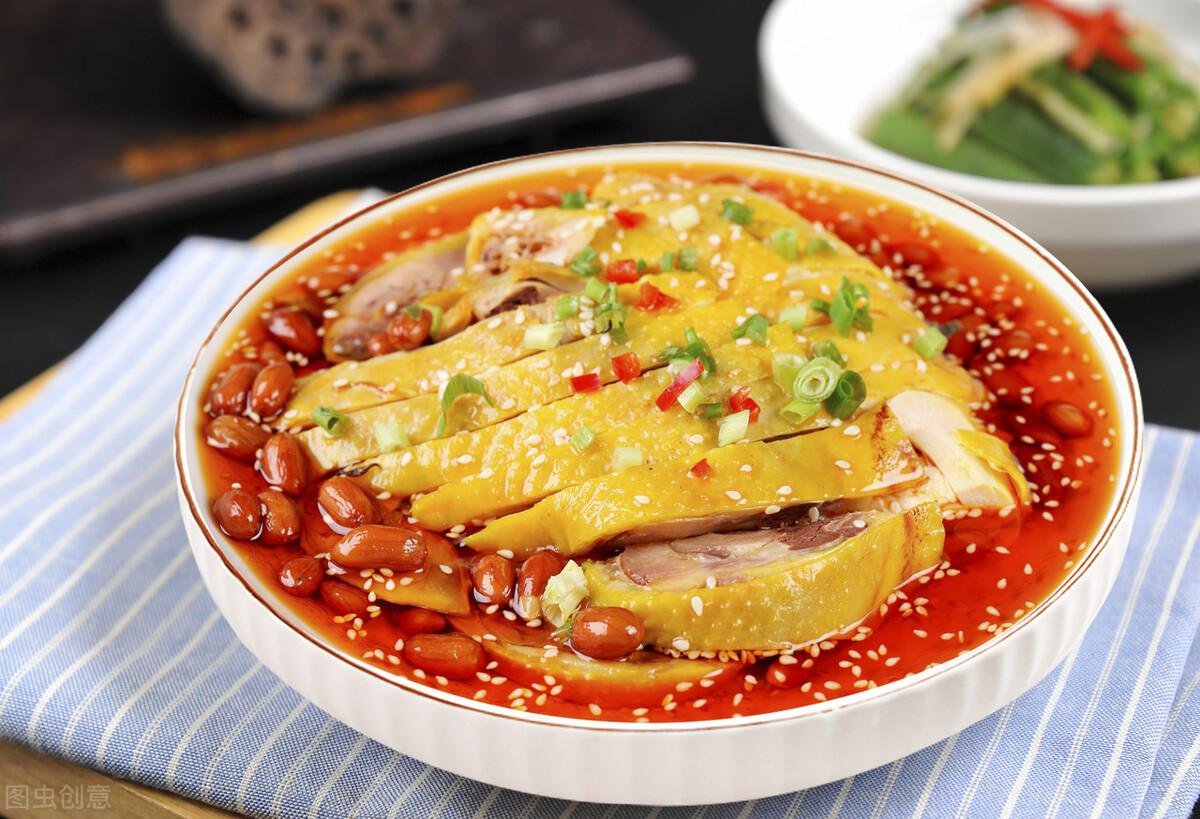
Editor’s Note: This is the kitchen companion to Kou Shui Ji: The Sichuan Chicken Dish With the Rudest Name in Chinese Food. Quantities, temperatures and the failure points are below. Read the technique once before you shop.
Why the Chicken Is Poached Gently, Chilled Hard, and Sliced Cold
Kou shui ji translates as mouth-watering chicken, or more literally saliva-inducing chicken, and the name has nothing to do with heat. It describes the moment the bowl lands on the table: chilli oil, garlic, black vinegar and ground Sichuan pepper, all of them volatile, all of them rising at once. The chilli arrives later, on the tongue. What makes you salivate is the smell.
The cooking, by contrast, is quiet. Bone-in legs go into water held at 85 to 90°C for 20 to 22 minutes, not a simmer and not a rolling boil. At a full boil the muscle fibres contract hard and squeeze out the water they hold, and the meat turns stringy even though it is sitting in liquid. Held just under the boil, the collagen in the skin softens slowly and the meat stays loose. Watch for a thin column of small bubbles rising from one or two spots, not a churn across the whole surface.
The ice bath is a texture step, not a cooling step. Ten minutes in iced water stops the carryover cooking dead and contracts the skin against the meat underneath, so it turns slick and slightly springy rather than flabby. Skip it and the skin slides and tears when you chop.
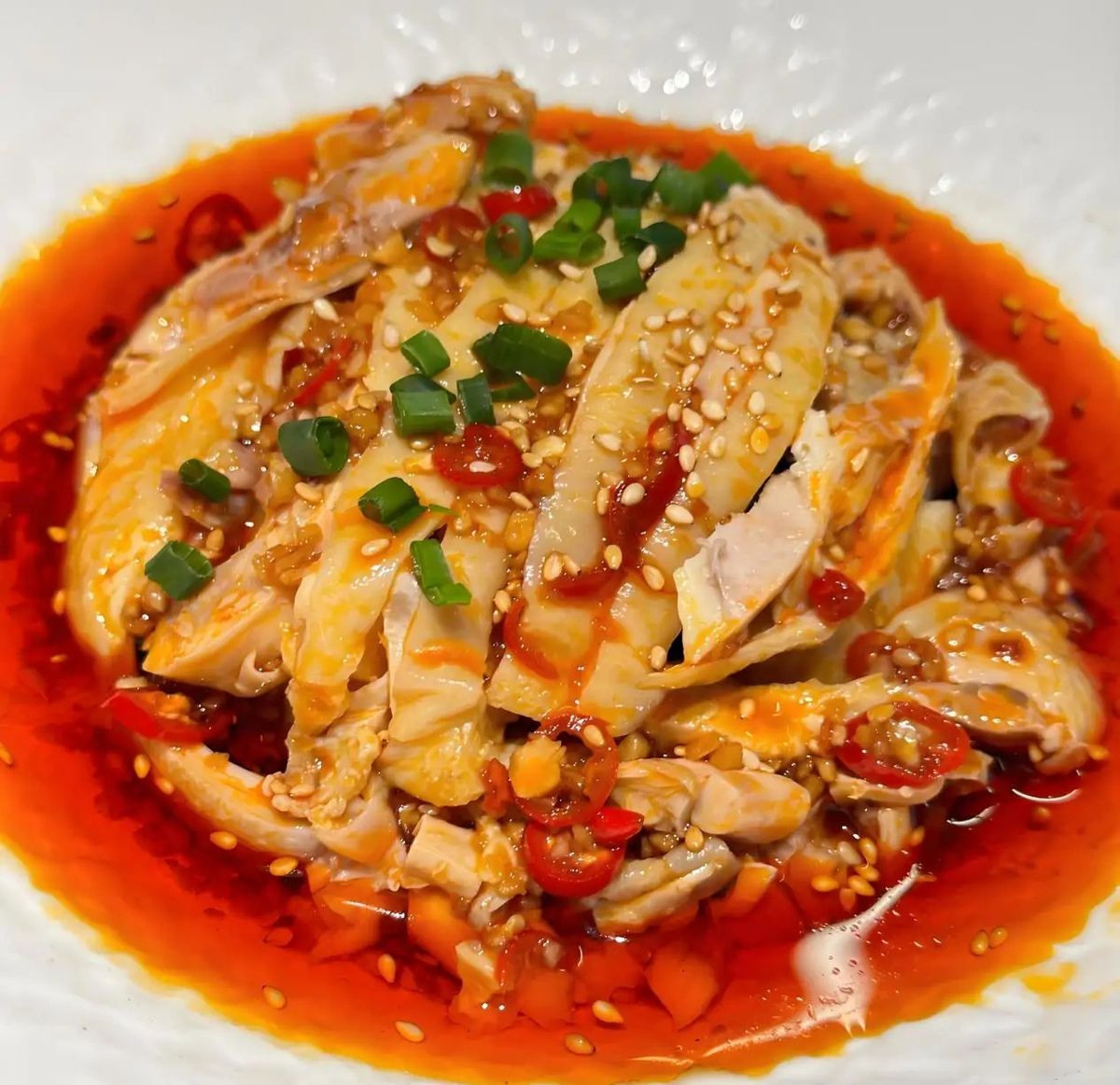
Then 30 minutes in the fridge. Cold meat slices clean; warm meat smears, the fibres tear instead of separating, the skin drags, and every piece looks ragged. Half an hour takes a leg down to fridge temperature through, which also means the sauce clings. Slice cold, then let the slices stand five minutes before dressing.
The sauce is built on chilli oil, the red oil with sediment at the bottom of the jar. It is too thick to dress with straight, so 2 tbsp of the hot poaching liquid go in and get whisked through. That loosens it to a dressing consistency and carries the chicken’s own flavour back into the sauce. Why this matters: the poaching liquid is the only place the chicken’s flavour exists outside the meat, so pouring it down the sink throws away half the dish.
Assembly happens at the last minute. Peanuts soften in 20 minutes, scallions wilt in 15, and the oil begins to separate as the sauce stands. Dress the chicken no more than 10 minutes before it goes to the table, and scatter the toppings seconds before. Why this matters: the gap between dressing and eating is short by design, and it is a hard limit rather than a suggestion.
Ingredients
For the chicken
- 2 bone-in chicken legs (about 700g total), skin on, trimmed of excess fat
- 1.2 litres water, enough to cover the legs by 3cm
- 40g ginger, sliced 3mm thick
- 3 spring onions (45g), cut into 5cm lengths
- 1 tbsp (15ml) Shaoxing wine
- 1.5 tsp (9g) fine salt, for the poaching water
For the sauce
- 3 tbsp (45ml) Sichuan chilli oil, sediment included
- 1 tbsp (15ml) light soy sauce
- 1 tbsp (15ml) Chinkiang black vinegar
- 2 tsp (8g) caster sugar
- 1 tbsp (15ml) garlic water (2 cloves crushed into 2 tbsp water, rested 10 minutes, strained)
- 1 tsp (2g) ground Sichuan pepper, freshly ground
- 1 tbsp (15g) sesame paste, optional
- 2 tbsp (30ml) hot poaching liquid, to loosen
To finish
- 1 tbsp (8g) toasted sesame seeds
- 2 tbsp (20g) roasted peanuts, crushed to coarse crumbs
- 2 spring onions (20g), green parts only, sliced thin on the diagonal
- 15g coriander leaves, picked, optional
Substitution notes: If bone-in legs are not available, a whole 1kg chicken works with the same method and needs 26 to 28 minutes; boneless thighs do not, because they overcook in the time it takes the skin to set, so poach them for 12 minutes and accept a softer skin. Chinkiang vinegar can be replaced with 2 tsp of balsamic loosened with 1 tsp of water, which is darker and sweeter and slightly less sharp. Sesame paste is genuinely optional: it smooths the sauce and mutes the vinegar, and a version without it tastes brighter and thinner, which some tables prefer.
Prep: Twenty Minutes, Most of It Waiting for Water
1. Temper the legs and trim the skin (20 minutes)
Take the legs out of the fridge 20 minutes before cooking. A fridge-cold leg drops the pot temperature by several degrees and takes four or five minutes to recover, and that is exactly the window in which the outside overcooks. Pat the skin dry and trim any thick flap of fat at the top of the thigh, leaving the rest of the skin intact.
2. Make the garlic water and crush the peanuts (5 minutes)
Crush two cloves with the flat of a knife, put them in 2 tbsp of cold water and leave for 10 minutes, then strain and discard the pulp. Steeping gives you the sweet part of the garlic without the harsh burn of raw pulp. Crush the peanuts with the base of a jar, leaving some pieces the size of a grain of rice and some finer.
3. Build the sauce base (3 minutes)
Whisk the chilli oil, soy, vinegar, sugar, garlic water and ground pepper in a bowl and taste before the chicken goes in. It should be sharp, salty, faintly sweet and numbing at the back of the mouth. If you are using sesame paste, warm it with a spoonful of the sauce first, or it seizes into lumps.
Step by Step: Twenty-Two Minutes of Heat, Ten of Ice
Step 1: Poach at 85 to 90°C (20 to 22 minutes)
Bring the water, ginger, spring onion, wine and salt to a full boil in a pot just wide enough for the legs in one layer. Lower them in skin side up and wait for the water to come back to a bare tremble, then turn the heat down until there are only a few small bubbles at the edge of the pot. If the legs bob and the water rolls, lift the pot off the heat for a minute. Hold for 20 minutes for thin legs, 22 for thick.
Step 2: Ice bath (10 minutes)
Fill a bowl with water and a generous handful of ice. Lift the legs straight from the pot into it, skin side up so it does not press against the bowl, and leave for a full 10 minutes until the meat is cold at the thickest part. Add more ice at the five-minute mark if it has melted.
Step 3: Chill and rest (30 minutes)
Drain, pat the skin dry and lay the legs on a plate, uncovered, in the fridge for 30 minutes. Uncovered matters: a covered plate traps steam and softens the skin you just set. Strain and reserve 2 tbsp of the poaching liquid now, and keep the rest for soup.
Step 4: Slice cold (3 minutes)
Cut down through the joint to separate thigh from drumstick, then cut each piece across the grain into 1.5cm slices, pressing firmly in one motion rather than sawing, which drags the skin off. Lay the slices in a low mound on the serving plate, skin side out.
Step 5: Dress at the table (2 minutes)
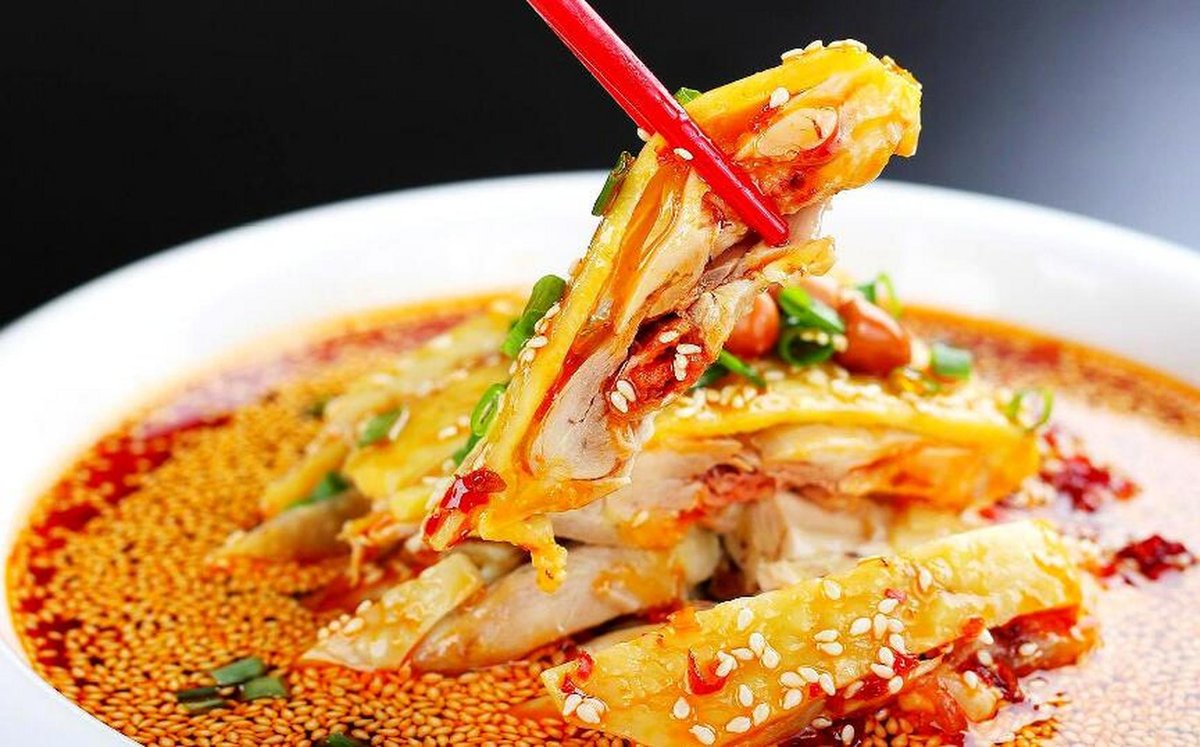
Whisk the 2 tbsp of warm poaching liquid into the sauce base and taste once more. Spoon it over the chicken so every slice is coated but not drowned, then scatter sesame, peanuts, scallion greens and coriander. Serve at once, with the remaining sauce in a small bowl.
Key Pitfalls
The meat came out stringy and dry. The water boiled. At 100°C the fibres contract and push out their water, and no sauce puts it back. Hold the pot at 85 to 90°C, where the surface only trembles, and pull it off the heat whenever it starts to roll.
The skin tore and slid off when you chopped. The ice bath was skipped or cut short, or the chicken was sliced warm. Ten full minutes in iced water sets the skin against the meat, and 30 minutes in the fridge makes it slice clean.
The sauce tasted greasy and flat. No poaching liquid went in, so the oil had nothing to carry flavour. Whisk 2 tbsp of the hot liquid into the chilli oil before dressing, and taste the sauce at room temperature rather than cold.
The peanuts went soft before the dish reached the table. It was assembled too early. Peanuts take on moisture within 20 minutes, so crush and scatter them at the last moment and keep the chicken undressed until 10 minutes before serving.
The garlic tasted raw and harsh. The garlic water was made minutes before use, or the pulp went straight into the sauce. Crushed garlic needs 10 minutes in water for the sharp sulphur compounds to settle, and the pulp should be strained out.
The chicken was still pink at the bone. A faint pink line against the bone is normal in young birds, but pink meat that springs back wet is not. Check the thickest part of the thigh: the juices should run clear and the meat should read 72°C on a probe.
The dish was too hot for half the table. Chilli oil and ground pepper vary enormously in strength. Start with 2 tbsp of oil and 1/2 tsp of pepper, taste, and pass extra at the table rather than committing the whole batch.
Serving Suggestions
Serve this as the first cold dish of a Sichuan meal, before anything hot arrives, with plain rice and a plate of smashed cucumber dressed with vinegar and salt. The sauce is heavy on oil, and the cucumber cuts through it.
For drink, cold lager or lightly sweetened tea, something with a little sugar to meet the vinegar. Leftovers keep two days in the fridge if stored undressed and sliced to order; once the sauce is on, the texture goes soft within hours and the peanuts are finished.
This is the companion recipe to Kou Shui Ji: The Sichuan Chicken Dish With the Rudest Name in Chinese Food. Read the story, then cook the dish.
💬 Comments