Jiaozi: The Dumpling That Takes a Village to Make and Vanishes in One Bite
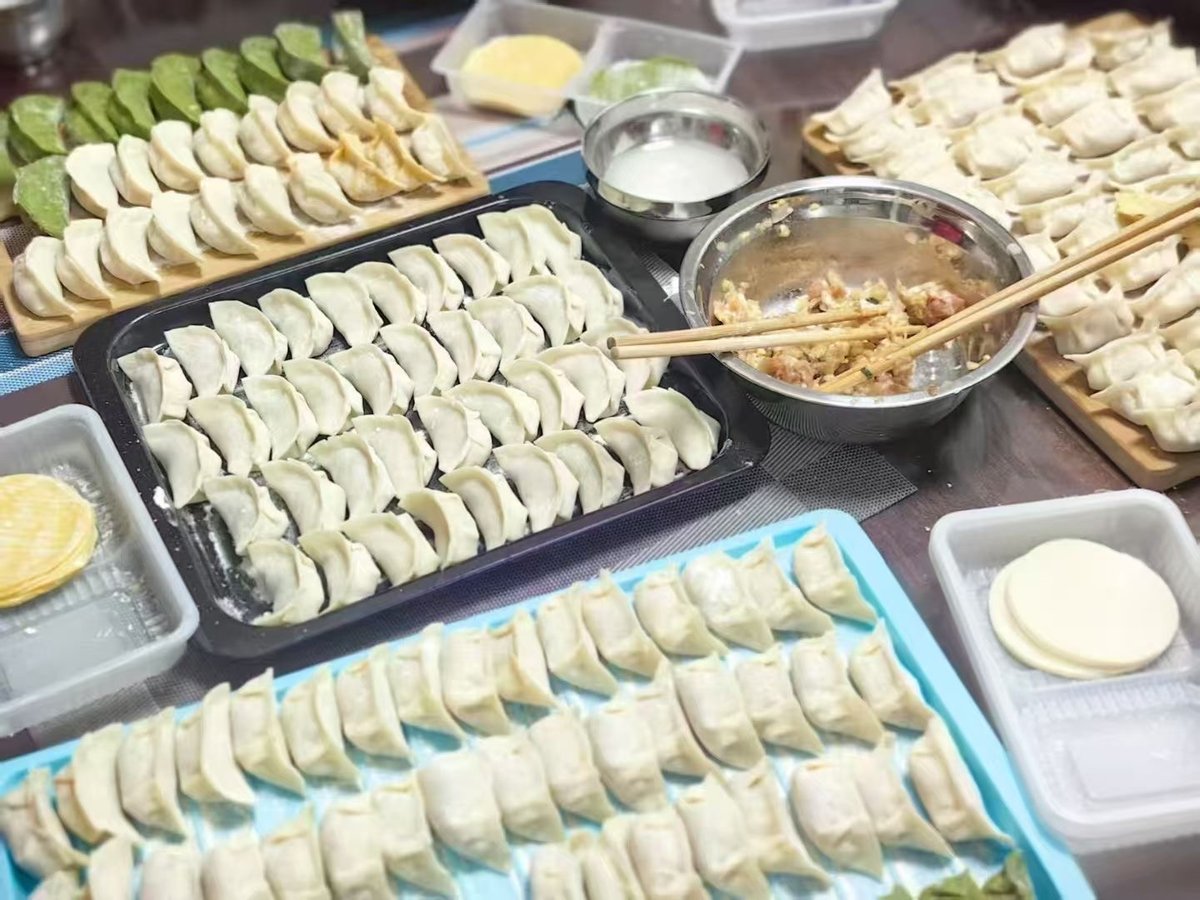
I was eight years old, standing on a wooden stool in my grandmother's Shanghai kitchen, my hands covered in flour up to the elbows. It was Chinese New Year's Eve and every surface in the kitchen was occupied. My mother was rolling wrappers with a wooden dowel — a wrist motion so fast it looked like a magic trick. My grandmother was folding. My father was boiling a test batch, three dumplings at a time, to check the salt level in the filling. I was supposedly shaping dough balls into discs. I was mostly making a mess.
The smell is what I remember first. Raw pork shoulder mixed with finely chopped napa cabbage, grated ginger, white pepper, and sesame oil — a smell that's clean and rich and somehow already tastes like comfort before anything has touched a flame. The kitchen was cold — Shanghai winters seep through concrete — but the gas burner had been on for hours, and the steam from the boiling pot fogged the windows. For about four hours, eight hands made roughly three hundred dumplings. Most of them would be frozen for the week ahead. The first batch — thirty pieces, boiled fresh — would be gone in under five minutes.
Jiaozi (饺子, jiǎozi) are the most democratic food in China. Every region claims their own. Every family has their own filling ratio. But they all share the same truth: three hours of labor for three seconds of pleasure. And it's always worth it.
The Architecture of a Bite
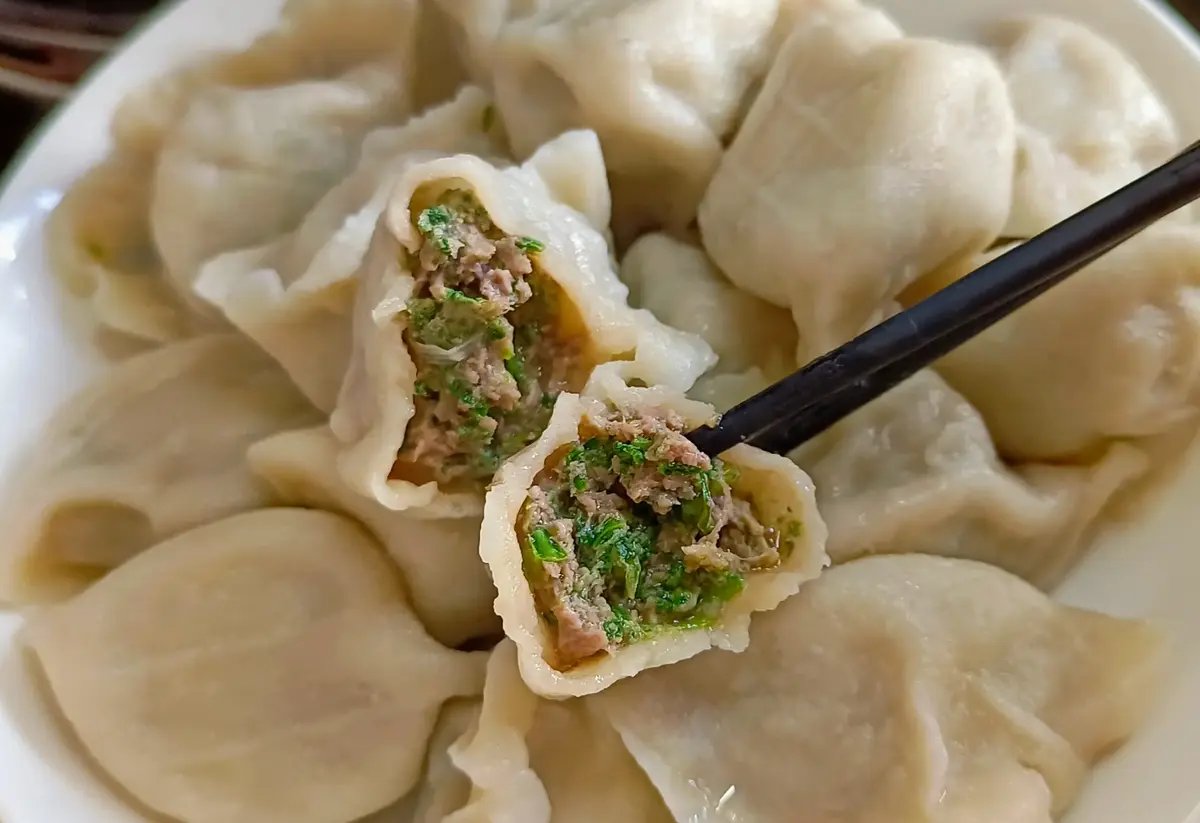
I've shipped software at three companies over thirteen years. The systems that last are the ones where every layer has a reason. A dumpling has four. Skip one and the whole thing collapses.
The wrapper: flour and water. That's it. No egg. No oil. The dough gets rested for thirty minutes so the gluten relaxes — skip this and it fights back when you roll it. The ideal wrapper is thin enough to be translucent after boiling but structural enough to hold its pleats. The center is slightly thicker than the edges because the center takes the weight of the filling. My grandmother knew this by feel. She never measured flour in her life.
The filling: pork shoulder with about twenty percent fat. Too lean and the filling turns dry and crumbly. Too fatty and it leaks grease into the wrapper and the whole thing turns into a sad oil balloon. The cabbage gets salted, squeezed, and drained — a step beginners always skip, and their dumplings always weep. Ginger is non-negotiable. It cuts through the pork fat and makes the filling taste lighter than it is. Sesame oil goes in last because its aroma is volatile — cook it and it disappears. White pepper, not black. Black pepper is a different dish.
The pleat: at least eight folds. A good pleat is not decoration. It creates structural ridges that hold the dumpling together during boiling and give the mouth something to register — texture before the filling hits. My grandmother could fold twelve in the time it took me to fold three. She never counted. Her hands just knew.
The boil: cold water, bring to a rolling boil, dumplings in, lid on. When the water returns to a boil, add a cup of cold water. Repeat twice. The cold-water shock prevents the wrapper from overcooking while the filling finishes. Dumplings are done when they float. If they sink, the filling is still raw. If they float immediately, you didn't seal them right and they're full of water.
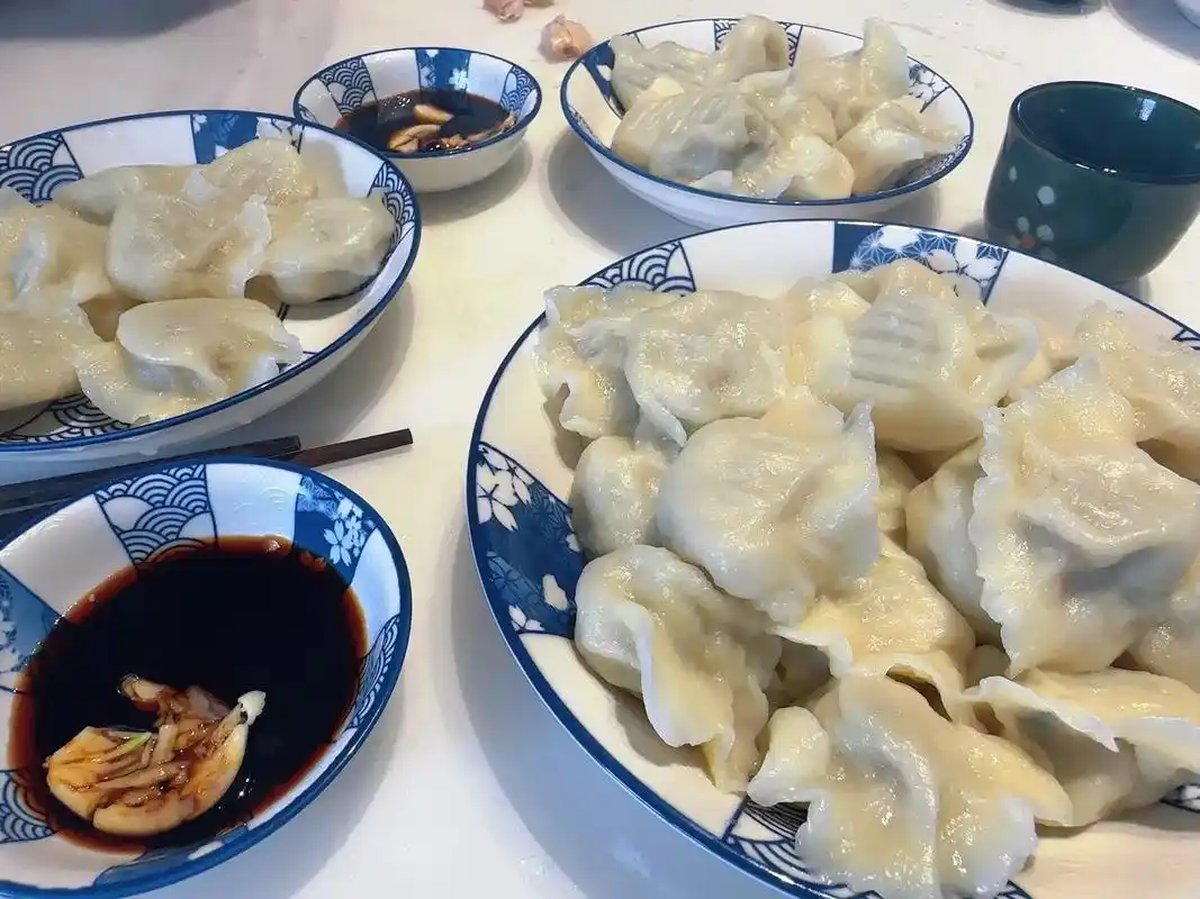
The dip: black Chinkiang vinegar, soy sauce, a few drops of chili oil, shredded fresh ginger. The vinegar cuts the pork fat. The soy adds salt. The chili oil adds a warmth that stays in the back of your throat. The ginger resets your palate between bites so every dumpling tastes like the first one.
A good dumpling makes you close your eyes for half a second. It's involuntary.
The Origin
The legend says Zhang Zhongjing, a doctor during the Eastern Han dynasty nearly two thousand years ago, invented jiaozi to treat frostbitten ears. He wrapped mutton and medicinal herbs in dough, shaped them like ears, and distributed them to the poor during winter. The story is almost certainly not true. But it's a good story. The real origin is simpler: some farmer two millennia ago had leftover filling and leftover dough and did the obvious thing. China has never stopped doing it since.
The Enemies of Jiaozi
The Frozen Supermarket Dumpling. Wrapper thick as a winter coat. Filling that tastes like a committee decided on it — salt, MSG, and whatever pork paste survived the industrial grinder. The pleats are machine-stamped, perfectly uniform, and entirely soulless. If the ingredient list has more than eight items, it's not a dumpling. It's a cry for help.
The Overboiled Restaurant Dumpling. Some places boil a hundred dumplings in a single pot and leave them swimming. The wrappers swell into doughy balloons. The filling turns to mush. A proper dumpling gets pulled the second it floats. The kitchen should be making them in small batches, not stockpiling them in hot water like a soup kitchen.
The Filling Disaster. Too much ginger makes it taste like a health tonic. Too much cabbage makes it watery and bland. Mystery fillings — "mixed meat," "vegetable medley" — are confessions. A dumpling should taste like one thing. Pork and cabbage. Lamb and leek. Shrimp and egg. Pick one. Commit.
The No-Dip Dumpling. Eating a boiled dumpling without the black vinegar dip is like drinking espresso without sugar. You can do it. You're missing the point. The vinegar is not optional. The shredded ginger is not a garnish.
The right jiaozi: wrapper thin enough to see the filling, pleats irregular — evidence of hands, not machines, filling that tastes like pork and ginger and nothing else, dipped in black vinegar sharp enough to make your jaw tighten. That's it. That's the whole thing.
How to Eat It
Chopsticks. One dumpling. Dip it fully — don't dab. Bite off exactly half. The first half gives you wrapper and filling and vinegar all at once. The second half, the open side, soaks up more vinegar from the dish. Two bites, two different experiences. Do not put the whole thing in your mouth unless you want to explain third-degree burns to an emergency room doctor. The broth inside is trapped steam — roughly the temperature of molten glass.
I learned this lesson at nine. The first dumpling of New Year's Eve. I bit the whole thing and the juice exploded across my tongue. I couldn't taste anything for the rest of the night. My grandmother, watching, said in Shanghainese what translates roughly to: "Now you know."
She was right. Now I know. Two bites. Always.
When the editorial calendar said "write about jiaozi," I hesitated. Not because I didn't know the subject — I know it too well. I love it too much. One article can't hold all its stories. And then there's the tangled family tree: huntun, wonton, chaoshou — same blood, different names, a thousand threads connecting them all. In cities across China, countless hole-in-the-wall shops survive on nothing but dumplings. One filling, one wrapper, one pot of boiling water — that's their entire business model, and the line stretches out the door.
So this is just an opening. If jiaozi means something to you too, send me an email or drop a comment below. I'd love to hear your version of the story.
I'll save the folding tutorial for another post — getting the pleat right takes more than words. The dough-to-filling ratio alone is a dissertation. Recipe coming soon.
💬 Comments