Jiaozi: The Pleat, the Filling, the Water
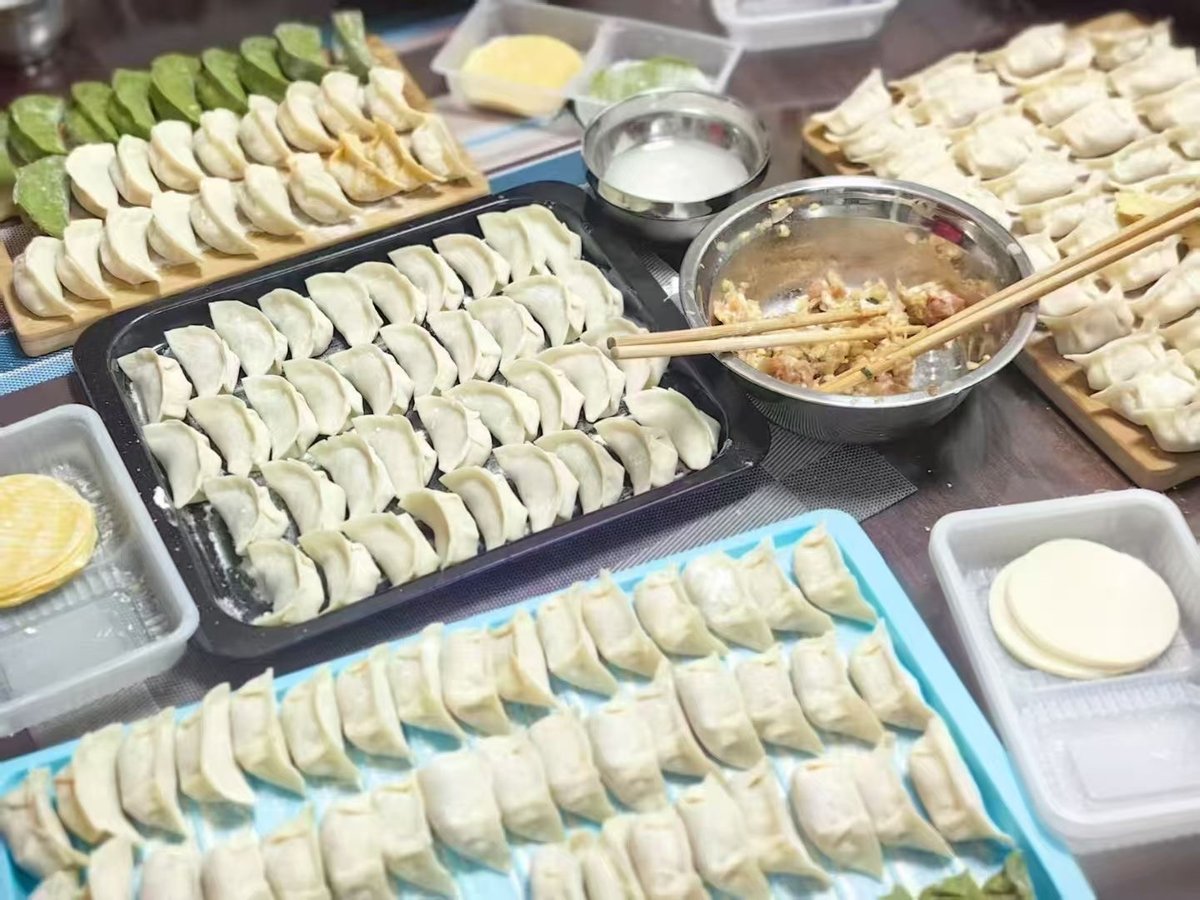
Editor’s Note: This is the kitchen companion to Jiaozi: The Dumpling That Takes a Village to Make and Vanishes in One Bite. Quantities, temperatures and the failure points are below. Read the technique once before you shop.
Why the Water Goes In Before the Wrapper Does
Jiaozi is a dough dish before it is a filling dish. The wrapper is 500g of plain flour, 250ml of water at about 20°C and 2g of salt, kneaded eight minutes and rested under a cloth for 30. The rest is not a courtesy: flour hydrates unevenly, and just-worked gluten shrinks back under the pin and tears at the rim.
Roll each disc thin at the rim, about 1mm, and thick in the centre, about 2mm. The centre is the floor of the dumpling: it carries the filling, the boil and the lift out of the water. A wrapper of even thickness either blows out in the pot or leaves a plug of dough at the seam.
The filling starts with 500g of pork shoulder, minced by hand with a cleaver, first to 5mm and then to a coarse paste. Shoulder carries about 30 percent fat, and you want to see it, white against pink, in the finished mince; a grinder smears that fat into the lean and the mixture goes grey and mealy.
Then the water. Steep 15g of sliced ginger and 4 crushed scallion whites in 150ml of just-boiled water for ten minutes, strain and cool. Add it 3 tbsp at a time, stirring in one direction and waiting for the liquid to disappear before the next spoonful. The pork goes pale, then glossy, then sticky enough to hold the bowl upside down. Why this matters: salt-soluble proteins take up water only when they are stirred, and one direction builds them into a net; reverse it and you knock the net apart.
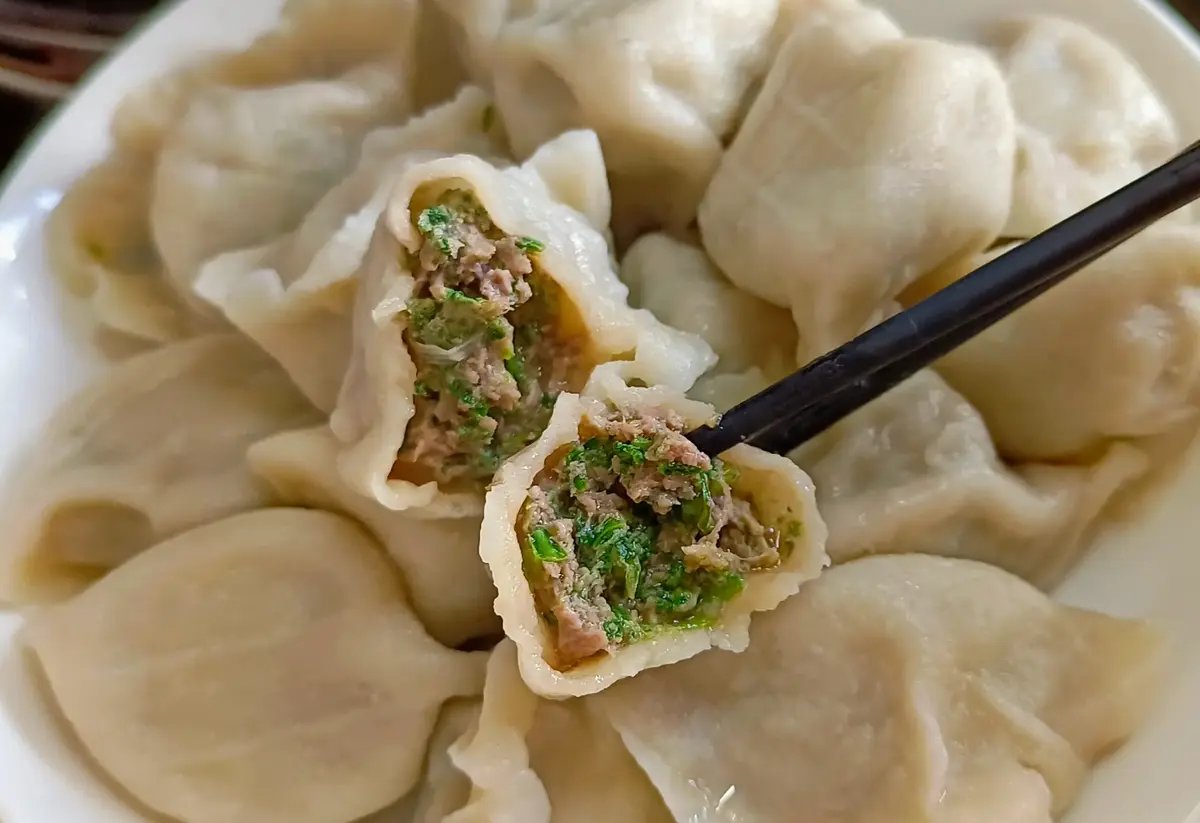
Napa cabbage is the other half of the water problem. 400g of leaves, sliced 5mm and salted with 1 tsp for 15 minutes, gives up 100ml or more; squeeze in handfuls until nothing runs, then toss the dry shreds with 2 tbsp of oil. The oil coats every cut edge and stops the salt drawing water back out of the meat.
The pleat is where a dumpling becomes recognisable. Pinch the seam shut at the right end, then make 6 to 8 folds along the near edge only, pressing each fold into the far edge so the far side stays a smooth line. The dumpling curves into a crescent and the base stays flat. Pleat both sides and the seam climbs to the top centre: you get a blunt, thick-lipped parcel with a ridge of dough where the folds meet, less room inside, and a base that tips over.
Boiling uses three rinses. Drop 20 dumplings into 3 litres of boiling water, stir once so they do not sit on the bottom, and add 100ml of cold water each time the pot comes back to a boil, three times in all, about eight minutes. Why this matters: the cold water keeps the pot just under a rolling boil, so the skins set gradually while the pork at the centre catches up. A dumpling is done when it floats, the skin has turned from opaque to translucent, and a press with the back of a spoon springs back instead of denting.
Ingredients
For the filling
- 500g pork shoulder, 30 percent fat by weight, minced by hand
- 150ml water, for the ginger-scallion steep
- 15g ginger, sliced
- 4 scallions, whites only for the water
- 2 tbsp (30ml) light soy sauce
- 1 tbsp (15ml) Shaoxing wine
- 1 tsp (5g) fine salt
- 1 tsp (4g) caster sugar
- 1/4 tsp (1g) ground white pepper
- 1 tbsp (15ml) sesame oil
For the cabbage
- 400g napa cabbage, sliced 5mm
- 1 tsp (5g) fine salt, for drawing water
- 2 tbsp (30ml) neutral oil, to seal the shreds
For the wrapper
- 500g plain flour, plus extra for dusting
- 250ml water, at room temperature
- 2g fine salt
For the table
- 100ml Chinkiang black vinegar
- 20g ginger, julienned
- 1 tsp (5ml) chilli oil, optional
Substitution notes: Beef chuck at the same 30 percent fat works with 2 tbsp more water and 1 tsp of dark soy for colour. If napa cabbage is out of season, use 300g of savoy and salt it for 20 minutes instead of 15, because the leaves hold more water. Shop-bought round wrappers, about 40 for 300g, save an hour but are thinner and need a wet finger run along the rim before pleating. For the dip, 3 tbsp of rice vinegar with 1 tsp of sugar stands in for Chinkiang.
Prep: Dough, Water, Cabbage
1. Mix and rest the dough (30 minutes)
Stir the flour and salt in a wide bowl, pour in the water in three goes, working each addition in before the next. When the bowl is clean, knead on a board for eight minutes, cover with a damp cloth and leave 30 minutes. It should feel like a cool earlobe.
2. Steep the ginger-scallion water (10 minutes)
Slice the ginger thin, crush the scallion whites with the flat of a knife, and cover both with 150ml of just-boiled water. Ten minutes is enough; longer turns it bitter. Strain and cool. Why this matters: aromatics release little below 80°C, so the steep starts hot and is left to cool.
3. Salt and squeeze the cabbage (15 minutes)
Slice the napa leaves 5mm, toss with 1 tsp of salt in a colander, and leave 15 minutes over the sink. Squeeze in fist-sized handfuls, twisting, until the water stops, then toss with 2 tbsp of oil.
4. Mince the pork and chill it (10 minutes)
Cut the shoulder into 2cm strips, removing nothing, and chop with a cleaver, turning the pile twice, until you have a coarse paste with visible white flecks. Keep it cold; warm pork will not hold water.
Step by Step: Filling, Wrapper, Pleat, Pot
Step 1: Season, then add the water (8 minutes)
Put the pork in a deep bowl with the soy, Shaoxing, salt, sugar and white pepper and stir in one direction for a minute. Then the water, 3 tbsp at a time, one direction only, waiting until the bowl looks dry again; the full 150ml takes twelve to fifteen additions. Finish with the sesame oil, and fold the cabbage through in three goes, stopping once it is even.
Step 2: Roll 40 wrappers (20 minutes)
Cut the dough into four, roll each piece into a 3cm log and cut ten pieces of about 18g. Press each into a disc and roll with a short pin, a quarter turn between passes, to 8cm across: 1mm at the rim, 2mm at the centre. Stack under a cloth; they dry at the edges within five minutes in a warm kitchen.
Step 3: Fill and pleat (25 minutes)
Hold a wrapper in your cupped left hand, add 20g of filling and flatten it with the back of the spoon. Pinch the right end closed, then fold the near edge 6 to 8 times toward the far edge, sealing as you go. Set each dumpling on a floured tray, pleats facing one way, 2cm apart.
Step 4: Boil in three rinses (8 minutes)
Bring 3 litres of water to a hard boil at 100°C. Add 20 dumplings, stir once, and cover. Add 100ml of cold water at the first boil, the second and the third; eight minutes in total. Lift with a slotted spoon and turn them onto a plate pleats up. Boil the second batch in fresh water, or the starch left behind makes them stick.
Step 5: The dip (2 minutes)
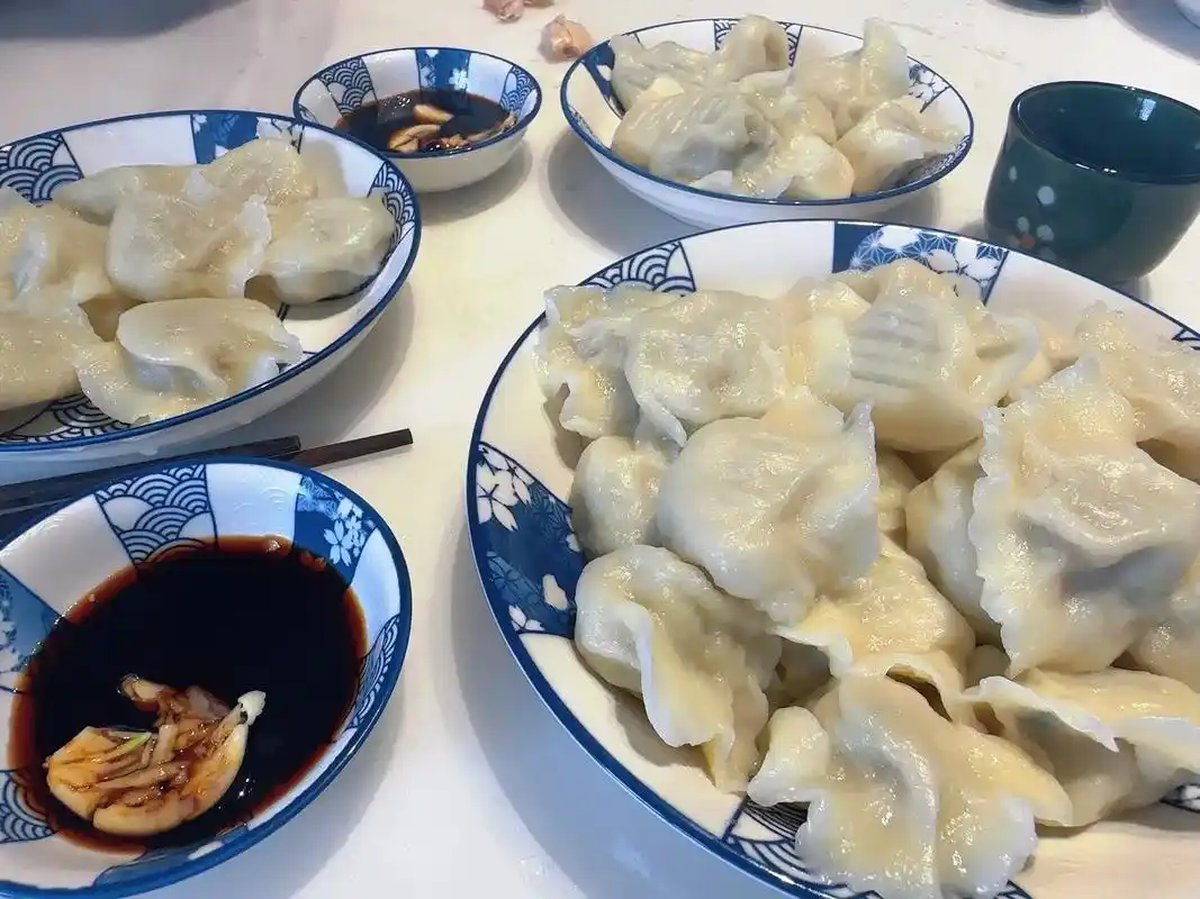
Julienne 20g of ginger and put it in a small bowl with 100ml of Chinkiang vinegar. The ginger is not a garnish; a strand goes on top of each dumpling so you get the sharpness with the pork fat.
Key Pitfalls
The dumplings leaked and the pot turned cloudy. The seam was not pinched shut, or the pleats were pressed onto a dry rim. Wet the rim before the first pinch, press each pleat into the far edge with your thumb, and check the two ends, which open first.
The dumplings came out with a doughy knot on top. Both edges were pleated, or the folds were stacked too deep. Fold one side only, 6 to 8 times, and press each fold flat into the far edge instead of leaving a ridge standing up.
The filling was dry and crumbly rather than juicy. The water went in too fast, or the pork was too lean. Add 3 tbsp at a time and wait for absorption, use shoulder with visible fat, and never let the mince warm up before mixing.
The filling was watery on the board before you finished. The cabbage was under-salted or under-squeezed. Salt 15 minutes, squeeze until the handful stops dripping, and toss with oil before it meets the pork. If it still weeps, stir in 1 tbsp of cornstarch.
The dumplings stuck to the bottom and split. They went into water below 90°C, or the pot was crowded. Hold a hard boil, 20 dumplings to 3 litres, and stir once immediately after they go in, before the skins gelatinise.
The skins went soft and the pleats collapsed. They sat in the pot after the third boil, or were piled on a plate. Eight minutes total, lift with a slotted spoon, and serve within two minutes; a dumpling left standing steams itself limp.
Serving Suggestions
Bring them to the table in the plate they were drained into, pleats up, with the vinegar and ginger beside them. In a Beijing home a bowl of the cloudy cooking water comes too, with vinegar in it.
Cold beer or jasmine tea. Leftovers fry well next morning: 8 dumplings in 1 tbsp of oil, flat side down, 3 minutes over medium heat, then 80ml of water and a lid for 4 minutes, until the bottoms are lacquered. Never boil them twice.
This is the companion recipe to Jiaozi: The Dumpling That Takes a Village to Make and Vanishes in One Bite. Read the story, then cook the dish.
💬 Comments