Jianbing: The Chinese Breakfast Crepe That Refuses to Be Ignored
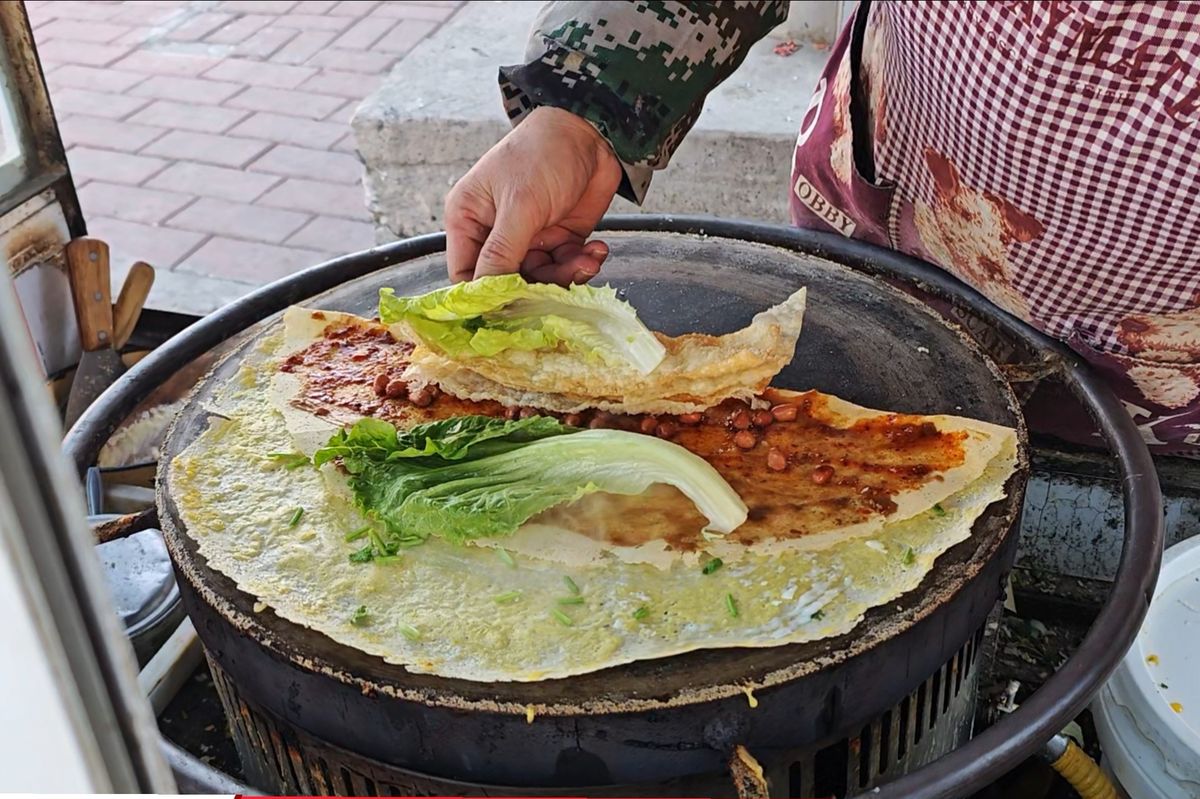
I was fourteen the first time I watched a jianbing being made start to finish. The cart was parked at the corner of Changde Road and Xinzha Road, right outside the No. 76 bus stop in Jing’an. The woman behind it wore a blue apron with a faded cartoon duck on the chest pocket. She’d been doing this for fifteen years — I asked her once, when I was old enough to be curious instead of just hungry. She moved with the economy of someone who could do it in her sleep. She probably could.
She ladled batter onto a round cast-iron griddle and spread it with a wooden paddle in a single continuous circle, so thin you could see the griddle through the batter. The edges curled up almost instantly. She cracked an egg directly onto the center, broke the yolk with the back of the ladle, and smeared it across the surface in a radial pattern like a sunflower. Scallions went on. Pickled mustard greens went on. A sheet of crispy fried dough — baocui (薄脆) — landed dead center with a crack you could hear from three feet away. Sweet bean paste, a streak of chili sauce, a fold, a fold, a fold. She handed it to me in a brown paper bag already translucent with grease. I timed the whole thing: forty-seven seconds.
That first bite: the crunch of the baocui shattering between layers of tender crepe and egg, the salt of the pickled mustard, the fermented depth of the bean paste, the slow burn of chili creeping up the back of my throat. I burned my tongue. I didn’t care. I ate the whole thing before the bus arrived, then sat there breathing scallion breath onto the window for the next twenty minutes. It was the best breakfast I’d ever eaten. It still is.
Jianbing (煎饼, jiānbǐng) is not a crepe in the French sense. It’s not delicate. It’s not elegant. It’s a working-class breakfast engineered for maximum flavor density per bite, wrapped in paper, eaten on the move. It belongs to the morning commute. It belongs to the street.
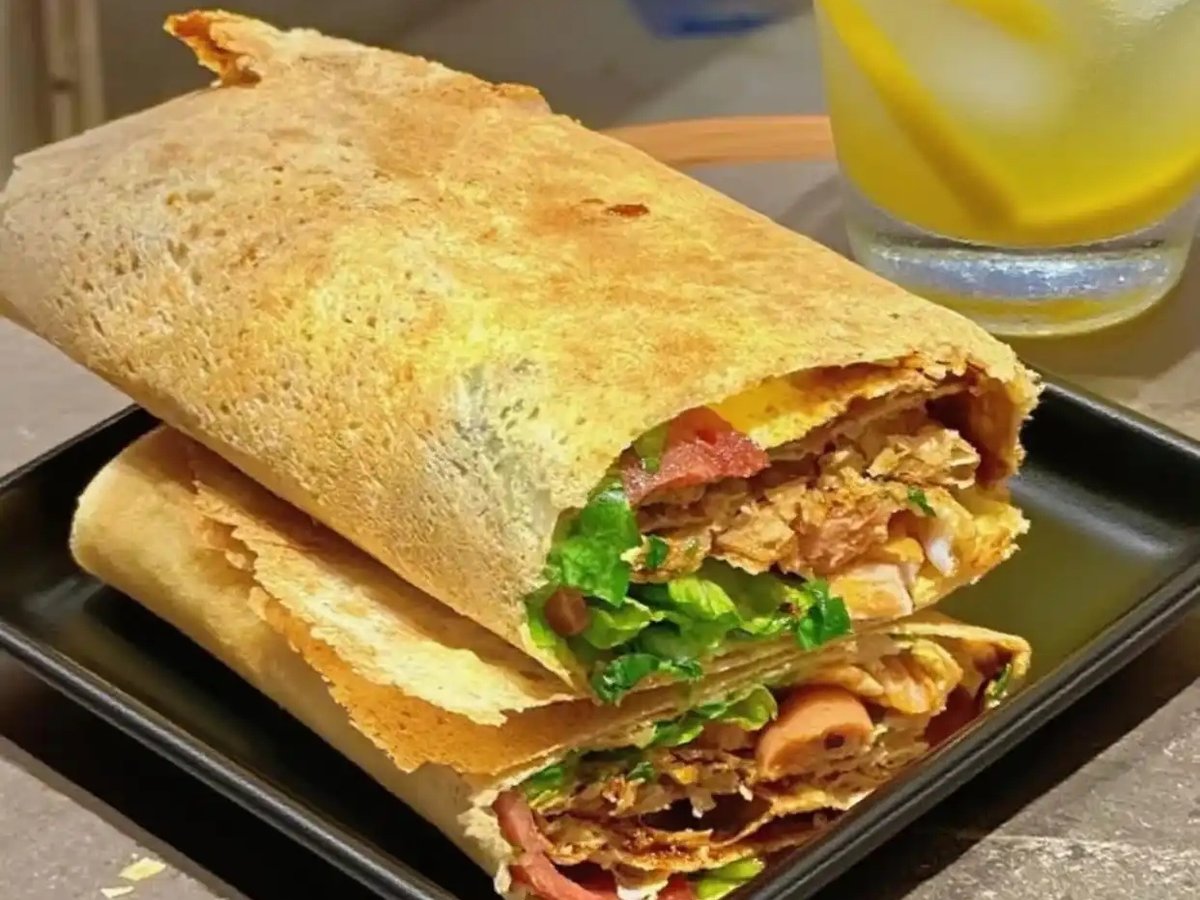
The Architecture of a Bite
I spent thirteen years in big tech — Microsoft, Google, NVIDIA — and I’ve debugged systems with a million moving parts. Jianbing has six layers. Every single one does exactly one job.
The skin: mung bean flour and wheat flour mixed with water, spread paper-thin on a hot griddle. No sugar, no leavening. It cooks in thirty seconds into something that tastes like toasted grain and earth. Its job is containment.
The egg: cracked on top while the skin is still wet, spread edge to edge. It bonds to the batter as it sets, turning a fragile crepe into a structural platform. The egg’s fat also keeps the baocui from turning everything soggy — a moisture barrier disguised as breakfast.
The baocui: a sheet of deep-fried dough, roughly the size of a postcard, that shatters between your teeth like a potato chip crossed with a cracker. This is the soul of the jianbing. Without it, you have a sad egg wrap. With it, you have texture contrast most restaurant dishes can’t touch. Good vendors buy from a baocui supplier who delivers at 5 a.m. Bad ones use yesterday’s.
The sauce: sweet fermented bean paste (甜面酱, tiánmiànjiàng) spread in a thin layer, plus a streak of chili sauce if you say “要辣的.” The bean paste is deep and savory — it tastes like soy sauce that went to graduate school. The chili adds heat but more importantly adds acid, which cuts through the richness.
The fill: scallions, pickled mustard greens (榨菜, zhàcài), sometimes cilantro. Not garnish. Counterweights. Fresh, salty, crunchy against the soft crepe and the brittle baocui.
The fold: not a roll, not a wrap — three swift folds that turn a disc into a palm-sized rectangle. Every vendor uses the same fold, learned by muscle memory, executed in two seconds. The fold traps the baocui in the center where it stays crispy. Wrong fold? The baocui shifts and structural integrity collapses by bite three.
A good jianbing is loud.
The Origin
Legend says jianbing goes back to the Three Kingdoms. Zhuge Liang’s army, stranded without cookware, mixed grain flour with water and cooked it on copper shields over open fire. The modern version — egg, baocui, bean paste — crystallized in Tianjin in the early 20th century and spread to every city in China by the 1990s. That’s the outline. You want the full history, there’s a Wikipedia article. This is about breakfast.
The Enemies of Jianbing
The Mall Jianbing. Food courts in Shanghai started selling jianbing around 2015. They use thicker batter — closer to pancake than crepe — and the baocui comes from a plastic bag opened on Tuesday. The result is a sad, doughy rectangle with the structural integrity of a wet napkin. No crunch. No soul.
The American “Jianbing.” I’ve seen food trucks in California put sausage, cheese, avocado, and sriracha in something they call jianbing. Fusion is fine. Call it something else. Call it a breakfast wrap. If it doesn’t crackle when you bite it, you’re eating a lie.
The Pre-Made Batter Cart. Some carts use commercial batter mix with baking powder and sugar. The crepe comes out fluffy and sweet, like a pancake that got lost looking for IHOP. Real jianbing batter has two ingredients: mung bean flour and wheat flour. Mixed with water that morning. Nothing else.
The right jianbing: batter spread to translucency, one egg per crepe (two if you’re hungry — say “加个鸡蛋”), fresh baocui that audibly cracks when the vendor lays it down, sweet bean paste, scallions, pickled mustard, folded tight, handed over in paper already soaking through with oil and steam. Eat it standing up. The window is three minutes.
The Tianjin version adds mung bean paste to the batter for a grainier texture and sometimes uses two eggs. It’s a different shape of the same idea.
How to Eat It
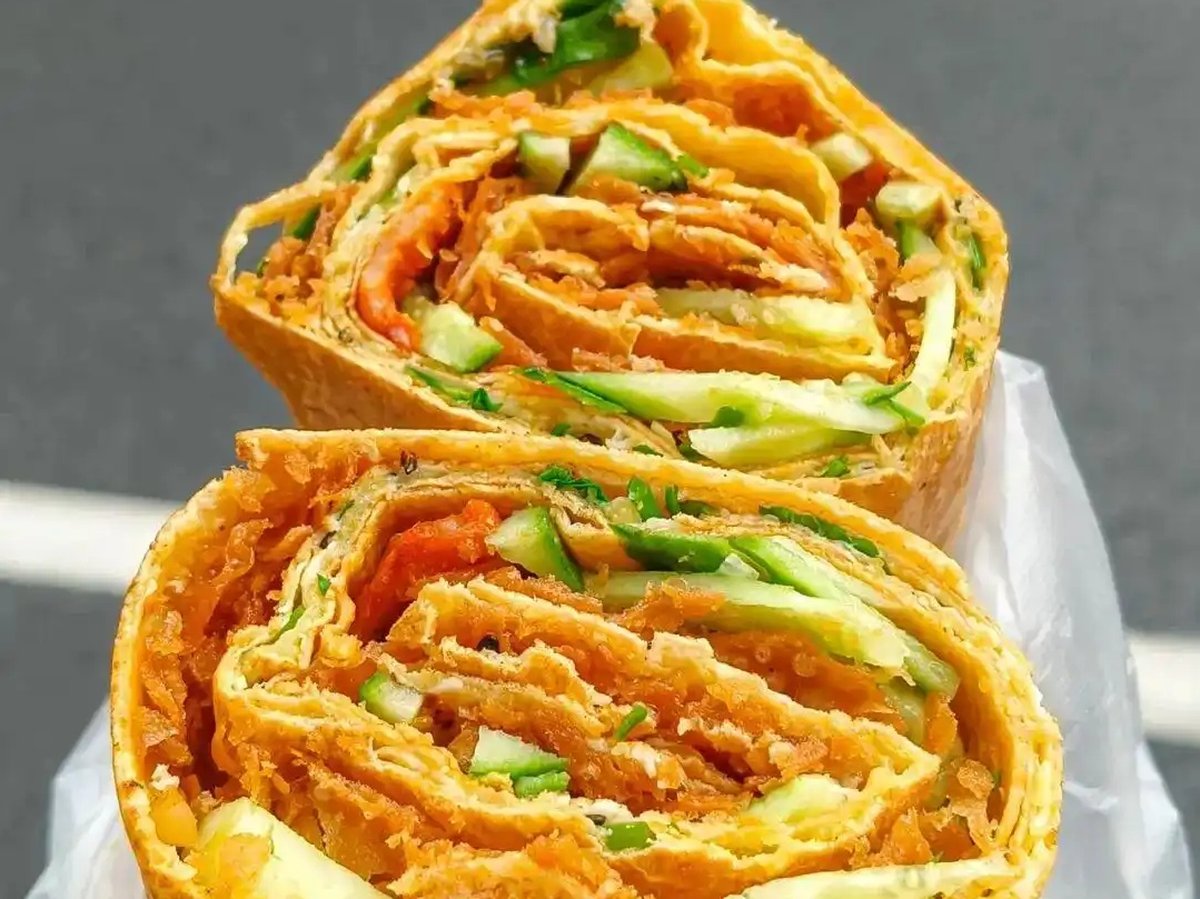
You eat jianbing immediately. Not when you get to the office. Not when you find a bench. The moment it’s in your hand. The baocui starts absorbing moisture from the egg and sauce the second the fold is complete. Three minutes until crispy becomes chewy. Five minutes until soft. Ten minutes until porridge in a bag.
I learned this the hard way. I once bought a jianbing, wrapped it in my scarf to keep it warm, and carried it forty minutes across town to my girlfriend’s apartment because she’d never had one. By the time I arrived, the baocui had dissolved into the batter. She took a bite and said “it’s soft.” I wanted to throw myself into traffic. Do not transport jianbing. Eat it where you buy it.
Hold it with both hands. Bite from the corner — the fold pattern means the center has a double layer of baocui and the corners have one, so starting at the corner builds toward the crunch. Work inward. The last bite is the center, where the baocui overlap is thickest, the sauce has pooled, and the whole thing hits maximum flavor density. Finish it. Lick your fingers. Catch your bus.
My grandmother never made jianbing — it was a street food, not a home kitchen dish. She was a woman of the stove, not the cart. But on mornings when I had exams, she’d slip me five kuai and say “买个煎饼, 吃饱了再考” — buy a jianbing, take the test on a full stomach. That was her version of a blessing.
💬 Comments