Lion's Head Meatballs — The Giant Pork Meatball That Collapses Under a Spoon
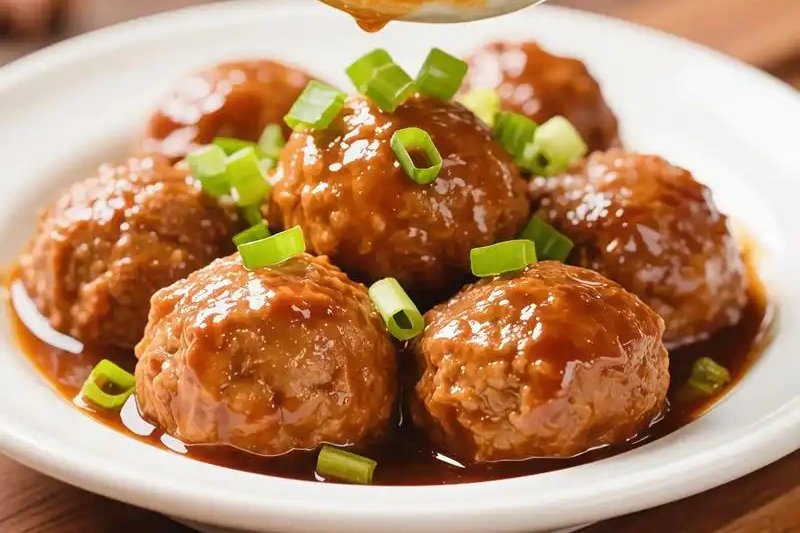
The spoon sinks in and the meatball gives way without resistance. No knife. No sawing. Just the edge of a ceramic soupspoon pressing down and the whole thing — this fist-sized sphere of pork and fat and dissolved tendon — opens like a flower. That’s the first thing you need to understand about hóngshāo shīzi tóu (红烧狮子头). It’s a meatball that’s forgotten how to be solid.
I was eight years old at a wedding banquet in the Jin Jiang Hotel on Maoming Road. My grandmother had dressed me in a stiff-collared shirt that itched. I was bored. Then the lazy Susan turned and a clay pot the size of a helmet arrived, steam escaping from under its lid like a held breath. Inside: four hulking meatballs, each the size of a child’s fist, half-submerged in dark liquid, napa cabbage leaves draped over them like blankets. One of them was mine.
I didn’t know how to eat it. I poked it with my chopsticks and the whole thing wobbled. My grandmother reached over, took my soupspoon, and split the meatball down the middle with one smooth press. The inside was pink-tan and glistening, flecked with water chestnut, the aroma rising — pork fat and Shaoxing wine and ginger and something sweet I couldn’t name. She scooped half onto my rice bowl. “Màn màn chī,” she said. Eat slowly.
That meatball ruined meatballs for me. For years afterward, every Italian meatball, every Swedish köttbulle, every dense rubbery thing served at office parties — they all felt like a betrayal. I didn’t know how to explain what was missing until I was older. What was missing was the collapse.
The Architecture of a Bite
I spent thirteen years writing code at Microsoft, Google, and NVIDIA before I quit to chase the 25th frame. Here’s something I learned across all three companies: the hardest thing to engineer isn’t speed or scale. It’s fragility that works. A system that holds together until the exact moment you want it to fall apart.
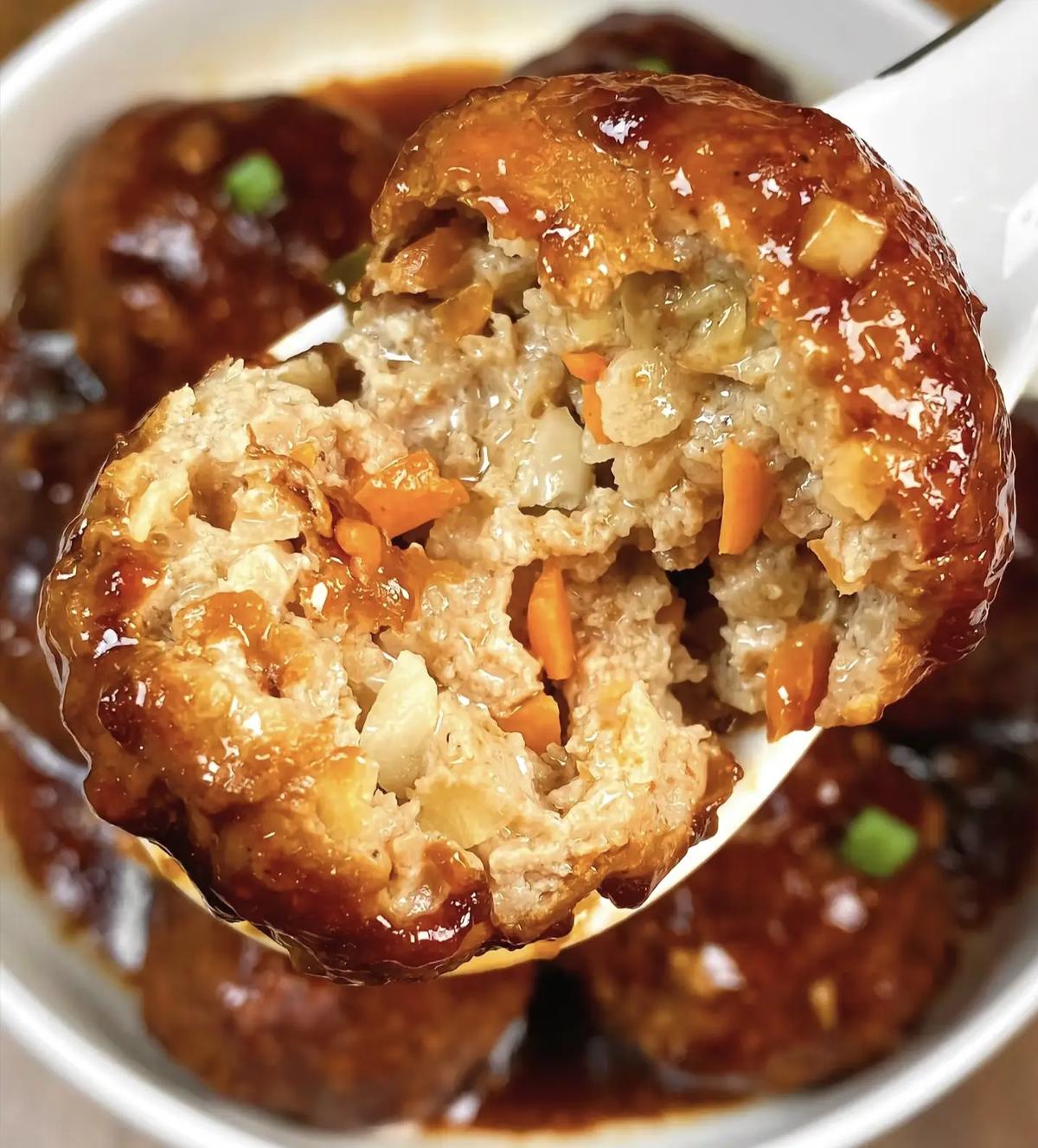
That’s lion’s head. The bite hits you in layers. First, the outer surface — browned from a quick sear, slightly firm, carrying the savory depth of the braising liquid. Your tongue presses and the meatball submits. There’s no chew. There’s a dissolution. The pork, hand-chopped into a coarse paste with visible flecks of fat, separates along grain lines you can feel but not fight.
Then the water chestnuts arrive — tiny white cubes scattered through the meat like landmines of crunch. They’re the only texture that resists. Everything else has surrendered to the two-hour braise. The fat has rendered into the meat. The lean has loosened into fibers. The ginger-scallion water, worked into the pork mixture before forming, has done its silent work: it kept the proteins from binding too tight.
The sauce is the quiet member of the band. Dark soy for color, light soy for salt, rock sugar for a sweetness that doesn’t announce itself, Shaoxing wine for depth. It’s not a heavy sauce. It’s a coating — enough to cling, not enough to pool. The napa cabbage that braised alongside the meatballs has gone translucent and sweet, absorbing pork fat and soy in equal measure.
A bad lion’s head is a meatloaf in costume. A good one is a pork cloud.
A Chef, an Emperor, a Name
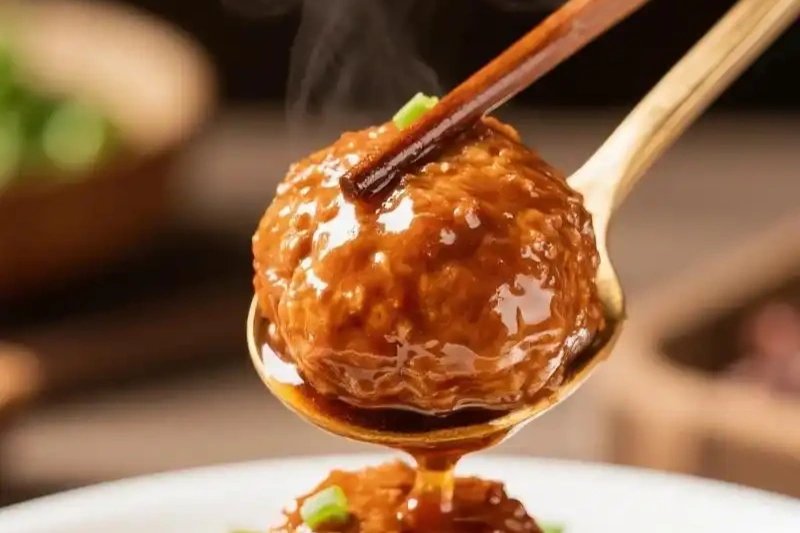
Legend says the dish was born in Yangzhou during the Sui Dynasty, when Emperor Yang toured the south and his chefs were ordered to impress. They made four giant meatballs meant to evoke a lion’s mane — the cabbage around them serving as the fur. Whether that’s true hardly matters. What matters is that the dish stuck around for 1,400 years, which means someone did something right.
The real trick is the cut. Not ground. Not blended. Hand-chopped. You take pork belly and pork shoulder, both cold, and you chop them with a cleaver until the fat is the size of rice grains and the lean is a coarse paste — about six minutes of rhythmic thwacking. This isn’t ceremony. A meat grinder tears the muscle fibers and smears the fat. A cleaver separates without destroying. The difference is the difference between a meatball that holds and one that’s just held together.
The Enemies of Lion’s Head
I’ve ordered this dish at Chinese restaurants across Shanghai, Taipei, New York, and San Francisco. I’ve been disappointed on four continents. Here’s what goes wrong.
The dense meatball. Someone used pre-ground pork from a supermarket tray. The fat is microscopic. The texture is uniform. The result is a sphere of compressed protein that bounces when you drop it. A lion’s head should not bounce. It should tremble and threaten to come apart.
The lean-only mistake. Someone decided pork belly was “too fatty” and used pork loin instead. Admirable intentions, terrible meatball. Fat is not optional here — it’s structural. Without it, you get a dry, grainy sphere that absorbs sauce without ever integrating it. The sauce sits on top like an apology.
The egg-and-breadcrumb filler. Western meatball habits creeping in. Egg whites and breadcrumbs make a meatball that’s springy and uniform — good for spaghetti, fatal for lion’s head. The binding agent here is the pork fat itself, plus the hand-chopping that leaves the myosin proteins intact enough to hold but not enough to fight.
The missing water chestnut. Some versions skip it. Some substitute bamboo shoots. Both are wrong. Water chestnuts (荸荠, bíqí) give a clean, apple-like crunch that cuts through the richness. Bamboo shoots are too fibrous. Lotus root is too starchy. It’s water chestnut or nothing.
The correct lion’s head uses: 70% pork belly, 30% pork shoulder — hand-chopped, never ground. Ginger-scallion water folded in, not mixed. A light sear on both sides, then a gentle braise in a clay pot with dark soy, light soy, Shaoxing wine, rock sugar, and enough water to come halfway up the meatballs. Napa cabbage on top to steam. Two hours. Low heat. Lid on. Don’t rush.
The crab roe version (蟹粉狮子头, xièfěn shīzi tóu) is a different beast — premium, pale, steamed instead of braised, topped with orange crab roe that melts into the meat. It’s the rich cousin who shows up at New Year’s and makes everyone else’s dish look like practice.
How to Eat It
Here’s what my grandmother taught me the night of that wedding banquet, and what I’ve refined across sixteen years of chasing this dish through Shanghai restaurants.
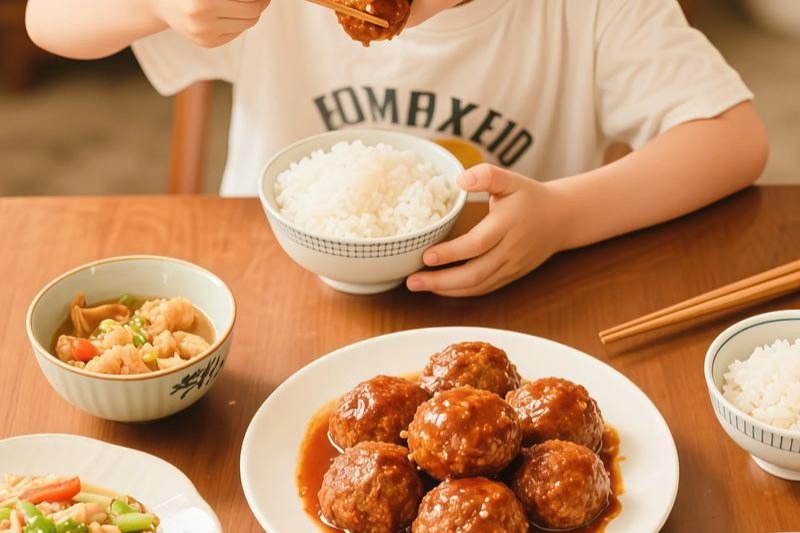
First, don’t use chopsticks. Use the soupspoon. The meatball is too tender to lift whole — it will break and half of it will land in the sauce with a splash that stains your shirt. Spoon in, lift with the edge, and place the piece directly on a mound of white rice.
Second, the rice is not optional. You need the rice to catch the sauce — that dark, savory-sweet liquid that’s been reducing for two hours with pork fat and napa cabbage. Bite of meatball, bite of sauce-soaked rice, repeat. Anyone who eats lion’s head without rice is leaving half the dish on the plate.
Third, eat the cabbage. It’s not garnish. After two hours braising in pork fat and soy, those translucent leaves are sweeter than the meatball itself. They’re the part grandmothers fight over.
I burned the roof of my mouth at that wedding banquet. The meatball had been sitting in a sealed clay pot for who knows how long before it reached our table. I didn’t care. I kept eating. Some dishes are worth the blisters.
Want to cook this? Here’s our step-by-step Lion’s Head Meatballs recipe .
💬 Comments