Hong Shao Rou — The Pork Belly That Tastes Like Home
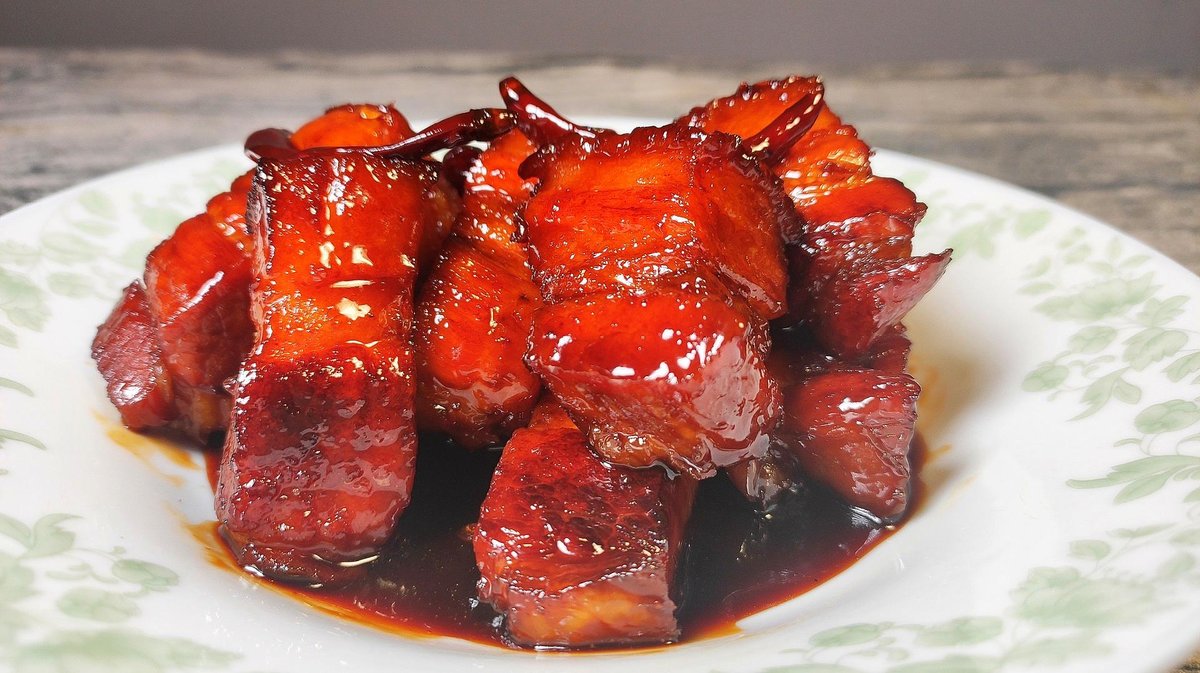
The smell hits you before the door opens. Soy sauce and caramelized sugar, star anise and ginger, pork fat rendering slow. You’re six years old in your grandmother’s Shanghai kitchen, and this smell means Sunday. It means a bowl of white rice waiting on the table. It means hóngshāo ròu (红烧肉).
Red braised pork belly is not a dish you order. It’s a dish you inherit. Every Chinese family has a version, every version is the best version, and every version is slightly different. Mine had extra star anise and rock sugar that cracked under my grandmother’s cleaver like glass. The pork came from the wet market on Wanping Road. It had to be skin-on, three-layer — fat, lean, fat — or she wouldn’t buy it.
That’s the thing about hóngshāo ròu. It isn’t complicated. Pork belly. Soy sauce. Sugar. Wine. Time. What makes it work isn’t an exotic ingredient or a secret technique. It’s patience. Two hours minimum, three if you want the fat to surrender completely.
The Architecture of a Bite
I spent thirteen years writing code at Microsoft, Google, and NVIDIA before I quit to chase the 25th frame, and I’ll tell you this: good hóngshāo ròu is like a well-designed system. Every component works. Nothing is wasted.
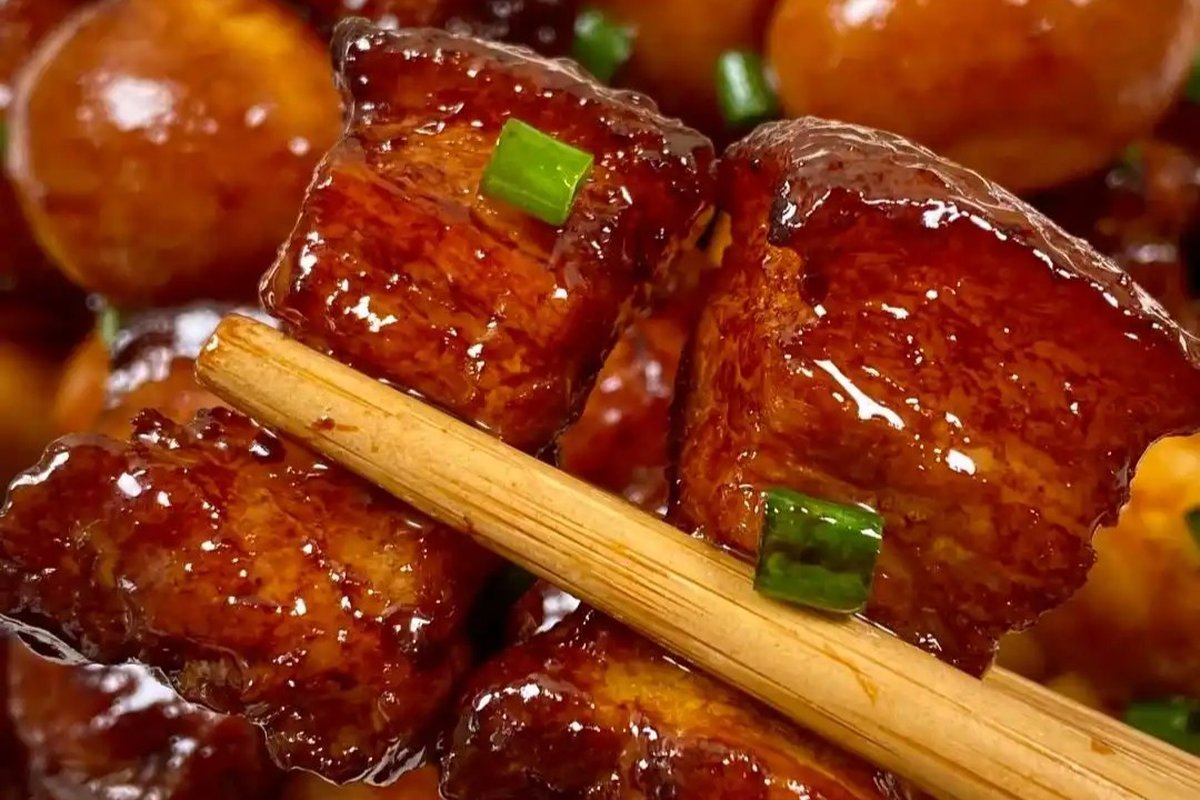
The skin resists your chopsticks for half a second before yielding — that’s the gelatin, cooked down from collagen over hours of low heat. The fat layer melts on contact with your tongue, carrying soy and sweetness and the faint licorice hum of star anise. The lean meat pulls apart along grain lines you can see but not feel. The sauce is the output of everything, reduced from Shaoxing wine, dark soy, light soy, and caramelized rock sugar until it coats the back of a spoon like lacquer.
A lesser braise tastes one-note: sweet soy. A good one hits you in waves. First sugar caramel, then salt, then the deep fermented warmth of soy, then a ghost of anise and ginger on the exhale. Five flavors, one pot, no shortcuts.
A good plate of hóngshāo ròu is quiet. It doesn’t sizzle. It doesn’t crackle. It just sits there, glossy and dark, and dares you not to eat three pieces.
The Poet and the Pork
Su Dongpo, the 11th-century poet and statesman, wrote about cooking pork: “Let the fire be slow, let the water be enough, and when it’s done, it will be beautiful.” Exiled to Huangzhou and broke, he discovered that the cheapest cut, pork belly, became transcendent if you just let it cook long enough. His version, Dongpo Rou, is the ancestor of every red-braised pork belly in China today.
I wrote about Dongpo Rou separately — it’s the square-cut, straw-tied cousin of hóngshāo ròu. Same DNA, different branch. If you’re wondering whether they’re the same dish: they’re close, they overlap in spirit, but they’re not interchangeable. Dongpo Rou: The Pork Belly That Launched a Thousand Poems breaks down exactly how they differ — spoiler: it’s in the cut, the tie, and the patience.
The Enemies of Hong Shao Rou
Bad hóngshāo ròu is everywhere. Here’s what to look for.
The Dry Cubes. Lean pork loin braised until stringy and sad. Wrong cut. If your hóngshāo ròu doesn’t have fat layers, you’re eating a mistake.
The Candy Pork. Bright orange, cloying, swimming in sauce that tastes like melted lollipops. This is what happens when cooks use bottled “red braising sauce” instead of caramelizing their own sugar.
The Gray Stew. No color, no gloss, no soul. They skipped the sugar step entirely. The “red” in red-braised comes from caramelized sugar coating every piece — skip it and you have brown water with pork.
The right way: pork belly, skin on, three-layer cut. Rock sugar, caramelized in the pot until amber and smoking. Shaoxing wine — not cooking wine. Dark soy for color, light soy for salt. Star anise, ginger, scallion, and nothing else. Two to three hours, lid slightly ajar, heat low enough the liquid barely trembles.
The Japanese have buta no kakuni, braised in dashi. It’s good. It’s not hóngshāo ròu.
How to Eat It
You need rice. White, short-grain, nothing fancy. The sauce is what the rice is there for.
I burned my tongue on hóngshāo ròu when I was seven. My grandmother had just pulled the clay pot off the stove and I grabbed a piece with my fingers before she could stop me. The fat was nuclear. The taste was worth the blisters.
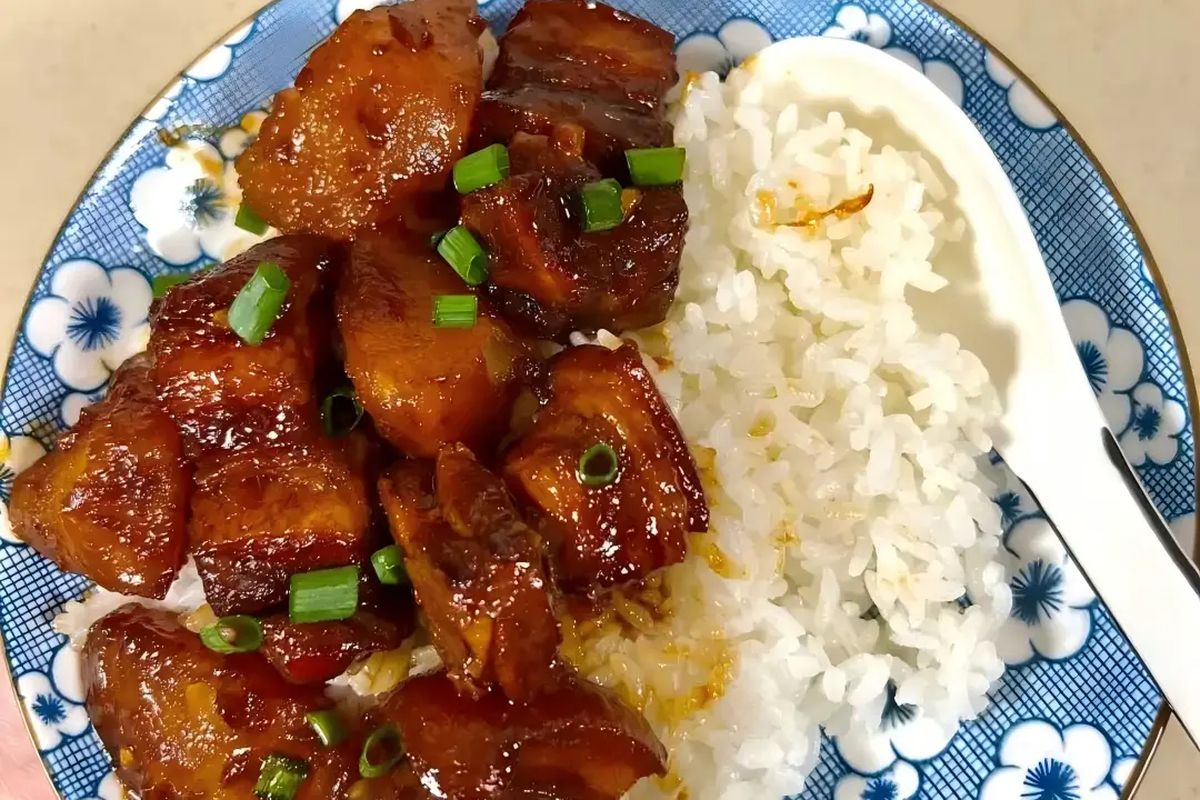
Step one: ladle sauce over rice first. Step two: place one piece of pork on top, let it sit for ten seconds so the sauce pools beneath it. Step three: pick it up with chopsticks — if it doesn’t wobble, they didn’t braise it long enough. Step four: bite, chew, exhale.
The last piece is always the best. By then the sauce has soaked into the bottom of the rice bowl and the pork has cooled to the exact temperature of perfect. You eat it slowly. You don’t want it to end.
Out of space for today — I’ll save the home-cooking breakdown for another post. Getting the sugar caramelization right at home without burning it is the one skill that separates a good hóngshāo ròu from a pot of regret. Recipe coming soon.
💬 Comments