Hong Shao Rou: Caramel First, Soy Second
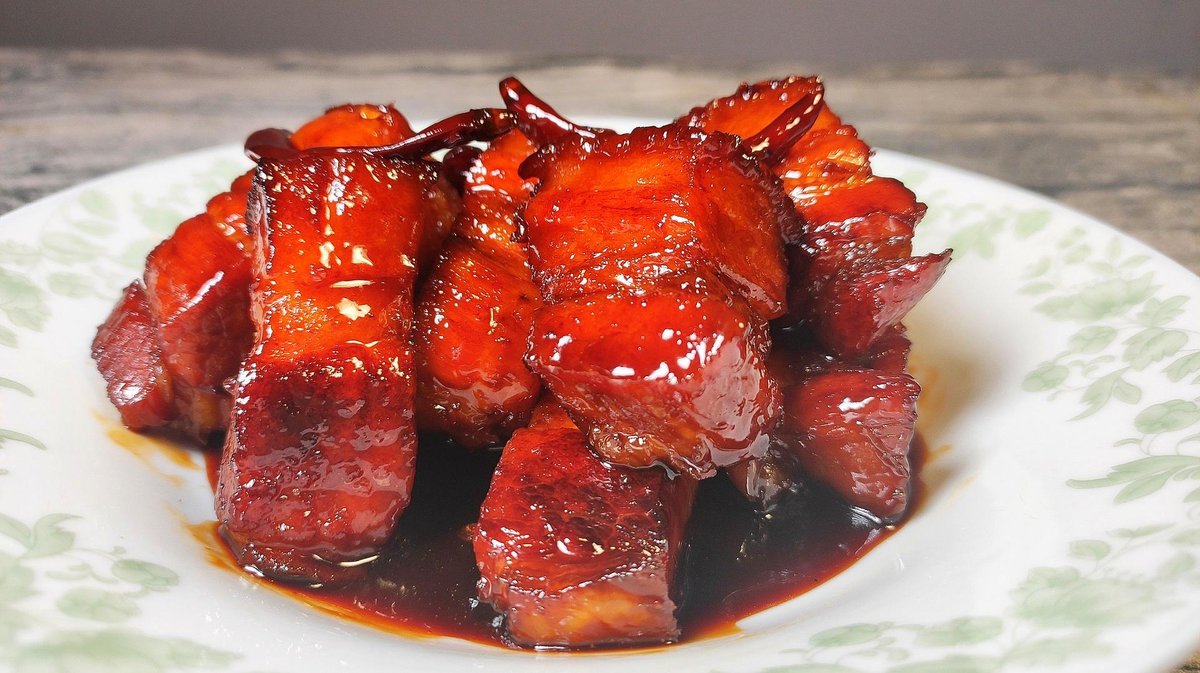
Editor’s Note: This is the kitchen companion to Hong Shao Rou — The Pork Belly That Tastes Like Home. Quantities, temperatures and the failure points are below. Read the technique once before you shop.
Why the Colour Is Made from Sugar
Hong shao rou means red-braised pork, and the red is the whole argument of the dish. In most versions cooked outside Shanghai the colour comes from dark soy sauce poured straight from the bottle. That is fast and consistent, and it tastes of soy and molasses rather than of pork. The Shanghai method builds colour from sugar first: rock sugar melted with a spoonful of water, taken to 160–170°C until amber, and the pork dropped in dry, straight into the caramel. Soy comes afterwards, for salt and depth.
There is a reason that colour survives seventy minutes of liquid. Sucrose heated past 160°C breaks into aromatic compounds that bind to the surface proteins of the pork as it browns. The caramel is not a coating that washes off; it is part of the crust. Why this matters: a caramel crust holds through the braise, while a soy-only version turns muddy and needs more dark soy at the end to look red at all.
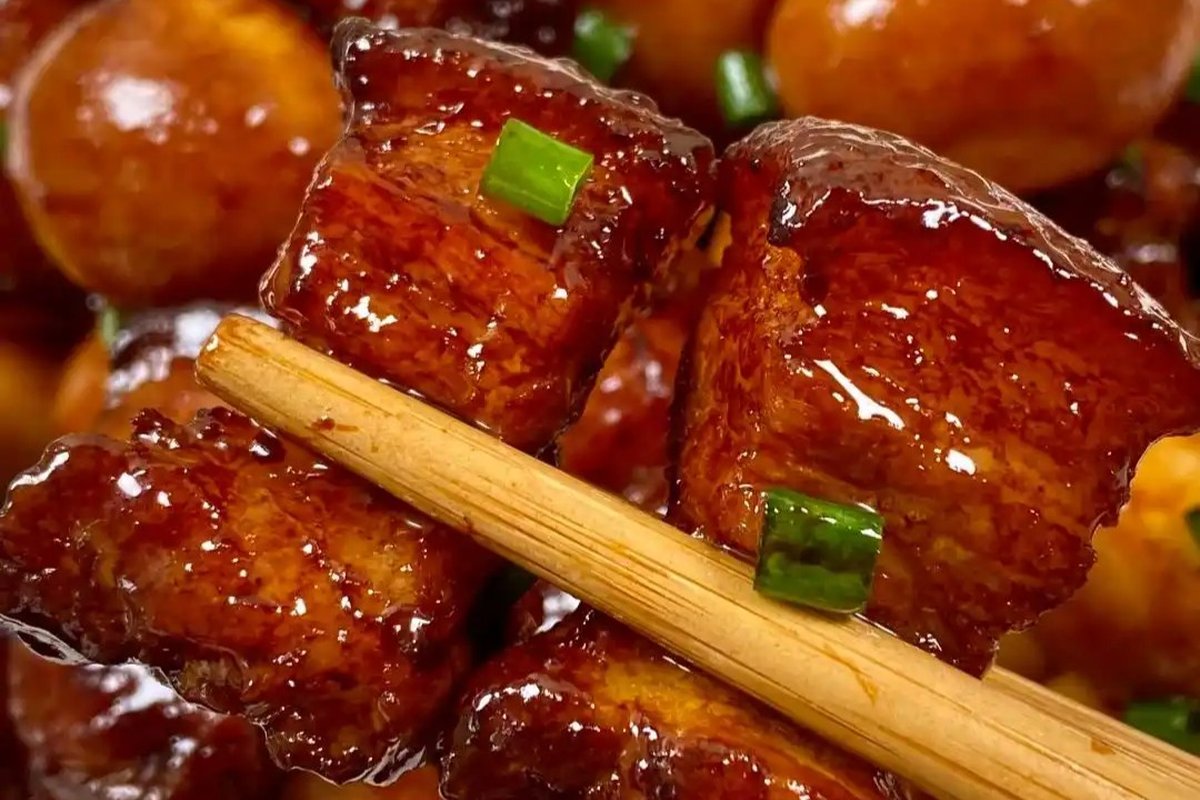
Gloss is the second reason. Caramel reduced with the braising liquid gives a sauce that coats a spoon and sets slightly as it cools, the quality cooks call liang. Dark soy is not banned from my kitchen, but here it is a repair tool: half a teaspoon in the last ten minutes if the caramel came out pale, never at the start, where it mutes the sugar.
What follows is the version I cook at home: four servings, one clay pot, a slab of belly about four centimetres thick with the skin on. The numbers matter less than the sequence. Dry the pork, caramelise the sugar, sear in the caramel, then braise slowly enough that the surface barely moves.
Ingredients
For the pork
- 800g pork belly, skin on, in one slab about 4cm thick
- 1.5 litres water, for blanching
- 3 slices ginger (15g), for the blanching water
- 2 tbsp (30ml) Shaoxing wine, for the blanching water
For the caramel
- 40g rock sugar, in lumps about 1cm across
- 2 tbsp (30ml) water, for the caramel
- 1 tbsp (15ml) neutral oil
For the braise
- 1 tbsp (15ml) Shaoxing wine
- 2 tbsp (30ml) light soy sauce
- 1 star anise
- 1 small cassia stick (3cm)
- 20g ginger, sliced 3mm thick
- 2 scallions (40g), cut into 5cm lengths
- 500ml hot water
- 1/2 tsp (3g) fine salt
To finish
- 1 tsp (5ml) sesame oil, optional
- 1 tsp (5ml) dark soy sauce, only if the colour needs rescuing
Substitution notes: Without rock sugar, use 35g of caster sugar and start checking at 155°C, because fine grains catch and burn faster than lumps. A cinnamon stick can replace the cassia, but use half of it; cassia is stronger and more bitter, and a whole stick tastes of potpourri. Dry sherry stands in for Shaoxing at the same volume, with less of the nutty note. Buy a slab rather than pre-cut pieces: you need to see the layers to judge the meat.
Prep: Knife Work, Cold Water, and a Dry Surface
1. Chill, then cut into 3cm cubes (8 minutes)
Chill the slab for 20 minutes before cutting. Cold fat holds its shape, so you get clean faces instead of torn ones. Cut 3cm strips, then across into 3cm cubes, working skin-side up with a rocking motion.
2. Blanch from cold water (3 minutes)
Cover the cubes with cold water, add the ginger and the two tablespoons of Shaoxing, and set the pot over medium heat. Starting cold is the point. Water and pork heat together, the scum rises slowly as a grey foam you can lift off, and the outside does not set before the inside has released its impurities. Starting in boiling water seals them in. Hold at about 85°C, hazy but not rolling, for three minutes. Skim, then rinse the cubes under warm water. Why this matters: cold water on hot blanched pork shocks the fibres tight, and they stay tight for the whole braise.
3. Dry the pork completely (10 minutes)
Spread the cubes on paper towel, skin up, and pat dry. Leave ten minutes. Surface water drops the caramel below 140°C the moment the meat goes in, so the sugar stops browning and starts dissolving, and it flashes to steam that spits hot sugar at your hands. Dry pork browns. Wet pork steams.
Step by Step: Caramel, Sear, Simmer, Glaze
Step 1: Caramelise the rock sugar (6 to 8 minutes)
Use a clay pot or wide enamelled cast-iron pot at least 24cm across. Warm it over medium heat for two minutes, then add the oil, the rock sugar and the two tablespoons of water. The water dissolves the sugar before it colours, which stops the caramel seizing around dry crystals. Let it melt without stirring for two minutes, then swirl rather than stir. At 160°C it is pale gold, at 165°C weak tea, at 170°C amber. Pull it off the heat at amber.
Step 2: Sear the pork in the caramel (8 minutes)
Tip the dry cubes in all at once, skin down where you can, and stand back; the caramel spits for a few seconds. Turn each cube so every face is coated, then leave two minutes a side. You want a mahogany crust on the skin and a darker edge along the fat. No liquid yet: the sugar needs contact with hot metal to set into a shell.
Step 3: Aromatics and the soy (5 minutes)
Push the pork aside. In the clear space put the ginger and scallion lengths and press them into the fat for 60 seconds until they smell sweet. Add the star anise and cassia, then the Shaoxing, which hisses and lifts the caramel off the bottom. Add the light soy and 500ml of hot water and bring to a simmer. Taste: it should be saltier than you would want to drink, because the pork takes salt in and gives none back.
Step 4: Braise at a bare simmer (60 to 75 minutes)
Cover with the lid ajar by a chopstick and hold 90 to 95°C: one or two bubbles a second, no more. At 100°C the fat renders out of the belly and the muscle contracts and squeezes out its water, so the meat ends up dry and stringy in a greasy sauce. At 90°C the collagen in the skin turns to gelatine while the fat stays put. Turn the cubes once at 40 minutes; they are done when a chopstick passes the skin with slight resistance.
Step 5: Reduce to a glaze (5 minutes)
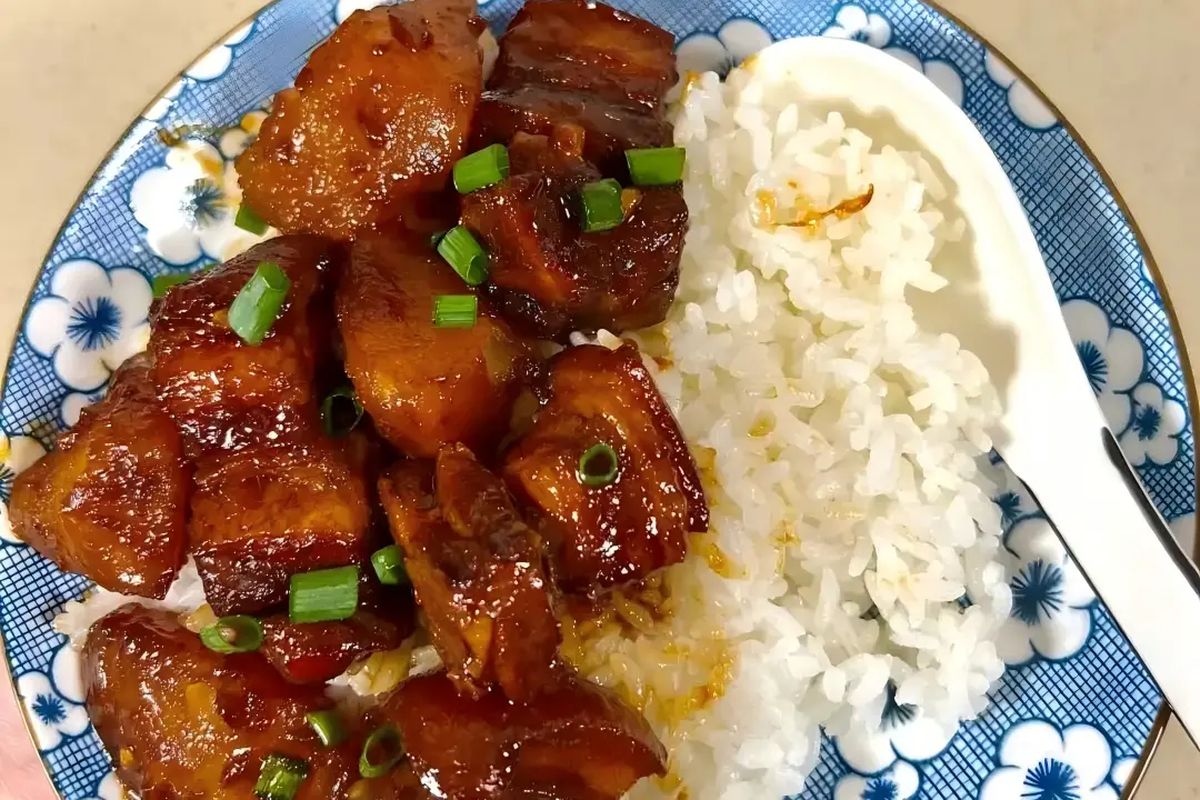
Lift the pork into a warm bowl and fish out the aromatics. Raise the heat and reduce the liquid, about 250ml, until it coats a spoon and a line drawn through it holds for two seconds, roughly five minutes. Return the pork, skin up, and spoon the glaze over each cube four or five times. Pull the pot off the heat while the sauce still looks a shade looser than you want; it tightens as it cools.
Key Pitfalls
The caramel went grainy and stayed pale. Sugar crystallised: you stirred with a spoon, sugar caught on the dry sides of the pot, or the pork went in wet. Swirl instead of stirring, brush the sides down with a wet pastry brush, and dry the cubes. Once crystals form, add 2 tbsp of hot water, dissolve, and colour it again.
The caramel turned black and bitter in seconds. It passed 175°C. Amber to burnt takes under 15 seconds in a thin pot, so have the pork within reach before the sugar goes on. If it is only lightly bitter, add 100ml of hot water and boil for a minute; if it still bites, wipe the pot and start again with fresh sugar.
The sauce was greasy and the meat dry. The pot boiled. Fat renders out at 100°C and the muscle contracts, so the sauce takes the fat and the meat loses its water. Hold 90 to 95°C with the lid ajar, and use a flame tamer if your smallest burner is too strong.
The pork came out pale under a thin sauce. The caramel was pulled at pale gold, or wet meat dropped the sugar below browning temperature. Both are fixable at minute 55 with 1 tsp of dark soy stirred in for the last ten minutes. Added earlier, it mutes the caramel.
The skin was chewy and resisted the chopstick. The braise was too short, or the slab came from an older animal. Give it 15 minutes more at the same simmer with 100ml of hot water.
The glaze went salty and thin at once. You reduced the soy after the sugar had gone. Add 100ml of hot water and 1 tsp of sugar, swirl and reduce for three minutes. Salt cannot be removed, only diluted, so taste before that final reduction.
It tasted flat on the day it was made. The salt had not spread through the meat and the gelatine was still loose. Cool uncovered for 20 minutes and refrigerate overnight; the next day the sauce sets to a jelly, the salt has equalised, and reheating at 80°C gives a gloss you cannot get in one session.
Serving Suggestions
Serve four cubes per person over steamed rice, with the glaze spooned over so the rice catches it. Blanched bok choy with a pinch of salt is the usual companion at my table, mostly to cut the fat. Keep the pot covered at the table; the glaze skins over in five minutes in a cool room.
A cold lager or plain roasted oolong works better than wine, since the sugar makes most reds taste thin. Leftovers improve for up to three days; reheat with a splash of water, lid on, at a low simmer for eight minutes, never in a microwave, which splits the glaze.
This is the companion recipe to Hong Shao Rou — The Pork Belly That Tastes Like Home. Read the story, then cook the dish.
💬 Comments