Hong Shao Niu Rou Mian: The Braised Beef Noodle Soup That Knows What Time Tastes Like
I was 23, fresh out of Fudan and three months into my first job at Microsoft’s Shanghai office. December. The kind of damp Shanghai cold that seeps through wool and lodges in your bones like a bad tenant. I’d just pulled a sixteen-hour shift debugging a storage-layer outage that took down half of Asia-Pacific, and at 2am the only thing open within walking distance was a beef noodle shop on Ziyun Road with a flickering neon sign and six plastic stools.
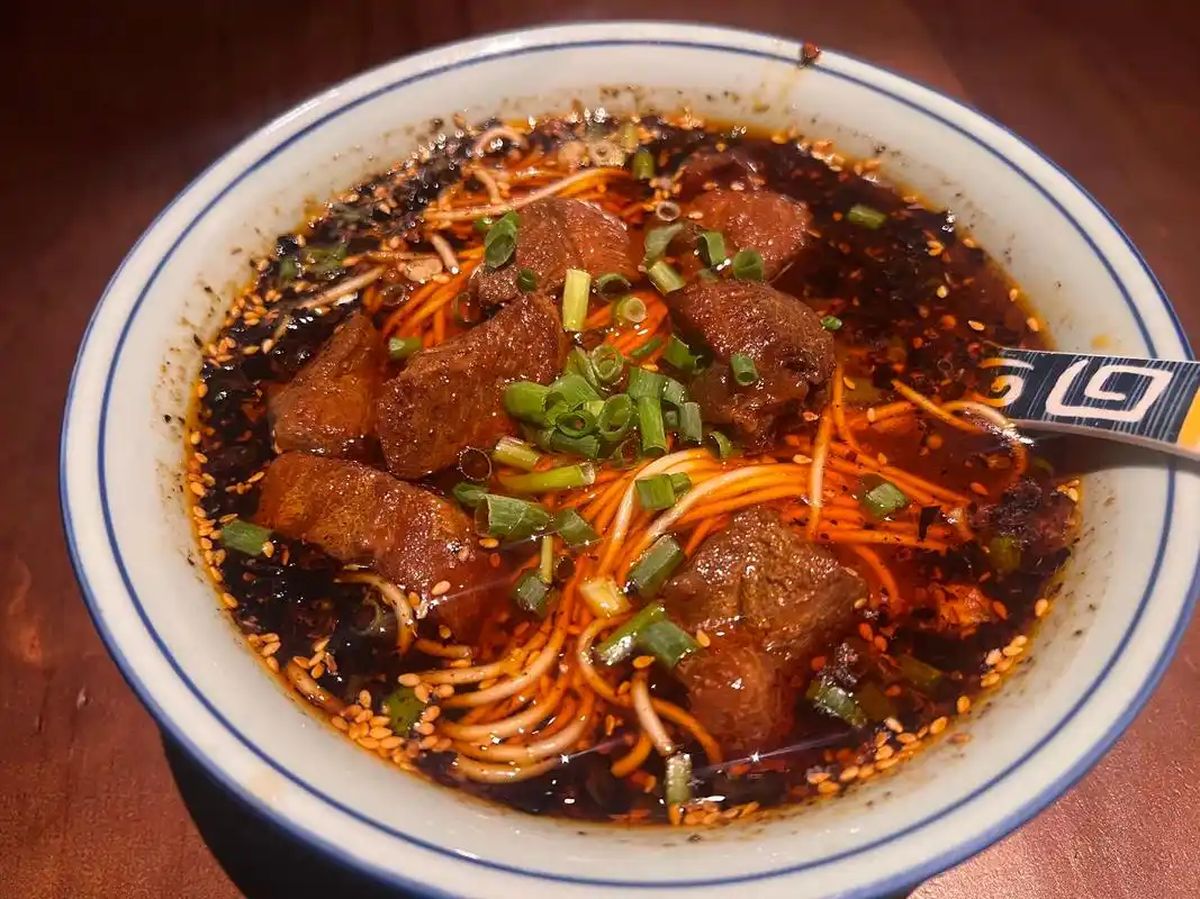
The owner, everyone called him Uncle Wang, didn’t ask what I wanted. He never did. I sat down, rested my forehead on my palm, and seven minutes later a bowl the size of a washbasin landed in front of me. Dark broth, the color of steeped black tea, with chili oil slicked across the surface in amber rings. Three slabs of beef shank, each one thick as a thumb, muscle fibers visibly separating at the edges. Thick wheat noodles coiled underneath like a nest of pale snakes. A handful of bok choy bobbing at the rim.
The steam hit my face before the spoon did — star anise, ginger, and something deeper, something that smelled like patience. I took one sip and stopped thinking about the outage.
This is Hong Shao Niu Rou Mian (红烧牛肉面, hóng shāo niúròu miàn). It’s not fast food. It’s not street food. It’s the bowl of soup that taught me what four hours of simmering can do to a piece of beef.
The Architecture of a Bite
I spent thirteen years as a programmer. I’ve debugged distributed systems where a single mistimed write could corrupt a petabyte of data. But nothing in computer science prepared me for the precision engineering inside this bowl.
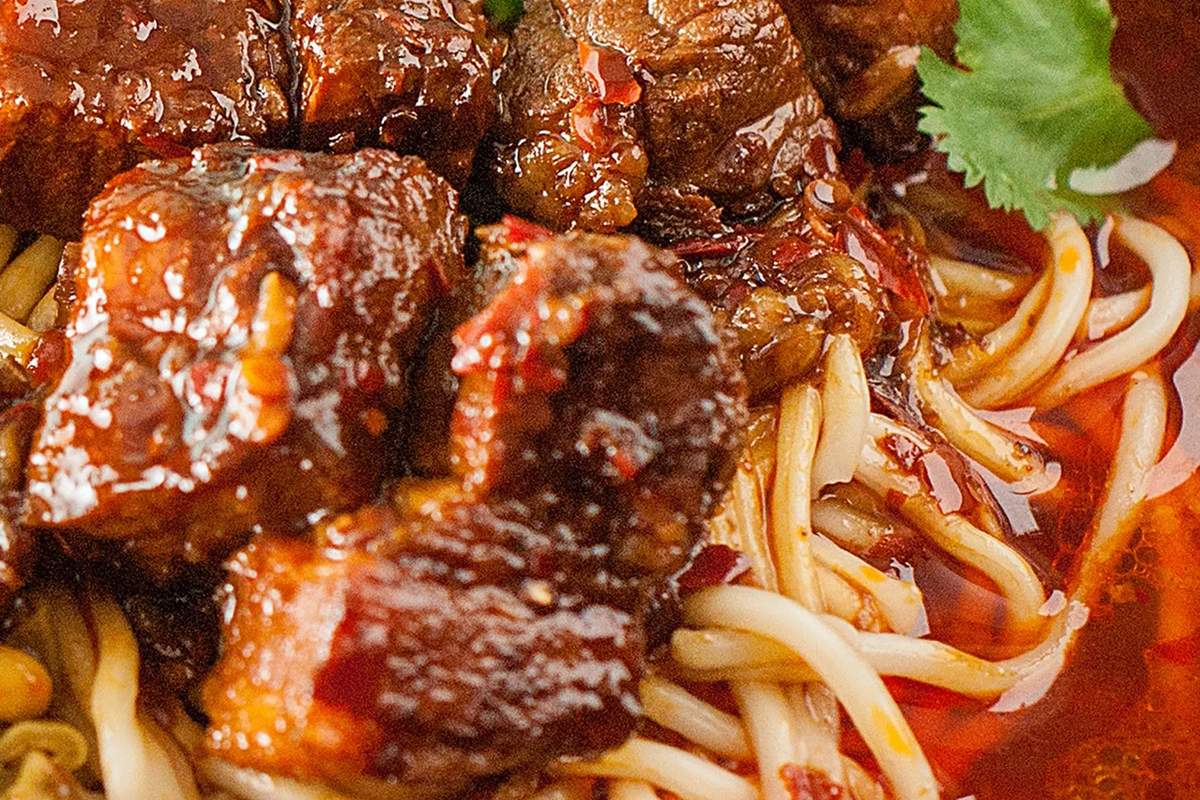
Here’s what happens. You lift a piece of beef with your chopsticks — it should tremble. Not fall apart, but come close. The shank has been braised for three to four hours, long enough for collagen to dissolve into gelatin and connective tissue to turn to silk. When you bite, the meat yields in layers: first the outer edge, lacquered dark by caramelized sugar and dark soy, then the inner flesh, still holding its grain, and finally, if you’re lucky, a ribbon of tendon that’s been reduced to a translucent, quivering jelly.
The noodles fight back. These are cu mian (粗面), thick wheat noodles cut wider than linguine. They’re not the alkaline yellow strands of Lanzhou. They’re white, dense, and chewy. The kind of noodle that makes your jaw work. A good bowl of Hong Shao Niu Rou Mian gives you exactly this tension: the beef surrenders, the noodles resist. They balance each other.
Then the broth. This is the part that separates greatness from mediocrity. A proper hong shao braise starts with rock sugar melted in oil until it smokes, then soy sauce, then the beef, then water, then spices: star anise, cassia, fennel, Sichuan peppercorn, dried tangerine peel. And then nothing but time. Four hours minimum. The result isn’t a beef soup. It’s a beef reduction, concentrated, almost sticky, with a sweetness that doesn’t announce itself until the third sip.
A good bowl of Hong Shao Niu Rou Mian is a study in patience. The broth spent all afternoon getting here. You can spend fifteen minutes with it.
The Guy Who Started It
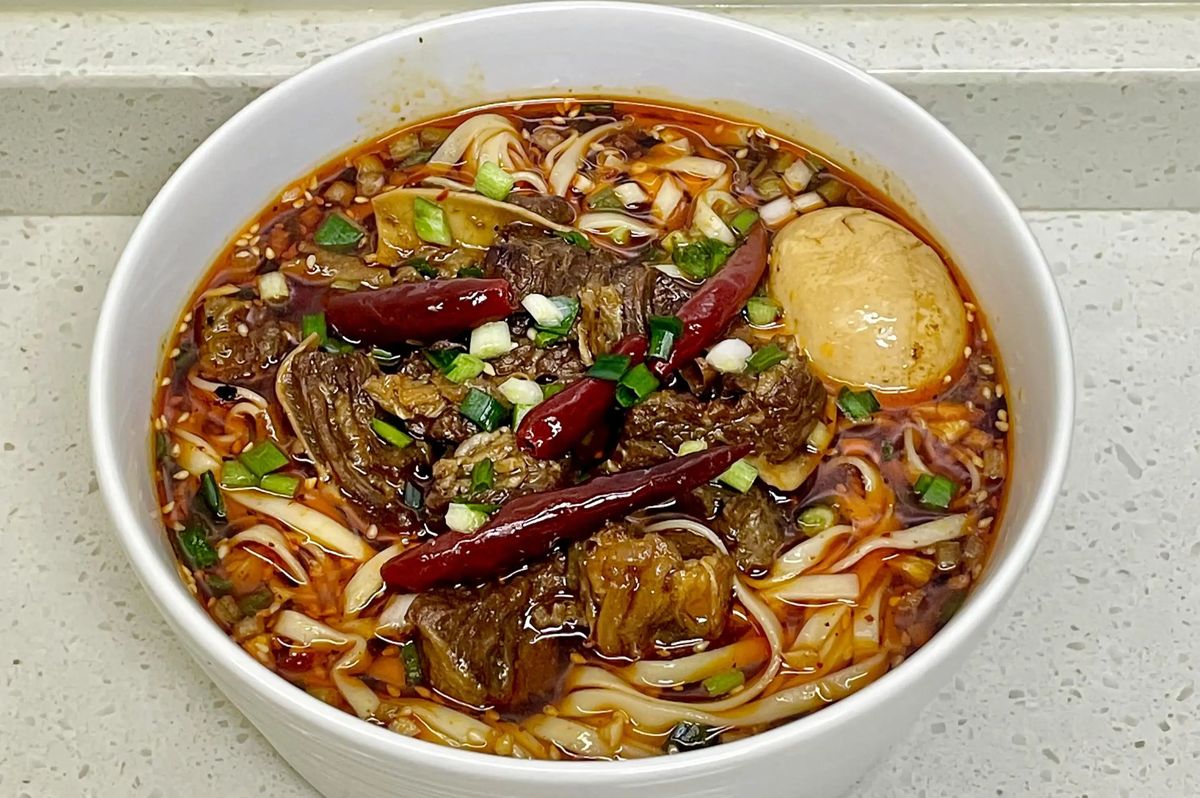
The dish traces back to Sichuan veterans who fled to Taiwan after 1949. They brought their beef-braising instincts with them — Sichuan’s hong shao technique — and adapted it to Taiwanese kitchens, adding rock sugar for sweetness and pickled mustard greens (suān cài, 酸菜) as a sidekick. The dish crossed back to the mainland in the 1990s and never left. Today you’ll find it from Harbin to Haikou, each shop tweaking the spice blend like a family recipe passed down in whispers.
The Enemies of Hong Shao Niu Rou Mian
Bad beef noodle soup is everywhere, and it always makes the same mistakes.
First: the broth. If it tastes like beef bouillon powder dissolved in hot water with a splash of soy sauce, leave. A real broth stains the spoon. It has body. You can feel it coat your tongue.
Second: the beef. If the chunks are smaller than a mahjong tile and dry enough to double as pencil erasers, the kitchen cut corners on braising time. Beef shank needs three hours minimum. Anyone who serves it after forty-five minutes should be investigated.
Third: the noodles. If they’re the thin, uniform kind that come out of a plastic bag and turn to paste five minutes after hitting the broth, you’re eating at a chain. Real shops use fresh thick-cut wheat noodles with bite — yǒu jiáo jìn (有嚼劲). They should still be fighting you ten minutes in.
Here’s what the real thing demands:
- Beef shank with tendon attached — not lean stewing beef, not brisket. The tendon is non-negotiable. It’s what gives the braise its body and the bite its contrast.
- Rock sugar, not white sugar — caramelized in oil before anything else. This is what gives the broth its mahogany color and that deep, rounded sweetness.
- Whole spices, never powder — star anise, cassia bark, fennel seed, Sichuan peppercorn, dried tangerine peel. Powder burns. Whole spices bloom.
- Dark soy for color, light soy for salt — two different sauces, two different jobs. If you’re using one soy sauce for everything, the broth comes out the color of dirty dishwater.
- Pickled mustard greens on the side — this isn’t decoration. A spoonful of suān cài cuts through the richness like a reset button. You eat it between bites.
The Taiwanese version is sweeter and heavier on the five-spice. It’s a valid remix, not better or worse. Just a different bowl.
How to Eat It
I burned the roof of my mouth on this dish more times than I can count. The broth looks calm — dark, still, a few chili flakes floating on the surface — but underneath it’s volcanic. You learn patience or you pay in skin.
First, the spoon. One sip of broth before you touch anything else. This is how you know what you’re dealing with. A good broth announces itself immediately — deep, layered, faintly sweet, with the warmth of star anise lingering at the back of your throat. A bad one just tastes like salt and regret.
Now the beef. Lift a chunk with your chopsticks. If it falls apart before reaching your mouth, the kitchen overcooked it. If it bounces, they undercooked it. The sweet spot: it holds together until your teeth close, then separates into strands with almost no resistance.
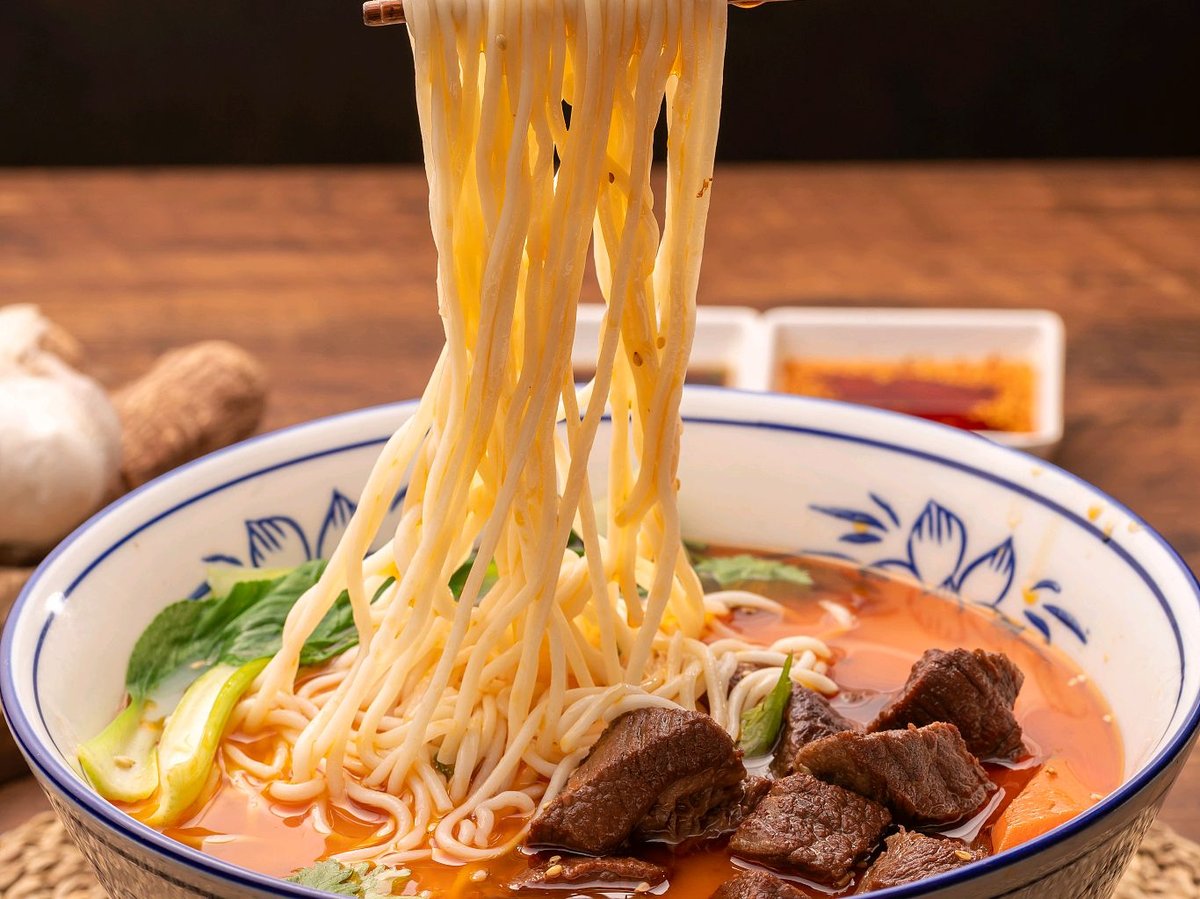
The noodles come next. Twist them around your chopsticks, but don’t try to lift more than you can handle. These are thick noodles and they’re heavy. Then slurp. The sound is part of the experience. Anyone who tells you otherwise has never eaten noodle soup in a Chinese shop at 2am.
Finish with the bok choy. It’s been soaking in the broth the whole time and is now carrying more flavor than any leaf has a right to.
Uncle Wang retired three years after I started going to his shop. Nobody knew where he went. The shop became a bubble tea place, then a phone repair kiosk, then nothing. But his broth — that dark, patient, four-hour thing — lives in my head as a standard. Every bowl of Hong Shao Niu Rou Mian I’ve eaten since has been measured against it. Most fall short.
I’ll save the home-cooking breakdown for another post. Doing this justice at home means nailing the caramelized sugar stage. One second too long and the whole pot turns bitter. That deserves its own deep dive. Recipe coming soon.
💬 Comments