Hairy Tofu: The Mold You're Supposed to Eat
The rain had been falling on Tunxi Old Street for an hour when I found the griddle. A woman in a plastic apron stood behind it, and to her left, laid out on a wet wooden board, sat a row of tofu blocks wearing fur.
Not a figure of speech. Every slab was covered in a coat of white fuzz half a centimetre deep — soft as the mold on forgotten bread, and just as alarming if you had no idea what you were looking at. She lifted one with chopsticks and laid it on the oiled steel. It hissed. The fur flattened against the surface, sank into the oil, and two minutes later she slid a golden brick onto a paper plate: a shell that cracked under the tooth, and inside, something closer to custard than to tofu.
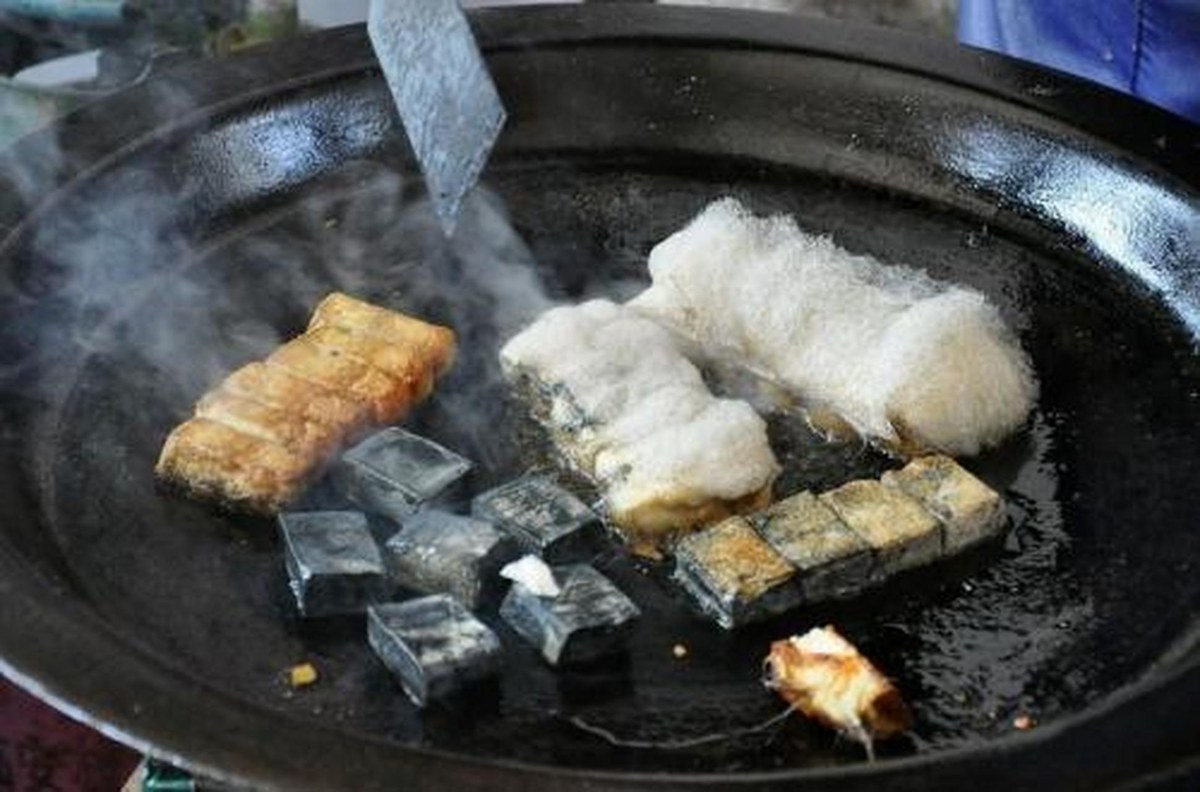
That is 毛豆腐 (máo dòufu) — hairy tofu — and it has spent six hundred years being the best argument I know that the mold we are all taught to fear is sometimes the entire point.
The Fuzz Is the Point
You think white fuzz means spoiled. That instinct is correct about bread and wrong about this.
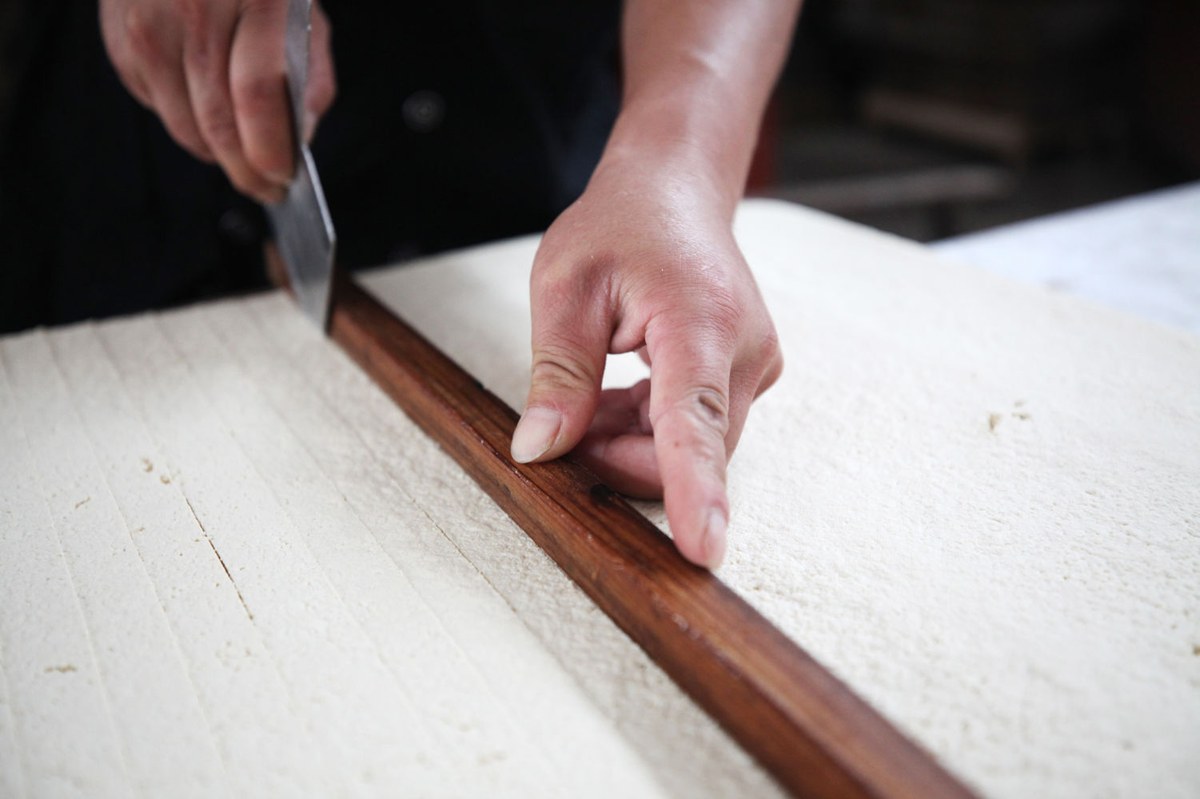
The mold on hairy tofu is not wild. It is invited. A maker cuts fresh blocks into dominoes and lays them in a warm, dark, damp room, on bamboo slats or straw, then dusts them with a starter culture — Actinomucor elegans, a cousin of the mold that ripens Camembert. Within a day or two, white filaments bloom across every surface. By the fourth day they stand up like the nap of good velvet. The air in that room is yeasty and faintly ammoniac, like a bakery inside a barn. If you have eaten Camembert, you have already eaten this mold's family. The French put theirs on a cheese board. Huizhou puts theirs on a griddle.
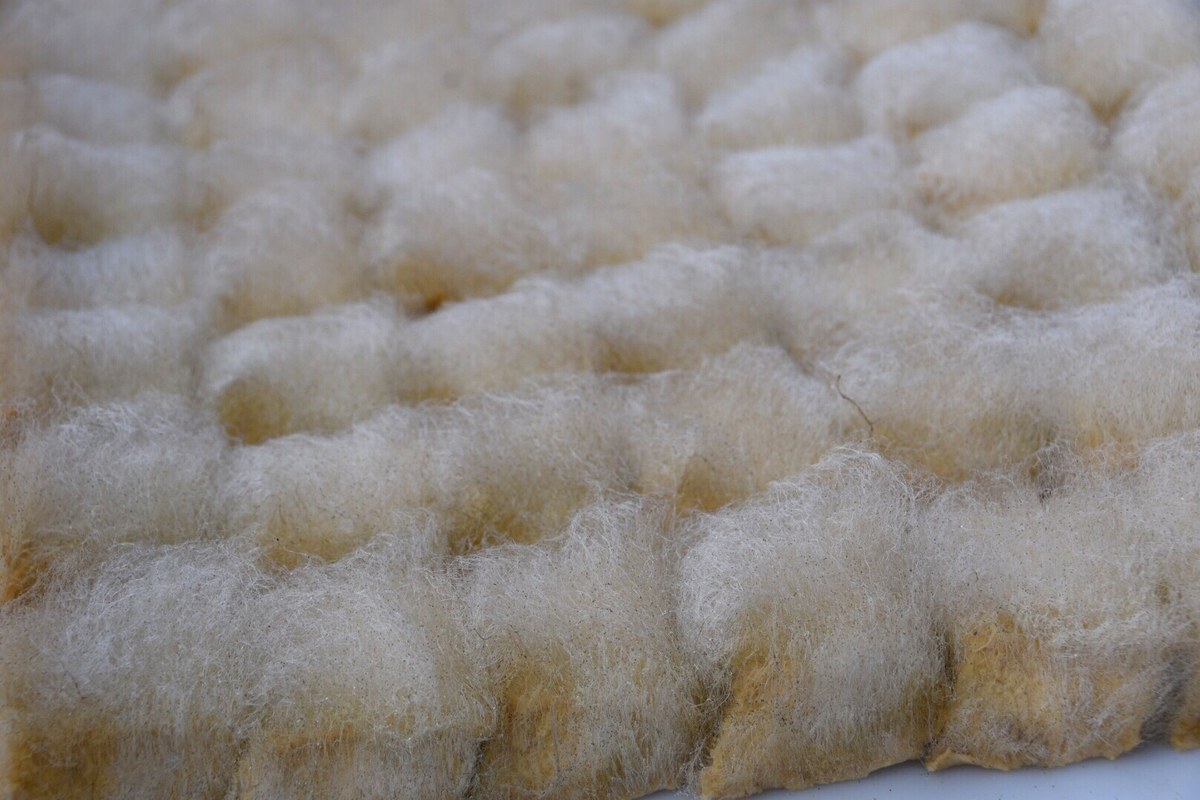
The mold is not decoration. It digests. Those filaments break the tofu's protein and fat into smaller, tastier pieces — free amino acids, a little sugar, a little glutamate — which is why the inside of a finished 毛豆腐 tastes rounder and deeper than any block of fresh tofu ever will. It is an ageing process, the same one that makes a dry-aged steak worth the money.
Fire Turns Fur Into Crust
You almost never eat it raw. The fuzz is a stage, not a dish. Twenty seconds on a hot, oiled pan and the white coat collapses, browning into a thin blistered shell. What is left underneath has gone soft and molten — somewhere between a custard and a soft-boiled egg, but savoury, with a low funk at the back of the throat that fades into sweetness. Crisp outside, liquid centre, hot enough to burn the roof of your mouth if you are impatient, which you will be, because the smell alone — toasted soy, hot oil, one whispered note of fermentation — makes waiting physically difficult.
Listen while it cooks. There is a flat sizzle with a wet tick underneath it, and that tick is the last of the fuzz giving up.
A Tofu That Only Huizhou Makes
Hairy tofu belongs to Huizhou (徽州, Huīzhōu), the old prefecture in what is now southern Anhui, in the hills around Huangshan. The usual legend credits Zhu Yuanzhang, the beggar who became the Ming dynasty's founding emperor: fleeing an army, he left a batch of tofu behind, came back days later to find it furred white, and fried it anyway because he was starving. True? No idea. What is certain is that the technique is old, that it never travelled much past Huizhou and a few neighbouring towns, and that for most of its history it was a breakfast and a street snack.
The Fakes
Bad hairy tofu exists, and it is worth knowing how to spot it.
Served cold. Fridge-temperature blocks with the fur intact and a sauce on the side, presented as a dare. The mold is an ingredient, not a topping. If nobody has applied heat, send it back.
Confused with stinky tofu. Stinky tofu (臭豆腐, chòu dòufu) is a different animal: brined until it reeks, usually blue-grey inside, and the mold is not the point. Hairy tofu is barely funky — soft, yeasty, closer to cheese than to a rubbish bin. A menu that swaps the two names is telling you it has never cooked either one properly.
Sold as a jar. The shrink-wrapped "fermented tofu" in a Western supermarket is 腐乳 (fǔrǔ), a paste you eat with rice porridge. Different food, different shelf, different century.
Actually rotten. And here is the danger worth remembering: mold that has gone the wrong colour. White and grey fuzz is dinner. Green, blue, orange, black, or anything slick that smells of ammonia through the plastic is not, and no amount of frying rescues it. Vendors in Huizhou are ruthless about this. A tray that turns the wrong shade goes in the bin, no debate, and that discipline is the whole reason you can eat the white version with total confidence.
Eat It Standing Up
Three moves, no ceremony. Pick it up with chopsticks while it is still spitting. Dip it in whatever small dish the stall hands you — usually a chilli sauce, sometimes a sweet fermented one, occasionally just chilli oil. Two bites, not one, unless you want the molten middle down your shirt. Cold beer or hot tea both work. Plain water does not; it thins the fat and the thing goes flat in your mouth.
My last plate was on that same Tunxi street, in a mist so fine it was not quite rain, under a shop awning with three strangers I had met ten minutes earlier. The vendor had run out of paper plates and handed each of us a leaf wrapper instead. Nobody said much. There is a particular quiet that happens when four people are eating something hot and strange and very good at once, and it is one of the better sounds in the world.
I have gone looking for it since, in Shanghai and once in the US, in sealed packets that claim to be the same thing. They are not. Hairy tofu is a food that refuses to travel and was never meant to: made two days before it is eaten, on a griddle that has been hot for decades. Which is exactly why, when you finally find one, you stop walking and eat it in the rain.
💬 Comments