Hairy Crab: The Crab Shanghai Waits Eleven Months For
September in Shanghai has a smell, but it isn't a food smell, not yet. It's the humidity finally breaking, the last of the summer heat loosening its grip on the streets, and one morning you notice the wet markets have all put out the same new sign: 阳澄湖大闸蟹. Yangcheng Lake hairy crab — dàzháxiè. Nobody needs to be told what it means. Across the city, people start counting days like it's a holiday they can't quite remember the date of.
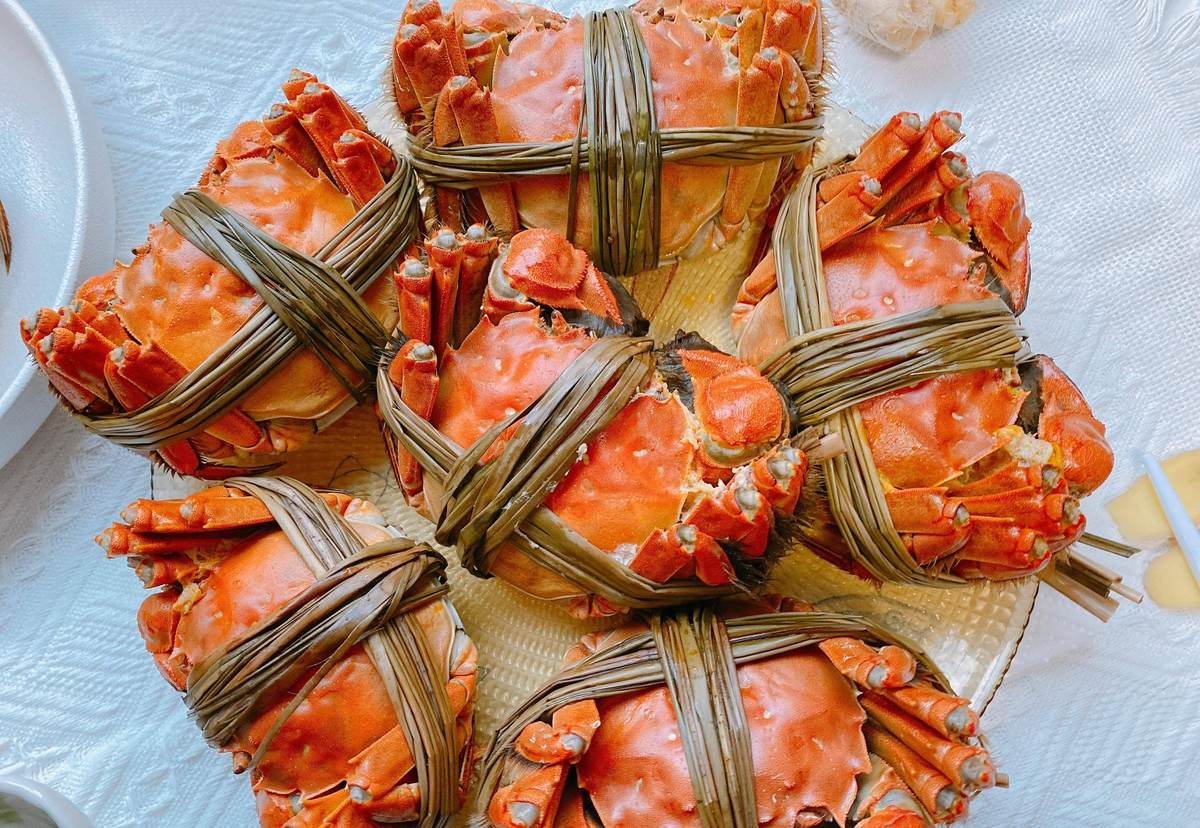
The crab itself arrives tied in rice straw, legs folded tight, shell the color of wet river mud with a pair of fuzzy mittens on its front claws. The hair is where the English name comes from. It looks like something that crawled out of a river and would rather go back. Then it hits the steamer, and everything changes.
You'll smell it before you see it. Lake water turning to sweet steam, a clean mineral note under something faintly briny. There's a rule about time: roughly fifteen minutes, no more. Overcook it and the meat goes cottony and sad. When the lid comes off, the shells have turned from green-brown to a red so bright it looks lacquered. That's the signal. Dinner starts now.
I grew up eating these. Shanghai is a crab city. My grandmother kept a set of 蟹八件 — the eight crab tools — in a carved wooden box she brought out exactly once a year, in autumn, with the gravity of someone unlocking a family heirloom. A hammer no bigger than a thimble. Scissors thin as a bird's beak. A pick the width of a needle, for the meat in the legs. To me it looked like a surgery kit. To her, it was just how you eat a crab properly.
Here's the thing nobody tells you until you've been burned: most "Yangcheng Lake" crab never touched Yangcheng Lake.
The lake is small. The hunger for it is not. Every autumn, crabs from a dozen other provinces get trucked to the shoreline, dropped into the water for a few days or a couple of weeks, then fished out with a certificate claiming they were born there. Locals have a name for them: 洗澡蟹, "bathing crabs." A dip, a stamp, a three-times price hike. The crab doesn't know the difference. Neither, honestly, do most of the people paying for it.
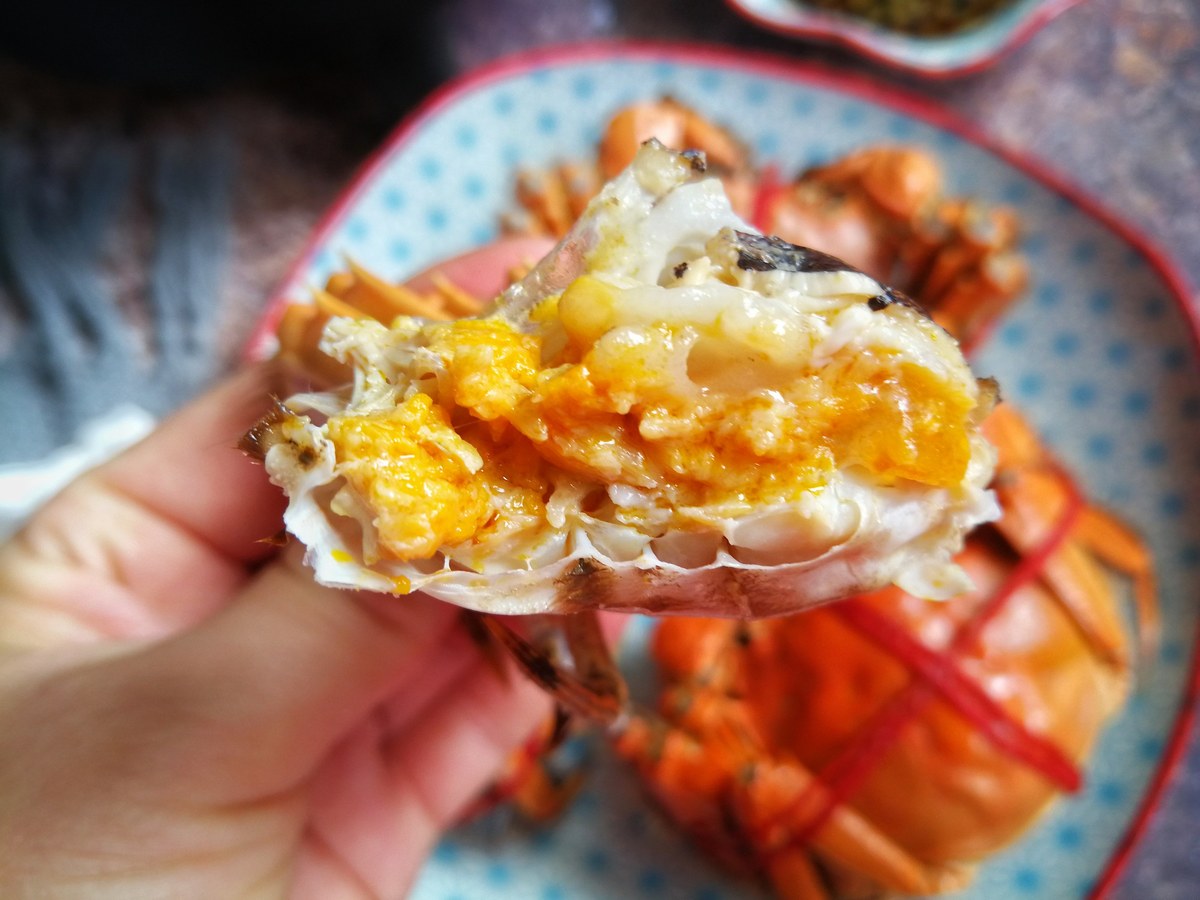
You learn to look. The real ones have clean white bellies and hard, glossy shells and a certain heft in the hand. And there's the calendar, which matters more than any certificate: 九雌十雄, "September for the female, October for the male." In September the female carries 蟹黄, the orange-gold roe. Come October, the male carries 蟹膏, that creamy, translucent stuff that melts against your tongue like butter made of shellfish. You want the female for the roe, and a month later, the male for the cream.
That's the hunt, and it's why Shanghai gets so serious about it. You don't eat hairy crab on a whim. You plan it. You buy from someone your aunt has trusted for years, or you take the train out to Kunshan and eat at the edge of the lake itself, steam rising off the water. You invite people over. Crab isn't a meal. It's an event with a guest list.
The bad version is everywhere, and you'll know it the moment it's in front of you. Frozen crab — factory-steamed, shipped, reheated — tastes of nothing but salt and refrigerator. The meat strings apart, the roe turns grainy and pale, and no amount of ginger vinegar can save it. If you can crush the shell in your hand, it molted too recently. If the price is a bargain, it took a bath. And if it arrives pre-cracked and pre-sauced in a takeout box, you are not eating hairy crab. You're eating a sad simulation of it, and you should send it back.
There's the sauce problem too. A real crab needs one saucer: Zhenjiang black vinegar (镇江香醋) with shredded ginger and a pinch of sugar, and a cup of warm Shaoxing rice wine (黄酒) beside it. Nothing else. Drown the crab in soy sauce or chili oil and you've buried the exact thing you paid for — the sweetness. Shanghai crab meat is sweet, cleanly and unmistakably sweet, and that sweetness is the entire point. Everything else is noise.
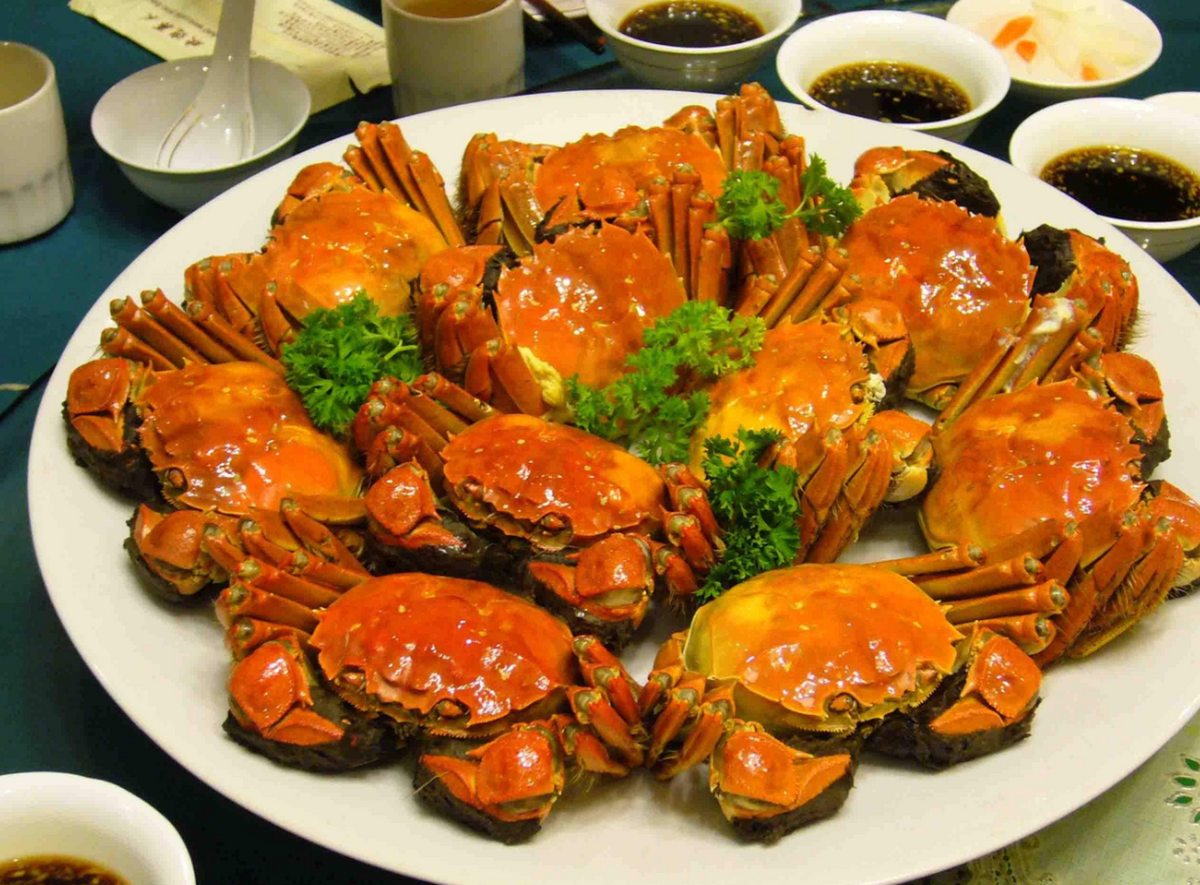
Eating one is slow on purpose. You crack the legs first, one by one, and the sound is a small wet snap, a joint giving way. You draw the meat out with the pick. Then the claws — the thickest, sweetest meat — worth every minute of the work. Then you flip the body, lift the shell, and there it is, the 蟹黄 or the 蟹膏, depending on the month, sitting there like the prize at the bottom of a puzzle box. You set aside the gray feathery lungs; nobody eats those. The rest you work through with your fingers, sucking the meat off the shell in that undignified, completely satisfying way no utensil was ever invented for.
My grandmother took an hour to eat one. She'd crack, pick, sip her wine, talk. The crab was never entirely the point. The hour was. It was the excuse to sit still in autumn while the city cooled down outside the window.
I don't live in Shanghai anymore. But every September the same impulse shows up — the urge to find the real thing, or something close enough, and sit down with it and take my time. Hairy crab is the one food I've never learned to rush. You can't. The tools won't let you, the shell won't let you, and the season — gone almost as fast as it arrived — won't let you either.
Eleven months of waiting, for a few weeks of this. Worth it.
💬 Comments