Guo Bao Rou — The Double-Fried Pork That Snaps When You Bite
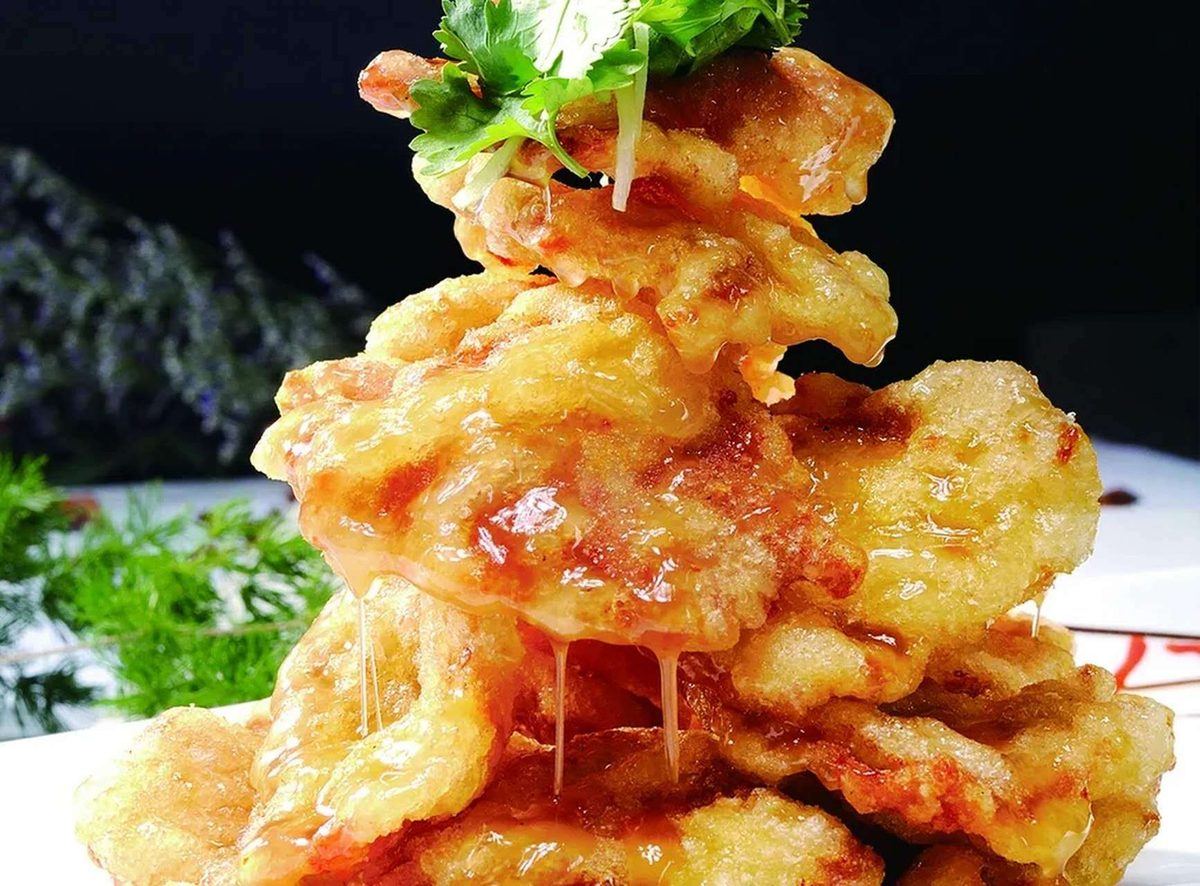
The first thing that hits you is the vinegar. Not the polite, subtle kind — the sharp, sweet-tart smell of aged mǐ cù hitting a hot wok, caramelizing on contact, billowing through the kitchen door like someone opened a window onto a different season. You’re sitting in a Dongbei restaurant in Shanghai in January, the kind where the windows fog up from the steam of boiling dumplings and the tables are covered in plastic sheeting. The heater rattles. Outside it’s three degrees. Inside, the plate that just landed on your table is still crackling.
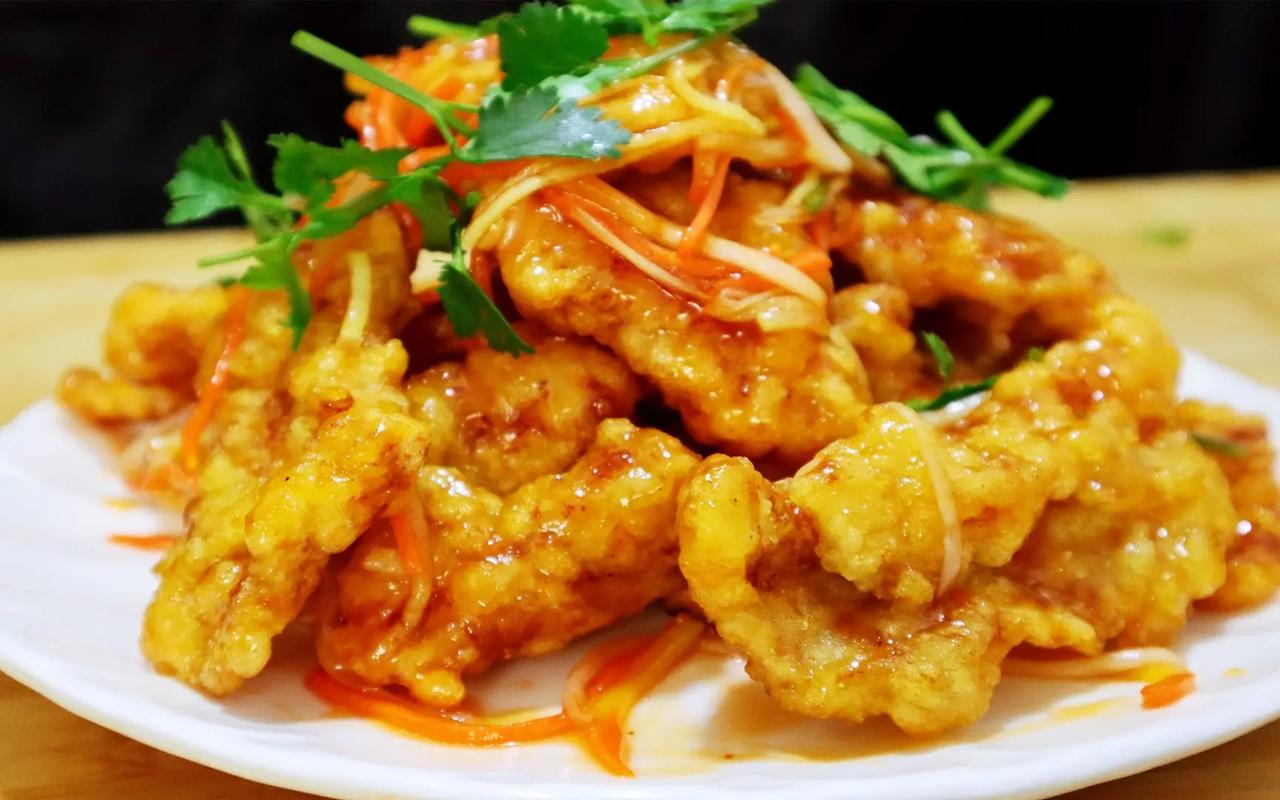
The slices are maybe the size of playing cards, gold as a late-afternoon sun through smog, each one wearing a translucent coat of sauce that catches the fluorescent light and turns it sticky-bright. A few julienned strips of ginger and carrot are scattered across the top like confetti. The edges of the pork curl up slightly where the batter bubbled and set.
You pick one up with chopsticks. It holds. You bring it to your mouth and the smell intensifies: vinegar and sugar and hot oil. The smell of Dongbei cooking. Your teeth close.
Snap.
The sound is audible. The shell shatters like thin ice, then the pork inside — tender, juicy, somehow still steaming — meets your tongue. The sauce hits: sweet first, then sour, then that clean mineral finish from the rice vinegar that makes you want to take another bite before you’ve finished the first.
This is Guo Bao Rou (锅包肉, guō bāo ròu). Harbin invented it. The rest of China borrowed it. Most of them got it wrong.
The Architecture of a Bite
I used to debug distributed systems for a living — thirteen years at Microsoft, Google, NVIDIA, staring at traces where a single mistimed operation could cascade into a full-system collapse. Guo Bao Rou is a similarly unforgiving piece of engineering. The double-fry technique that defines it isn’t a gimmick. It’s a thermodynamic necessity.
Here’s how it works. The batter — just potato starch, water, and a pinch of salt — is mixed into a slurry slightly thinner than pancake batter. The pork, sliced against the grain into thin sheets, gets dredged and dropped into oil at 160°C for the first fry. This sets the starch shell and cooks the meat through. The slices come out pale, flabby, unremarkable. Most people would stop here. Most people are wrong.
The second fry happens at 190°C, hotter and faster. This is where it happens. The starch shell, already set from the first pass, now flash-dehydrates. Water trapped in the batter matrix turns to steam, creating microscopic air pockets that harden into a lattice of crispness. The exterior goes from beige to gold in about forty seconds. The interior, shielded by the starch armor, stays moist.
When you bite, that lattice shatters. The sound is a single sharp crack — not the wet crunch of a potato chip, more like breaking the sugar crust on a crème brûlée with the back of a spoon. Then the pork gives way. Then the sauce floods in.
The sauce is the other half of the equation: white sugar melted into aged rice vinegar, a splash of light soy, and that signature mǐ cù (米醋) which has none of the fruity sweetness of black Chinkiang vinegar. It’s sharper, cleaner, more industrial in its purpose. It doesn’t want to be liked. It wants to cut through fried starch and leave you ready for the next bite.
A good plate of Guo Bao Rou is loud. That’s the test.
The Russian Equation
In 1907, a chef named Zheng Xingwen (郑兴文) was cooking at the Daotai Fu (道台府), the Qing government office in Harbin that hosted Russian diplomats. The Russians found traditional Dongbei food too salty, too heavy on the fermented bean pastes. Zheng needed a dish that a Russian palate would recognize — something sweet, something sour, something fried.
He sliced pork loin thin, battered it in potato starch, double-fried it until the shell shattered, and tossed it in a sugar-vinegar sauce. The original name was Guō Bào Ròu (锅爆肉) — “wok-exploded meat.” Over a century of Harbin accents smoothing the syllables, bào softened into bāo, and the dish became the Guo Bao Rou we know today.
The Russians loved it. Harbin never let it go.
The Enemies of Guo Bao Rou
Guo Bao Rou has exactly one job: it must shatter. Everything else is negotiable. The shatter is not.
Walk into a mediocre Dongbei restaurant and you’ll see the signs before you taste them. The pork slices look uniformly pale, the sauce pooled at the bottom of the plate instead of clinging to each piece. This is single-fried pork — the batter set but never crisped. It tastes like a pancake that lost its nerve. You can bend it. You should not be able to bend it.
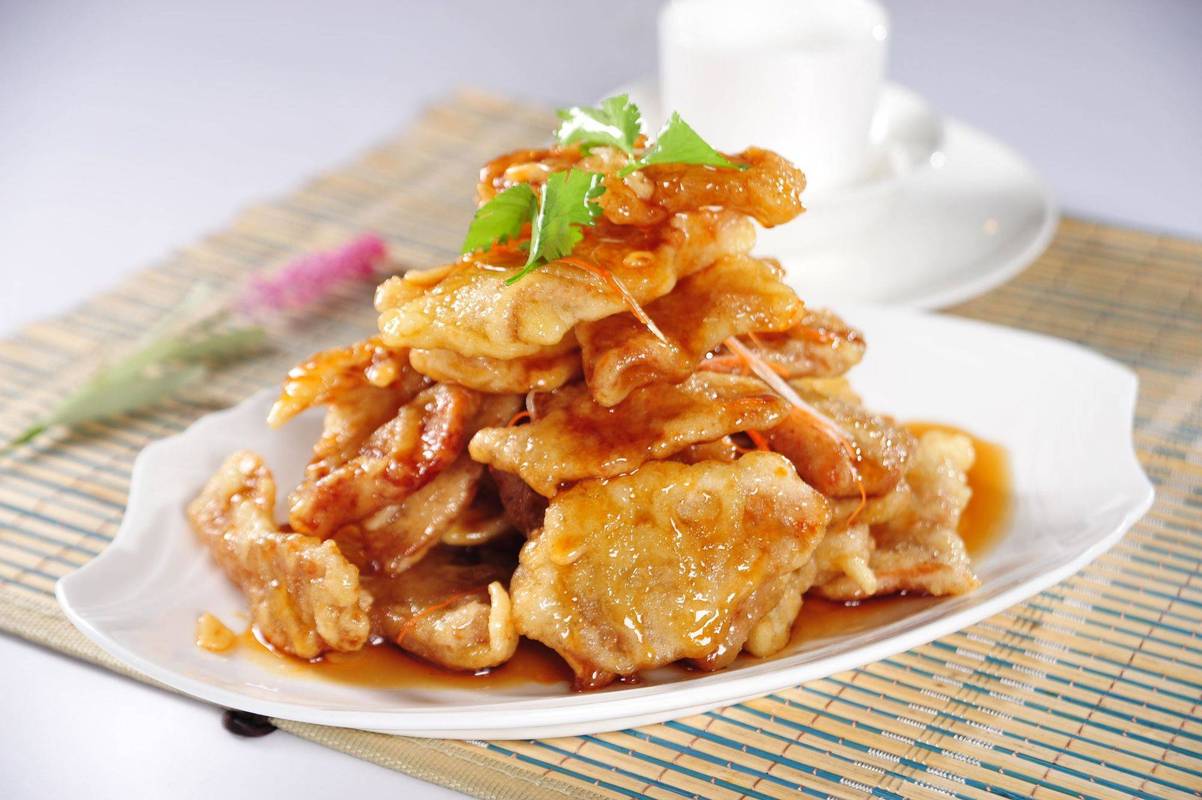
Then there’s the ketchup problem. In Liaoning province, some cooks replace the sugar-vinegar sauce with ketchup and call it “tomato Guo Bao Rou.” The result is pork wearing a sweet red coat that tastes like a school cafeteria tried to be exotic. The Heilongjiang version — proper Guo Bao Rou — uses white sugar and rice vinegar exclusively. The sauce should be translucent, amber-tinged, and invisible except for the glisten. If your Guo Bao Rou is red, you are eating a Liaoning remix. It’s a valid regional dish. It is not Guo Bao Rou.
Other crimes: pork sliced too thick so the fry times don’t work, batter made with wheat flour instead of potato starch (potato starch is the only starch that shatters; wheat flour goes soft), sauce applied too early so the shell steams itself into submission, and — the most common sin — letting the dish sit for five minutes before serving. The crunch window is maybe three minutes. After that, physics wins.
Real Guo Bao Rou has:
- Pork loin, sliced thin against the grain into sheets, not cubes. You want surface area for the batter to cling to and quick, even cooking.
- Potato starch batter (土豆淀粉), not cornstarch, not wheat flour. Potato starch is the only starch that shatters. It’s non-negotiable.
- The double fry — 160°C first, 190°C second. Skip either temperature checkpoint and you’ve made fried pork, not Guo Bao Rou.
- White rice vinegar (米醋), not black Chinkiang, not white distilled. Rice vinegar has a specific sharp-sweet profile that defines the dish.
- White sugar, not brown, not rock sugar. Clean sweetness that dissolves completely into the vinegar.
- Ginger and carrot, julienned fine and scattered fresh — they’re not a garnish, they’re a palate reset between bites.
How to Eat It
I learned this the hard way in a Harbin restaurant when I was twenty-two, visiting a college friend over winter break. The plate arrived sizzling, the vinegar smell sharp enough to make my eyes water, and I dove in like it was any other fried dish — slow, conversational, pausing between bites to comment on the snow falling outside the window. By bite four the shell had gone soft. My friend’s grandmother, who had ordered for the table, looked at me the way a mechanic looks at someone who just poured diesel into a gasoline engine.
“Eat fast,” she said. “The kitchen did its job. Now you do yours.”
She was right. You have about three minutes from the moment the plate hits the table to the moment the pork stops being Guo Bao Rou and starts being something else — still good, still edible, but no longer transcendent. The sauce, trapped against the hot starch by surface tension, begins to steam the shell from the inside. The crackle fades to a chew. The magic has an expiration time and it’s measured in bites.
Pick up a slice. Let the excess sauce drip. Eat it in two bites — three if you’re being polite, but why are you being polite. Alternate with a strand of ginger. When the plate is empty, which it will be quickly, there should be nothing left but a faint smear of oil and the smell of vinegar on your fingers. That’s the marker. That’s the whole meal.
My friend’s grandmother nodded once and refilled my tea. We never spoke about it again. I’ve never eaten Guo Bao Rou slowly since.
Want to cook this? Here’s our step-by-step Guo Bao Rou recipe .
💬 Comments