How to Cook Guo Bao Rou: The Double-Fry Way
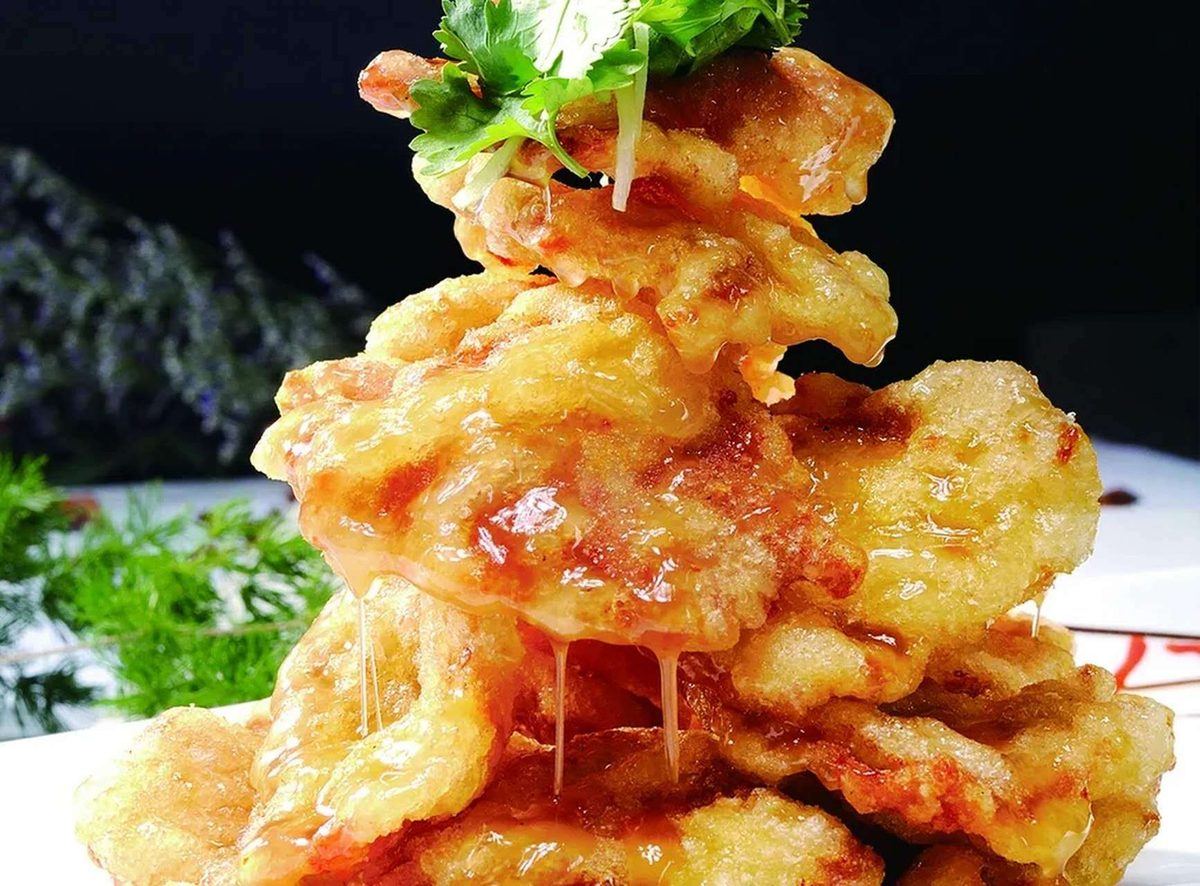
Editor’s Note: When we published the story of Guo Bao Rou , several readers asked the same question: how do you actually get that shatter at home? The double-fry technique looks intimidating but it’s really just two temperatures and a clock. Here’s the step-by-step.
If you’ve ever bitten into Guo Bao Rou that went crack — the kind where your table neighbors turned to look — you know the standard that matters. The shatter is everything. This recipe gives you that shatter, in a home kitchen, with a wok and a thermometer. It takes about thirty minutes. It will ruin takeout fried pork for you permanently.
The Science of the Shatter
Before we start cooking, a quick word about why this works — because understanding the mechanism makes you less likely to skip steps.
The shatter comes from potato starch (土豆淀粉, tǔdòu diànfěn). Unlike cornstarch or wheat flour, potato starch granules are larger and more crystalline. When they hit hot oil, they gelatinize quickly on the outside while the interior stays moist. The double fry exploits this: the first fry cooks the meat and sets the starch shell. The second fry, at a higher temperature, flash-dehydrates that shell. The water inside the starch matrix turns to steam and escapes, leaving behind a rigid, brittle lattice of starch molecules — exactly the structure that shatters when you bite it.
This is also why you cannot substitute cornstarch. Cornstarch produces a softer, more pliable crust because its granules are smaller and pack more densely. It’s fine for velveting chicken. It’s wrong for Guo Bao Rou.
Ingredients
For 3 servings, served family-style.
The Pork & Batter
- 300g pork loin (猪里脊, zhū lǐjǐ) — sliced against the grain into sheets approximately 3mm thick, roughly the size of a playing card
- ½ tsp salt — for the marinade
- ¼ tsp white pepper (白胡椒粉) — for the marinade
- 120g potato starch (土豆淀粉) — this is the non-negotiable ingredient. Look for packages labeled 土豆淀粉 at any Chinese grocery. If the package says 生粉 (general starch), check the ingredients — it must say potato, not corn
- 100ml cold water — to make the batter slurry
- 1 egg white — adds structure and helps the batter cling
The Sauce
- 3 tbsp white granulated sugar — dissolves clean, no caramel notes
- 3 tbsp rice vinegar (米醋, mǐ cù) — the pale yellow kind, not black Chinkiang vinegar. Rice vinegar has a sharp, clean acidity that defines the dish. If you can find Hengshun brand 米醋, that’s the one
- 1 tbsp light soy sauce — salt and umami backbone
- 1 tsp dark soy sauce — purely for a whisper of color
The Aromatics
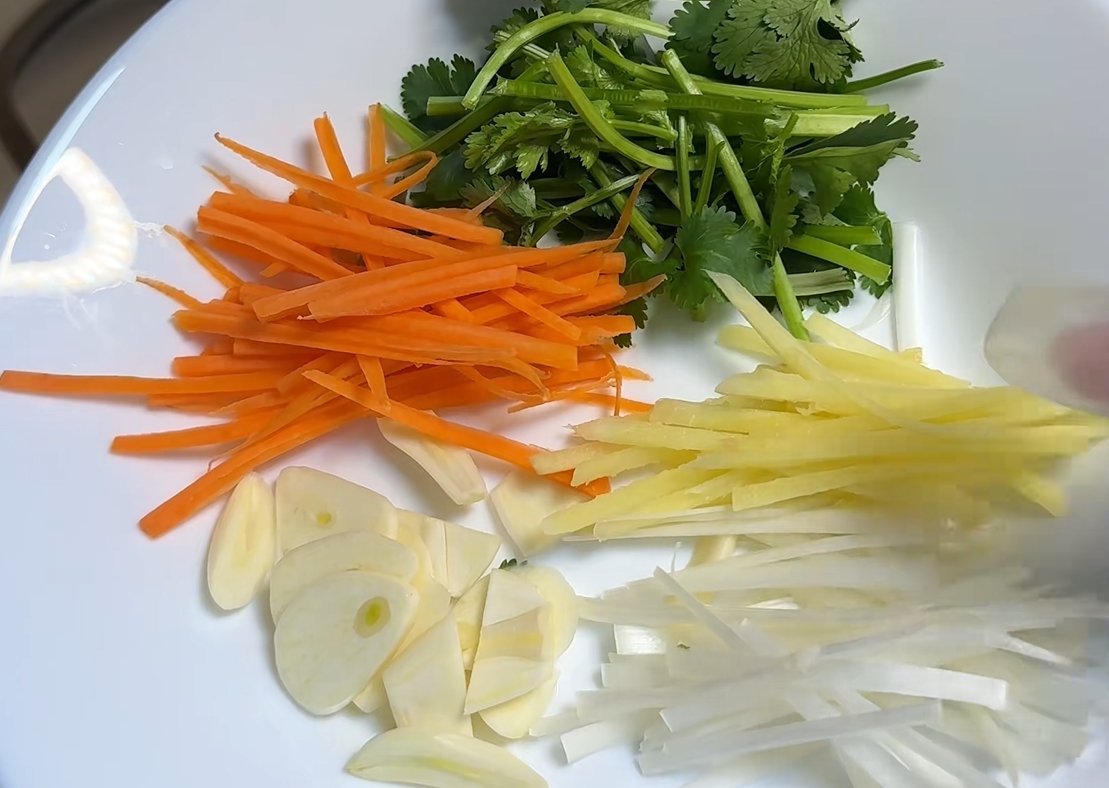
- 2-inch piece ginger, peeled and cut into very fine julienne (matchsticks thinner than a chopstick)
- 1 small carrot, peeled and julienned to match the ginger
- 3 cloves garlic, thinly sliced
- 2 scallions, white parts only, julienned
For Frying
- Vegetable oil for deep frying — about 3 cups (enough to submerge the pork slices). Peanut oil or canola oil both work. Do not use olive oil — the smoke point is too low.
Substitution notes: If you absolutely cannot find potato starch, tapioca starch is the closest alternative — but know that the shatter will be slightly less crisp and the shell slightly more chewy. Cornstarch produces a completely different texture and should be considered a different dish. For rice vinegar, do not substitute white distilled vinegar (too harsh) or apple cider vinegar (too fruity). In a true emergency, half rice vinegar and half water will get you closer than any substitute.
Prep: 10 Minutes That Make the Difference
1. Slice the pork
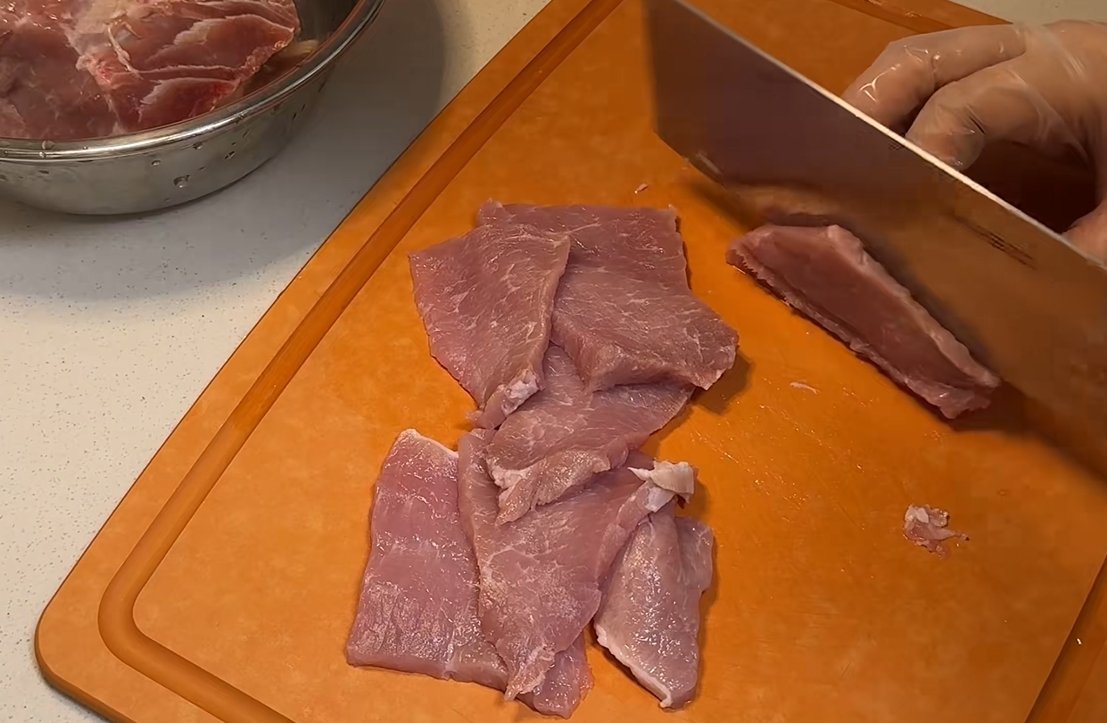
After slicing, lay each piece flat and gently tap it with the back of your knife in a crosshatch pattern — not hard enough to break through, just enough to relax the muscle fibers. This prevents the pork from contracting into a tube when it hits hot oil.
Why this matters: Pork loin is lean. If the slices are too thick, the center will be raw when the batter is golden. If too thin, the meat dries out before the shell sets. Three millimeters is the Goldilocks zone, and tapping the fibers keeps each sheet flat so it fries evenly.
2. Marinate
In a bowl,
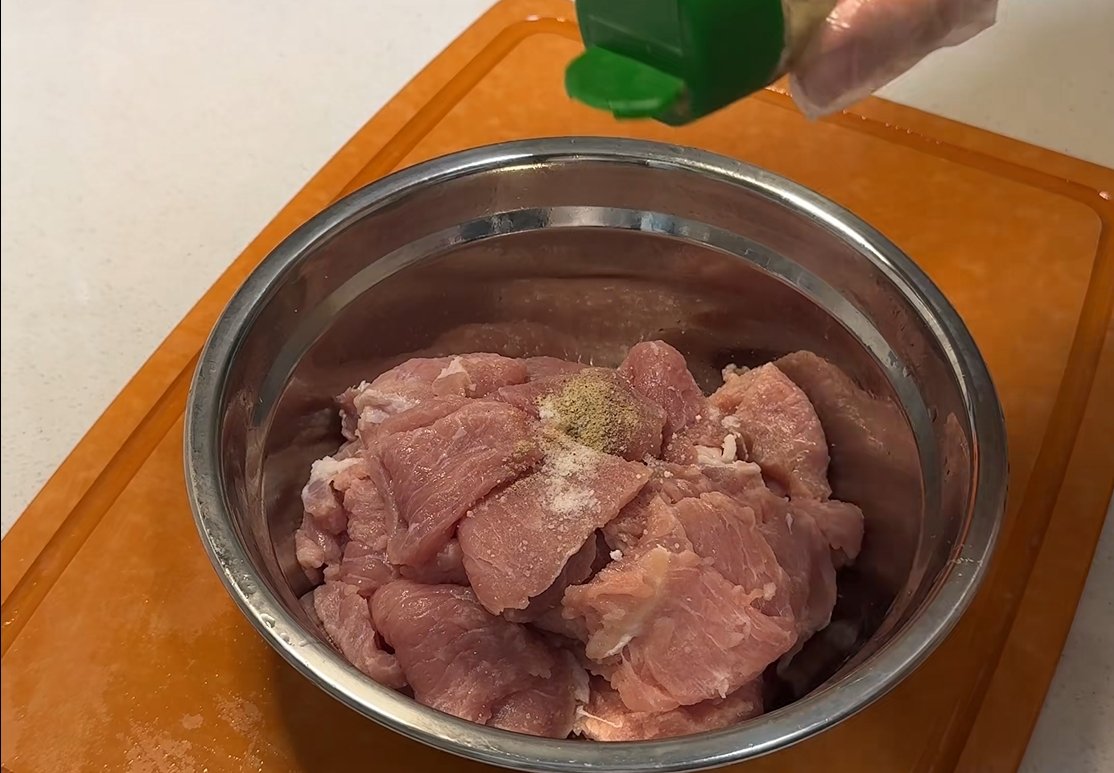
3. Make the batter
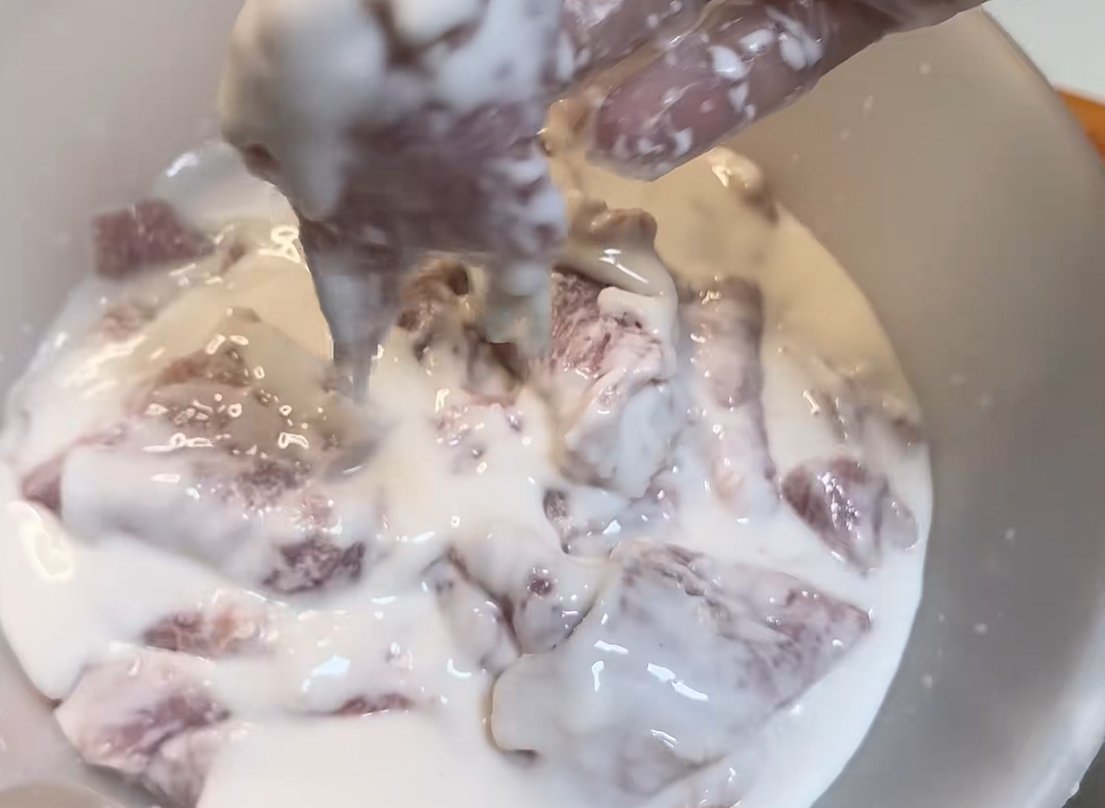
Why this matters: Potato starch is hydrophilic — it absorbs water and then releases it. The settling step removes excess water so the starch concentration is high enough to form a brittle shell. Too much water in the batter = steam, not shatter.
4. Prep the aromatics and sauce
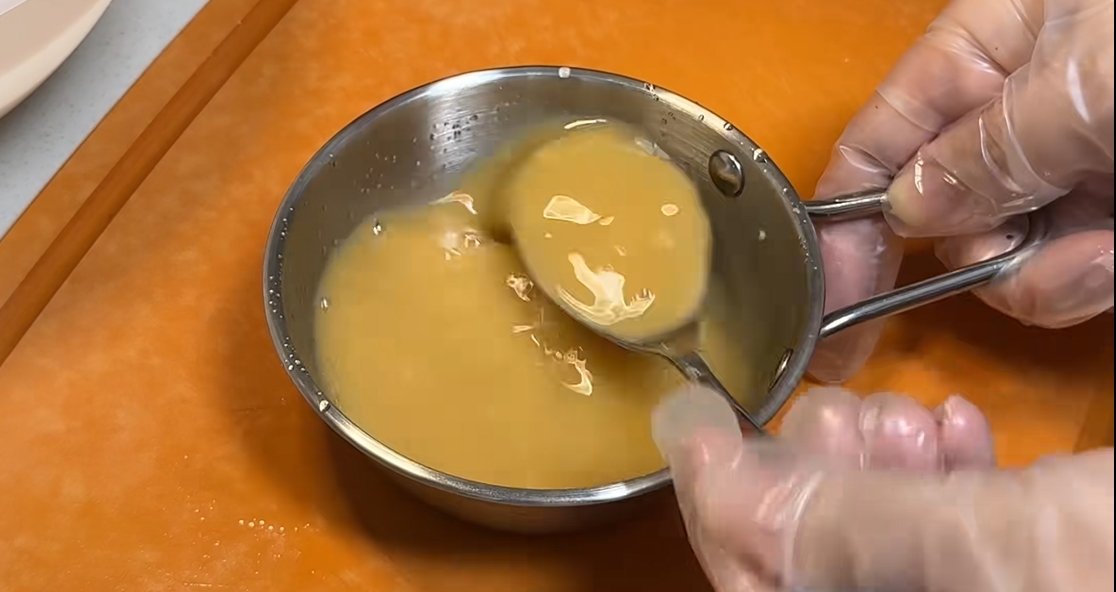
In a small bowl, combine sugar, rice vinegar, light soy sauce, and dark soy sauce. Stir to dissolve the sugar. Taste it. It should be assertively sweet and sharply sour, with the soy barely registering. Adjust: more sugar if your vinegar is unusually sharp, more vinegar if your sugar is taking over. The ratio is roughly 1:1 by volume, but vinegars vary. If you prefer a thicker, glossier sauce, stir in a small amount of cornstarch slurry.
Have everything next to your wok before you heat any oil: marinated pork → batter → oil → sauce bowl → aromatics plate → serving platter. Once frying starts, there’s no time to measure or chop.
Step-by-Step: The Double Fry
Step 1: First Fry — Set the Shell (3–4 minutes per batch)
Pour oil into your wok to a depth of about 5cm. Heat to 160°C. If you don’t have a thermometer, test with a drop of batter — it should sink halfway, then rise to the surface and sizzle gently without browning. If it browns immediately, the oil is too hot. If it sinks and stays at the bottom, too cold.
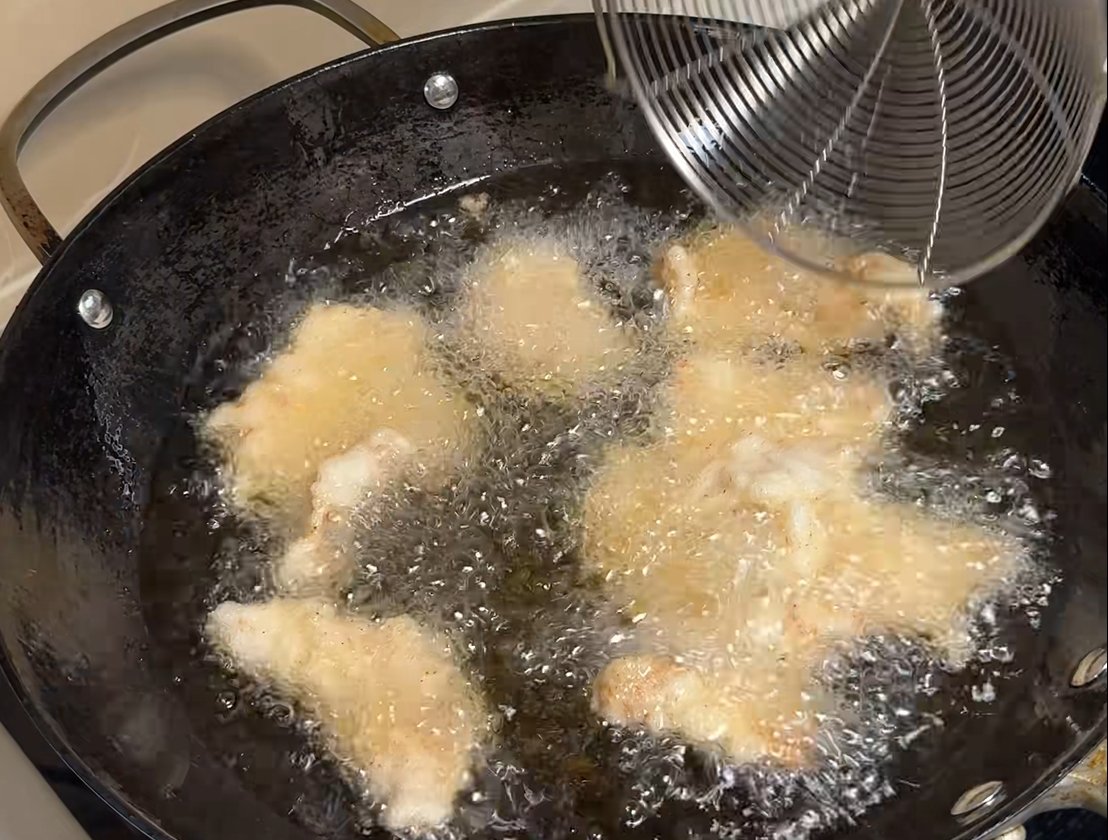
Why this matters: The first fry is about cooking the meat and creating the starch foundation. The temperature is moderate because you need the pork to cook through before the batter browns. If the oil is too hot, the shell will burn while the center stays raw. If too cool, the batter absorbs oil and turns greasy instead of crisp.
Step 2: Rest and Heat (2 minutes)
Let the partially fried pork rest while the oil temperature climbs. This is not downtime — the resting period allows carryover cooking to finish any slightly-under pieces and lets the batter cool slightly, which improves the second fry’s effect. Heat the oil to 190°C. You’ll see the surface shimmer and the oil will thin visibly, moving more freely in the wok.
Why this matters: The temperature gap between first and second fry is the entire game. At 160°C, water in the batter evaporates slowly. At 190°C, it flashes to steam instantly. The rapid expansion is what creates the microscopic air pockets that make the shell shatter.
Step 3: Second Fry — The Shatter (30–40 seconds)
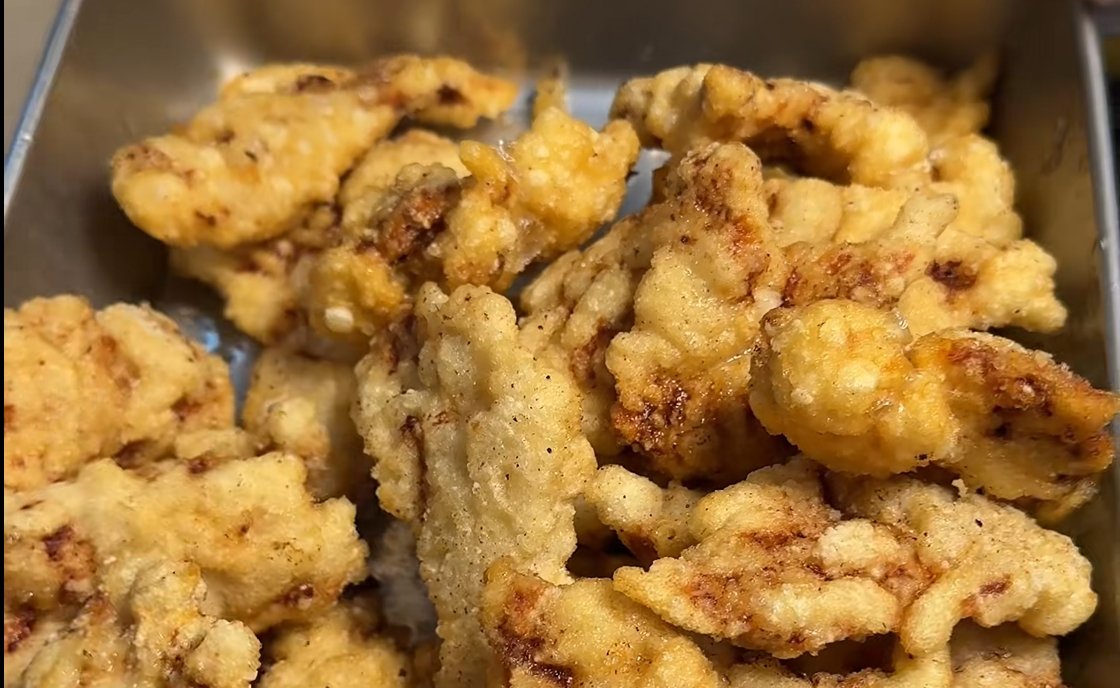
Return all the pork to the oil at once. The oil will bubble furiously. The slices will turn from pale to gold in about 15 seconds. Keep them moving with a spider strainer or chopsticks so they color evenly. At 30 seconds, tap a slice against the side of the wok — if it makes a sharp tak tak tak sound, it’s done. If it sounds dull, give it 10 more seconds. Remove immediately to a wire rack. Do not use paper towels at this stage — the trapped steam will soften the shell.
Step 4: Sauce and Toss (30 seconds)
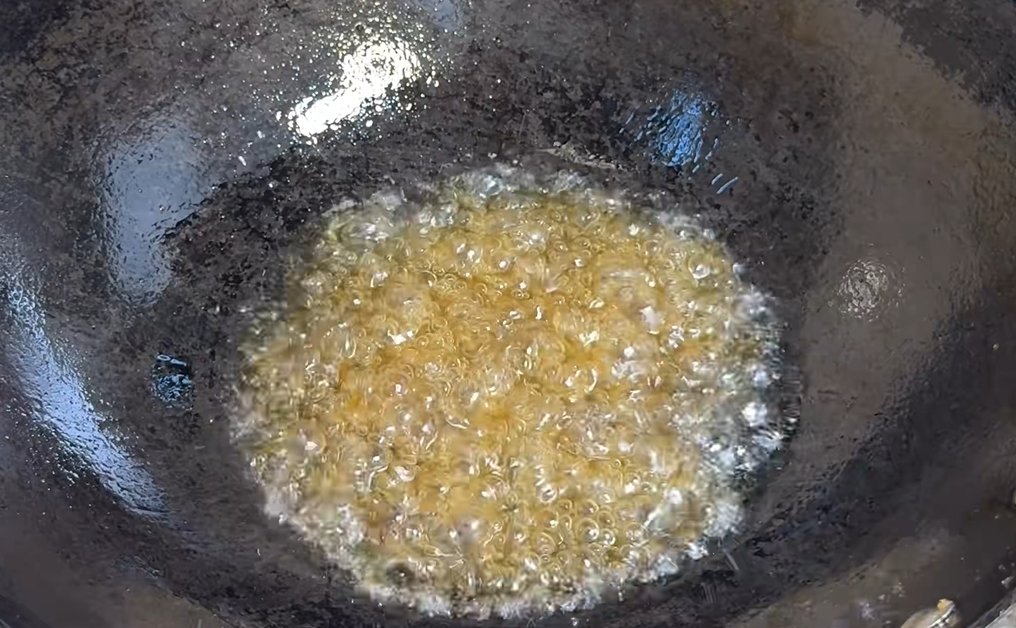
The alternative (and my preferred) method: heat the sauce separately until it bubbles and thickens, then pour it over the plated pork at the table. The pour-at-table method preserves maximum crunch because the sauce hits the shell only at the moment of eating. It’s less traditional but more practical for home cooks who want every bite to shatter.
Why this matters: Sauce is the enemy of crunch. Every second the sauce sits on the shell, it begins to soften it. Toss quickly, plate immediately, serve faster than you think is reasonable.
Step 5: Serve Immediately
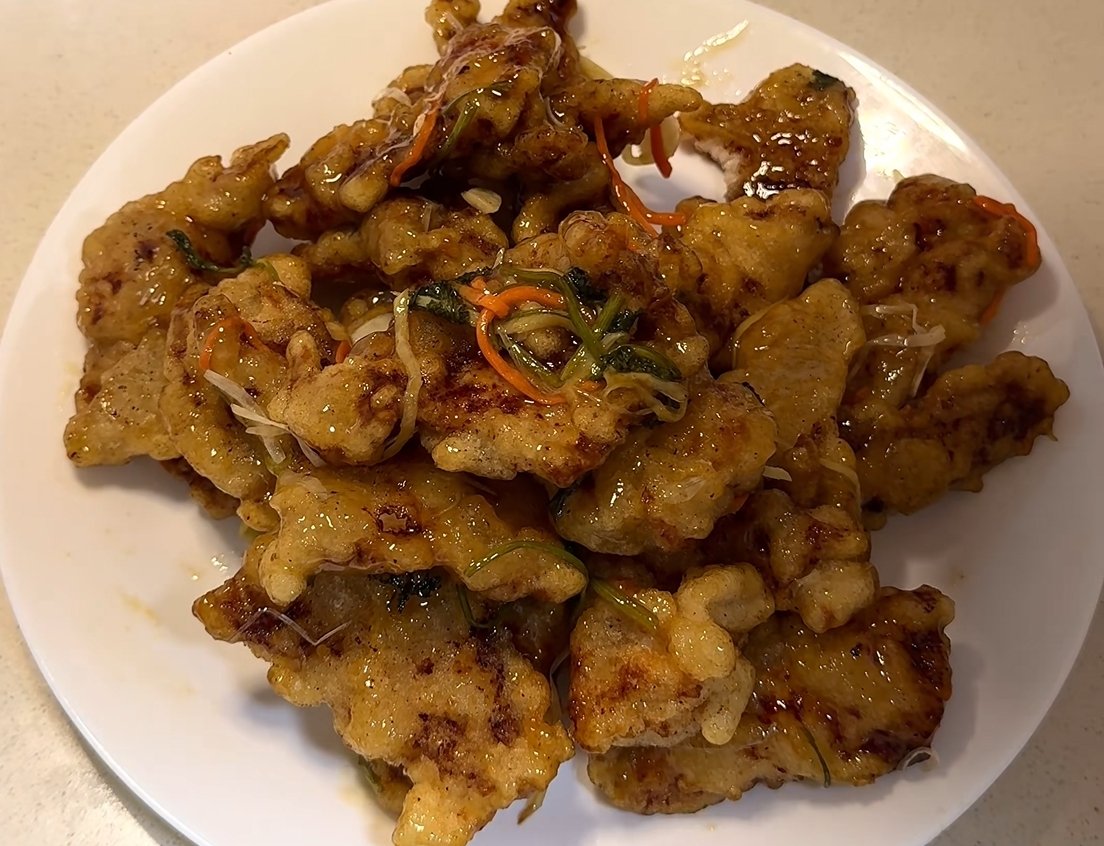
Move the pork to a serving plate. Scatter the aromatics on top if you pour-sauced. Bring to the table. Do not wait for side dishes. Do not wait for rice. Do not wait for the person who’s still washing their hands.
Key Pitfalls
The batter was too thin. This is the most common problem. If your batter drips off the pork like water, you didn’t pour off the excess water after the starch settled. Remedy: let it settle again, pour off more water, or add another tablespoon of dry potato starch.
The first fry burned. Your oil was too hot for the first fry. Drop the temperature to 160°C — at that temperature, a batter drip should sizzle gently but not brown for at least 30 seconds.
The shell went soft before serving. You let the sauced pork sit too long. The pour-at-table method solves this. If you’re tossing in the wok, sauce only half the batch and keep the other half unsauced on a wire rack in a warm oven (80°C). Sauce the second half only when the first is eaten.
The pork was tough. You sliced with the grain instead of against it. The muscle fibers run lengthwise through the loin; cut perpendicular to that direction. If you can see long lines running down the slice, you cut the wrong way.
The sauce is too sour / too sweet. Rice vinegars vary dramatically between brands. Some are mellow, some will strip paint. Taste the raw sauce before cooking and adjust. The sugar and vinegar should feel balanced — neither should dominate. When in doubt, 1:1 by volume is your starting point.
The batter slides off in the oil. Your pork was wet from the marinade. Pat the slices dry with a paper towel before dredging in batter. Wet meat repels starch slurry.
There’s no “snap” even after the second fry. The oil wasn’t hot enough for the second fry. 190°C is not a suggestion. Below 185°C, the water in the batter evaporates too slowly and the shell remains chewy instead of brittle.
Serving Suggestions
Guo Bao Rou is a centerpiece dish. It does not share the spotlight well. Serve it as the main protein alongside plain steamed rice and one or two simple vegetable sides — smashed cucumber salad (拍黄瓜, pāi huángguā) dressed in garlic and vinegar is the classic pairing, the cool crunch of cucumber playing against the hot shatter of the pork. A bowl of egg drop soup (蛋花汤, dànhuā tāng) rounds out the meal without competing.
For drinks: cold Tsingtao beer is the default in Harbin. The bitterness cuts through the sweet-sour sauce and the carbonation scrubs your palate between bites. If you’re not drinking, strongly brewed jasmine tea works the same way. Do not pair this with red wine. I’ve tried. The tannins fight the vinegar and everyone loses.
Leftovers, if you have them — and you probably won’t — can be reheated in an air fryer at 180°C for 2 minutes. The microwave will turn the shell into a sad, flabby memory of its former self. You’ve been warned.
This is the companion recipe to Guo Bao Rou: The Double-Fried Pork That Snaps When You Bite . Read the story, then cook the dish.
💬 Comments