Guilin Rice Noodles: You Eat It Dry, Then You Add the Broth
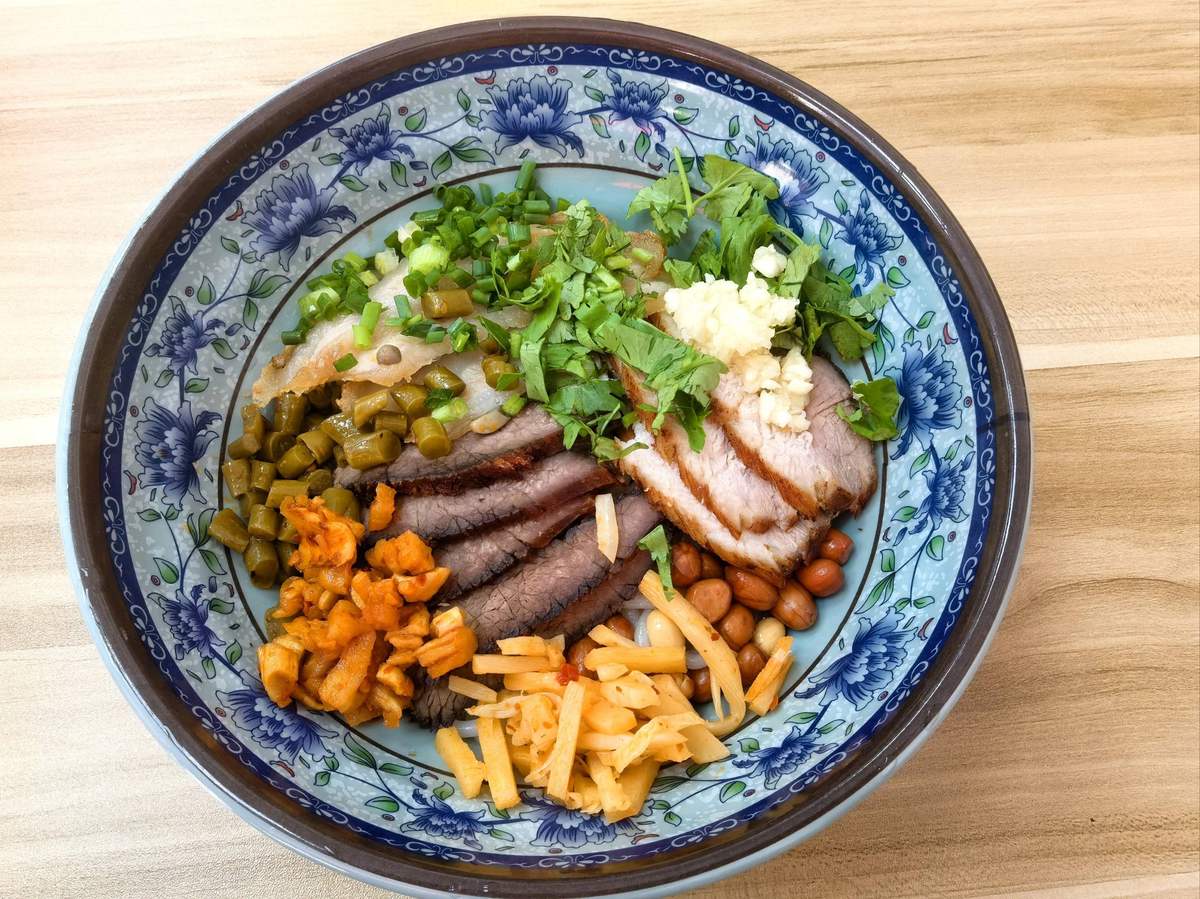
The bowl lands in front of me with no soup in it. White rice noodles, folded in on themselves. A dark spoonful of something that looks like thin gravy. Four slices of beef. A handful of chopped pickles on top. I look up at the woman behind the counter to ask where the broth is.
She gets there first. "Mix it," she says, in Mandarin with a Guilin edge on the vowels. "Eat half. Then add the soup yourself."
That was my third morning in Guilin, back in 2019, on a trip I had taken mostly to get away from a screen. The first two mornings I ate the wrong breakfast, and I have nobody to blame but my own confidence. I ordered what I assumed rice noodles meant — a bowl of broth with noodles drowned in it — and got exactly that. Pale pork-bone soup. Decent. Unremarkable. Forgotten by lunch. Meanwhile the man on the next stool was doing something entirely different: dry noodles, dark as soy, disappearing in four minutes flat while I fiddled with a spoon.
That is the whole trick of 桂林米粉 (guìlín mǐfěn), and it is the reason the dish has never traveled well. The bowl Guilin actually eats every morning, 卤菜粉 (lǔcài fěn), arrives dry. No soup. Not until you go get it yourself.
What holds it together is 卤水 (lǔshuǐ), and if you remember one thing from this piece, make it that. Rice noodles are easy: soak, blanch, drain. The 卤水 is a master braise, cooked down from pork bones, beef, soy, rock sugar and a spice bag that usually runs to a dozen entries — star anise, cassia bark, fennel, clove, licorice root, dried tangerine peel, and three or four things the shop will not name for you. It simmers for hours, gets skimmed, gets topped up, and in the good places the same pot has been going for years. Ask what's in it and you get a smile and a change of subject. A few shops now sell it bottled out the side door, which tells you everything about which half of this dish matters.
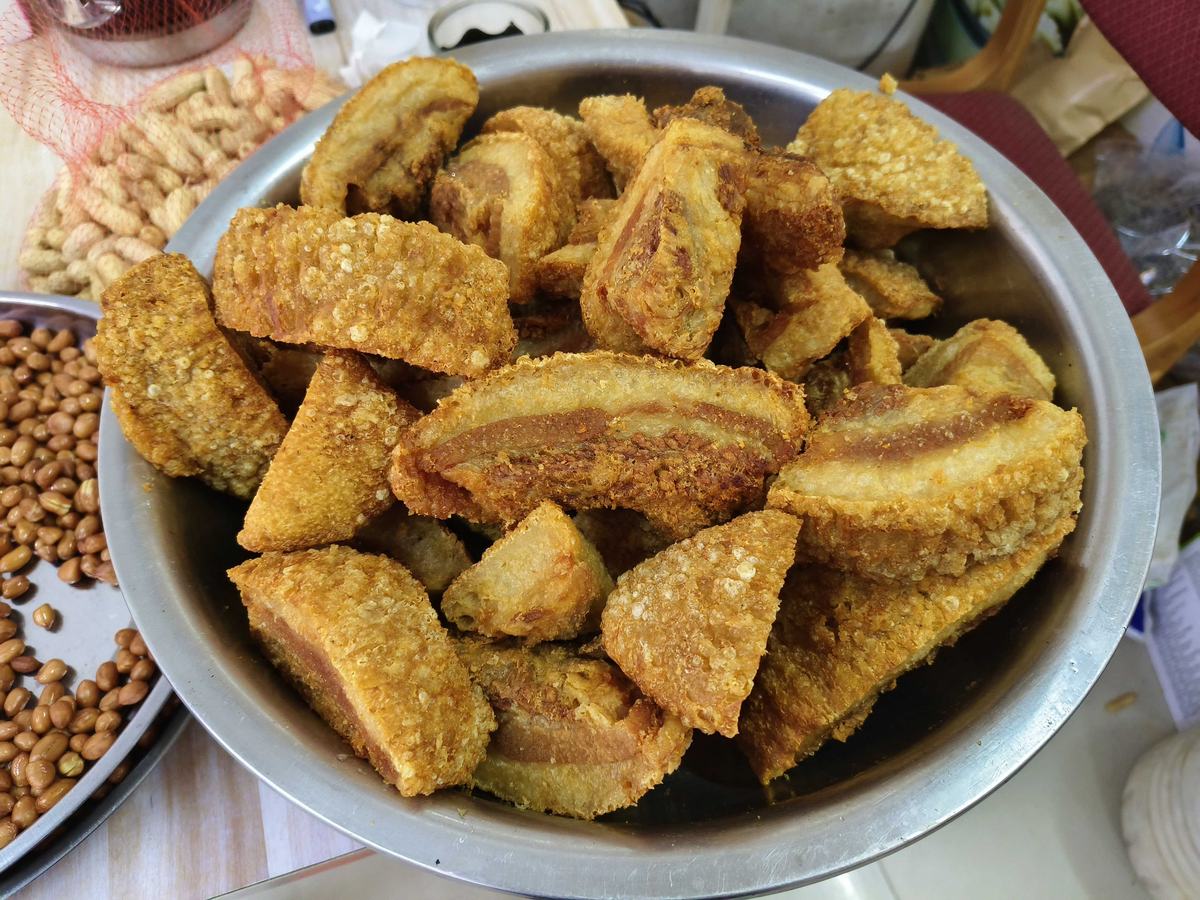
The noodle is 切粉 (qiē fěn) — flat, wide, cut from a steamed sheet of rice — or 圆粉 (yuán fěn), the round version, thinner and more slippery. Order the flat one. Rice has no gluten to fight back with, so there's none of the chew of a wheat noodle; these are soft and a little slick, and they hold the braise on their surface instead of soaking in it. Cold pickles on top of hot noodles, and then a crunch from somewhere unexpected: 锅烧 (guōshāo), pork belly fried hard enough that the skin blisters into something between crackling and glass. Fried peanuts. Fried soybeans. Chopped scallion. Sour long beans and sour bamboo shoot, one spoon each. A spoon of chili oil. You hear the peanuts before you taste them.
Guilin has been eating this for a long time. The rice comes from the paddies around the city; the spice bag rode in on the trade routes through Guangxi. The old Guilin specialty, 马肉米粉 — horse-meat rice noodles — is nearly extinct, kept alive by a handful of shops. What replaced it costs five or six yuan, goes on sale at six in the morning, sells until the pot runs dry, and gets eaten standing up by people who have somewhere to be.
Which brings me to the versions worth refusing. If a bowl of Guilin rice noodles arrives swimming in pale broth, you have been handed 汤粉 (tāng fěn) — soup noodles — and someone has decided for you that you wanted soup. It isn't bad food. It's a different dish wearing the same name, and it dilutes the one thing you came for: the 卤水 is the point, concentrated and salty and faintly bitter at the back of the tongue, and in soup it simply isn't there anymore.
The second mistake happens before the first bite. Visitors catch sour bamboo shoot on the nose and file this under luosifen, Liuzhou's stinky-noodle export. It isn't. In Liuzhou the sour bamboo cooks into a snail broth and the smell owns the whole street. Here it's one spoonful of condiment among six, and what you actually smell is star anise and soy — sweet and dark, closer to a braised-meat counter in a wet market than to anything fermented. If your Guilin noodles smell like a drain, the kitchen is overcompensating for a weak braise.
Then there's the version abroad, usually in a "rice noodle house" with a laminated menu and a photo of a smiling family. The noodles came out of a plastic bag and sat in water; chalky at the core, slimy on the surface. The 卤水 is soy sauce, sugar and a splash of stock, thin and one-dimensional. Real 卤水 has body — gelatin pulled out of all that long-braised meat — and it should taste like more than the sum of four ingredients you could name.
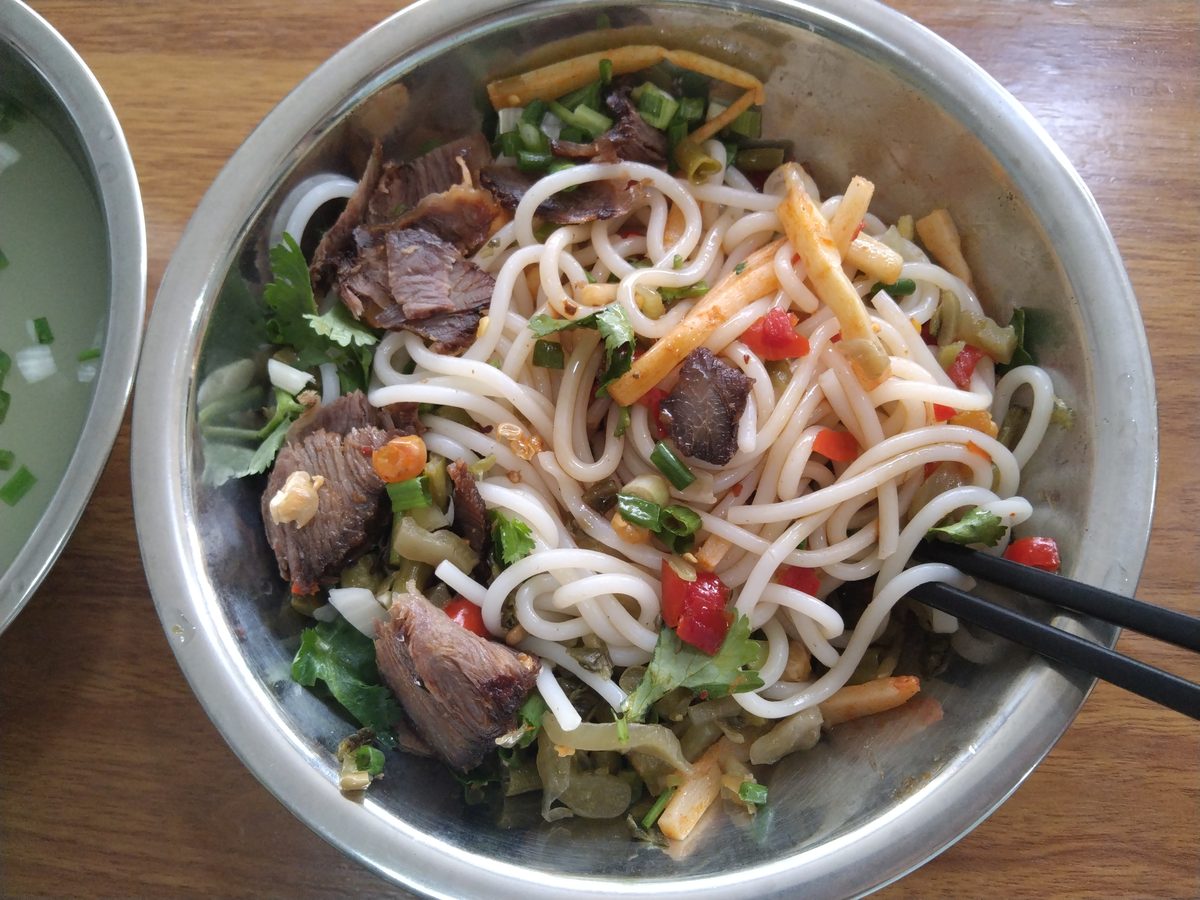
How to order, since nobody behind the counter is going to explain it: you ask by weight, 二两 for a light bowl or 三两 if you skipped dinner, and you name your toppings — 卤菜粉加锅烧 gets you braised beef and crackling pork belly. Take the bowl. Mix from the bottom, hard, so the braise climbs through the noodles instead of pooling underneath them. Eat the first half plain. This is not a suggestion. Add chili now and every bite afterward tastes like chili. When you're halfway down, walk to the steel pot at the end of the counter — or the thermos, depending on the shop — and add hot pork-bone broth yourself. The back half of the bowl is a different dish: warmer, looser, more forgiving. The first half is the argument; the second half is the answer.
The woman who corrected me watched the whole thing from behind the counter with her arms crossed. She said nothing when I went back for the broth. In Guilin, that counts as praise.
Five yuan. Four minutes. Two dishes. I have paid thirty times that for a bowl of soup with noodles in it and never once thought about it again.
💬 Comments