Grilled Pig Eyes: The Burst Is the Whole Point
The stall sets up at nine. By half past there are already a dozen motorbikes parked at an angle with their engines still ticking, because nobody in Baise walks to a barbecue stall if they can ride to it.
Four pig heads sit on the grate, split down the middle, face-up. The man running the fire barely looks at them. He turns them with a pair of tongs the way you'd turn a page, one hand, no ceremony, and every minute or so he leans in and paints the skin with a brush dipped in something dark, and the coals answer with a hiss and a column of smoke that smells like star anise and burning sugar.
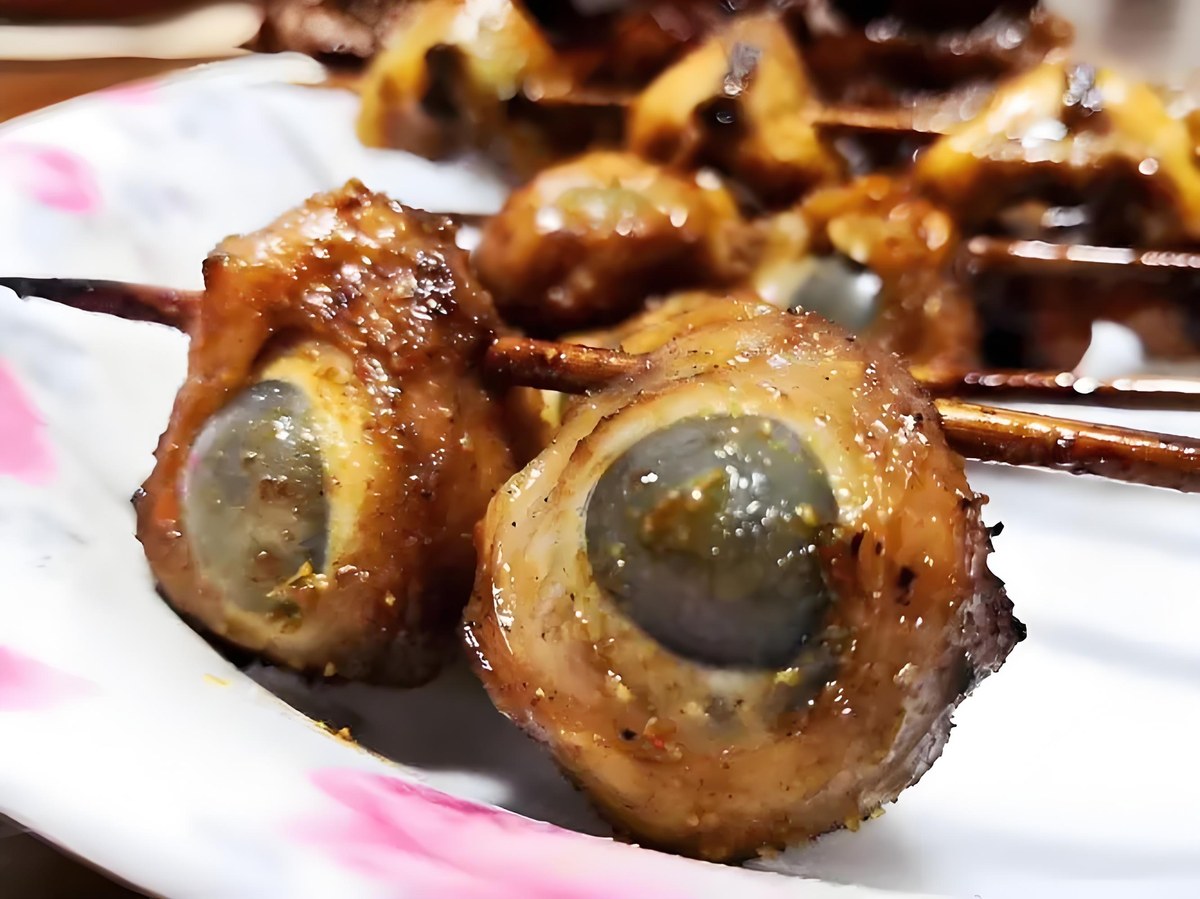
You have probably seen this food on a phone. Somebody with a ring light holding an eyeball up to the lens, asking would you? in the voice people use for content. The comments say no. All of them say no.
The part the videos leave out
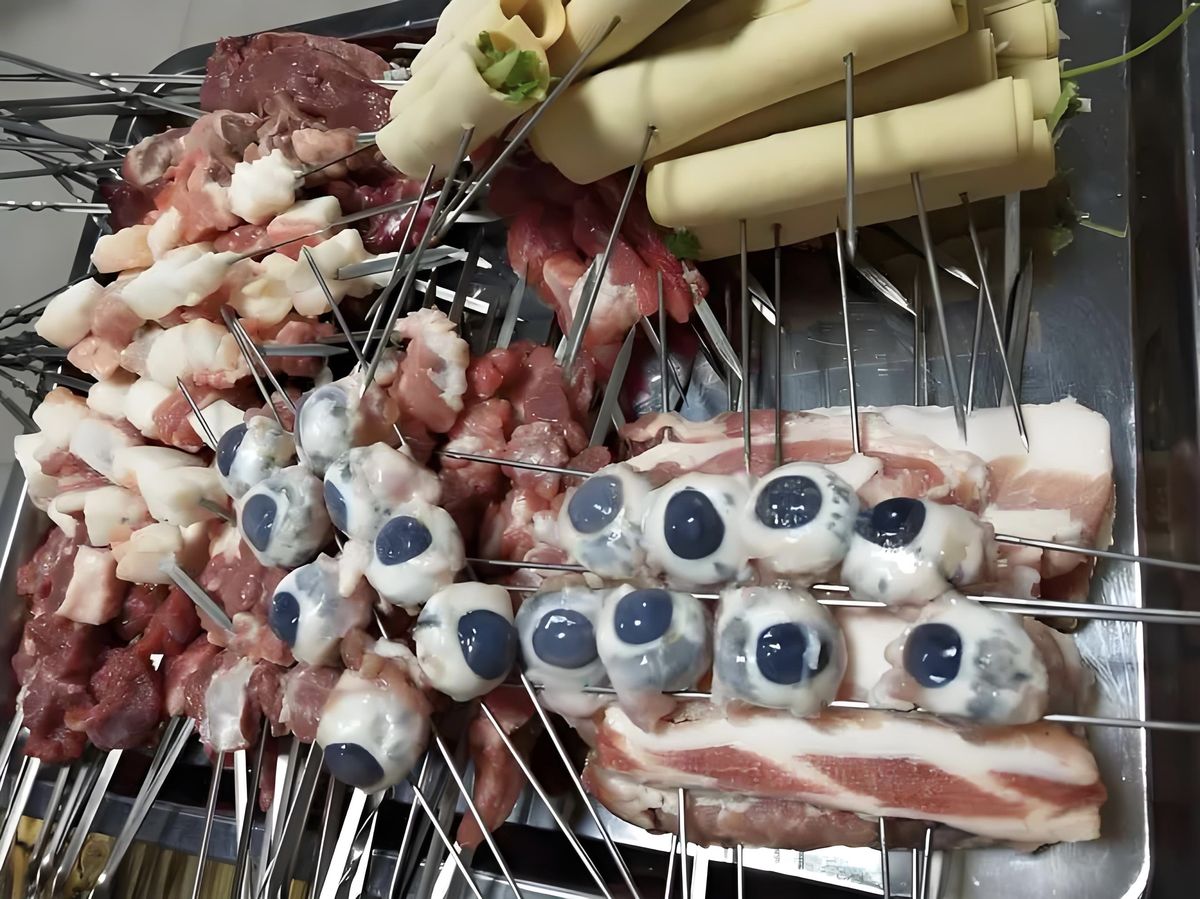
Grilled pig eyes — 烤猪眼, kǎo zhū yǎn — belong to Baise (百色), a small city in western Guangxi where the karst hills begin and dinner gets serious without asking permission. The whole head goes over charcoal: cheeks, ears, tongue, jowls, every bit of it eaten by somebody in some order. The eyes are only the part that got famous.
And the videos got the story wrong. They framed the eye as a challenge: a test of nerve, a punishment, a thing you do for clout. Which is odd, because the eye is the mildest thing on that grill. No bone. No gristle. No gaminess. It's soft and it's rich, closer to the fattiest corner of a braised pork shoulder than to any offal you've been warned about.
What it has instead is architecture.
Outside, a thin membrane that tightens and blisters over the fire until it crackles like the skin on a good roast chicken. Under that, the globe: firm, dense, faintly springy, the texture of a just-set egg yolk. And inside the globe, liquid. Warm, savory, faintly sweet, rendered in place inside a sealed sphere for as long as it's been on the coals. That's the thing the videos are trying to sell you. Not the eye. The burst.
You bite down and it goes off. It isn't violent. It's a small contained pop, the sound a cherry tomato makes, and then your mouth is full of something hot and rich and unlike anything else on the grill, and the table goes quiet for a second, because everybody at it knows exactly what just happened to you.
Ninety seconds either side
Bad versions fail on the fire. An eye wants a hot, fast grill so the membrane blisters before the middle overcooks. Miss on the slow side and the interior sets to something with the bounce of a rubber ball; the burst, which is the entire point, never arrives. Miss on the cold side and you're eating warm jelly with a memory of raw onion. The window is maybe ninety seconds wide, which is why the good stalls have one person whose only job is the eyes.
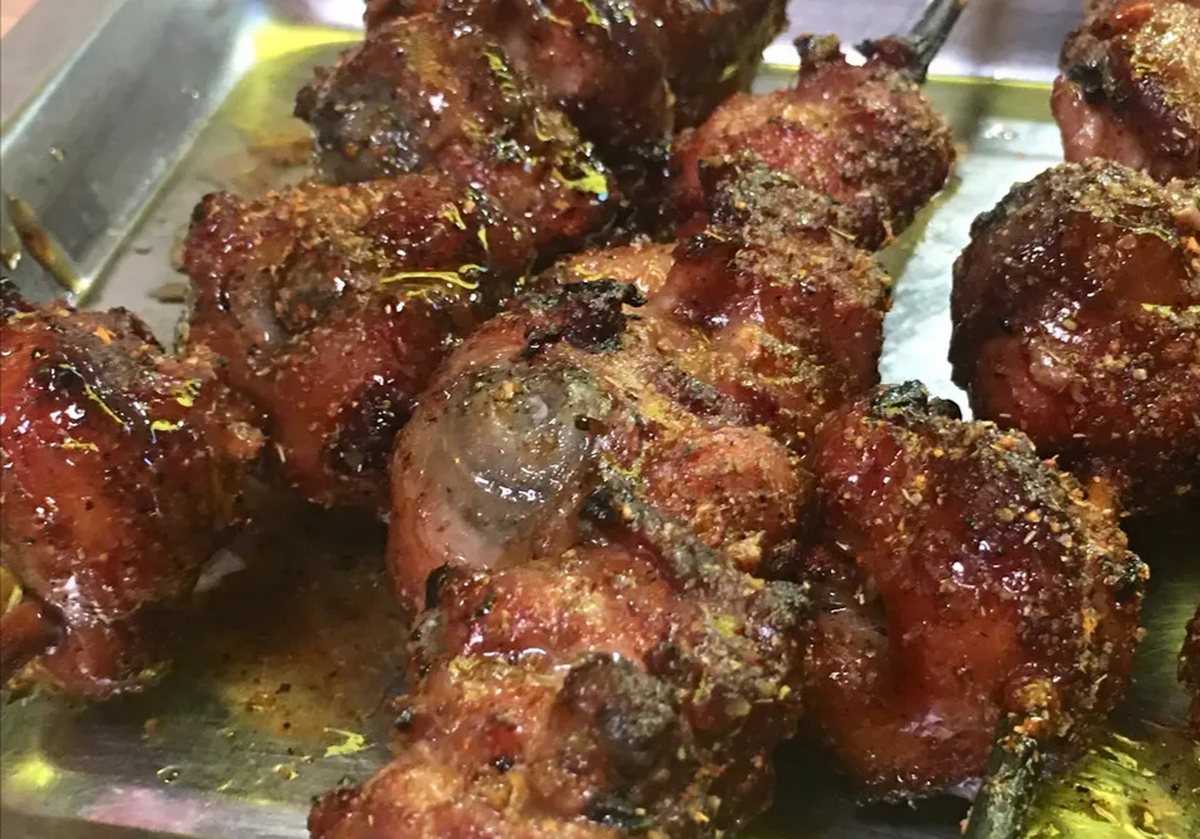
Freshness is the second failure. Eyes turn fast, and a freezer destroys them outright: the membrane splits, the middle goes to water, and when you bite there's no pressure, just a sad little spill. Any vendor who buries them under three tablespoons of cumin and chili is usually hiding something. A good one brushes, doesn't drown. You should still taste pork.
The third is the shortcut. Some kitchens boil the heads first to save time, then finish them over coals for a minute. It looks right and it eats wrong. The skin never blisters, the inside has already spilled, and you get a warm salty ball with nothing to say.
I grew up eating the head cold. In Shanghai the cooked-food counter sold 猪头肉 (zhū tóu ròu), pressed and sliced, the meat set in its own jelly, and the eyes were scooped out and put aside for whoever wanted them. In twenty years of Sunday lunches, nobody at my table ever asked. The eyes went to the woman behind the counter, or into the bin, or to some customer with an appetite the rest of us didn't have. I assumed they were the worst part. I had it exactly backwards.
I finally ate one at thirty-one, in Baise, on the advice of a friend from Nanning who described it in a single sentence: don't chew the first second, just let it happen. He was right, and I've been mildly annoyed about it ever since, because it means the thing I avoided for two decades on the strength of a look was the best bite on the table.
One bite, or two
Order them by the head or by the skewer, whichever the stall sells. Eat them hot, standing up, out of the paper. One bite is the way it's done: chew once, let the center go, then work the globe itself, which keeps giving for a while after the burst is over. Two bites is legal and ruins the effect.
Dip them in 椒盐 (jiāoyán), salt and ground Sichuan pepper, if there's a dish of it on the table. Skip the heavy chili oil, which flattens the sweetness of the fat. Drink something cold and uncomplicated; a cheap lager is traditional and correct. And eat them before they cool, because the membrane loses its crackle in about five minutes and the whole argument collapses with it.
The word for what happens when you bite one is 爆浆, bàojiāng, bursting juice. It's used for custard buns and for this, and it's the reason the videos exist. But a video can only show you the pop. It can't show you the quiet at the table afterward, or the second one you order before you've finished the first. So: would you? Wrong question. Ask whether you'd order a third, and then watch what your hands do.
💬 Comments