Gan Chao Niu He: The Noodle That Tests Every Cantonese Chef
It’s 11:47pm in Mong Kok and the cha chaan teng is still running at full volume. The cook — a man who has not spoken a complete sentence since 2003 — pulls a jet of flame across the wok and the whole restaurant smells like a controlled burn. You ordered Gan Chao Niu He (干炒牛河, gān chǎo niú hé) five minutes ago. You will receive it in approximately forty-five seconds.
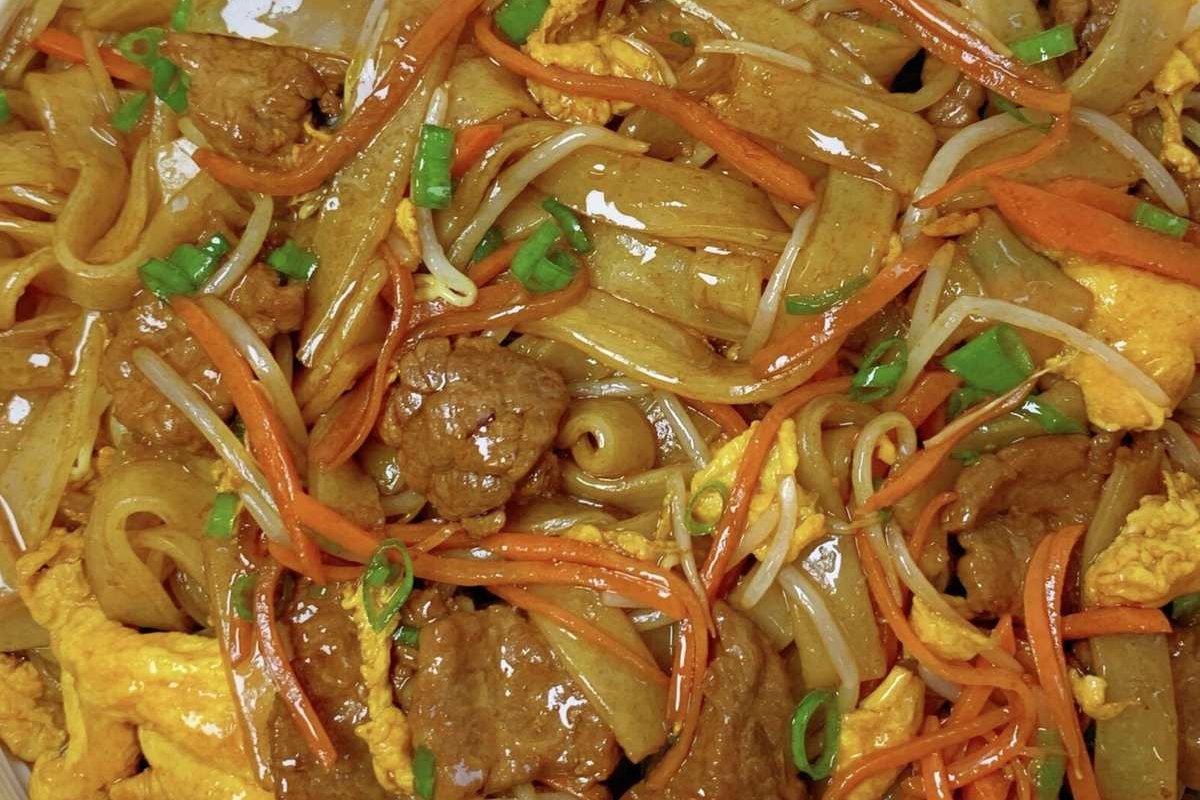
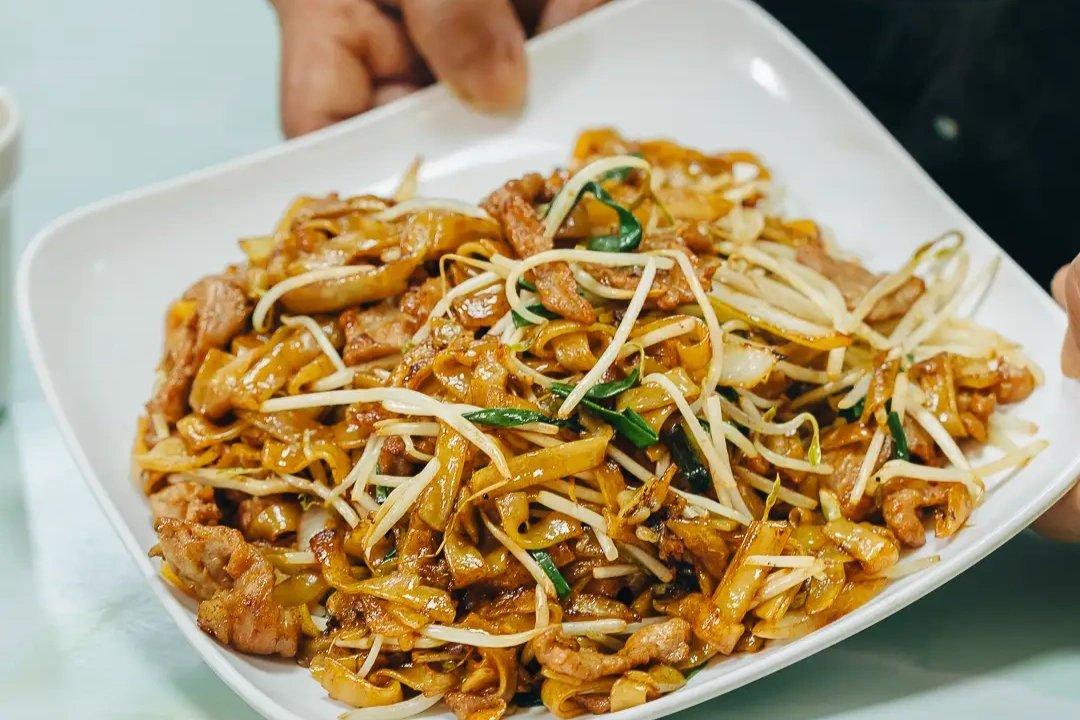
The dish lands on your table still hissing. Wide rice noodles — hé fěn (河粉) — the color of caramel and slightly charred at the edges. Slices of beef the size of playing cards, seared hard on the outside, pink-verging-on-defiant at the center. Bean sprouts that have steamed to submission in the residual heat. Scallion segments scattered like an afterthought that isn’t one. And rising off the entire thing: wok hei (镬气), the breath of the wok — that smoky, almost metallic fragrance that exists only in the fifteen-second gap between “done” and “too late.”
This is not a noodle dish. This is a certificate of competence. In Cantonese kitchens, Gan Chao Niu He is the dish they give to an applicant who claims to be a chef. If the noodles clump, you’re a cook. If the beef leaks, you’re a cook. If the plate has a puddle of oil at the bottom, you’re a cook and you should probably leave.
The Architecture of a Bite
I spent thirteen years in tech — Microsoft, Google, NVIDIA — and the thing I keep coming back to is this: the best systems have the fewest moving parts. Gan Chao Niu He has four ingredients. Five if you count oil. And yet it breaks more cooks than any ten-ingredient banquet dish ever will.
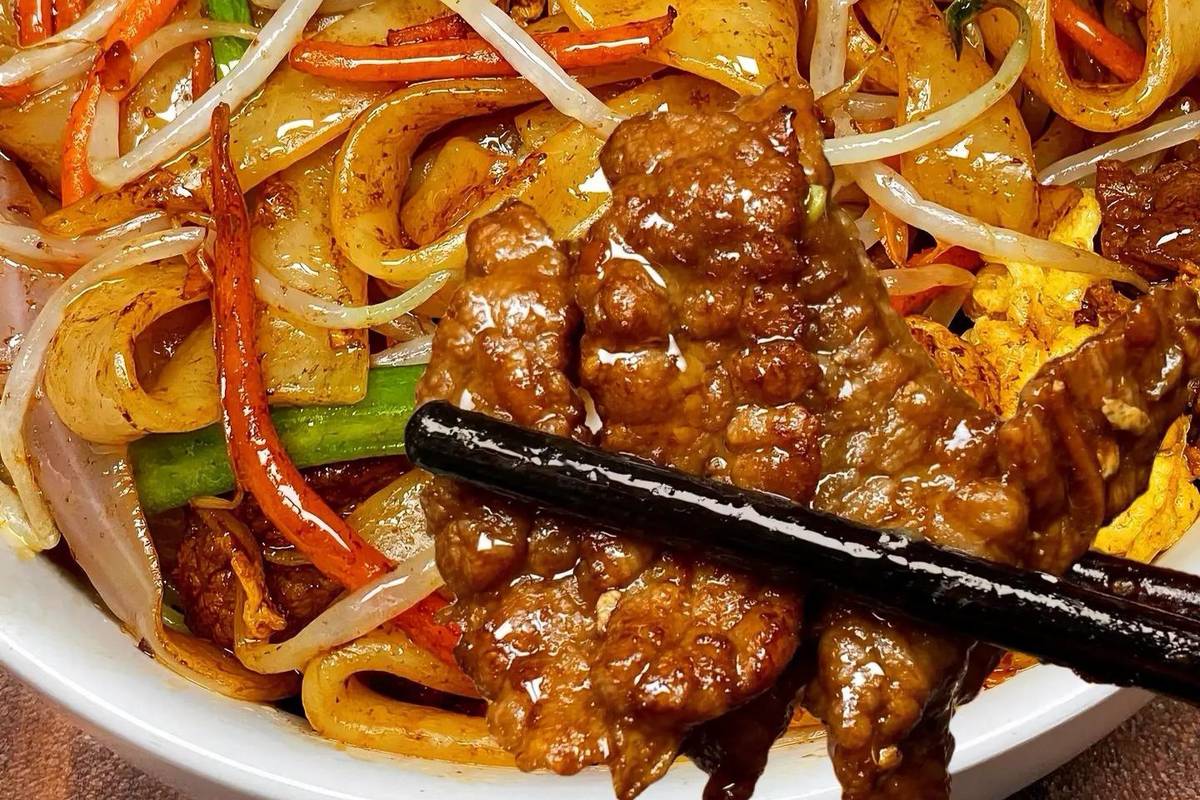
You pick up a tangle of noodles. They should come apart easily — each strand coated in a micro-layer of oil and soy, each strand still distinct. If they’re stuck together like a rice-flour brick, the wok wasn’t hot enough. The beef: sliced against the grain, velveted briefly in cornstarch and egg white, then flash-fried at a temperature that would incinerate anything that stayed still. The texture is soft but not mush — there’s a bounce to it, a willingness to be chewed. The bean sprouts snap. The scallions offer a green, wet crunch that cuts through all the smoke.
The sauce is almost invisible. Light soy, dark soy, a pinch of sugar, white pepper. That’s it. No oyster sauce. No hoisin. No garlic — garlic would burn at these temperatures and turn bitter in two seconds flat. Gan Chao Niu He is not about sauce. It’s about the transformation that happens when fire meets starch meets meat in the right order with the right timing.
The first bite is smoke. The second is beef. The third is the moment you understand why this dish exists.
The Dish That Hires and Fires
Gan Chao Niu He was born in the cha chaan teng (茶餐厅) culture of postwar Guangzhou and Hong Kong — working-class diners where speed, cost, and flavor had to coexist in a single plate. Nobody “invented” it. It evolved from the collision of Cantonese wok technique and the flat rice noodle sheets brought north by Teochew migrants. The name is literal: gān chǎo means “dry-fried” — no sauce, no gravy, no hiding.
There’s a famous test in Hong Kong kitchens called the Three Bottom Check: flip the plate over after the customer finishes. If oil drips out of the noodles onto the table, the chef failed. No oil, no clumps, nothing stuck to the plate — that’s the standard. Most people who call themselves wok chefs cannot pass this test.
The Enemies of Gan Chao Niu He
The first enemy is wet noodles. If your Gan Chao Niu He arrives swimming in a brown sauce, you’re eating Beef Chow Fun, which is a different dish entirely. Wet chow fun is valid. It’s not Gan Chao Niu He. The word gān means dry. Dry means dry.
The second enemy is the wrong noodles. Fresh hé fěn must be used within hours of production. If a restaurant uses dried rice noodles rehydrated in warm water, the texture goes from silky to gummy. You’ll know on the first bite — the noodle will resist your teeth like it has something to prove.
The third enemy is overcrowded wok. Some restaurants throw in onions, carrots, bell peppers, and bean sprouts by the fistful. This drops the wok temperature below the threshold needed for wok hei. Your noodles are now steaming, not frying. The vegetables weep water. Everything goes pale.
Real Gan Chao Niu He has: fresh hé fěn rice noodles, beef flank sliced thin against the grain, bean sprouts, scallions, light soy, dark soy, sugar, white pepper, and a wok hot enough to scar the air above it. Seven ingredients. One chance.
How to Eat It
Eat it immediately. The window is maybe four minutes before the noodles cool, the oil congeals, and the wok hei evaporates into memory. If you’re photographing this dish for Instagram, you’re losing.
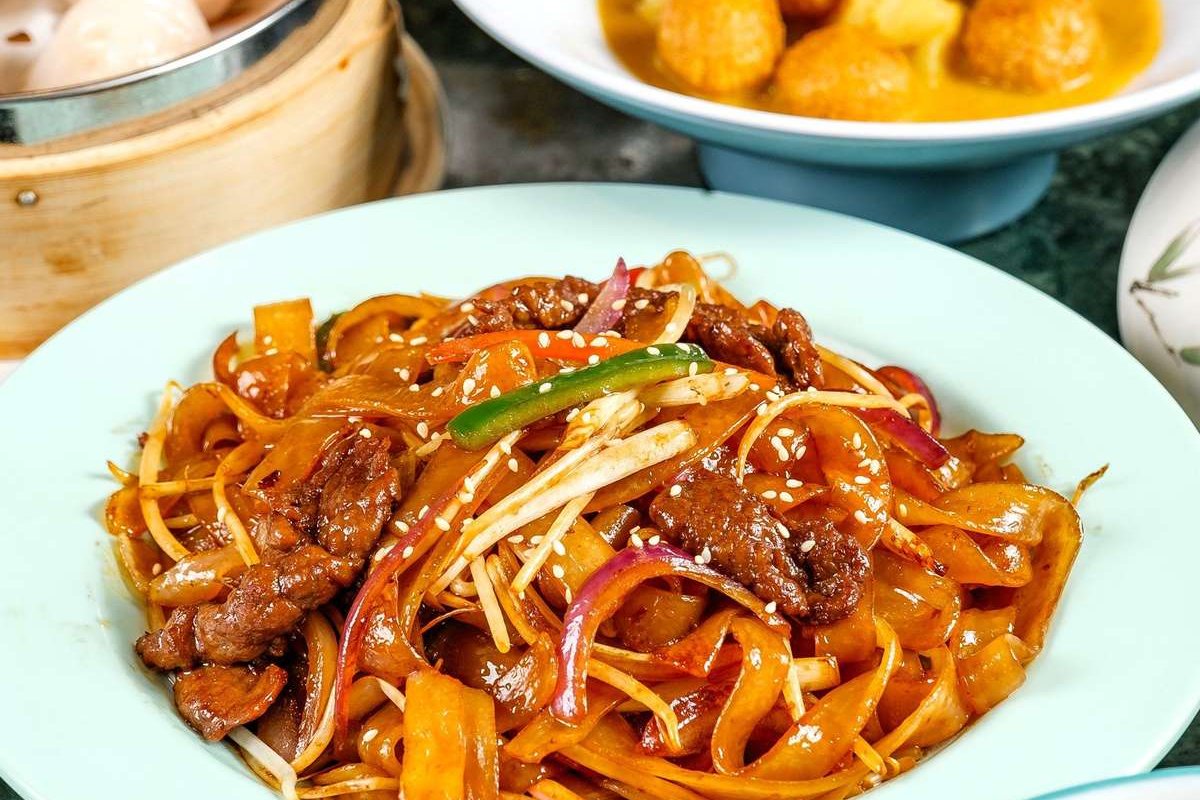
Don’t look for the beef. The beef will find you. Start with the noodles — they’re the point. Let a tangle of them fill your mouth and register the char first, then the soy, then the clean absence of grease. The beef is there for punctuation, not paragraphs. The bean sprouts are there for texture. The scallions are there because a Cantonese cook would feel spiritually incomplete without them.
If the plate is clean at the end — no oil slick, no noodle fragments welded to the ceramic — you’ve found a real wok chef. Tip them. Tip them twice. They passed a test most people don’t even know exists.
The first time I ate proper Gan Chao Niu He in Sham Shui Po, I was two years into my job at Google, in Hong Kong for a tech conference. I walked back to the same cha chaan teng three nights in a row. The cook never spoke to me. On the third night, he nodded once. That nod is still one of the top five achievements of my adult life.
Out of space for today — I’ll save the home-cooking breakdown for another post. The trick to Gan Chao Niu He at home is not the ingredients but the heat source — a home burner can’t match a jet-engine wok station, and every workaround involves a tradeoff. That deserves its own piece. Recipe coming soon.
💬 Comments