Gan Bian Si Ji Dou: The Green Beans That Taught China to Cook Without Water
My grandmother had exactly one vegetable dish she'd make when she wanted to show off. Not because it was fancy. It wasn't. Because it was dangerous.
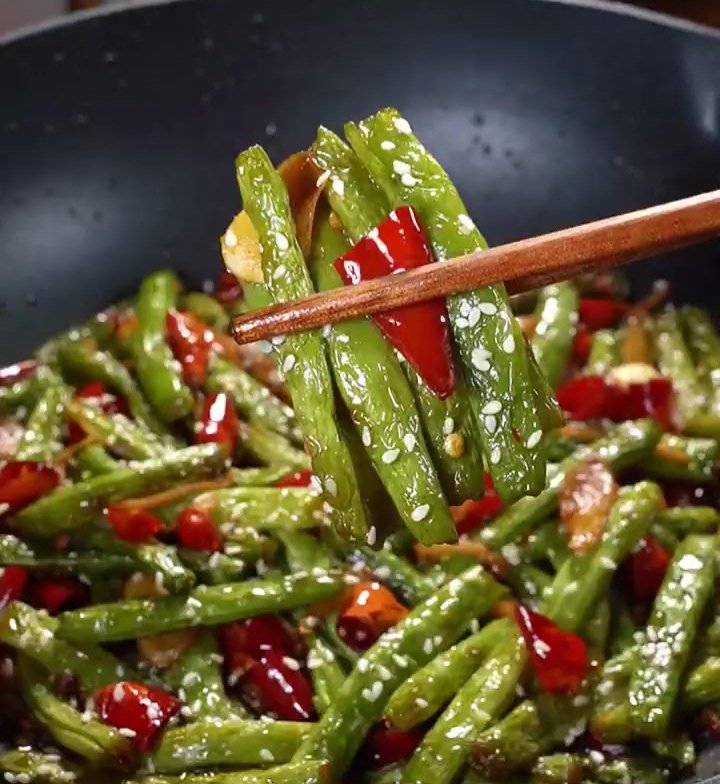
I was maybe nine, standing on a stool in her Shanghai kitchen, watching her toss a pile of green beans into a wok so hot the oil was vibrating. No water. No sauce. Just beans and a wok that roared. The beans hissed, jumped, blistered. She worked them with a spatula, pressing the beans against the side of the wok between tosses, and every time they hit the metal, the sound was a wet crackle. Water fleeing, skin wrinkling, deep green deepening toward brown. The whole kitchen filled with the smell of toasted bean, scorched chili, and something I couldn't name then. Wok hei. The breath of the wok.
"Don't touch the handle," she said without turning around.
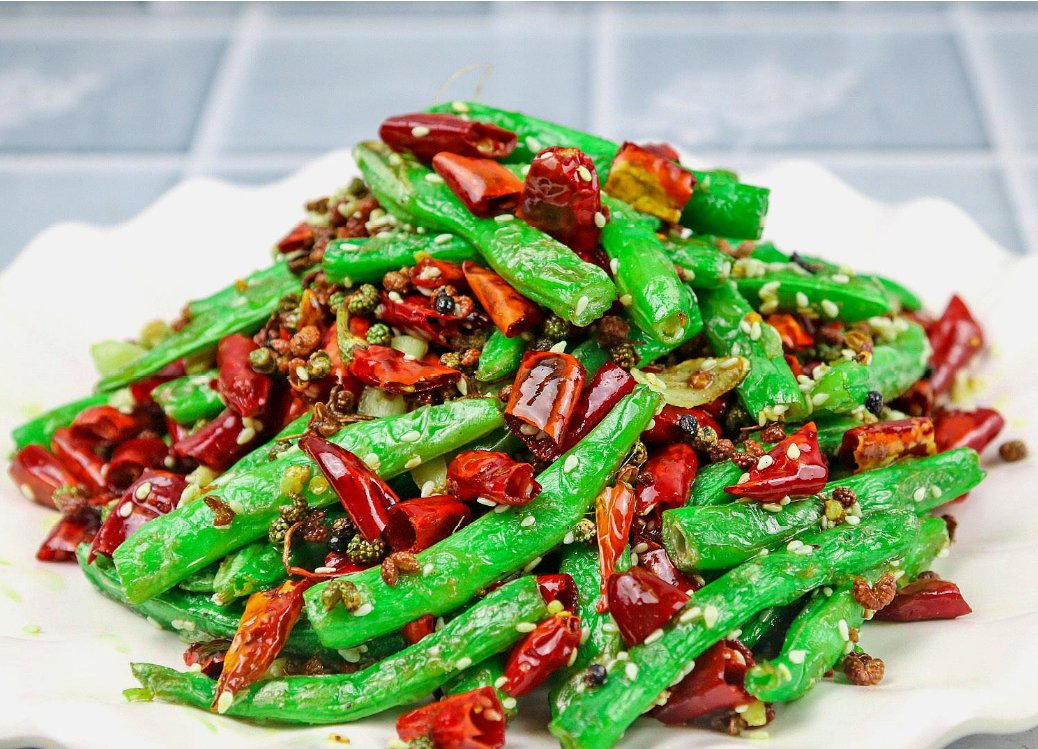
The beans came out of the wok wrinkled and blistered, deep green with charred spots like a leopard's coat, tangled with dark bits of minced pork, red chili segments, and the pale brown husks of Sichuan peppercorns. I ate them with chopsticks, one at a time, slower than I ate anything else that year. I could not figure out how something this simple tasted like that.
Gan Bian Si Ji Dou (干煸四季豆, gān biān sìjì dòu) is not a side dish. It's a flex. It says: I have a wok, I know how hot it can get, and I am not afraid of either.
The Architecture of a Bite
Thirteen years debugging distributed systems taught me this: the simplest architectures are the hardest to get right. Dry fried green beans have four components. If any one of them fails, the whole dish collapses.
The beans: yard long beans or standard green beans, but young, thin, and snapped by hand. Machine cut beans are uniform. You don't want uniform. Hand snapped beans have jagged edges that catch more oil, more seasoning, more char. The beans need to be completely dry before they hit the wok. Any surface moisture and you're steaming, not frying. Steamed beans are the enemy.
The oil: just enough to coat the wok, never enough to submerge. This is the difference between dry frying and deep frying. A properly dry fried bean blisters from direct contact with screaming hot metal. A deep fried bean cooks in a bath of oil and comes out greasy, flabby, its skin smooth instead of wrinkled. You can spot a fake from across the restaurant.
The pork: minced belly or shoulder. The classic version is pork free — just beans, oil, and aromatics. Adding pork is the home cooking upgrade my grandmother deployed without apology. The pork renders its own fat, which becomes part of the cooking medium. By the time the beans are done, the pork is dark brown, almost crispy, scattered through the dish like tiny flavor mines.
The aromatics: dried red chilies, Sichuan peppercorns, and ya cai (芽菜) if you can find it — the preserved mustard greens from Yibin that taste like earth and salt and time. The peppercorns go in last, tossed through the residual heat so they perfume without burning. Bite into a whole peppercorn and your tongue goes electric. This is correct.
A good plate of dry-fried green beans tastes like a kitchen that almost caught fire. Not in a bad way.
The Origin
A Sichuan home cook, probably a grandmother, probably sometime in the last hundred years. Nobody wrote it down because nobody thought to. It was just how you cooked green beans when you wanted them to taste like something. The technique, gan bian (干煸, "dry stir-fry"), sits alongside shui zhu (water boiled) and hong shao (red braised) as one of Sichuan's core methods. Low moisture, high heat, constant motion. The ingredient surrenders its water and concentrates its flavor. It works on green beans, on shredded potato, on beef slivers. The beans are the best version.
The Enemies of Dry Fried Green Beans
The Deep Fried Version. This is the most common betrayal and the easiest to spot. Deep fried beans are smooth skinned, pale green, and greasy. They taste like oil, not like bean. Real dry fried beans are wrinkled, blistered, and taste deeply of themselves: concentrated, nutty, almost smoky. If the beans look like they've been Botoxed, send them back.
The Water Blanched Version. Some places boil the beans first, then toss them through a wok with oil and seasoning. This is not dry frying. This is stir frying boiled beans. The texture is wrong: soft all the way through, no resistance, no chew. A dry fried bean should have a slight snap when you bite it, a thin crisp shell giving way to a tender center. Blanched beans have no shell.
The Undercooked Version. Dry frying takes time. The beans need five to eight minutes in the wok, pressed and tossed, until their skin blisters all over. Rushed beans come out with a few brown spots and raw insides. They taste grassy and squeak against your teeth. A properly dry fried bean is cooked through to its core, its natural sugars caramelized, its vegetal edge blunted into something almost meaty.
The Bell Pepper Invasion. Some Americanized versions add diced bell peppers, onion, and a sweet soy glaze. They turn a Sichuan technique showcase into a Panda Express side. I understand the impulse. I reject the result.
The real thing: blistered, wrinkled green beans with charred spots. Dark, crispy bits of minced pork. Whole dried chilies, blackened at the edges. Sichuan peppercorns scattered through. Ya cai if you're lucky. A whisper of salt. A drizzle of sesame oil. Nothing else.
How to Eat It
You eat dry fried green beans the way you eat anything good in China: with rice, with chopsticks, and without stopping.
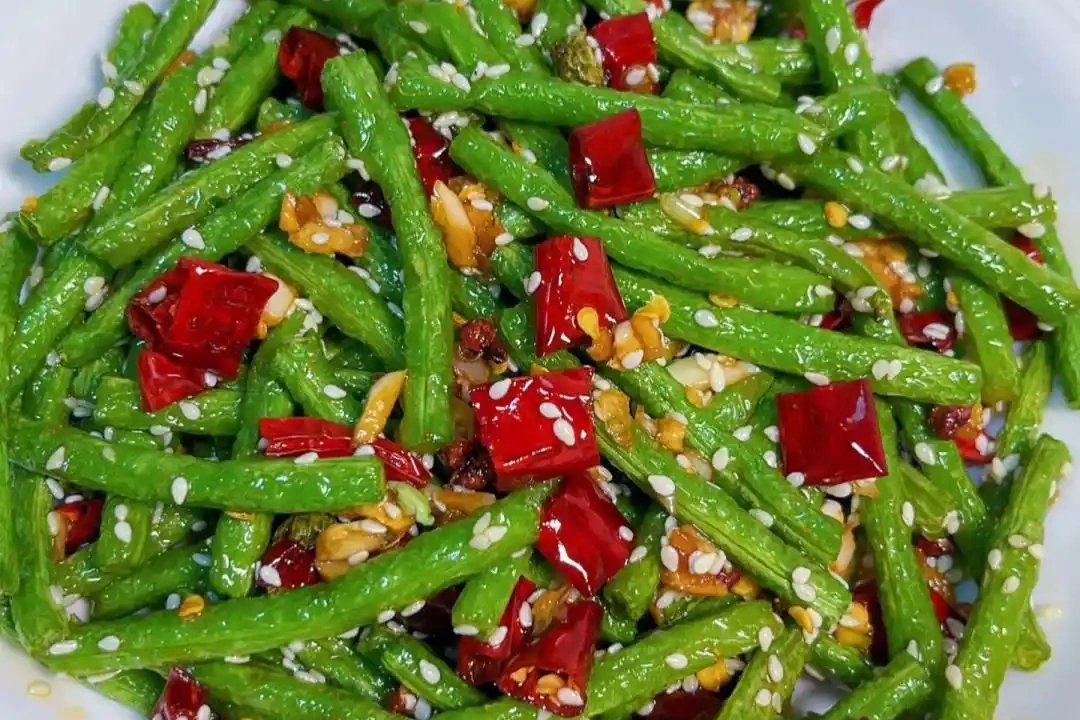
Pick up a few beans at a time. You want a cluster: beans, pork, chili, peppercorn, all in one bite. The beans should be salty and charred on the outside, tender and sweet inside. The pork should be dark and crisp. The chili should hit clean, not build. The peppercorn should buzz, then fade, then buzz again on the next bite.
I once watched a coworker at Google eat this dish with a fork, carefully separating the beans from the pork, the pork from the chilies. First trip to China. He called it "surprisingly flavorful for a vegetable dish." I didn't correct him. But I thought about my grandmother, standing at her wok, the beans jumping, the kitchen filling with smoke. She had one rule that applied to everything she ever cooked: 伐要怕龌龊. Don't be afraid of the mess. The best food always leaves a mark.
Out of space for today — I'll save the home-cooking breakdown for another post. Dry-frying green beans at home means getting your wok hot enough to blister without burning, and keeping the beans moving for six straight minutes. That deserves its own deep dive. Recipe coming soon.
💬 Comments