Fuqi Feipian: The Dish a Husband and Wife Built From the Parts Nobody Wanted
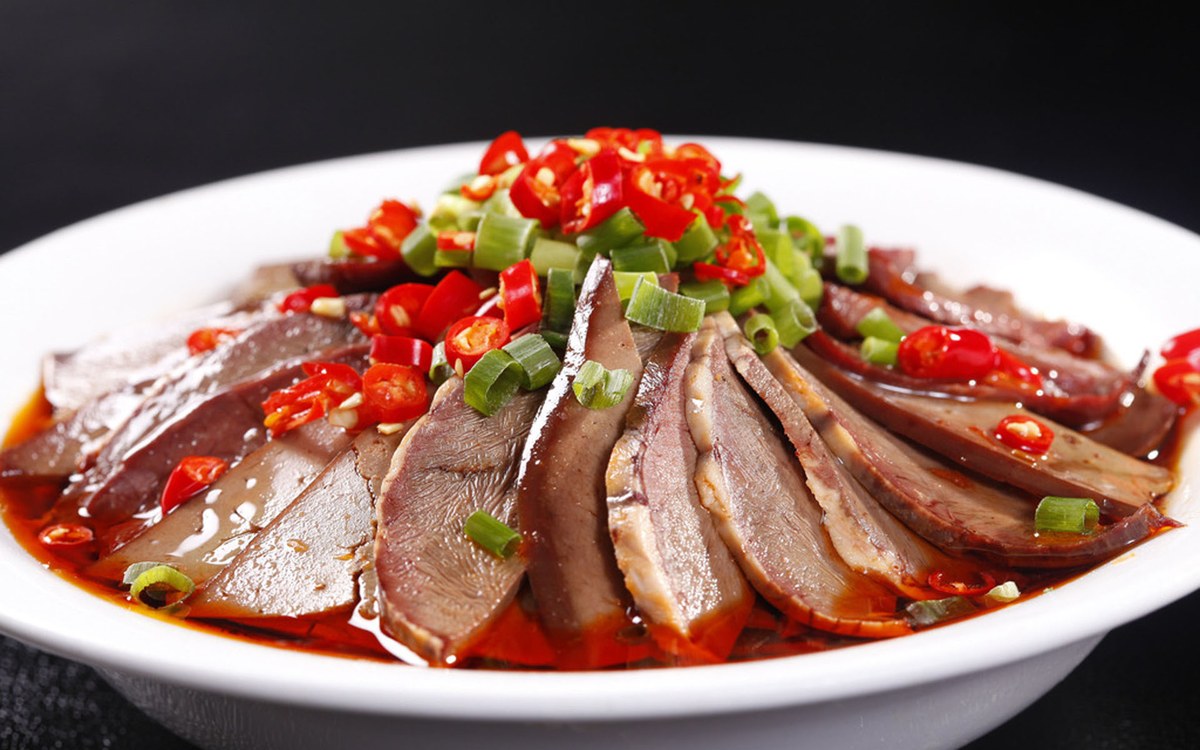
The cleaver lands with a wet thud, then settles into a rhythm so steady it could be a metronome — thok-thok-thok — slicing something pale and soft into ribbons thin enough to read through. Then the smell arrives, half a second before you can place it: roasted chili oil, Sichuan peppercorn, and underneath, a low dark hum of soy and star anise. It pulls you across the Chengdu alley before you've decided to cross it. Then you see the bowl. A shallow mound of glossy slices, stained deep red at the edges, flecked with sesame and crushed peanuts and a scatter of scallion, the whole thing glistening like it was dipped in lacquer.
This is Fuqi Feipian (夫妻肺片, fūqī fèipiàn) — "husband-and-wife lung slices." And here is the first lie the dish tells you, the one baked into its own name: there is no lung. There never was.
Two names on a wooden cart
What the name does get right is the couple. In the 1930s, in pre-war Chengdu, a man named Guo Chaohua and his wife Zhang Tianzheng pushed a wooden cart through the streets selling cold-dressed beef. The cuts they cooked were the ones a butcher couldn't give away — beef head skin, tripe, tongue, the pale trimmings that ended up in the scraps bucket. The couple did the one thing smart cooks do with the unloved: they treated the scraps like they mattered. Each cut got its own braise — soy, cinnamon, star anise, ginger — until the skin went glassy, the tripe went tender, the tongue went soft as butter. Then they sliced it all thin and dressed it in a red oil they made themselves, roasted chili and Sichuan peppercorn crushed with sesame.
"Feipian" was street slang for those cheap off-cuts, the "scrap slices." Somewhere along the line it drifted into "lung slices" — a mistranslation, or a joke, or a way to make the ugly sound delicate. The stall became famous not for the name but for the bowl. Nobody else was making scraps taste like that. People started calling it "husband-and-wife lung slices," the dish of the couple who cooked the parts nobody wanted.
A bowl of contradictions
The glory of it is contrast. Every bite should carry four textures at once: the brittle snap of beef head skin, the chewy give of tripe, the melting tenderness of tongue, the clean bite of the beef itself. And over all of it, the sauce — which is not one thing but several, stacked. First the chili oil's slow burn, then the peppercorn tingle that makes your lips feel very gently electrocuted, then a sweetness underneath you didn't expect, and finally the deep round breath of the braising spices. It is cold food that eats hot. It is a salad that could knock you out.
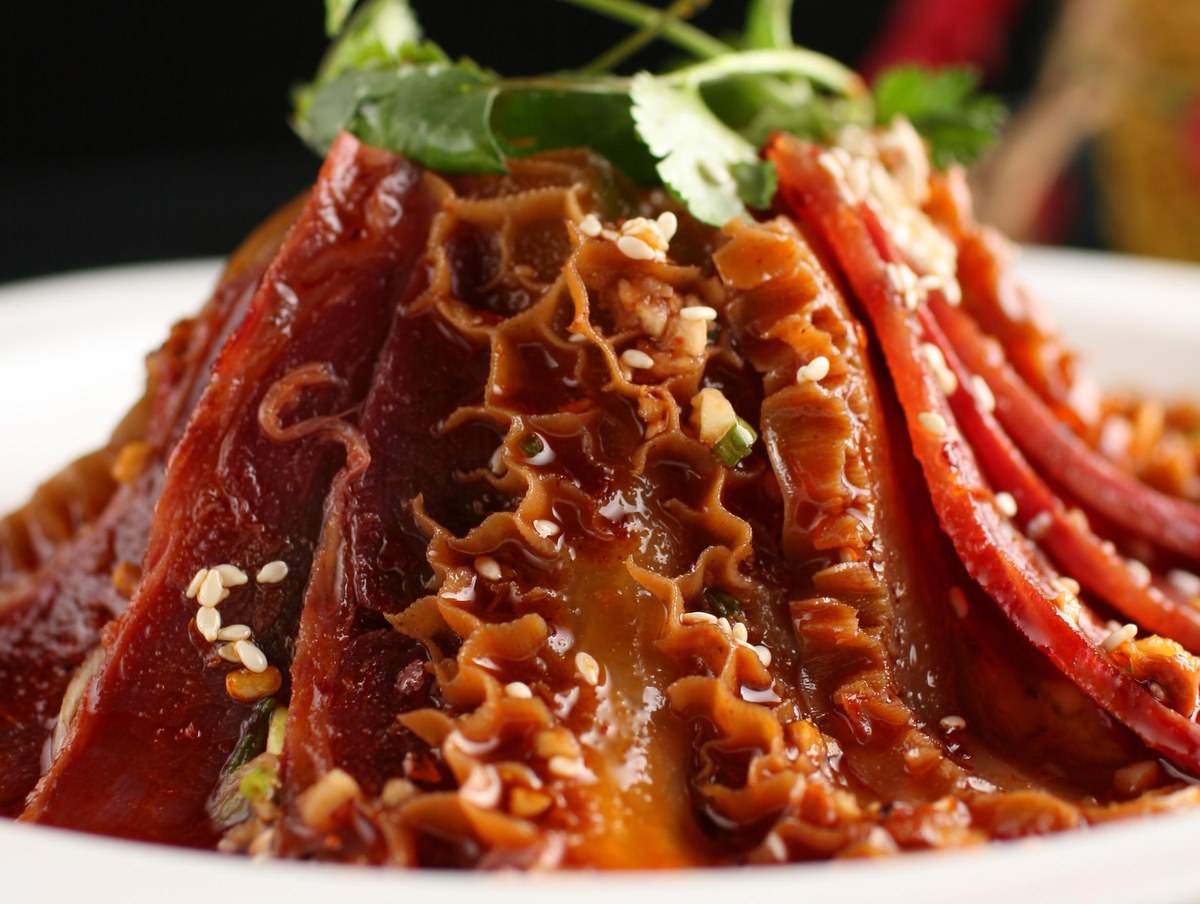
I first ate it in Chengdu in 2019, in a restaurant so small the menu was chalk on a board and the only cold thing was the beer. A friend from school ordered for the table without asking, the way you do when you trust the food more than the menu. The bowl landed and I did what every first-timer does — I asked which part was which. Nobody answered. They were too busy eating.
The bad versions forget all of this. The one from a vacuum-sealed pouch is dead on arrival, every texture collapsed into one uniform rubber, the oil tasting of nothing but heat and food coloring. And the version with actual lung in it, which you do sometimes meet because someone read the name literally, is a different and grimmer dish — a pale steamed organ that has nothing to do with this one. The name is a ghost. The bowl is what matters.
Eat it cold, with rice
You eat it the moment it's dressed, still cold. Do not reheat it. Do not let it sit until the oil separates. Toss the bowl once so every slice is lacquered, then eat it with plain white rice or a cold beer, and treat the peanuts and sesame as part of the dish, not a garnish. My grandmother, who was not from Chengdu and would never have admitted to liking Sichuan food, made a Shanghai version with extra sugar and no peppercorn at all. It was good. It was not this.
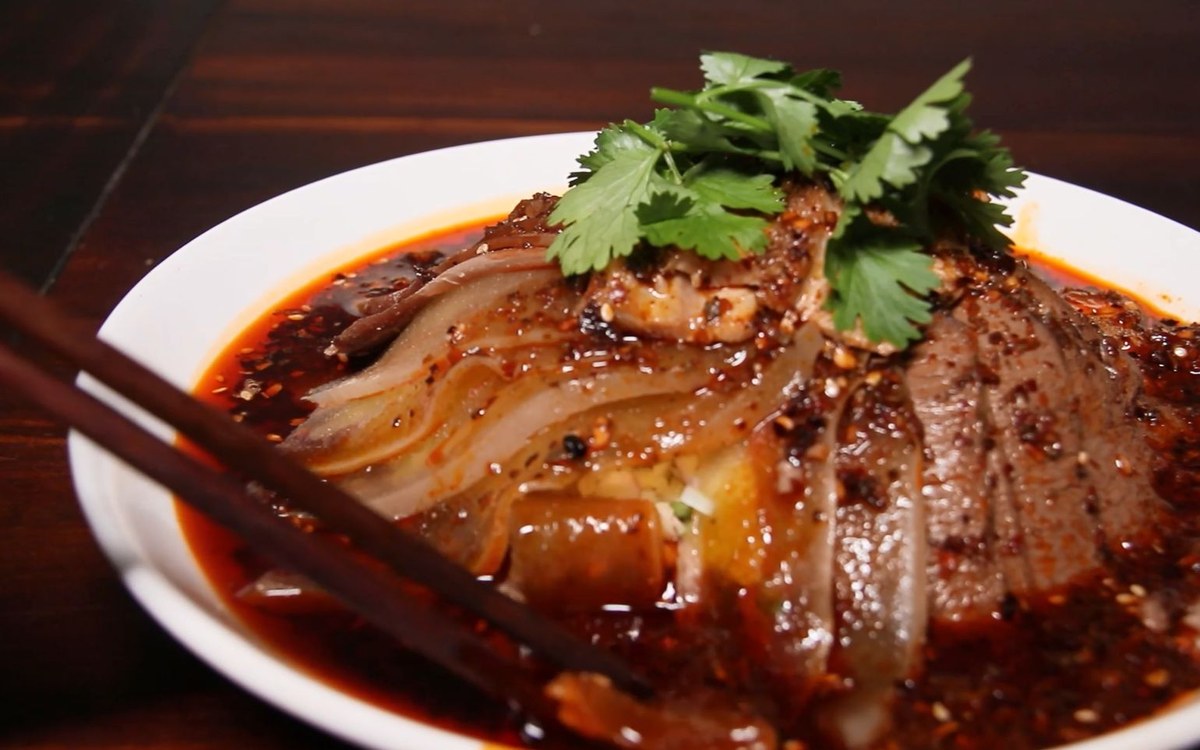
The last slice is the one at the bottom of the bowl, the one that has been soaking in the oil the longest. That is the slice you want — the one that has given up entirely, stained through, carrying the whole history of the bowl in a single bite.
Out of space for today — I'll save the home-cooking breakdown for another post. Getting the red oil right at home means rendering the chili and peppercorn at a heat low enough not to scorch the spice. That deserves its own deep dive. Recipe coming soon.
💬 Comments