Egg Tart: The Sweetest Thing the Empire Left Behind
You smell it before you see it — butter, caramelised sugar, and underneath both, eggs going slowly thick. Then the swing door at the back of the cha chaan teng (茶餐厅, chá chān tēng) bangs open and the tray comes through, and a room full of people who were arguing about football go quiet. Nobody ordered. You cannot order. The egg tarts arrive on their own schedule, in waves, and you are either sitting when the wave lands or you are watching the empty rack for twelve minutes.
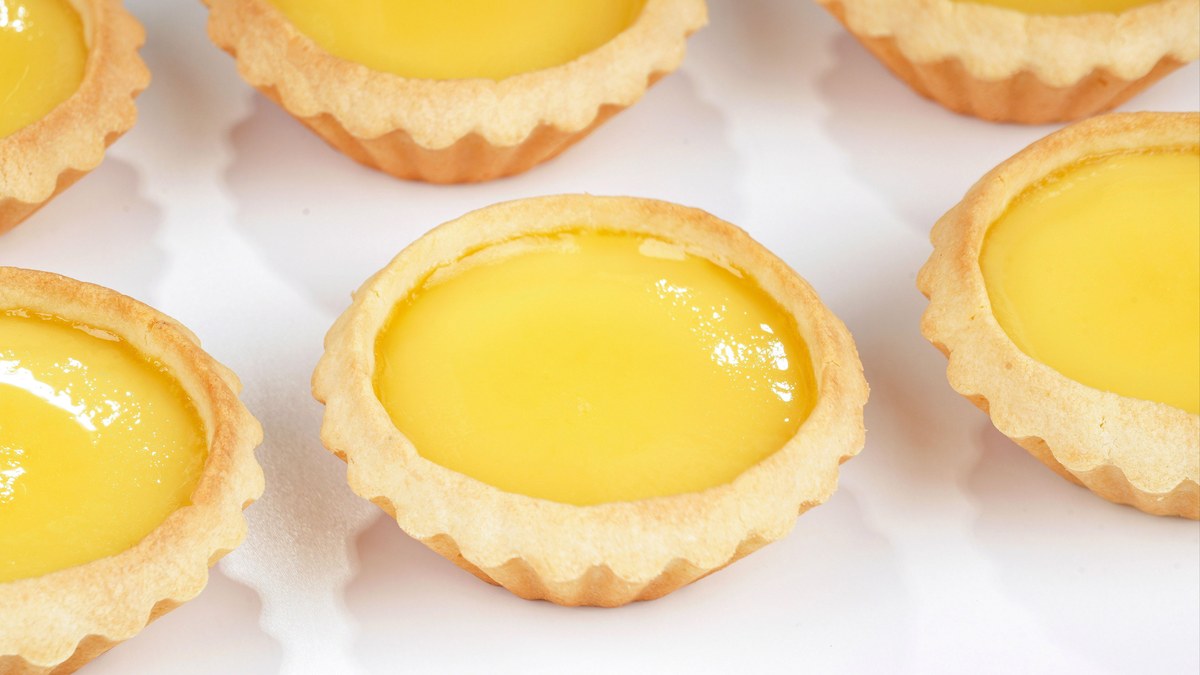
An egg tart (蛋挞, dàn tà) is a small argument between two things that want opposite treatment. The shell is cold butter folded into flour, dozens of thin layers, and it wants violence — enough heat to turn the water in the butter to steam and force the folds apart. The custard is egg, milk, sugar and cream, and it wants gentleness, because a custard that gets too hot turns to rubber and then weeps water onto the plate. You cannot be brutal and tender in the same oven at the same time. The compromise is a furnace and twelve minutes, and what comes out is structurally perfect and nutritionally doomed.
The first one I ate was at the KFC on Huaihai Road, in Shanghai, when I was thirteen. My mother held the position that KFC was an American embarrassment and that nobody in our family would be caught inside one. Then the Portuguese egg tart landed on the menu, in the mid-2000s, and there was a queue down the pavement, and she stood in it. She ate two, standing up, out of a paper bag, and did not mention America for the rest of the afternoon. That was how the tart actually arrived in mainland China — not through a bakery, through a fried chicken chain.
There are two shells and people are loyal to one. The flaky one (酥皮, sū pí) is laminated like croissant dough: butter, flour, fold, chill, fold again. In the oven it opens into shattering layers that shed across the table. It is the older shell and the harder one. The cookie shell (牛油皮, niú yóu pí) skips all of it — butter, sugar, flour, pressed straight into the tin, no folding, no chilling, no ambition. Bakeries argue about this the way villages argue about water.
The tart itself is not Chinese. British colonisation brought a custard tart to Hong Kong and a Portuguese one came ashore in Macau, and the ingredient lists were near enough identical that nobody bothered to fight. Hong Kong kept the tart and quietly went to work on the custard, and what came out the other end is paler, smoother and softer than either parent. This is worth knowing because it is the fastest way to read a tart in front of you: the blistered, scorched, tiger-skinned top is Macau. The flat, pale, glassy top is Hong Kong. Order an egg tart in Hong Kong and get a burnt one, and you are standing in a Portuguese bakery with a Cantonese accent.
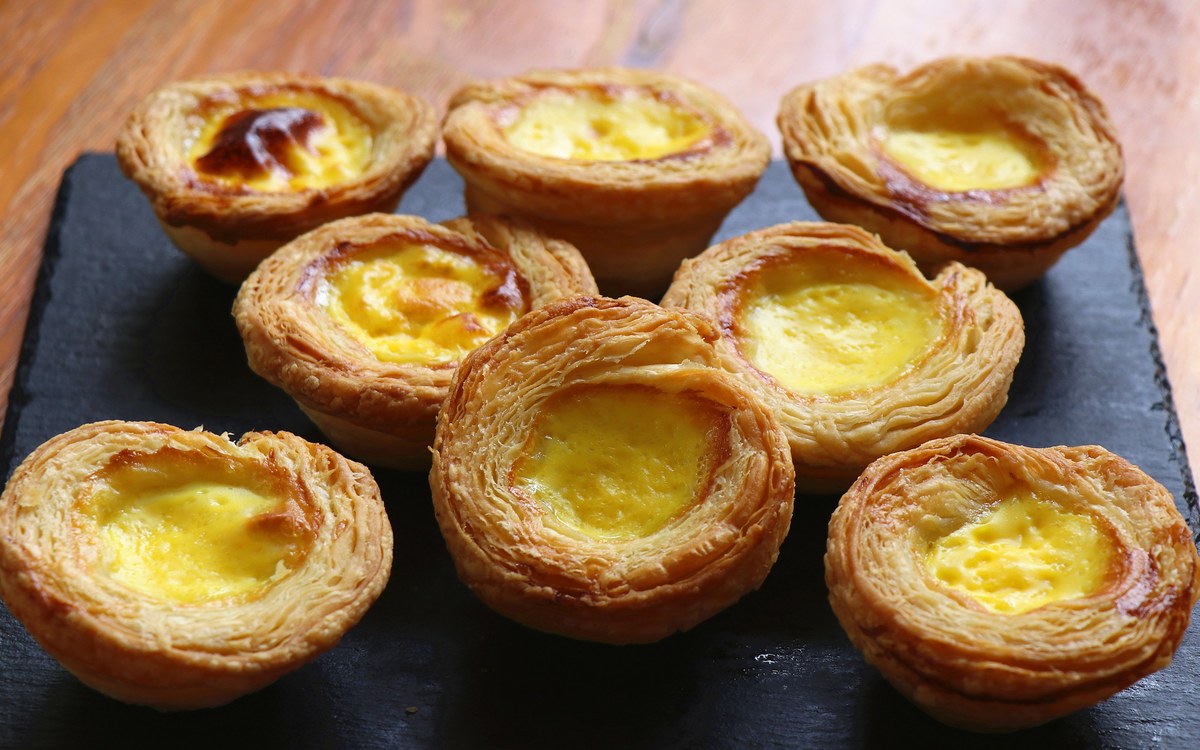
There are three bad tarts and you will meet all of them. The set one has been in a display case since eleven, and the custard has tightened into a rubber disc that squeaks against your teeth. The cold one is the same tart an hour later — refrigeration does something specific and unforgivable to a custard, turning the fat in it hard and waxy, and a cold egg tart is a genuinely different food that nobody should have to eat. The hollow one is made on supermarket puff pastry, and it tastes of nothing and shatters into dry paper that dissolves on your tongue like a communion wafer. And then there are the flavoured ones — matcha, chocolate, durian, cheese. Nobody is stopping you. But a cheese egg tart is not an egg tart. It is a cheesecake squatting in a pastry case.
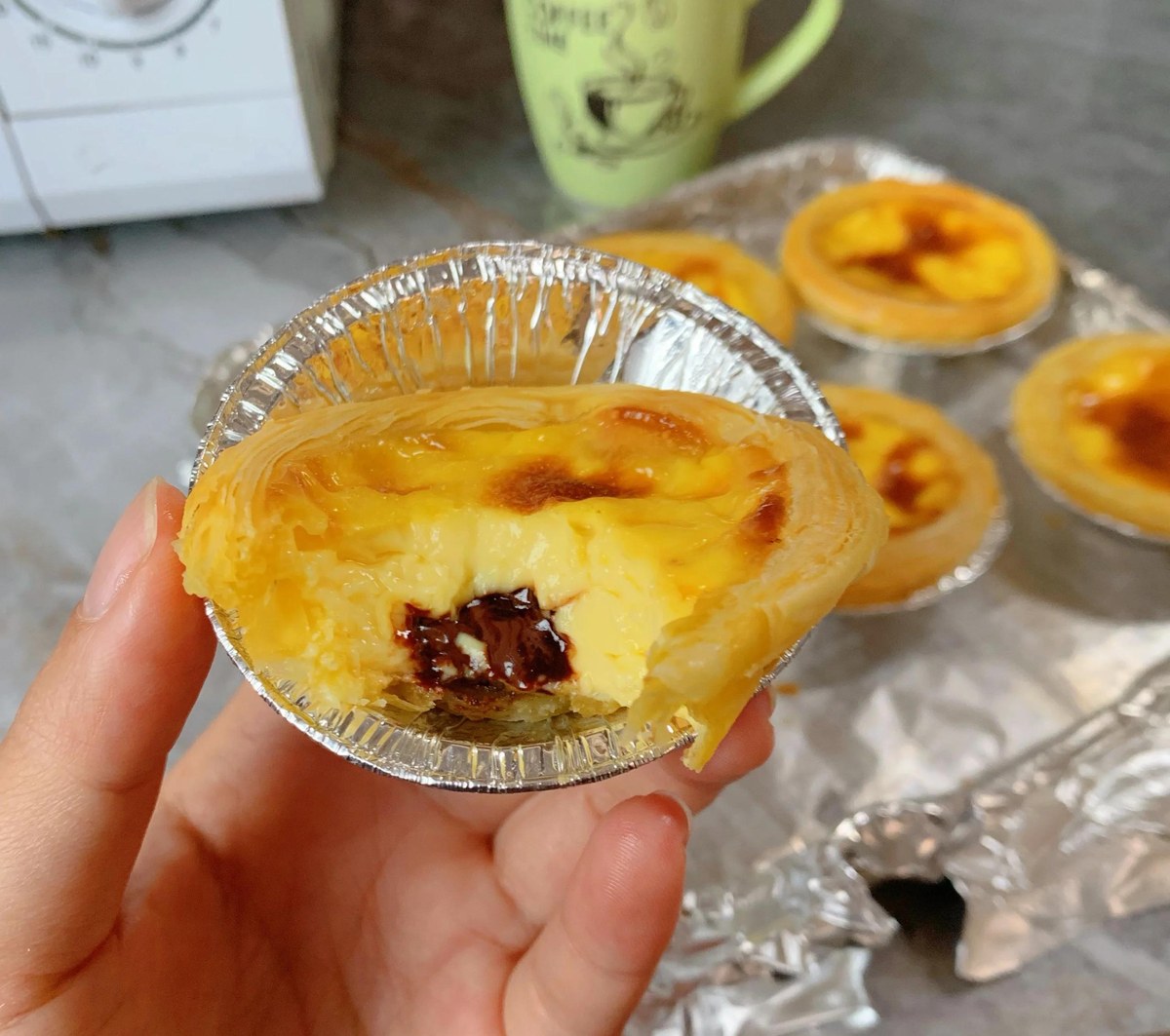
There is one test worth doing and it takes a second. Tilt the tart. If the custard shivers — moves as one glossy sheet, like a waterbed with a skin on it — it is right. If nothing moves, it has been sitting, and the sitting is what kills it. If it sloshes, it is not set and the shop is selling you raw egg in a cup. The second test is underneath. A good tart has a base you can hear when you tap it; the bad ones are pale and yielding on the bottom, which means the tin went into the oven cold or the oven was never hot enough in the first place.
Eat it standing up. This is not etiquette, it is engineering — you have about ninety seconds before the steam stops pushing the layers apart and the crust starts to give up. Bite through the top and let the custard burn the roof of your mouth, because that is the entire transaction. Get something hot and bitter to drink with it, ideally a Hong Kong milk tea (丝袜奶茶, sī wà nǎi chá), and let the two of them argue. If you must sit down, sit as close to the tray as the staff will let you. And if you are in a bakery that sells out by four in the afternoon, that is not bad luck. That is a good bakery.
Everything else the British left Hong Kong, the city has spent nearly thirty years deciding what to do with. The tart they never had to think about twice. It got better here, then it went north, and now there are grandmothers in Shanghai who have never been to Hong Kong and who will tell you, with total confidence and no evidence, exactly how an egg tart should taste. They are not wrong.
— Out of space for today. Doing an egg tart properly at home is a lamination project: cold butter, cold hands, and a shell you have to fold and rest three times before it will hold a custard without leaking. That deserves its own post. Recipe coming soon.
💬 Comments