Earth's Three Fresh: The Vegetable Dish That Isn't One
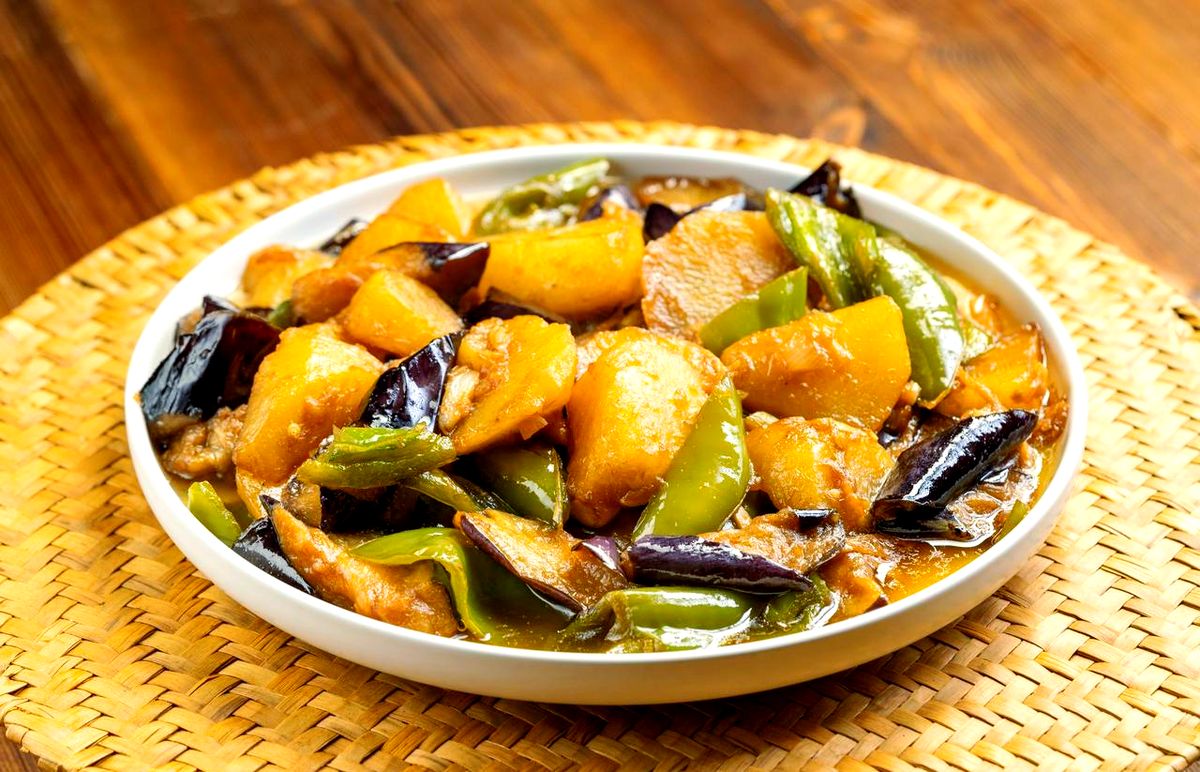
The plate lands and you relax, because for once the table has vegetables on it. Eggplant, potato, green pepper — the three of them, in a dark sauce that shines. You take a bite expecting virtue and get something else instead. The eggplant has collapsed into custard. The potato has a shell on it. The pepper still snaps. And your mouth is coated in something sweet and savory and faintly sour that has no business being on a vegetable at all. You look at the plate again. That was not a stir-fry. That was three fried things agreeing to share one sauce.
This is 地三鲜 (dì sān xiān), "the earth's three fresh," and it is the most-ordered vegetable dish in Northeast China. The name does more work than it looks. "Fresh" does not mean light. "The earth's three" is not poetry, it is a shopping list. Up in the cold northeast, the vegetables you could count on were the ones growing underground — potato, eggplant, green pepper — and if you had those three plus rice you had dinner. The dish has been around about a century. Ask five cooks where it started and you will get five kitchens.
Now the part the menu never tells you. Nothing in this dish is stir-fried. Every vegetable gets fried on its own, in its own oil, for its own amount of time, and only then does the whole thing meet the sauce. That is the entire dish. It is why it tastes the way it does, and it is the step every bad version skips.
Eggplant goes first, usually. It is a sponge, so the cook salts it and lets it weep, or dusts the chunks in a little starch, then drops them into the oil. What comes out is soft all the way through and blistered at the edges, with none of the grease that ruined your last attempt at home. Potato follows, in thick slices, and this is where a serious kitchen splits the fry in two: a lower temperature to cook it through, then a harder one to build a crust. Green pepper goes in last and barely stays. Fifteen seconds, maybe twenty. It is there for the crunch and the green bitterness, not to soften.
Then the sauce. Soy, a spoon of sugar, black vinegar, garlic, a splash of stock, and a slurry of starch to make it cling. Everything gets tossed together for the time it takes to coat each piece and no longer. The potato keeps its crust. The eggplant stays soft. The pepper keeps its bite. Three textures in one glossy mouthful, which is the whole point.
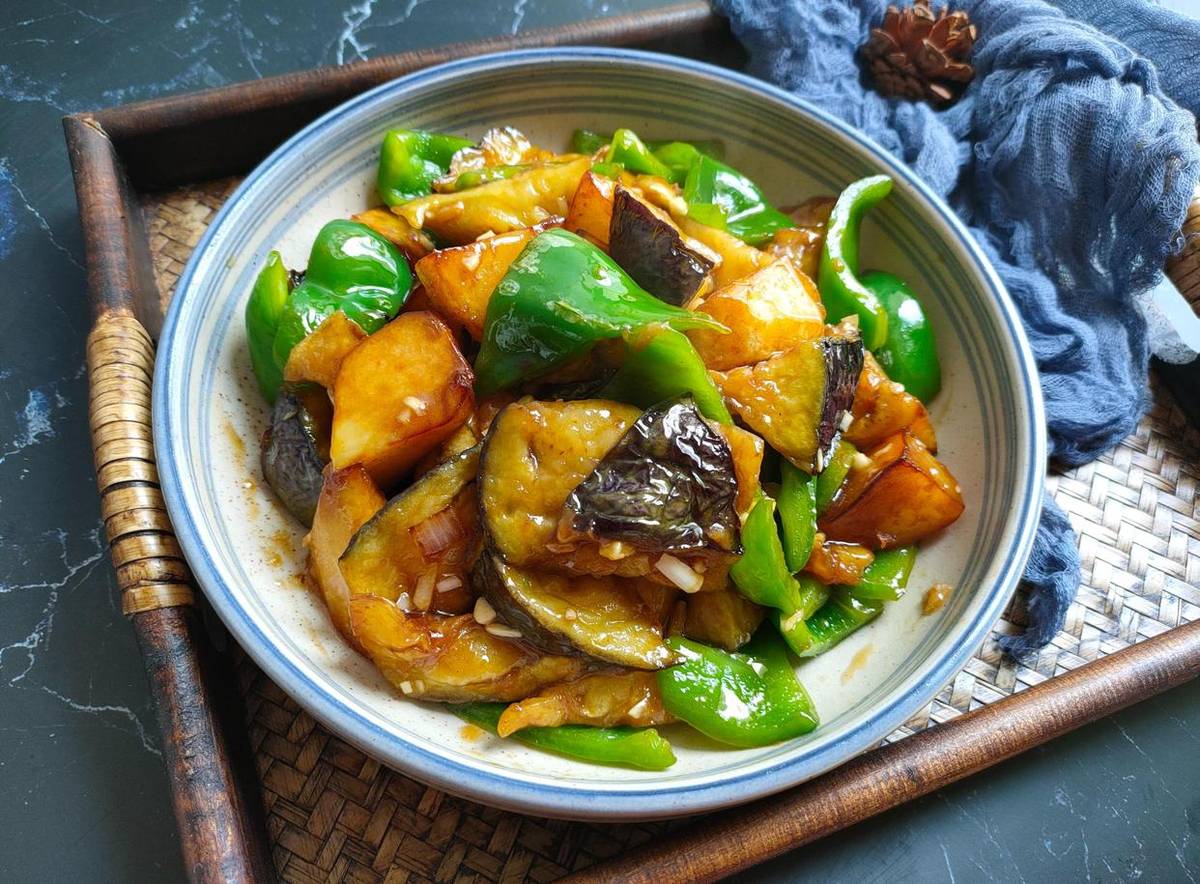
Stand in the kitchen while it is being made and the dish announces itself in stages. The eggplant hits the oil and roars, then settles into a hiss. The potato crackles drier and higher. Somewhere between them a fist of garlic goes into a hot wok with the soy, and the whole room turns sweet and dark with a burnt edge at the back of it, which is the smell of every northeast restaurant I have ever walked past.
Dump the three vegetables into a wok raw, cover them in soy sauce, and let them stew, and you get the version you have probably eaten: a brown, oily mass where the eggplant has gone transparent, the potato is pale and slightly raw in the middle, and the sauce sits in a puddle at the bottom instead of wrapping anything. That is not a lighter version of the dish. That is a different dish, and a worse one.
The same goes for the well-meaning remakes. Green bell peppers are not green peppers. They are sweet and watery, and the small bitter heat of the real thing is doing structural work in the plate. Skipping the frying and stir-frying everything "for health" leaves you with three vegetables in brown sauce, which is dinner, but it is not this. And anything with ketchup in it is not even arguing in good faith.
I learned all of this the hard way, standing in my own kitchen, certain I could improve on a century of northeast cooking. I cut the oil by half. I fried nothing. I served three limp vegetables and a thin brown gravy, and I ate it quietly while my friend from Shenyang told me, without cruelty, that this was not food. He was right. The dish is built on oil and it will not negotiate.
The first bite of a good one is sweet and salty at once, because the sugar and the soy go in together. Then the vinegar arrives, a small sour note near the back of your tongue that keeps the sweetness from getting comfortable. Garlic runs underneath all of it. And the textures keep changing on you — crust, then custard, then a snap — so no two bites are quite the same, even though it is one plate, one sauce, one minute of work at the end.
Eat it over plain rice. There is no other way worth discussing. The sauce exists to soak into the rice, and the rice exists to keep the sauce honest. Order a cold dish beside it if you are in a restaurant, something vinegary and sharp, and let the two argue. It is a home dish at heart, which means restaurants treat it casually and homes treat it seriously, the opposite of how most dishes work. And eat it now. Ten minutes later the eggplant has given up and the potato has softened, and the pleasure drains out of it like heat.
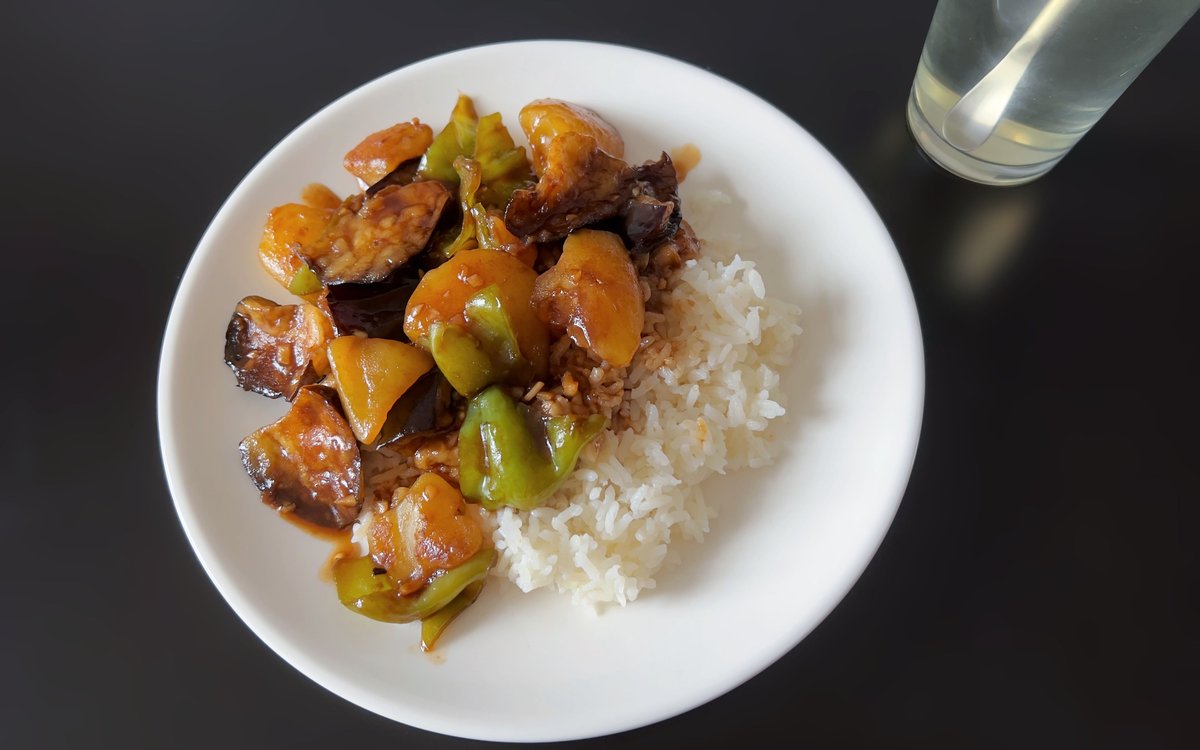
Ask for it hot, with rice, and do not let anyone tell you it is the healthy option.
The home version earns its own post. Doing it right means frying the potato twice and dusting the eggplant before it ever touches oil — skip either step and you are back to brown mush. Recipe coming soon.
The home version earns its own post. Doing it right means frying the potato twice and dusting the eggplant before it ever touches oil — skip either step and you are back to brown mush. Recipe coming soon.
💬 Comments