Di San Xian: Eggplant That Does Not Drink the Oil
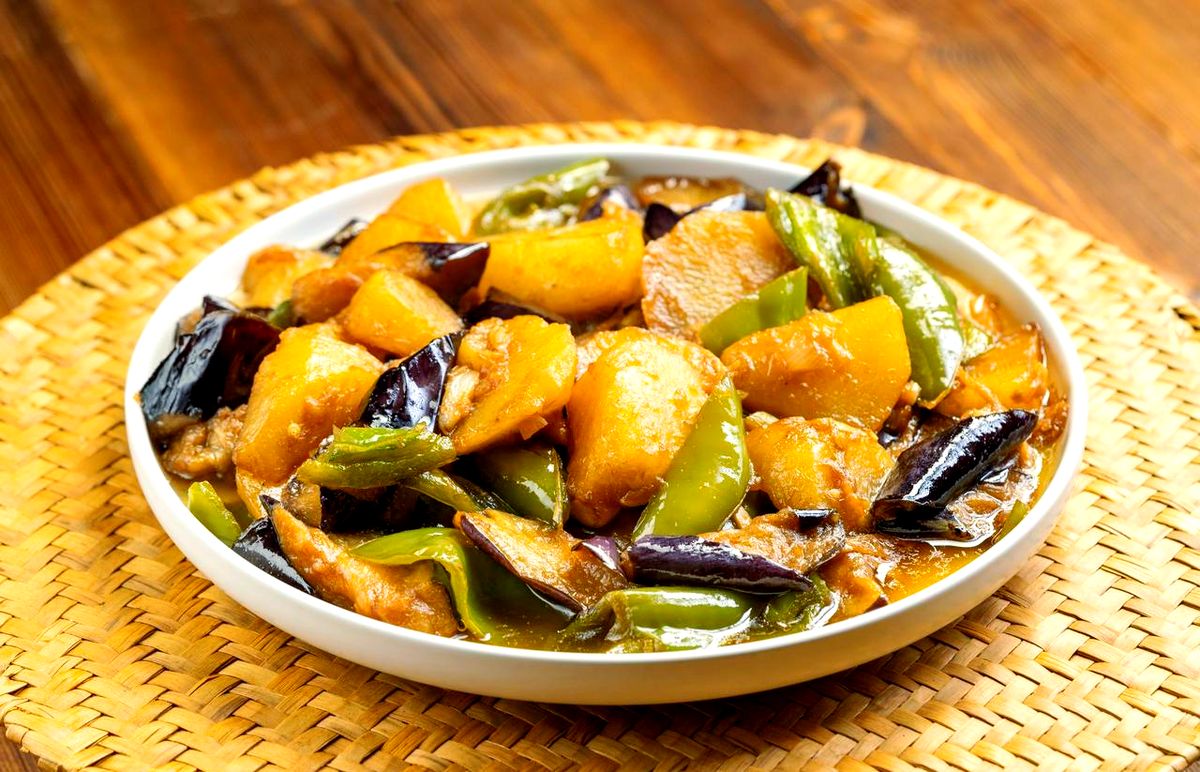
Editor’s Note: This is the kitchen companion to Earth's Three Fresh: The Vegetable Dish That Isn't One. Quantities, temperatures and the failure points are below. Read the technique once before you shop.
Why the Three Vegetables Fry in Three Passes
Di san xian means “earth three fresh,” and it names the vegetables in the order they matter: potato, eggplant, green pepper. It is a Dongbei weeknight dish made in one wok, and it has a reputation for being simple. It is not. The three share nothing except a season, and a wok cannot hold three temperatures at once.
Potato is the densest. A 1.5cm baton needs four minutes at 160°C before the starch at its centre gelatinises and turns floury; hotter oil browns the outside while the middle stays chalky. Eggplant is roughly 90 percent water held in an open foam of cells, and it drinks oil until that foam collapses. It needs a hotter start, 175°C, so the cut face sets into a crust within seconds. Green pepper is water behind a thin skin: ten seconds at 175°C blisters it, thirty turns it olive and limp.
The salt-and-squeeze step is what makes the eggplant manageable. One teaspoon of fine salt tossed through 3cm rolls draws water out through the cut faces, and after ten minutes you can press handfuls and watch three or four tablespoons of brown, faintly bitter liquid run out. Water inside the vegetable becomes steam in hot oil, and steam is what pushes oil into the cells as it escapes. Remove it first and there is less room for oil to follow. Why this matters: unsalted eggplant absorbs about twice as much oil as salted, squeezed eggplant, and draining on paper afterwards does not take it back out.
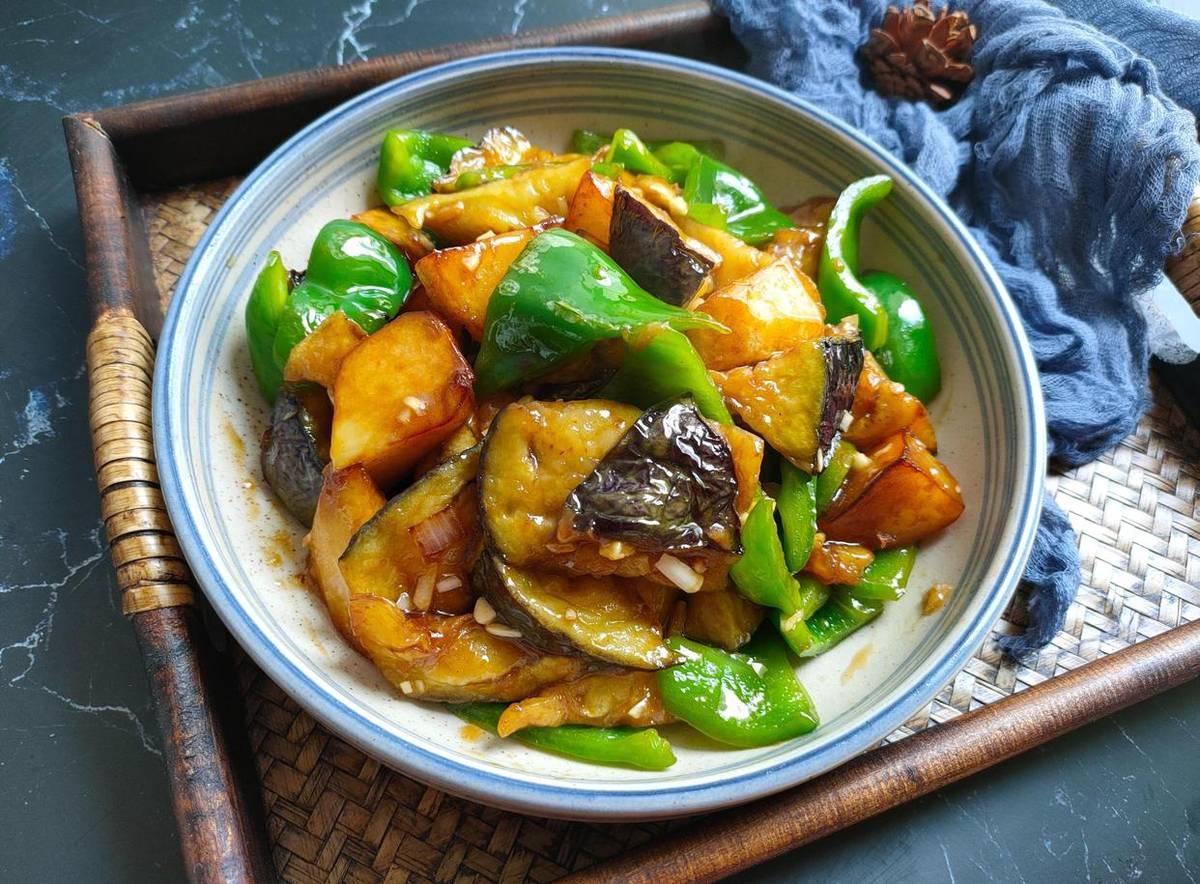
The potato gets one tablespoon of cornstarch tossed over dry batons. The starch gels into a thin shell, so the potato stays crisp and the sauce clings instead of sliding off. The sauce itself waits until the end: 2 tbsp of light soy, 1 tbsp of sugar, 1 tsp of dark soy, 1 tbsp of vinegar, 1 tsp of cornstarch and 100ml of water thicken in about twenty seconds at a boil. Add it earlier and it scorches under the vegetables while the potato finishes, and the vinegar cooks flat.
The oven version runs at 220°C (425°F) for twenty minutes with one tablespoon of oil and a single layer on the tray. You lose the crust: the potato comes out floury and the eggplant softer, closer to roasted. What you gain is a dish you can walk away from. Crowding is the other failure. Three vegetables at once drop the oil to about 130°C and release water faster than the oil can drive it off, so the wok fills with steam.
Ingredients
For the vegetables
- 300g waxy potato (about 2 medium), peeled
- 1 tbsp (10g) cornstarch, for the potato
- 350g long Asian eggplant (about 2), cut into 3cm rolls
- 1 tsp (5g) fine salt, for the eggplant
- 150g green pepper (1 large or 2 long), cut into 3cm squares
- 600ml neutral oil, for frying
For the sauce
- 2 tbsp (30ml) light soy sauce
- 1 tbsp (12g) caster sugar
- 1 tsp (5ml) dark soy sauce
- 1 tbsp (15ml) Chinkiang vinegar
- 1 tsp (4g) cornstarch
- 100ml cold water
For the wok
- 3 cloves garlic (10g), sliced 2mm thick
- 15g ginger, cut into thin julienne
- 2 spring onions (30g), cut into 3cm lengths
- 1 tbsp (15ml) neutral oil, for the stir-fry
- 1/4 tsp (1g) fine salt, to finish
Substitution notes: Chinkiang vinegar is malty and dark; without it, use 1 tbsp of rice vinegar plus a pinch of sugar and accept a sharper edge. Cornstarch and potato starch behave the same at these quantities. Use a waxy potato, the kind that holds its shape when boiled; floury baking potatoes crumble in the oil and cloud the sauce.
No long Asian eggplant: use half a globe eggplant in 3cm wedges and salt for fifteen minutes, since the flesh is thicker. For the oven method, use 1 tbsp of oil and a tray wide enough for one layer, or the vegetables steam against each other and never brown.
Prep: Fifteen Minutes, Ten of Them Waiting
1. Salt the eggplant (10 minutes)
Cut into 3cm rolls, halve them lengthwise, toss with the 1 tsp of salt in a colander and leave for ten minutes. Then squeeze handfuls over the sink until they feel half their original weight; you should get three or four tablespoons of brown water. Pat them dry, because surface water spits in the oil.
2. Cut and dust the potato (5 minutes)
Cut 1.5cm slices, then 5cm batons. Rinse for 30 seconds, dry thoroughly, toss with the 1 tbsp of cornstarch until each baton wears a chalky coat, and shake off the excess. Wet potato or excess starch and they fuse in the oil.
3. Whisk the sauce (1 minute)
Stir the cornstarch into the 100ml of cold water first, then add the light soy, sugar, dark soy and vinegar. Cold water matters: starch dropped into warm liquid seizes into pearls that never dissolve.
4. Cut the pepper and aromatics (3 minutes)
Cut the pepper into 3cm squares, discarding the seeds and the white pith. Slice the garlic, julienne the ginger, cut the spring onions into lengths with whites and greens kept apart.
Step by Step: Fifteen Minutes at the Wok
Step 1: Bring the oil to 160°C (4 minutes)
Heat the 600ml of oil in a wok wide enough to hold the potato in one layer. Use a thermometer the first few times; without one, a cube of bread should sink, then rise and bubble steadily. Keep a slotted spoon and a paper-lined tray to hand.
Step 2: Fry the potato at 160°C (4 minutes)
Lower the batons in and move them gently so they do not stick. After 90 seconds the oil around them goes quiet, which means the surface water has boiled off. At four minutes they should be pale gold at the edges and a skewer should pass through with no resistance. Lift out and spread on the paper.
Step 3: Raise to 175°C and fry the eggplant (3 minutes)
Turn the heat up and add the eggplant in two batches so the temperature does not crash. Fry each batch for 3 minutes, turning once. The rolls float, the cut faces brown, the skins wrinkle. If they drink oil instead of bubbling, the oil is too cool; take them out, wait, and try again.
Step 4: Ten seconds for the pepper
Drop the pepper squares into the same oil for 10 seconds, no more. The skin blisters in spots and the colour sharpens to a deeper green. Lift them out at once, since the residual heat keeps cooking them on the plate.
Step 5: The sauce goes in last (20 seconds)
Wipe the wok, add the 1 tbsp of fresh oil and set it over high heat. Add the ginger, garlic and spring onion whites and stir for 15 seconds, until the garlic smells sweet. Stir the sauce again and pour it in; it turns from cloudy to glossy in about 20 seconds. Why this matters: the starch needs a full boil to thicken, and the vinegar needs to go in late to keep its edge. When it coats the back of a spoon, tip in all three vegetables and toss for 20 seconds. Taste, add the 1/4 tsp of salt only if needed, scatter the green tops and turn out onto a warm plate.
Key Pitfalls
The eggplant soaked up half the wok and came out greasy. The oil was below 170°C, or you skipped the salt. Cold oil lets the cells draw it in before the surface sets, and unsalted eggplant holds more water, which drags more oil in as steam. Salt for ten minutes, squeeze hard, dry the surface, and fry at 175°C in two batches.
The potato batons stuck together into one lump. They went in wet, or with too much starch, or you did not move them in the first thirty seconds. Rinse, dry completely, dust lightly, shake off the excess, and stir gently as soon as they hit the oil.
The sauce turned into a thick, gluey paste. The cornstarch was mixed with warm water, or the sauce boiled for longer than half a minute. Mix it cold, stir again before pouring, and pull the wok off the heat the moment it coats a spoon.
Everything tasted of oil and the vegetables were limp. The wok was crowded and the oil fell to 130°C, so the vegetables steamed in fat instead of frying. Fry in batches no larger than will fit in one layer, and let the oil return to temperature between them.
The finished dish was far too salty. Light soy is already salty, and so is the salt on the eggplant. The 1/4 tsp at the end is a correction, not a default. Taste after the sauce thickens, before you add anything.
The green pepper went olive and soft. It stayed in the oil longer than ten seconds, or it sat in the sauce at the end. Ten seconds in the oil, then add it with the other vegetables and toss for no more than twenty seconds.
The oven version came out pale and wet. The tray was crowded, or the vegetables were still wet from salting. Spread them in one layer with space between, pat them dry, and use 1 tbsp of oil, no more.
Serving Suggestions
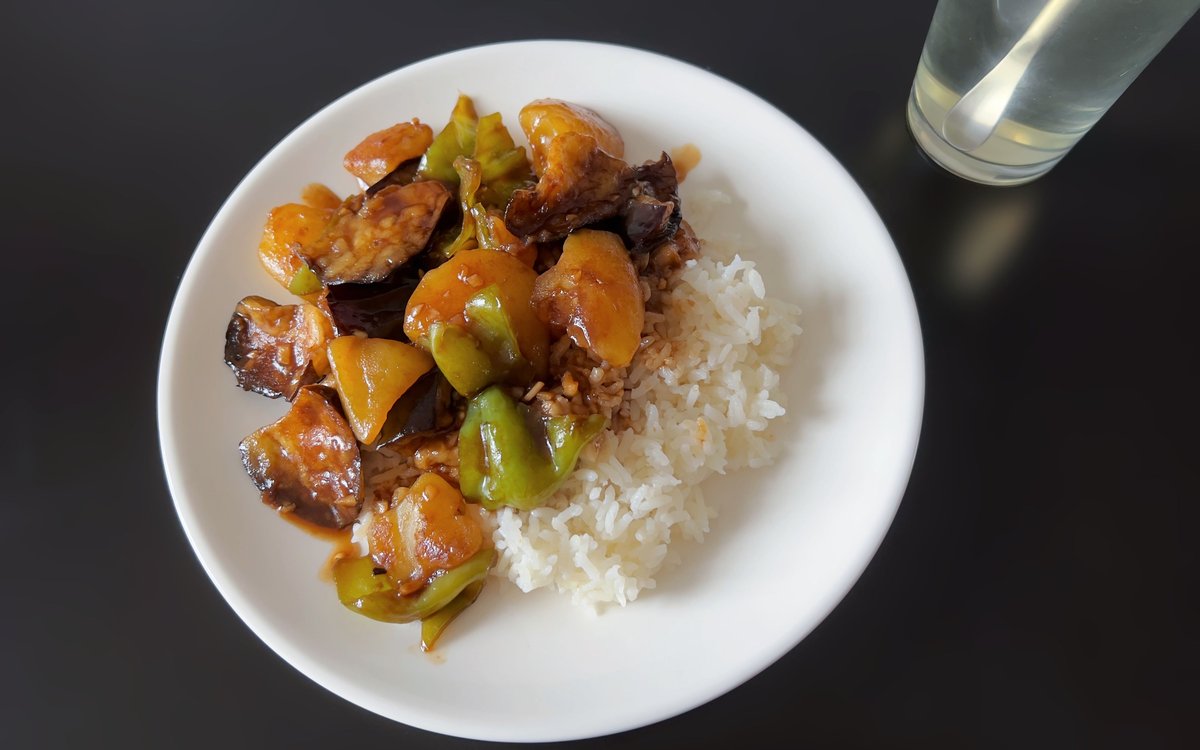
Serve it hot over steamed short-grain rice, with the sauce spooned over so it soaks a little way in. The dish is rich enough that rice and a dish of pickled cucumber is all it needs.
A cold lager or plain jasmine tea cuts the oil better than wine. Leftovers keep two days; reheat them in a dry hot pan for two minutes rather than a microwave, which turns the potato to mush. The dish does not freeze, because the eggplant collapses on thawing.
This is the companion recipe to Earth's Three Fresh: The Vegetable Dish That Isn't One. Read the story, then cook the dish.
💬 Comments