Duo Jiao Fish Head: The Cheek Is the Point
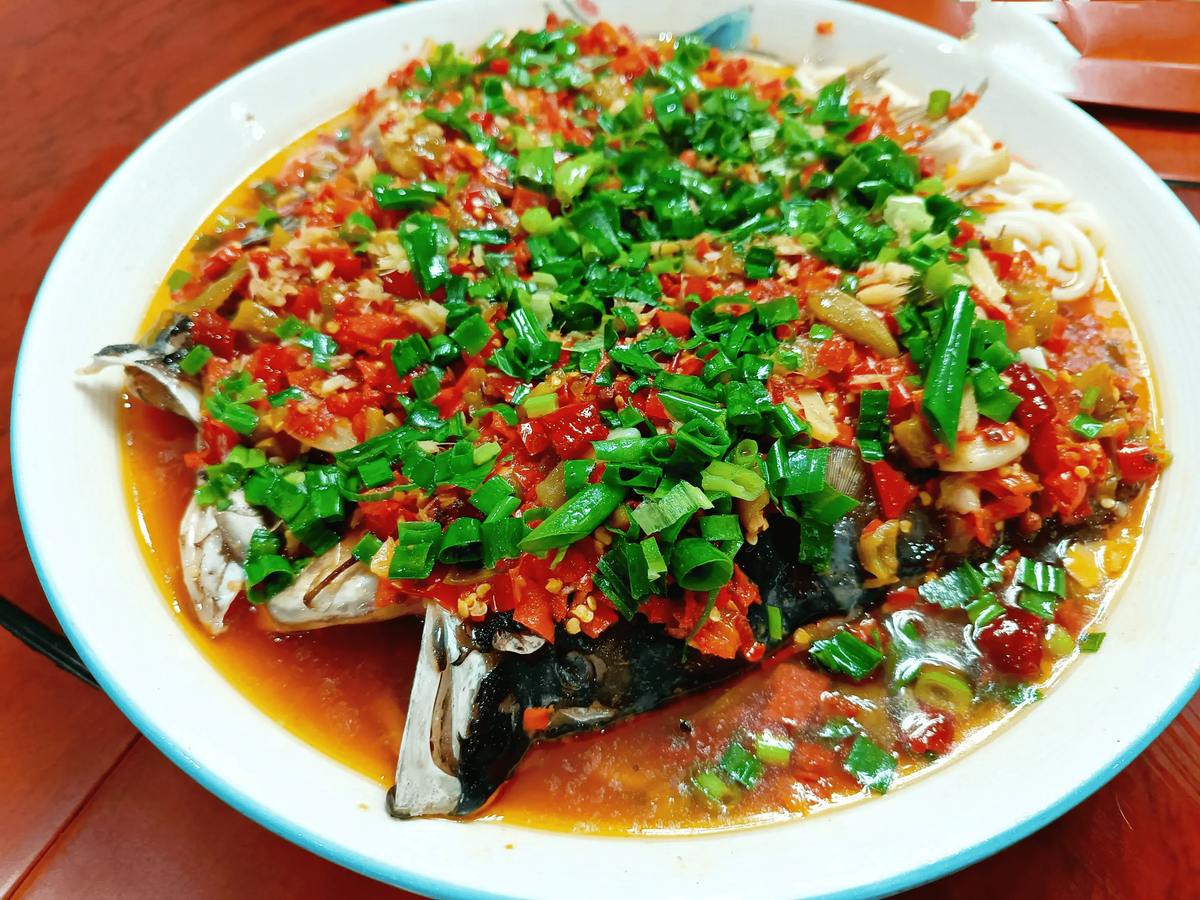
The lid comes off the steamer and the whole table turns toward it. What hits you first is the smell — sour and sharp and hot, fermented red chili and ginger and a slap of scallion, and underneath all of it, so clean it's almost a separate room, the sweetness of fresh fish. On the plate is a fish head, split down the middle and laid open like a book, buried under chopped red chilies thick enough that you can't see a single scale of the thing. This is Duo Jiao Fish Head (剁椒鱼头, duò jiāo yú tóu). If you grew up where I did, your first thought is the one I had: someone is trying to hide something.
I grew up in Shanghai, a city that treats fish with the delicacy it thinks fish deserves — steamed whole with ginger and scallion, the flesh white and quiet, the sauce nothing but soy and hot oil and a breath of sugar. The head was never the point. It went into the soup, or it went to whoever drew the short straw and had to be polite about it, and it was never me. So I carried a quiet prejudice for years: a fish head was the leftover, the part you ate because your grandmother told you not to waste it, never the thing you'd cross a province for.
Then a friend from Changsha kept talking about it. Not the polite version — the real one. He said 剁椒 (duò jiāo) the way you'd say a password, and he insisted on the head, not the fillet, because the head is where a fish keeps its best work. I didn't believe him. So on a trip through Hunan I let him drag me to a place I couldn't find again if I tried — four flights up, plastic stools, windows fogged from the steam of a hundred other orders — and he ordered it without asking me.
The plate landed. The cook had split the head of a bighead carp (鳙鱼, yōng yú — Hunan calls it 胖头鱼, pàng tóu yú, the "fat-head fish," and no fish ever earned a name more honestly) and buried it under a mound of chopped chili that had been salted and left to sit until it turned just sour. Then it had been steamed — no fryer, no wok, just steam and patience — and at the very end someone poured a spoon of smoking oil over the scallions and sent the whole thing hissing to the table. Nobody agrees exactly where the dish was born; the version I like is the improvised one — a Changsha cook with a fish head nobody wanted and a jar of chopped chili, deciding one belonged under the other.
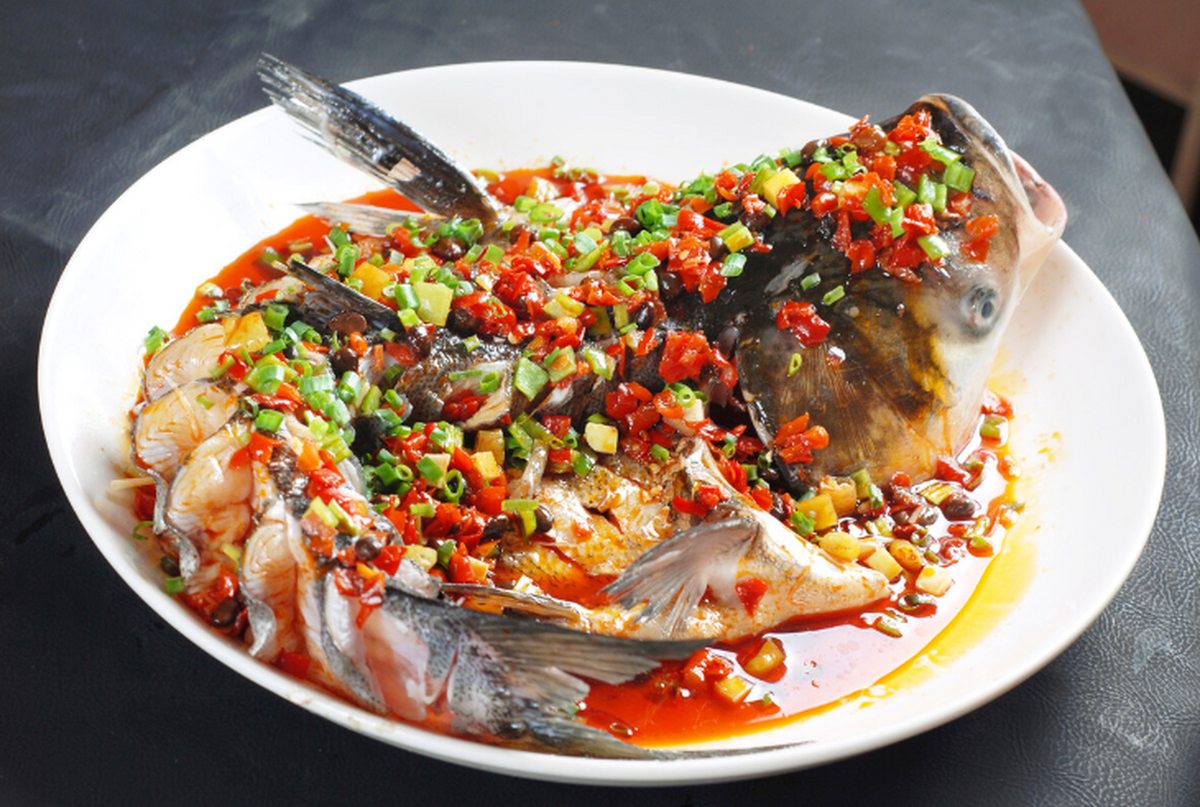
My friend went straight for the cheek. Not the chili. Not the bright red parts. He worked a spoon under the side of the head and lifted out a wedge of flesh the size of a thumb — the 鱼脸肉 (yú liǎn ròu), the face meat, the muscle the fish actually uses to chew. He set it in my bowl. "Eat this first," he said, "then tell me the chili was the point."
He was right, which is annoying. The cheek is the tenderest thing on the fish, softer than the fillet by a mile and somehow more itself — sweeter, tighter, with a give that snaps back just before it melts. It came up coated in chili, and the sour hit first, bright and sharp, then the ginger, then underneath it all the fish, clean as river water, tasting like the thing the chili was only ever there to frame.
That is the whole trick of the dish, and it's what every fake gets wrong. The chili is not the point. The chili is the frame. Duo Jiao Fish Head works because the head is fresh enough to taste like fish and not like the dock, because the chopped chili is real — fresh red chilies, chopped and salted and left to go slightly sour, not a spoonful of red paste from a jar — and because it's steamed, which means nothing can hide. There's no sauce to swim in, no breading, no braise. Just a fresh head, a blanket of sour-hot chili, and a steamer. If any one of those three is a lie, you'll know it in the first bite.
Which brings me to the enemy, and you've met it. It's the version that shows up at a buffet or a lazy banquet hall: a head that's been frozen, thawed, and buried under a slick of red chili paste the texture of jam — sweet and flat, no sour anywhere, the whole thing designed to keep you from thinking about the fish. That's what chili is for in a bad kitchen: camouflage. A real 剁椒鱼头 has nothing to hide. If the fish smells like fish in the bad way, or if the chili tastes like ketchup with ambition, send it back. The dish only exists because the head is worth eating on its own.
Eat it like this. Go for the cheeks first — there are two, one on each side, and they're the prize, so you move fast because everyone at the table wants them. Then the 鱼云 (yú yún), the "fish cloud," the soft gray pocket of fat and collagen that sits behind the eye; that's the texture people mean when they say a fish head beats the fillet. The eye is a decision, not an obligation — some people swear by it, and I've made my peace with it, but no one will judge you for sliding it aside. Work the collar and the fins for the last shreds, the way you'd work a crab. Then, when the head is mostly bone, do the best part: tip a bowl of plain noodles or rice into what's left — the chili, the fish oil, the ginger, all of it loosened by the steam — and stir until every strand is stained red. The last bite of that is the reason the dish exists.
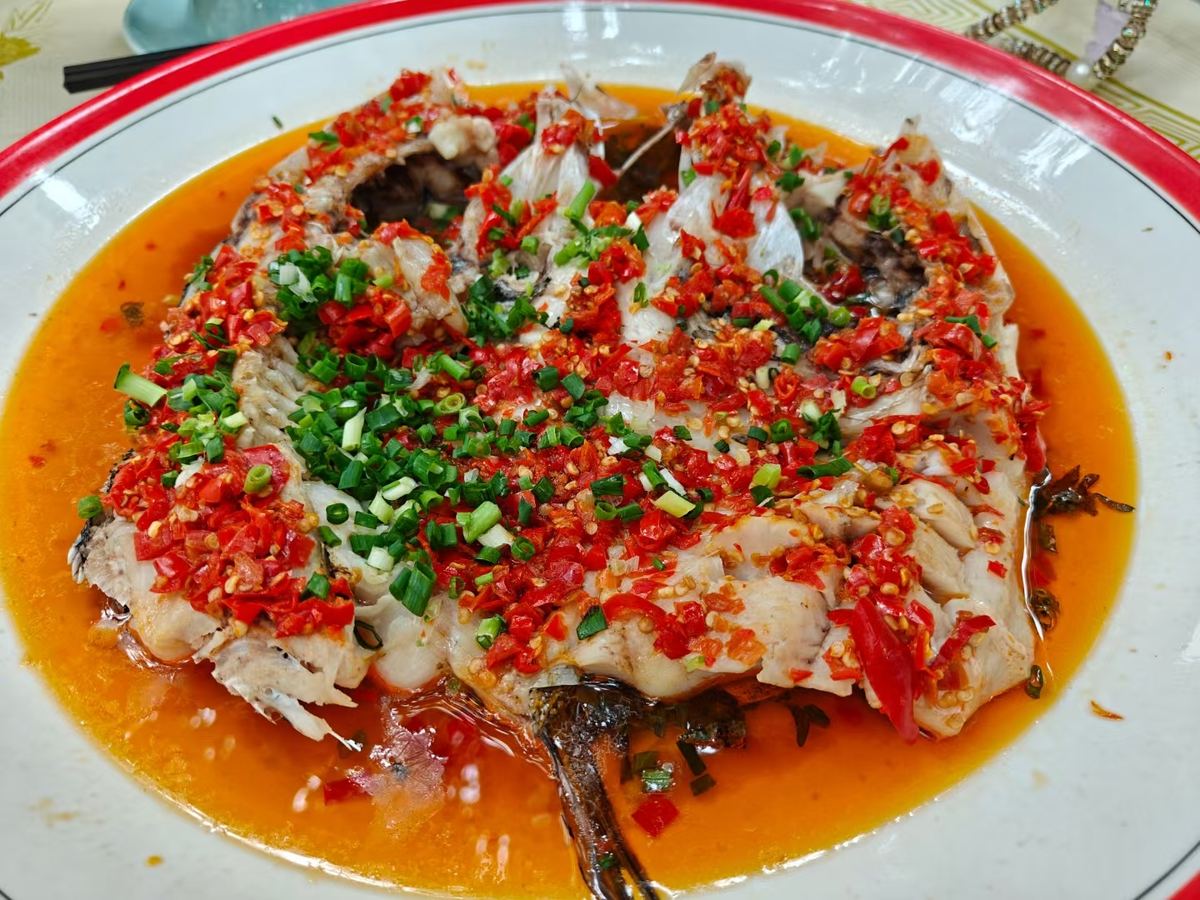
I went back to Shanghai with my friend's jar of 剁椒 in my bag, and the first thing I did at home was buy the biggest fresh fish head I could find. It wasn't as good. It never is, the first time. But the kitchen smelled like that Changsha restaurant for a full hour — sour and sharp and clean — and I stood over the steamer thinking how wrong I'd been, how I'd spent years treating the best part of a fish like it was the leftover, because nobody had ever told me the cheek was the point.
💬 Comments