Drunken Crab: It Isn't Raw — It's Cured
The jar comes out of the fridge in November and the whole kitchen knows before the lid is off. Rice wine first — sweet, faintly caramelised. Then soy. Then star anise. Then, underneath all of it, the cold mineral smell of a river. Inside, half-submerged in dark amber, are crabs. Anyone who didn't grow up on this says the same sentence at the same moment: you're going to eat that raw?
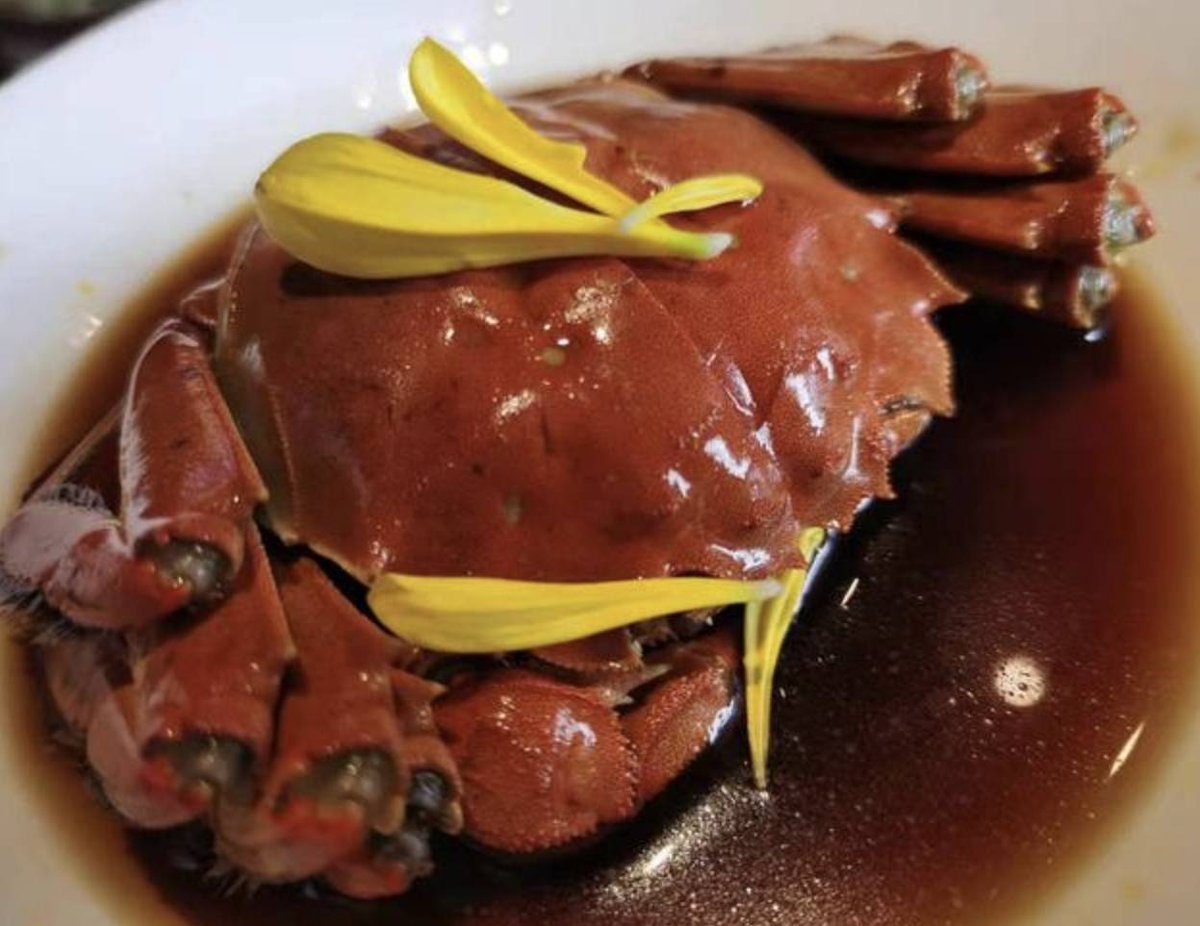
It isn't raw, and that one word is doing almost all of the damage. Drunken Crab (醉蟹, zuì xiè) is cured — salt, sugar, alcohol, cold, time. Nobody calls prosciutto raw pork, and nobody should call this raw crab. Nine days in a jar does to a crab roughly what a winter does to a leg of pork: pulls the water out, makes the inside hostile to whatever wanted to live there, and leaves behind something darker, denser and far more savoury than what went in.
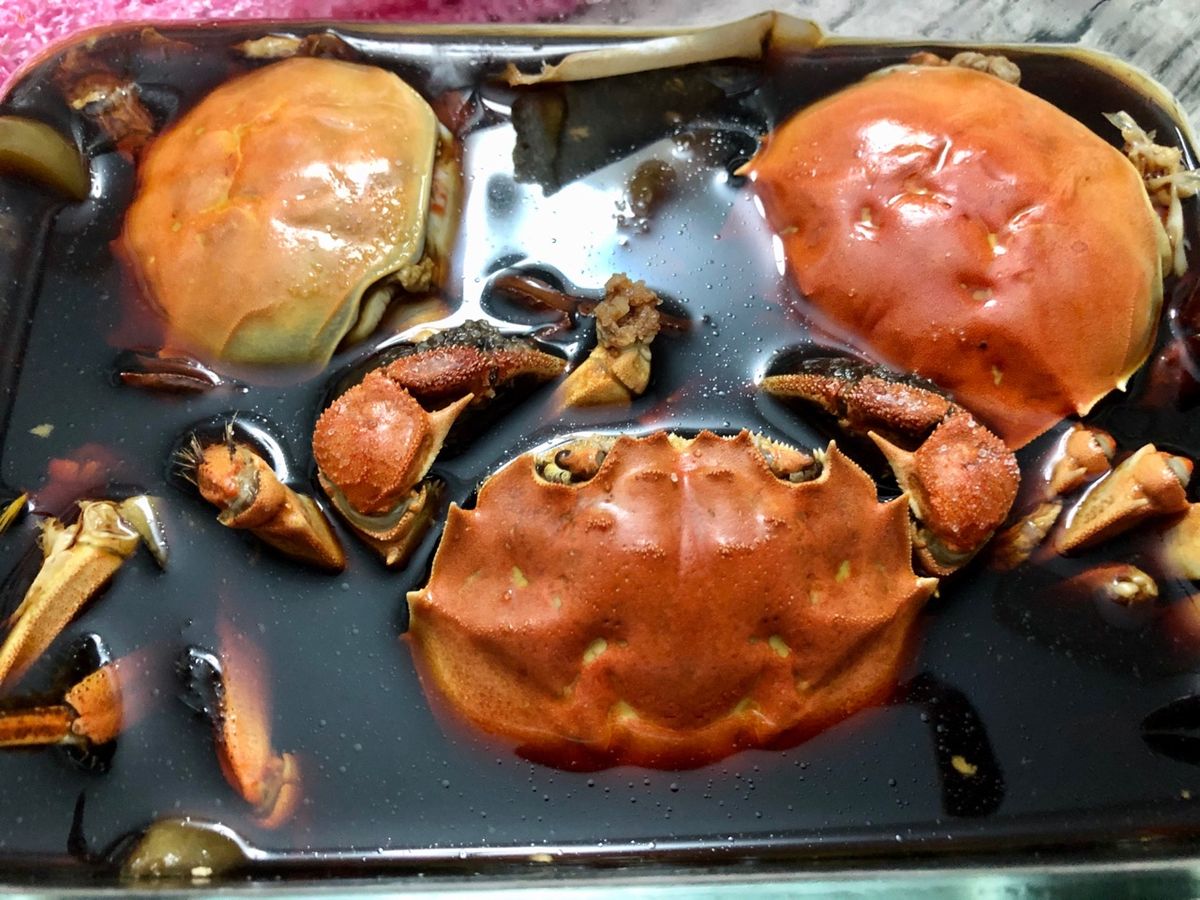
Only live crabs go in. Mitten crabs (大闸蟹, dàzháxiè) — the same ones Shanghai steams by the million every October — scrubbed with a brush, left a day in clean water to purge, packed into the crock while they're still waving. The brine is yellow wine (黄酒, huángjiǔ) at fifteen to eighteen percent, plus soy, sugar, salt, ginger, star anise, and in most home kitchens a shot of something stronger to push it over the line. Five days is a light cure. Nine or ten is standard.
It isn't a marinade's job. A marinade flavours a surface; this goes all the way through, because salt drags water out through the shell and the wine's sugars and amino acids move in to replace it. The flesh loses volume and tightens, turning from white and fibrous to pale grey-amber and slightly translucent — the way the inside of a smoked fish looks when you pull it apart.
This is winter work from the Jiangnan water towns, not a restaurant invention. Yuan Mei, the Qing poet who documented eighteenth-century Jiangnan cooking, put a version in his Suíyuán Shípǔ (随园食单) in 1792 — curing was how you kept a November glut of crabs from going to waste. Ningbo, down the coast, cures saltier and firmer and considers itself the original; Shanghai and Suzhou go sweeter and darker, with more soy. Both are right.
My grandmother's lived in a stoneware crock on the north-facing windowsill of a lane house off Jianguo Road. No recipe, no measuring cup. Salt went in by feel, from a bowl, in three handfuls, and I once watched her taste the brine off the back of her hand and add a fourth. Eleven days, she said, and then it was ready and not discussed again, because discussing a good jar is how you jinx it. My sister and I were not given crabs. We got a spoonful of the cure, dark salty-sweet amber, over hot rice. It took me until my twenties to work out that the grown-ups had the better end of it.
Eat one straight out of the fridge and the first surprise is temperature — cold crab, warm room. The second is texture. Steamed crab flakes; this one doesn't. The meat comes off the shell in firm sheets that hold their shape on your tongue, cool and faintly gelatinous, closer to good cold smoked trout than to anything you'd call shellfish. Salt arrives first, hard on the front of the tongue. Then the wine, sweet and ricey. Then a long crab sweetness that sits there twenty seconds after you swallow.
Then the inside, which is the real reason people pay for this. A female's roe (蟹黄, xiè huáng) comes out of the cure dense and deep orange, closer to cured egg yolk than to the loose golden stuff in a steamed crab; you scrape it out with a small spoon and eat it slowly, because it's about four bites long. The male's 蟹膏 (xiè gāo), the pale amber paste under the shell, cures into a cool, gluey gel that plenty of Shanghai people consider the best single mouthful in Chinese crab cooking. The old rule for steamed crab gives the ninth lunar month to the female and the tenth to the male. In a jar, a lot of us quietly flip it.
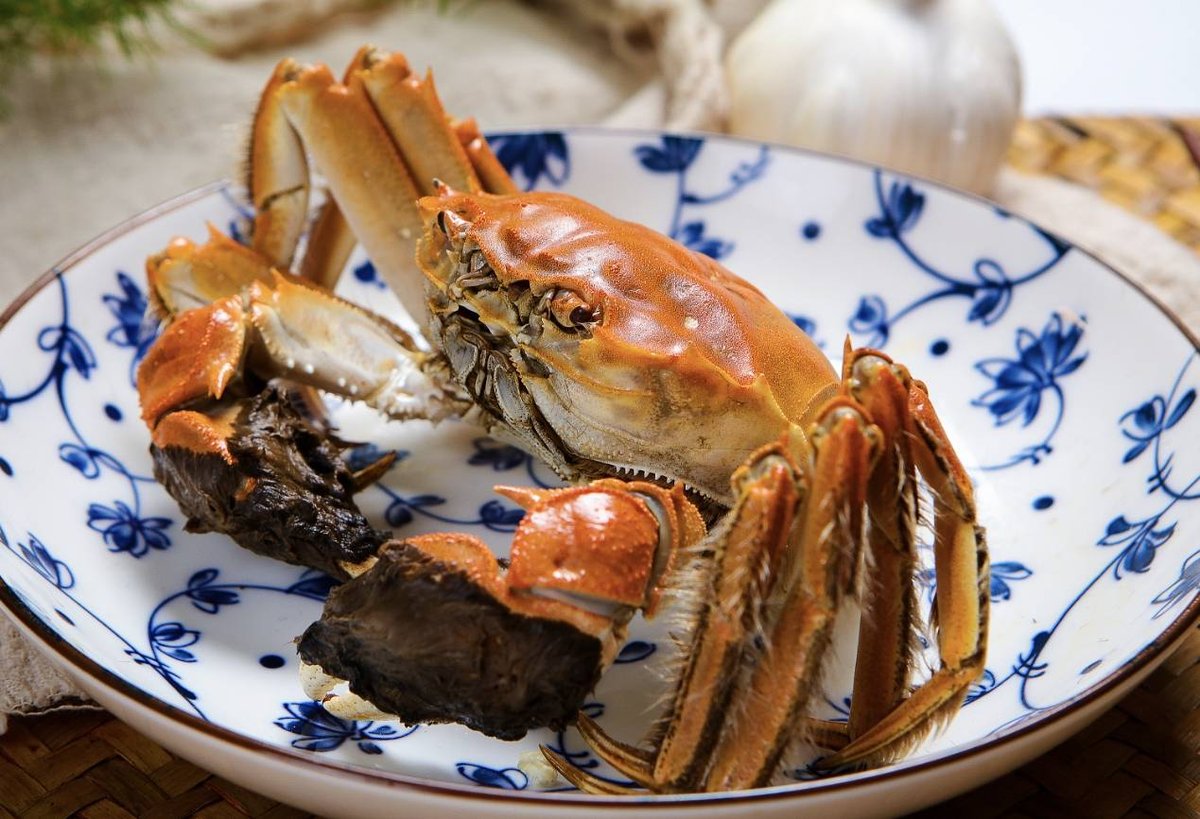
Now the fakes, because there are five and you'll meet at least two. The frozen crab is the worst — freeze a mitten crab, thaw it, cure it, and the flesh collapses out of the shell like a sponge. This is what buffets buy. Then the vodka version: somebody read that the crab is cured in alcohol, reached for the strongest clear spirit in the cupboard, and got a raw ethanol burn with nothing underneath it. 黄酒 isn't neutral — rice wine is sweet and full of amino acids, so it seasons while it preserves. Vodka seasons nothing.
The twenty-four-hour cure is the most common lie in kitchens outside China — a day in soy and rice wine gives you a salty shell and a bland centre, and it lets a restaurant charge four times the cost of its ingredients. The cure is not a marinade; it needs a week minimum, in the cold, and it can't be hurried with more salt. Then the cocktail-glass version, the one that gave the dish its reputation in the West: cooked crab — you can tell by the flaking — dropped in soy and cheap wine an hour before service, on crushed ice with a lemon wedge. Edible, and a different dish wearing the same name. And finally the dead crab. Cured crab gone wrong smells of ammonia and low tide. Good 醉蟹 smells of a wine cellar. If you get the first smell, don't be brave. Send it back.
The fear isn't stupid, though. It's aimed at the wrong target. Raw freshwater crab can carry lung flukes and Vibrio bacteria. Salt and alcohol make the crab hostile to most of that, and the cure is a real preservation technique, but a home crock is not a laboratory. Reputable makers freeze first, cure for weeks, or test the batch. Outside China, or anywhere that can't tell you how long the cure ran, order 熟醉 (shú zuì), the modern cooked-then-cured version. You lose maybe a tenth of the texture and none of the worry. A kitchen that read the recipe online this morning is the real danger here, not the crab.
Serve it cold and eat it cold — fridge temperature, never warmed, because the pleasure is the contrast against hot rice. Fingers, not chopsticks, and certainly not a crab fork. Shell off, roe first, with a spoon. Then the legs and claws, where the meat has cured firmest. Then tip the jar: the leftover cure goes over plain hot rice, and that rice is arguably the point of the whole exercise. Drink warm 黄酒 with it and nothing else. And no vinegar, no ginger — that belongs to steamed crab, and putting it next to a cured one erases everything you waited nine days for.
So: is it raw? No. It's a winter, in a jar. A river animal goes in and something closer to cured charcuterie with legs comes out. If you can find a maker you trust, it's one of the great cold things in Chinese cooking, and almost nobody outside China has tried it. If you can't, eat the cooked version and don't apologise for it. Keep the question in your pocket for the next jar that comes out of a fridge in November.
I'm not giving you a home version of the raw cure, and that's deliberate — this is a food-safety problem before it's a recipe problem, and getting it wrong is not worth a dinner. What I will write up properly is the cooked one: 熟醉蟹, steamed, chilled, then cured in 黄酒 with soy, sugar and ginger. The technique that decides whether it works is the brine ratio. Too much salt and you've made a pickle. Recipe coming soon.
💬 Comments