Douzhi: The Breakfast That Tastes Better Than It Smells
The door opens and the smell comes out to meet you. Not food smell. Cellar smell — wet concrete, sour grain, something underneath that is honestly a bit like a drain. My colleague walked straight in. "This is the good one," he said, which in Beijing is the only review that counts.
Six forty in the morning, January, a shop two streets from the Temple of Heaven: fluorescent tubes, formica tables, plastic stools, windows fogged so thick you can't see in from the street. In the queue, men in their seventies, several of whom have brought their own bowls from home. Nobody talks much. Behind the counter there's a pot the size of a washing machine and a woman with a ladle who has been doing this since before I was born.
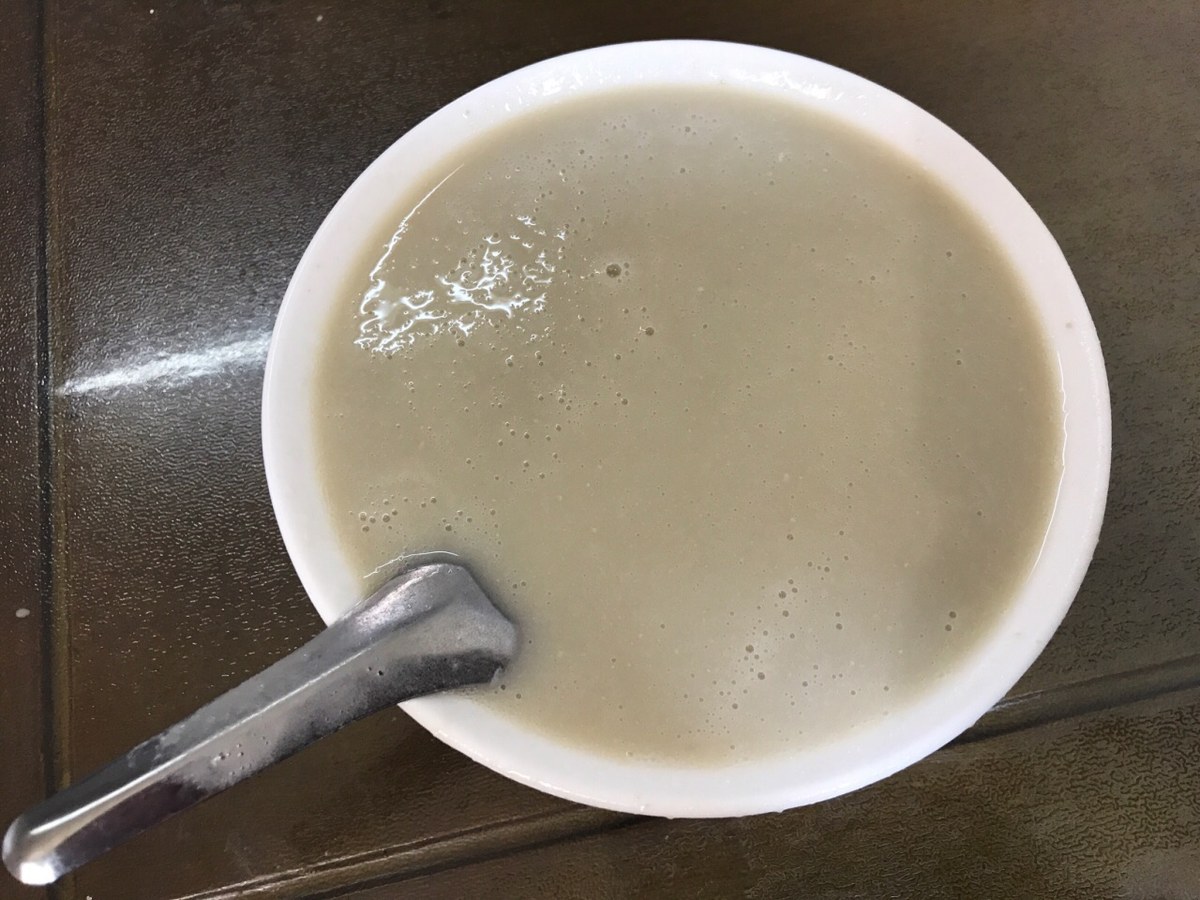
She fills a bowl and sets it down, and the surface keeps moving for a second, the liquid is that hot. Grey-green, faintly cloudy, a thin skin gathering at the edge. Beside it: a jiaoquan, which is a ring of dough the size of a bracelet fried until there's no softness left in it, and a small dish of mustard pickle cut into threads and dressed with chili oil.
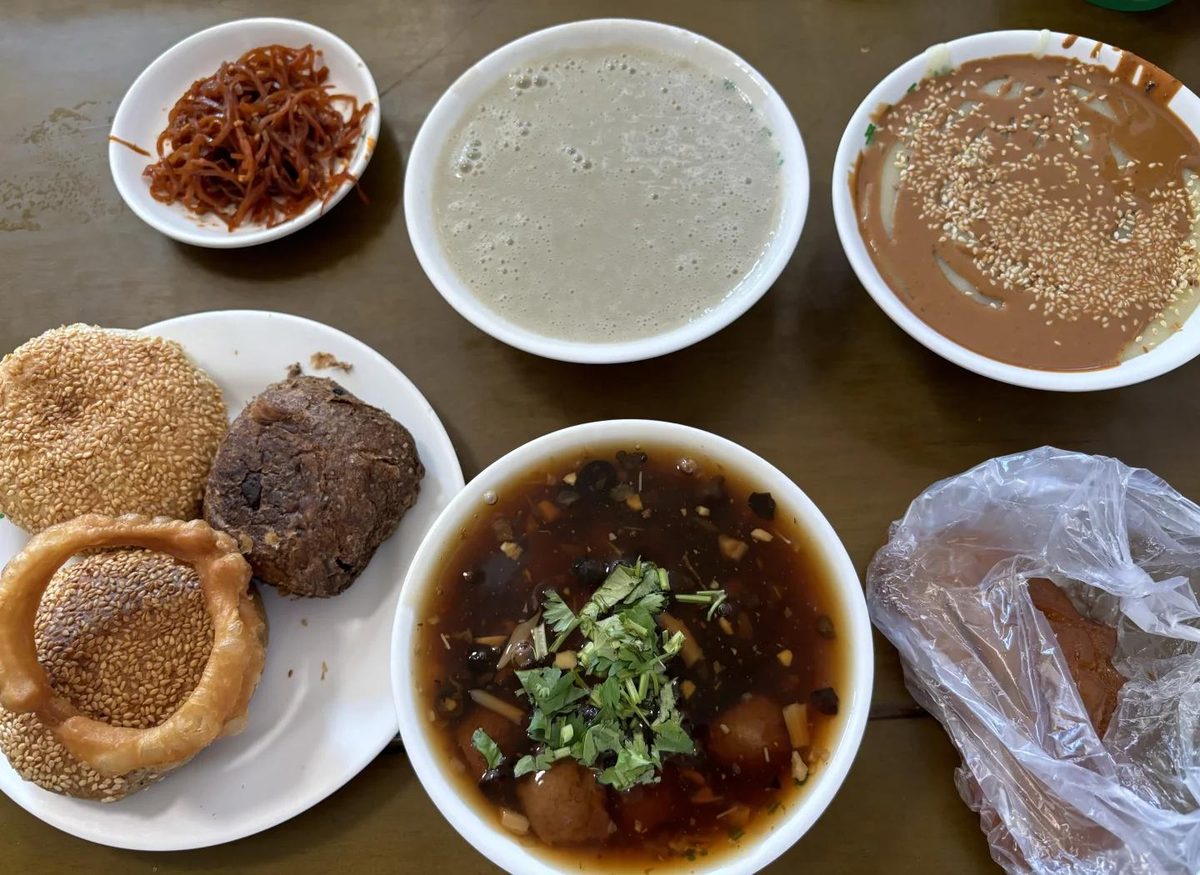
You do not smell it first. That is the mistake. Put your nose in the bowl and you get the cellar at full volume, and your brain files the whole thing under "do not swallow." Lift the bowl instead, sip from the rim, get it into your mouth before your nose can file a complaint.
First second: sour. Not lemon, not vinegar — the sour of bread dough that sat out overnight, round, with a fizz at the edge of the tongue. Then the mung bean comes up underneath, faintly nutty, and the whole mouthful turns savoury. The finish is where it gets difficult: something sulfurous climbing into the back of your nose, and staying a beat too long. Then it lets go, and what's left is almost sweet.
Second sip is easier. By the third you understand why a man would get up at six in the winter for this.
The smell is not the taste
That gap between nose and mouth is the entire experience, and it's why the drink has the reputation it does. Beijingers will tell you, with real pride, that it's a test — that you're either the kind of person who can drink douzhi or you aren't. Half of them are joking. The other half are from Beijing.
What's in the bowl is thin and slightly grainy, with a sediment that drops to the bottom within a minute of pouring. Do not stir it. Drink from the rim and turn the bowl slowly as you go, the way the old men do, so the sediment mixes itself in a little at a time. The bowl gets stronger as you work around it. The last mouthful is the loudest. That isn't a flaw in the method; it is the method.
It isn't rotten. It's fermented.
Douzhi (豆汁儿, dòuzhī) began as somebody else's waste. Mung beans get ground and soaked to draw out the starch for bean threads, and the water left behind is full of bean solids and sugar. In the workshops of Beijing's south city that water used to go down the drain. At some point a bucket was left standing, it fermented, somebody drank it, and by the Qing dynasty the cheapest thing in the building had become breakfast for the men who unloaded the carts.
That's the whole trick: the byproduct, kept until the bacteria do the work. A ladle of yesterday's batch goes into today's, the way you'd feed a sourdough starter, and it sits in a crock for a day or two until it sours properly. Then it's boiled — twice, because the first boil foams up like milk and will climb out of the pot and onto the stove.
None of that is rot. It's lactic fermentation, the same family as kimchi, sourdough, and the rind of a washed cheese. The swampy note comes from sulfur compounds as the bean protein breaks down. If you've eaten a good aged cheese you've met that note before, just in different clothes.
The bowl, the ring, the pickles
The jiaoquan (焦圈, jiāoquān) is not a side dish. It's a tool. A bracelet of dough fried hard, shattering when you bite it — a hundred small cracks, salt, oil, no sweetness at all. Between sips you take a bite, and the fat and salt reset your mouth so the next sip lands like the first one. Without it the sourness accumulates, and by halfway you're finished.
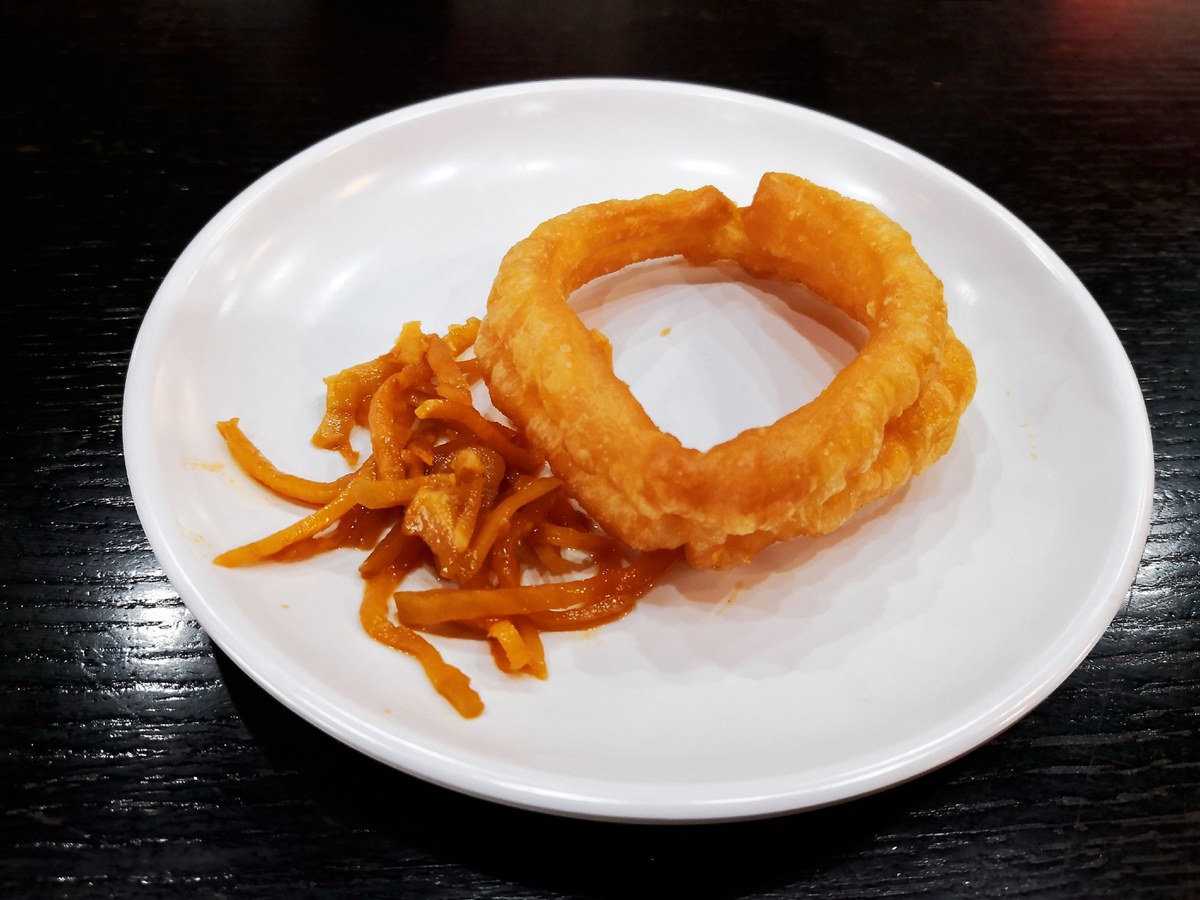
The pickle does the same job from the other side. 咸菜丝 — mustard tuber in thin threads, chili oil, a little crunch and heat. Three strands on chopsticks, then a sip. Some shops bring a sesame flatbread as well; order it if you're hungry, skip it if you want to taste the douzhi properly.
Then there's the room you're drinking it in. A Shanghai breakfast shop at that hour is loud and sweet — soy milk with sugar in it, fried dough sticks, a sesame ball with red bean. My mother would pour this bowl into the sink without tasting it, and she'd be right, for her. Douzhi isn't a Chinese drink. It's a Beijing one, and the two hundred kilometres to the coast are enough to make it foreign.
What gets sold as douzhi away from Beijing is mostly an insult. There are instant sachets now: powder, hot water, stir. It tastes like sour milk powder forgotten in a cupboard. There are cafés pouring douzhi into espresso, a drink built to be photographed and not finished. There is the "mild" version some places serve to outsiders, cut with water until it's a rumour of itself — worse than either extreme, because now it tastes of nothing and you have paid for it. And there is cold douzhi in a paper cup, which is as sound an idea as cold gravy.
The first time, I got through about a third of the bowl before I put it down and let my colleague finish mine. He didn't say anything. He drank both and ordered another jiaoquan.
The second time was eight months later, another trip north, the same shop. I finished it. By the third I was the one suggesting we go.
I tried to make it at home once. Bought a vacuum-packed bag in a Beijing supermarket, carried it back to Shanghai, warmed it in a saucepan. It came out flat and dead and slightly wrong, because douzhi needs a live starter from a batch that is already going, and it needs to be drunk the day it's made, and it needs a shop selling forty bowls an hour so that nothing sits. You cannot make it alone in a kitchen that has never made it.
Which is fine by me. Some things should require a train.
Tomorrow at six forty, in a shop near the Temple of Heaven, there will be a queue of old men holding their own bowls, and the windows will be fogged, and the woman with the ladle will fill them one after another without saying much. Order a bowl. Don't smell it. Drink it hot.
If you hate it, you're in good company — half of Beijing hates it too. The other half will tell you, with genuine pity, that you went to the wrong shop.
💬 Comments