Double-Skin Milk: The Dessert With a Second Skin Hidden at the Bottom
A bowl of it lands in front of you and does nothing at all. White, flat, still, barely steaming. In a bakery case you would walk straight past it. Then you drag the back of your spoon across the surface and the surface wrinkles: a paper-thin film folding under the metal, the way the skin on a cup of cocoa wrinkles when it has been sitting too long. Push down and the spoon sinks through something silken, then stops again, an inch above the bottom of the bowl. There is a second film down there. Two skins. It is right there in the name, and most of the world still thinks it is a milk pudding.
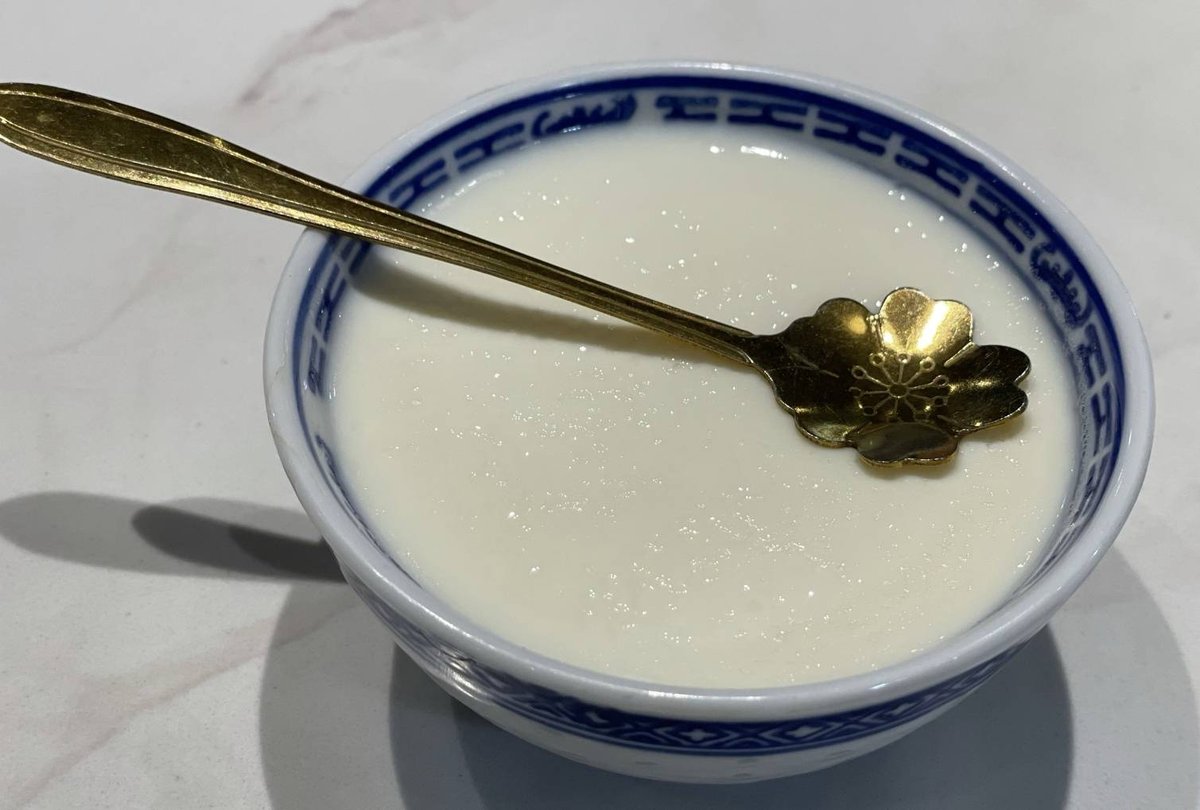
Double-Skin Milk (双皮奶, shuāngpí nǎi) is a Cantonese dessert from Shunde (顺德), the district south of Guangzhou. Milk, egg white, sugar. That is the entire list. No gelatin, no agar, no cornstarch, no rennet, nothing to lean on but heat and egg white. It is not a pudding either. A Western custard sets as one continuous mass. This sets with a skin above and a skin below, and those two skins are the reason the dish has a name at all.
The technique is a small piece of physics, and it is worth understanding, because every bad version is a shortcut around it. You scald whole milk and pour it into a bowl, then wait. Fat and protein gather on the surface and set into a skin — a few minutes, longer in a cold room. You lift a corner of that skin with a chopstick and pour the milk out from underneath it, so the skin stays behind in the bowl. Then you whisk the poured-off milk with egg white and sugar, strain it, and pour it back in slowly, down the inside wall, past the skin. Into the steamer it goes. When it comes out, one skin sits on top and one sits at the bottom, with the custard suspended between them. The top skin has picked up a faint savoury richness; the bottom one is denser, closer to a sheet of cold butter. Two textures inside a bowl of white.
Shunde kept water buffalo for the rice paddies, not for milk, and buffalo milk runs around 8 percent butterfat — double a Holstein's. That fat is why the skin forms so obligingly here and so reluctantly anywhere else. The dessert is credited to Daliang (大良), the old town at the centre of Shunde, where a dairy family was selling it by the 1930s.
I ate my first one at a plastic table in a Hong Kong dessert shop (糖水铺, tángshuǐ pù) after midnight, which is when sugar-water shops do their best business, and what I remember is being annoyed at how little there was to look at. Years later I tried to make it in a California kitchen and produced three bowls of warm sweet milk with a little foam on top. Two things were wrong. American supermarket milk is homogenised, which shreds the fat into particles too small to rise and knit into a film, and the carton in my fridge was 2 percent anyway. Non-homogenised whole milk fixed most of it. A spoonful of milk powder stirred into the mix fixed the rest, which is what home cooks in Guangdong do on days when the milk is thin.
Temperature is the choice you get to make, and the two cities disagree about it. Shunde serves it warm, straight off the steamer, and warm is where the milk smells like milk — cream and a faint grassy note off the buffalo fat, the custard loose and trembling. Hong Kong chills it, and cold doubles down on texture: the skins firm up and the whole thing eats like the middle of a good tofu, the top skin cracking under the spoon like the lid of a crème brûlée that was never torched. Both are correct. A bowl that has spent two days in a fridge is not, and you can tell it the moment the spoon goes in.
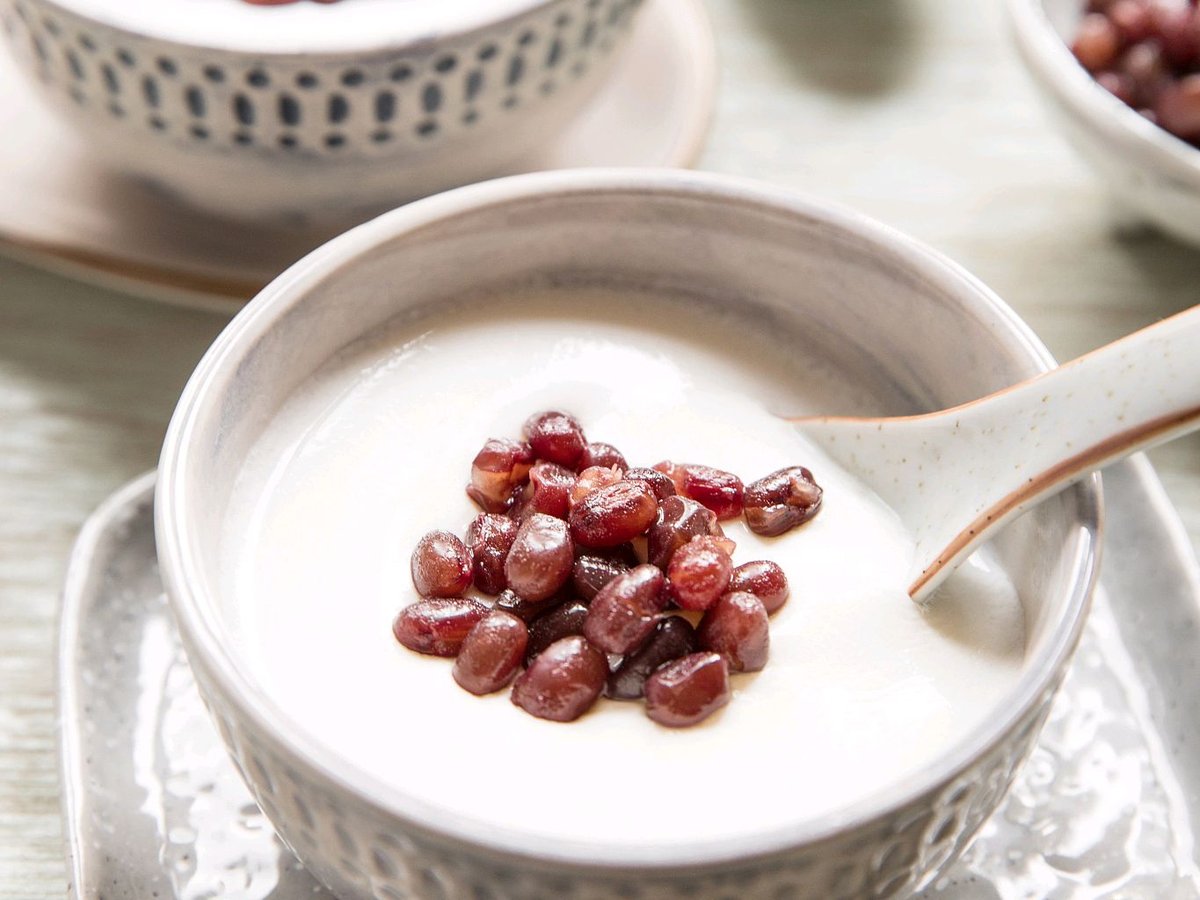
There are four fakes, and you have probably eaten two of them. The packet version is the worst: 双皮奶粉, double-skin milk powder, sold in sachets with instructions to add boiling water. It sets into sweet chalk with one rubbery film on top, and it tastes of vanilla and wallpaper paste. The jelly version is what bubble tea shops and dessert chains sell, thickened with gelatin or agar and served cold in a plastic cup; press it with a spoon and it pushes back, translucent at the edges and sweating. The cornstarch version is the lazy restaurant shortcut — glossy, gluey, coating your tongue the way gravy does. And the fourth one is a milk problem: 2 percent, homogenised, no skin to speak of, so the kitchen quietly hands you a pudding and lets the menu do the lying.
There are two tests, and both of them use a spoon. Tilt the bowl first. A good one moves as a single trembling mass, the way a soft-set panna cotta does, and the surface domes rather than sloshes. A dead flat surface means a thickener and a fridge. Then push the spoon all the way down. If you feel a soft resistance just above the bottom of the bowl, there it is: the second skin, the entire point of the dish. If the spoon travels through custard and hits only ceramic, you are eating a shortcut — and now you know something about the rest of that kitchen's menu.
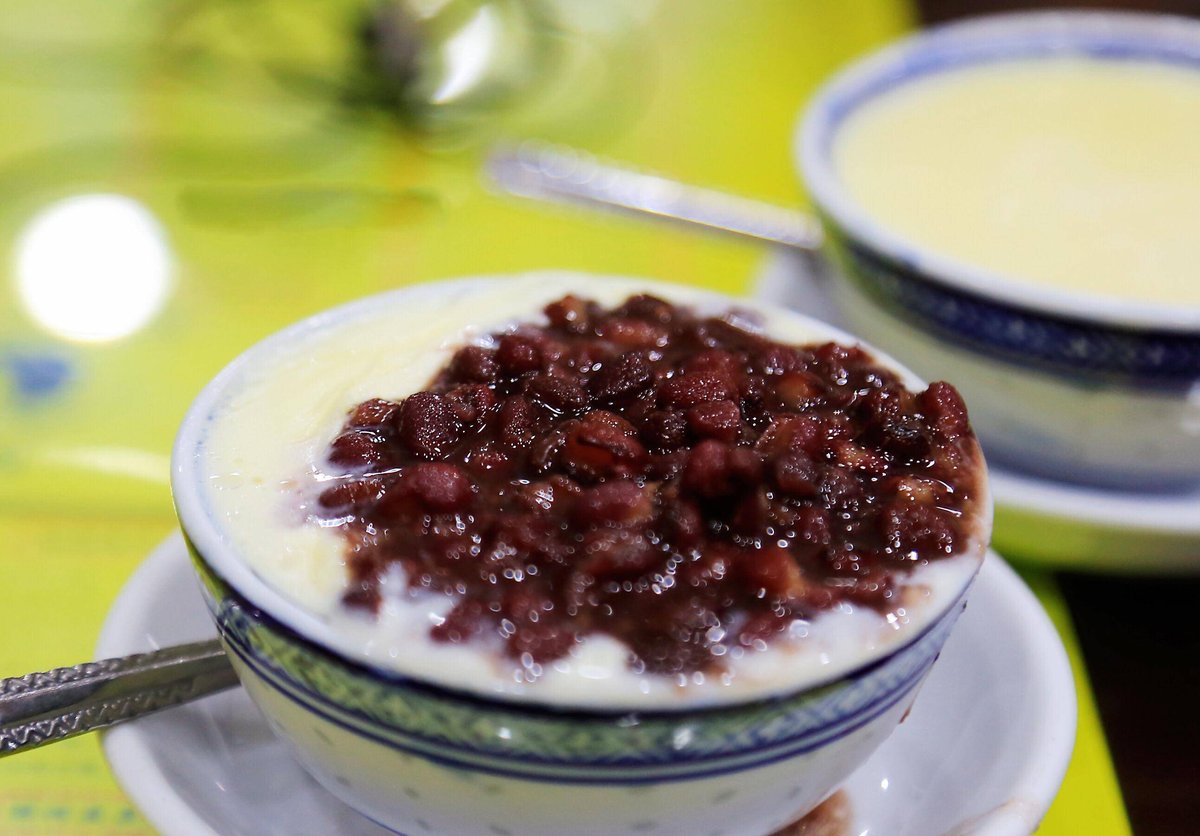
In Shunde you eat it warm, with a spoon, and no ceremony at all. Sweet red beans (红豆, hóngdòu) stewed soft in sugar are the classic topping; lotus seeds show up in the older shops; in Hong Kong you will meet mango, pomelo and coconut versions that are, honestly, a different dessert. Order it plain the first time. The toppings exist to sell you the second bowl. And do not stir — stirring is the most common mistake anyone makes, and it costs you the whole dish: two textures collapse into one, and a bowl that was architecture becomes sweet milk soup. Take a vertical spoonful instead, skin and custard and bottom skin in the same bite, and finish it before the custard cools, because this is not a dessert that improves as it sits. Three in the afternoon is the hour it was built for. In Shunde they will also hand you one at breakfast, and after the first time you stop finding that strange.
It is a hard dessert to photograph and a hard dessert to sell. There is no colour, no garnish worth mentioning, and the argument happens entirely under a white surface where nobody can see it. Which may be why the honest versions are still mostly in Guangdong and Hong Kong, made by people with nothing to hide behind. Two skins, three ingredients, one spoon. If the bottom one is missing, order tea and leave.
💬 Comments