Double-Skin Milk: Two Skins, No Oven
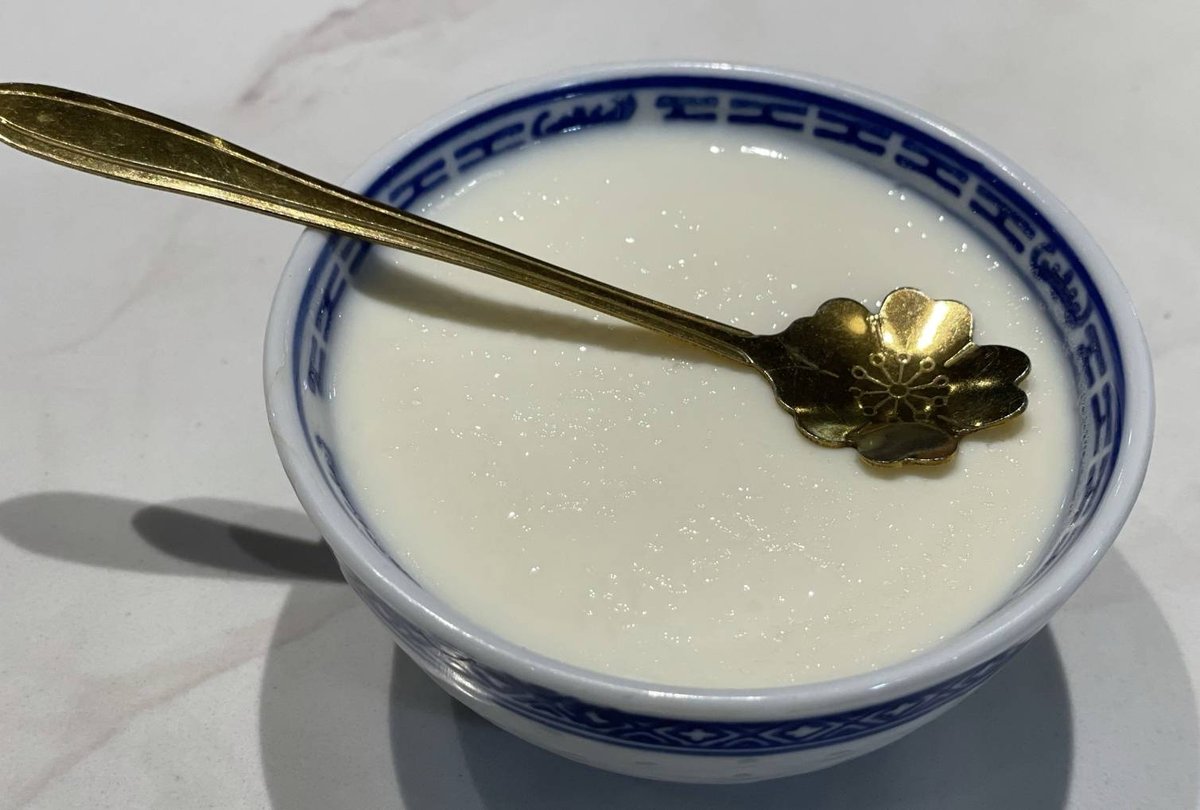
Editor’s Note: This is the kitchen companion to Double-Skin Milk: The Dessert With a Second Skin Hidden at the Bottom. Quantities, temperatures and the failure points are below. Read the technique once before you shop.
Why the Milk Grows Two Skins
Double-skin milk is four ingredients and no oven, and it fails for reasons that are invisible while you make it. The name describes the process: a skin forms on hot milk, the milk is poured out from under it, set with egg white, poured back, and steamed. A second skin closes over the top as it cools. The first is the lid, the second the surface, and between them sits a custard that should tremble like a soft junket.
That skin is a film of denatured protein and fat that gathers as the milk cools and water leaves the surface. Whole milk at 3.6 percent fat is not a suggestion: fat globules and the proteins coating them are most of what the film is, and skimmed milk gives a skin so thin it tears when you look at it. UHT milk has already been denatured in the carton and gives a weak, patchy skin; if that is all you can buy, stir 30g of full-cream milk powder into the litre first.
Eighty degrees is the target. Hot enough that the surface proteins unfold and a film forms within twenty minutes, cool enough that you are not boiling the milk, which makes bubbles that set into a leathery skin. Pour it hot into the bowls, then leave them alone for twenty minutes. Why this matters: a bowl that is moved, a draft, a spoon dipped in to check, any of these break the film before it is strong enough to lift.
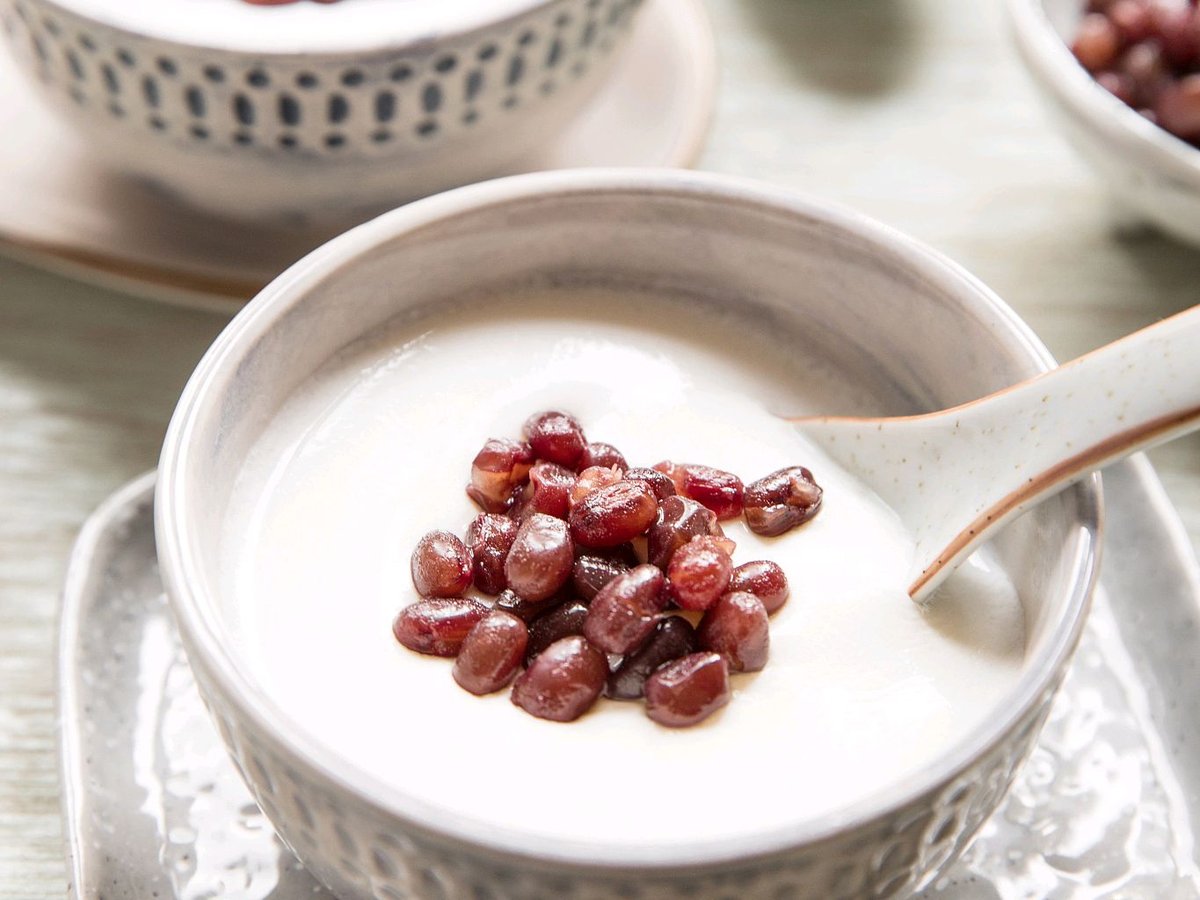
The custard is egg white only: four egg whites, 80g of caster sugar, a pinch of salt. Yolks are left out because they carry fat and sulphur that turn the mixture into a steamed egg custard, and because they set at a lower temperature, so the surface firms while the middle is still liquid. Whites in this dilution set at about 80°C, slowly, into something between a jelly and a panna cotta.
The pour-back looks impossible and is not: the skin floats, and if you hold it against the rim with a chopstick and tilt, the milk runs out underneath while the skin stays put.
Steaming at 85°C for 12 minutes with the lid ajar is a water bath in disguise. The bowl sits above simmering water, and the gap under the lid stops the steam building pressure. A rolling boil pushes 100°C steam onto the surface, and the water in the custard turns to steam inside it before the protein network has set, which leaves honeycomb holes.
Off the heat, the second skin forms over the whole surface in about 5 minutes, thinner than the first. Warm, the skin is soft and the custard loose; chilled overnight it firms. Both are correct, and shops sell both.
Ingredients
For the milk
- 1 litre whole milk (3.6 percent fat minimum, not skimmed)
- 30g full-cream milk powder (optional, for a stronger skin)
- 100ml whole milk, to top up the bowls
For the custard
- 4 egg whites (about 130g), at room temperature
- 80g caster sugar
- 1g fine salt (a pinch)
- 1 tbsp (15ml) fresh ginger juice (optional)
To serve
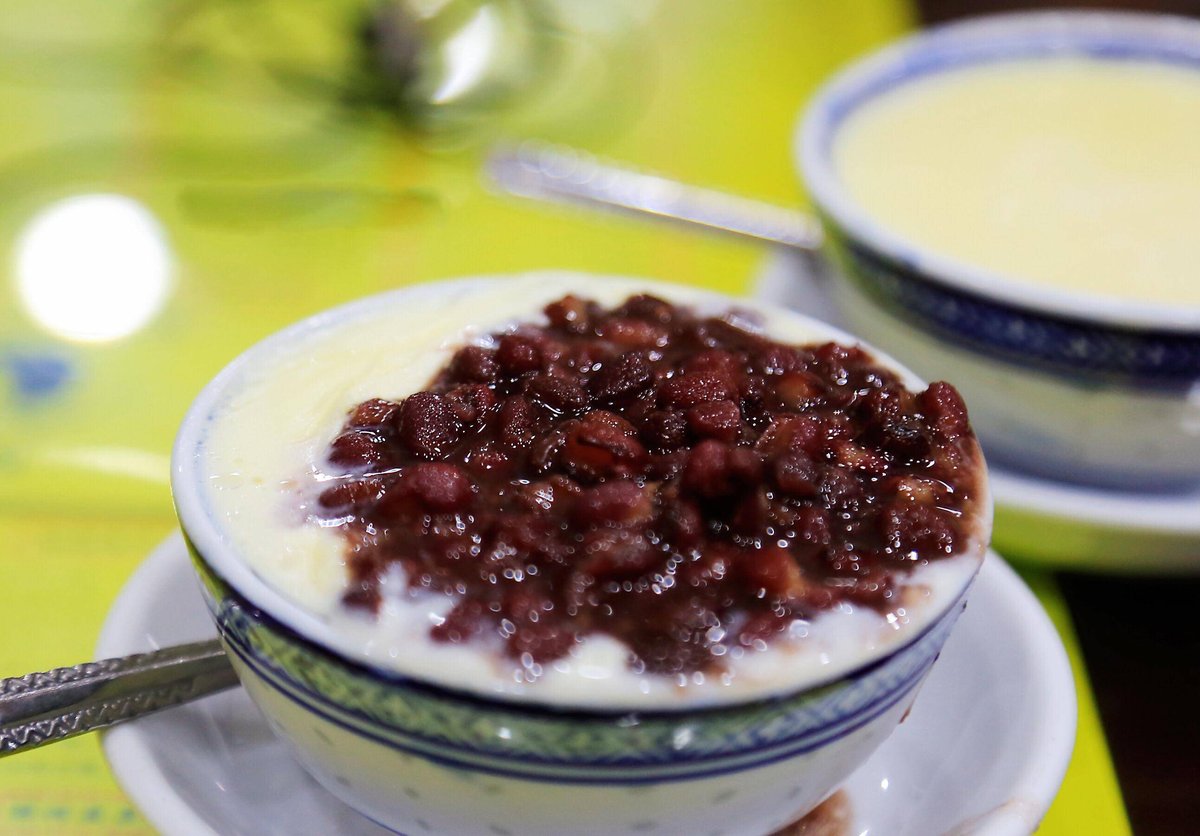
- 150g cooked sweet red beans, in syrup
- 2 tbsp (30ml) red bean syrup
- 40g lotus seeds, boiled 30 minutes (optional)
- 1 tsp (5g) caster sugar, for the toppings
- 2 tsp (10ml) condensed milk (optional, for a richer custard)
Substitution notes: If your supermarket only sells UHT milk, use it with the milk powder; the skin will be thinner and the custard softer, and 3 more minutes of steaming brings it back. Buffalo milk, sold in some Asian groceries, gives a richer custard with a much thicker skin and needs no powder.
No fresh ginger juice: leave it out rather than use the bottled kind, which tastes of preservative. Do not substitute evaporated milk for the whole milk, since it has lost the fat structure that makes the skin.
Prep: Twenty Minutes, Most of It Waiting
1. Bring everything to one temperature (10 minutes)
Take the milk and eggs out of the fridge; cold milk drops to 70°C the moment it hits a cold bowl. Whisk the milk powder into the cold milk now, so it hydrates before heating.
2. Heat the milk to 80°C (6 minutes)
Warm it in a heavy pan over medium heat, stirring so the base does not scorch. At 80°C small bubbles gather at the edge but the surface is still. Take it off before it boils and stir for 20 seconds.
3. Pour into the bowls and leave them alone (20 minutes)
Pour 200ml into each of four heatproof bowls from a low height, so you do not build a foam. Skim any bubbles off once, then leave the bowls on a still surface. Do not move them to a cooler room, and do not cover them with a cloth that touches the surface.
4. Beat the whites without making foam (2 minutes)
Stir the whites, sugar and salt with a chopstick in a slow circle until the sugar dissolves, about 2 minutes. Do not whisk. Foam sets into a pitted top, and bubbles inside become holes.
Step by Step: The Pour-Back
Step 1: Check the skin (20 minutes in)
Tilt a bowl very slightly. A proper skin is 1 to 2mm thick, opaque, and wrinkles into folds as the milk moves beneath it, and the milk underneath is still liquid. If the surface is glossy and flat, give it 5 minutes more. If it has set solid, the milk was too hot and you have a junket.
Step 2: Break the edge and pour the milk out (2 minutes)
Free the skin by running a chopstick around the rim, then hold it against the far rim. Tilt the bowl over a jug and let the milk run out slowly, stopping while 2 tbsp remain so the skin keeps floating.
Step 3: Mix, strain, top up (3 minutes)
Pour the warm milk into the whites in a thin stream, stirring constantly, and add the condensed milk and ginger juice here if using them. Strain through a fine sieve into a second jug, which catches the chalazae and any cooked egg, then skim the foam. You should have about 1 litre; add the topping-up milk if you are short.
Step 4: Pour it back under the skin (2 minutes)
Tilt each bowl and pour the custard down the inside wall, slowly, to the rim. The skin lifts and floats as the level rises; if one sinks it does no harm, it sits in the custard rather than on it.
Step 5: Steam at 85°C for 12 minutes, lid ajar
Set the bowls on a rack above simmering water, not in it, with small bubbles rising at the sides. Lay a chopstick across the rim of the wok and rest the lid on it so a finger-width gap stays open. After 12 minutes the centre should wobble as one piece when you nudge the bowl, and a skewer at the edge should come out clean. Two more minutes if it is still liquid.
Step 6: Rest, and let the second skin form (10 minutes)
Take the bowls out and leave them on the counter. The surface cools, the proteins at the top tighten, and a second skin closes over the custard within 5 to 10 minutes. Why this matters: it only forms if the custard is completely still, and a bowl carried across the kitchen will have a creased top.
Key Pitfalls
No skin formed at all. The milk was skimmed or UHT, too cool in the bowls, or the bowls were moved while it rested. Use whole milk at 3.6 percent, heat to 80°C, and leave them still for the full 20 minutes.
The skin tore and sank when I poured the milk back. You poured too fast, or tilted past the point where the skin could cling. Hold it with a chopstick, tilt to 45 degrees, and stop while there is still milk in the bowl.
The custard came out full of honeycomb holes. The steamer was at a rolling boil, or the lid was clamped down. Steam at 100°C sets the surface before the inside, and the water in the mixture expands into bubbles that stay. Keep a bare simmer, lid ajar.
The custard stayed liquid in the middle. Too much milk for four whites, or under-steamed. Four large whites weigh about 130g, so weigh them. Steam 2 minutes longer and test with a skewer at the edge.
It tasted like a steamed egg, not a dessert. Yolks went in, or it was steamed too long at too high a heat. Whites only, 12 minutes at 85°C, out as soon as the centre wobbles as one piece.
The milk curdled into grains when it met the whites. The milk was hotter than 85°C, or it went in all at once. Let it drop to 80°C, pour in a thin stream, and stir the whole time so the whites warm gradually.
Serving Suggestions
Warm is how it is served in winter: the custard barely set, the second skin soft, a spoon going through both layers at once. In summer, chill it for 3 hours and spoon the red beans over at the last minute with a little syrup.
Nothing else is needed, though a small cup of jasmine tea is what most shops put beside the bowl. It keeps two days covered in the fridge; the custard weeps a little whey, which is harmless. Do not reheat it in a microwave, since it will separate.
This is the companion recipe to Double-Skin Milk: The Dessert With a Second Skin Hidden at the Bottom. Read the story, then cook the dish.
💬 Comments