Dongpo Rou: The Poet Who Braised Pork Better Than God
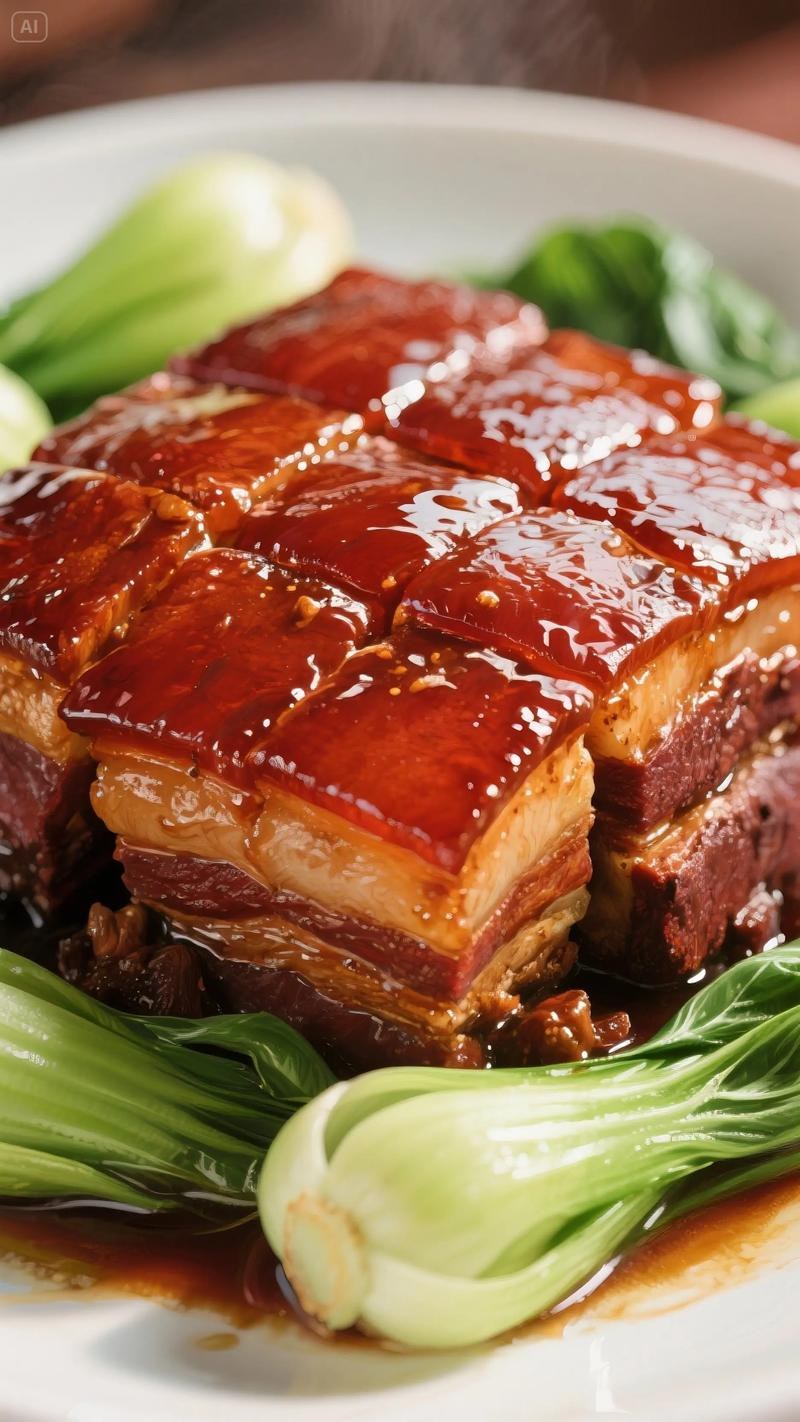
The clay pot lid lifts and the smell hits you like a wall: Shaoxing wine reduced to syrup, caramelized sugar gone dark as old wood, star anise and cinnamon whispering underneath, and the deep primal funk of pork fat that’s been cooking since before lunch. The cubes sit in their dark lake — four perfect squares of belly, skin the color of polished oxblood, fat layers gleaming white, lean meat gone mahogany. They tremble. Not metaphorically. The gelatin has set the meat into a state halfway between solid and liquid, and the slightest nudge sends a shiver through the entire cube.
This is Dongpo Rou (东坡肉, Dōngpō ròu) — pork belly braised in Shaoxing wine, named for the greatest poet in Chinese history. It’s not barbecue. It’s not roast pork. It’s alchemy, performed in a clay pot with four ingredients and infinite patience.
I first ate this dish at Lou Wai Lou (楼外楼), the 170-year-old restaurant perched on West Lake in Hangzhou. I was twenty-four, three years into my first job at Microsoft, back in China for Chinese New Year. My grandmother — Shanghainese, immovable, built like a fire hydrant — insisted we make the three-hour drive from Shanghai. “You can’t call yourself Chinese if you haven’t eaten Dongpo Rou at West Lake,” she said. She was wrong about that, strictly speaking. But the pork made her case.
The Architecture of a Bite
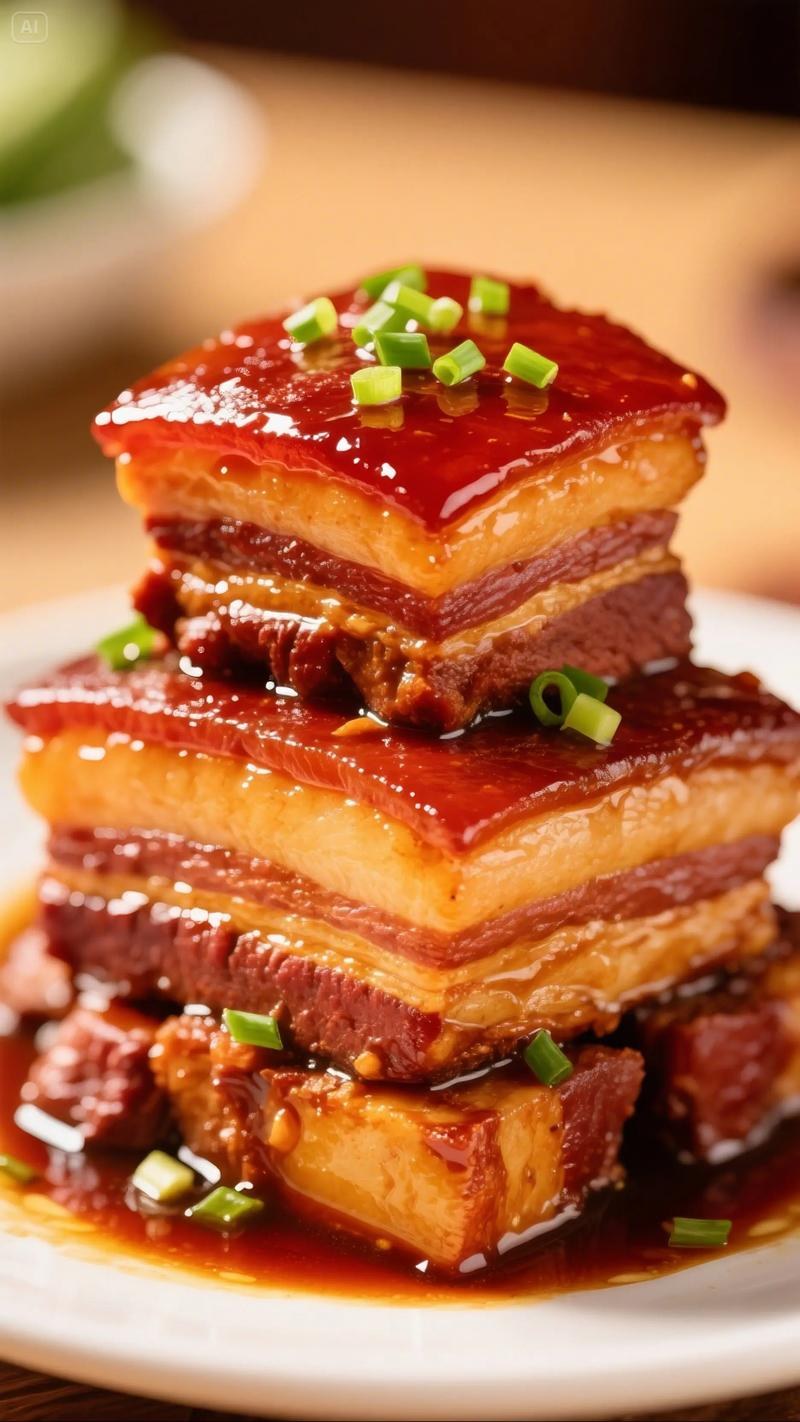
A proper cube of Dongpo Rou has four distinct layers, and each one behaves differently in your mouth. This is why the dish takes three hours. Speed kills layers.
The skin on top — gelatinized, sticky, faintly sweet from caramelization — yields first. Not chewy. Never chewy. If the skin resists your teeth, the braise was too short. Cooked properly, it collapses like custard into a wash of pure pork essence. You will close your eyes. This is involuntary.
Below the skin: a band of pure white fat, about half a centimeter thick. This is where cooks lose their nerve. They trim it. They score it. They render it out. All mistakes. The fat layer should be intact — it acts as a thermal blanket during braising, cradling the lean meat in its own insulation. When you bite through, it shouldn’t be greasy. It should be warm and clean and vanish on your tongue the way butter vanishes on hot toast.
Then the lean meat. Three hours in a 1:1 mixture of Shaoxing wine and water, plus rock sugar, dark soy, and aromatics. By the time the pot opens, the muscle fibers have surrendered entirely. You press with your tongue and they separate into strands, each one saturated with braising liquid. A chopstick cuts through like it’s entering warm cheesecake.
The sauce at the bottom is the reward. Reduced to a sticky glaze, it’s part pork reduction, part caramel, part wine — dark, salty, sweet, so concentrated that a single drop on plain rice transforms the entire bowl.
I spent thirteen years waiting for code to compile at Microsoft, Google, and NVIDIA. Dongpo Rou takes longer. It’s worth more.
The Poet Who Cooked
Su Dongpo was a Song dynasty poet, exiled to Huangzhou in 1080 for offending the emperor. Pork was cheap there, and nobody knew how to cook it. So Su braised pork belly low and slow in Shaoxing wine, sweetened with sugar, darkened with soy. The result was so good the dish took his name for the next nine hundred years.
The Enemies of Dongpo Rou
Impatience. Less than two hours and the collagen hasn’t converted to gelatin — you’re eating pork stew with soy sauce, not Dongpo Rou. Lou Wai Lou does four hours. They’re not showing off.
The wine. Shaoxing cooking wine (绍兴酒, Shàoxīng jiǔ) is non-negotiable. Not white wine, not whatever’s open. Its nutty, oxidized profile permeates the pork during the long braise. Substituting is like cooking coq au vin with Bud Light.
The sugar. Rock sugar (冰糖, bīngtáng) only. It melts slower, caramelizes gentler, and produces a lacquered gloss that granulated sugar can’t match. The difference is visible from across the restaurant.
The cut. Pork belly (五花肉, wǔhuā ròu) is the only cut with enough collagen to survive a three-hour braise. Shoulder won’t work. Loin is a disaster. It needs the five clear layers.
The real thing is four cubes, dark as lacquer, trembling on a bed of blanched bok choy, sauce pooled beneath. Anything else is a different dish.
Dongpo Rou vs. Hong Shao Rou
Westerners often hear “red-braised pork” and assume Dongpo Rou and Hong Shao Rou are the same dish. They’re not. They’re first cousins who took different paths in life.
| Dongpo Rou | Hong Shao Rou | |
|---|---|---|
| Shape | One massive cube (4–5 cm³), served whole | Small chunks or thick slices, stir-fried loose |
| Method | Blanched, then steamed. The gentle heat preserves the cube’s architecture | Sugar caramelized first, then stewed. High heat builds the sauce |
| Texture | Falls apart under chopstick pressure. Gelatinous, trembling, custard-soft | Firm bite, skin springy, meat with chew — you know you’re eating pork |
| Flavor | Sweet-leaning, deeply wine-scented, fat rendered completely translucent | Savory-sweet balance, soy sauce forward, the caramelized sugar carries the finish |
| Origin | Su Dongpo’s exile kitchen, Hangzhou — a poet’s experiment that became a classic | Every Chinese grandmother’s stove — no single inventor, infinite variations |
| Soul | Refinement. One piece of pork belly, given three hours of undivided attention | Generosity. A pot of pork, sticky and dark, meant to be shared over rice |
The simplest test: pick it up with chopsticks. If it trembles and threatens to collapse, it’s Dongpo Rou. If it holds its shape with a confident bounce, it’s Hong Shao Rou . Both are worth your time. Only one was invented by a poet who was also arguably the greatest calligrapher of the Song dynasty. That’s a high bar for a pork dish.
How to Eat It
Over white rice, or with mantou (馒头) — plain steamed buns, fluffy as clouds. I prefer mantou because tearing the bun, bedding the pork inside, and watching the sauce stain the white dough is one of the great sensory experiences in Chinese food.
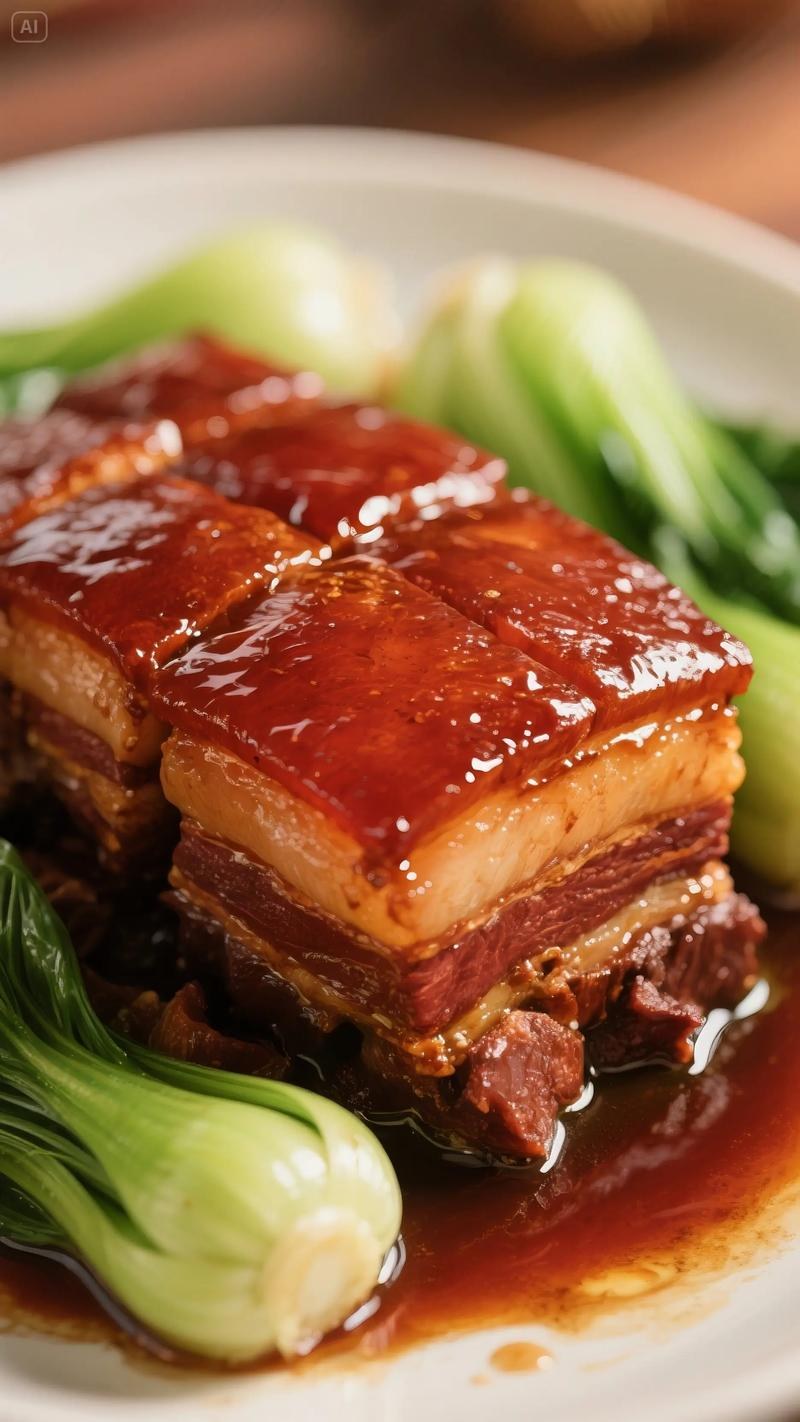
Chopsticks. Lift a cube. It should tremble. Press gently — the lean meat should separate into strands without resistance. Fold the bun over and eat it like a sandwich, sauce running down your wrist. Accept that.
The bok choy underneath is not a garnish. It has absorbed the braising liquid during the final minutes of cooking. Eat it.
Between bites, drink hot tea. Tieguanyin oolong cuts through the fat better than anything. Don’t drink cold water — it congeals the pork fat on your palate.
Want to cook this? Here’s our step-by-step Dongpo Pork recipe .
💬 Comments