How to Cook Dongpo Pork: The Poet's Recipe
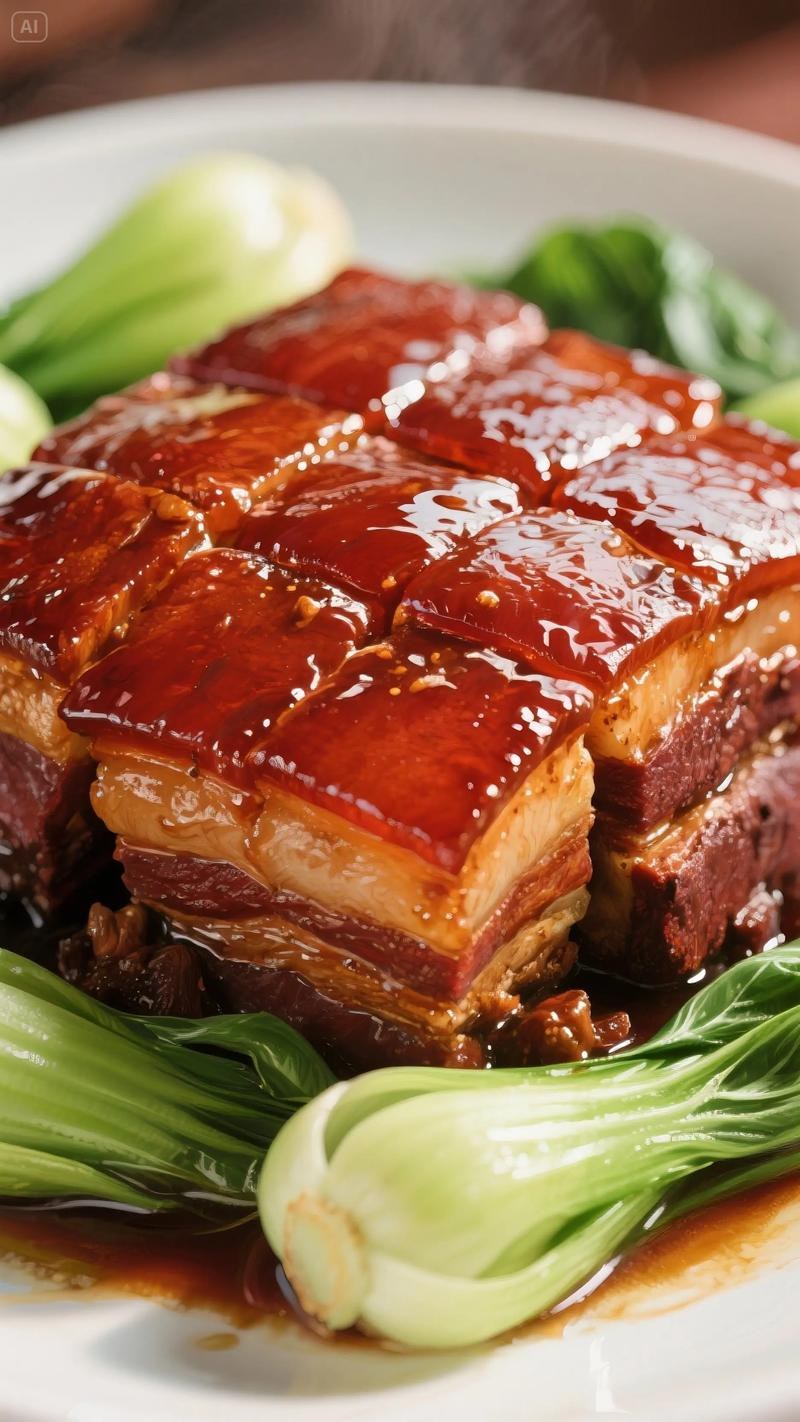
Editor’s Note: Since launching this column, we’ve heard one request more than any other: the stories are great, but how do we actually cook these? Today we’re fixing that — six classic recipes, dropping at once. Here’s how to make 东坡肉的正宗做法。 Dongpo Rou (东坡肉) isn’t just braised pork belly. It’s the dish Su Dongpo invented in exile, a recipe so good it’s survived nine centuries with essentially no changes. What separates it from regular red-braised pork (红烧肉, hóngshāo ròu)? Three things: the cut is always square blocks, not chunks; the braising liquid is mostly Shaoxing wine, not water; and the pork gets a final steam after braising that turns the skin into trembling silk. If your recipe skips the steam, you’re making hongshao rou — a fine dish, but a different one.
Here’s the recipe, battle-tested over years of Sunday attempts, wrong turns, and one very expensive clay pot that cracked on high heat. Learn from my mistakes.
Ingredients
For 4 square servings — the classic presentation:
- 500g pork belly (五花肉, wǔhuā ròu), one solid block with skin on. You need the five distinct layers: skin, fat, lean, fat, lean. Reject any piece where the layers aren’t visible.
- 300ml Shaoxing wine (绍兴酒, Shàoxīng jiǔ). Not cooking wine. Buy the drinking-grade stuff — if you wouldn’t sip it from a tiny cup, don’t braise with it. Huadiao (花雕) variety is what Hangzhou cooks use.
- 50g rock sugar (冰糖, bīngtáng). Yellow rock sugar preferred over white. It dissolves slowly and creates a lacquered finish.
- 3 tablespoons dark soy sauce (老抽, lǎo chōu). For color and depth.
- 2 tablespoons light soy sauce (生抽, shēng chōu). For salt and umami.
- 4 spring onions, white parts only, tied in a knot.
- 4 slices of ginger, thick-cut, smashed with the side of a knife.
- 1 star anise (八角, bājiǎo). Optional but traditional. Lou Wai Lou uses it.
That’s it. No garlic, no chili, no five-spice powder. Dongpo Rou is a minimalist dish — every ingredient added is an ingredient that dilutes the pork.
Step 1: Blanch the Belly (5 minutes)
Fill a pot with cold water. Add the whole block of pork belly. Bring to a boil over high heat, then let it boil for 3 minutes. You’ll see gray foam rise to the surface — that’s blood and impurities. Skip this step and your braising liquid turns cloudy and metallic-tasting.
Remove the belly, rinse under cold water, and pat dry with paper towels. The skin should be white and firm, the meat pale. Let it cool for 10 minutes on a cutting board.
Step 2: Cut Into Squares (5 minutes)
This is where geometry matters. Cut the belly into 4 equal cubes, roughly 5cm × 5cm (2 inches). Each cube must have skin, fat, and lean layers intact. Uneven cubes cook unevenly, and unevenly cooked Dongpo Rou is a failure of attention.
Some cooks tie kitchen twine around each cube to keep the layers from separating during the long braise. I do this. Lou Wai Lou doesn’t. If you’re new to this dish, tie the twine — it’s cheap insurance against falling-apart pork.
Step 3: The Braise (3 hours)
Arrange the ginger slices and spring onion knots in the bottom of a clay pot or heavy Dutch oven. Place the pork cubes skin-side down on top. The onions and ginger form a natural rack — they prevent scorching and infuse the meat from below.
Pour in the Shaoxing wine. Then add the dark soy, light soy, rock sugar, and star anise. Do not add water. This is the single most important rule of Dongpo Rou. The wine is the braising liquid. Water dilutes everything — the flavor, the gelatin extraction, the final gloss. If 300ml doesn’t cover the pork completely, that’s fine. The pork will release its own liquid as it cooks.
Bring to a boil over medium heat, then immediately reduce to the lowest possible flame. You want one or two bubbles per second breaking the surface — not a simmer, not a boil, just a gentle, patient quiver. Cover the pot.
Now wait. Three hours. Do not lift the lid. Do not stir. Do not “check on it.” Every time you open the pot, you release the steam that’s doing the actual work. Set a timer. Walk away.
At the two-hour mark, carefully turn each cube skin-side up. The skin should already be darkening. If the liquid has reduced too much — below the halfway point on the cubes — add a splash of hot water. One splash. Not a cup.
Step 4: The Final Steam (30 minutes)
This is the step that separates Dongpo Rou from every other braised pork dish in China. After three hours of braising, transfer the cubes — carefully, they’re fragile — to a heatproof plate or shallow bowl, skin-side up. Spoon a few tablespoons of the braising liquid over them. Place the plate in a steamer basket over boiling water. Steam for 30 minutes.
Why? The dry heat of steaming drives off excess surface moisture while the ambient steam keeps the interior from drying out. The skin tightens, the sauce on top reduces to a sticky glaze, and the fat layer goes translucent. What emerges is not wet. It’s lacquered.
Technique Notes
Why no water? Pork belly is 30% fat and 15% water by weight. During a three-hour braise, the fat renders and the water releases, creating its own braising medium. Adding water from the start makes soup. Shaoxing wine provides the liquid base, and the pork provides the rest.
Why rock sugar? Granulated sugar caramelizes fast and burns easily over three hours of heat. Rock sugar dissolves incrementally, feeding a slow, steady caramelization that builds color layer by layer. The difference is visible — rock sugar produces a deep mahogany gloss, white sugar produces a flat brown.
Why the final steam? The braise creates tenderness. The steam creates texture. Without it, the cubes are soft but wet — more like stew. With it, the skin firms into a gelatinous sheet that trembles on the plate, and the exterior dries just enough to carry a concentrated glaze.
Common Pitfalls
Too high heat. If your liquid is boiling, you’re making shredded pork. Collagen converts to gelatin at 70–80°C. Above that, muscle fibers seize and toughen. Keep it at a bare quiver.
Wrong cut of belly. Shoulder, loin, and leg all lack the layered fat structure that protects the lean meat during the long braise. Only belly has the five layers. Buy it from a Chinese butcher who knows what 五花肉 means.
Skipping the blanch. That gray scum you see during blanching ends up in your braising liquid if you skip this step. The result tastes muddy and slightly metallic. Blanching takes five minutes. Do it.
Opening the lid. Every peek releases steam and drops the temperature. It takes 15 minutes to recover. If you lift the lid three times in three hours, you’ve effectively braised for 2 hours and 15 minutes. The collagen won’t have converted. The texture will be wrong.
Serving
Arrange the four cubes on a bed of blanched bok choy or Shanghai baby cabbage. Spoon the reduced braising liquid over the top. The bok choy isn’t garnish — it absorbs the pork-rich sauce and provides the vegetable counterpoint the dish needs.
Serve with plain steamed white rice or mantou (馒头), the fluffy steamed buns that tear open like clouds. I prefer mantou — you make a sandwich, the sauce stains the white dough, and for thirty seconds the world is very simple.
Between bites, drink hot Tieguanyin oolong tea. Cold water congeals the pork fat on your palate. Hot tea cuts through it. This isn’t superstition. It’s chemistry.
This is the practical companion to Dongpo Rou: The Poet Who Braised Pork Better Than God — the full story of the dish, the poet, and why three hours in a clay pot is the best thing you’ll do this Sunday.
💬 Comments