Dim Sum: It Was Never About the Dumplings
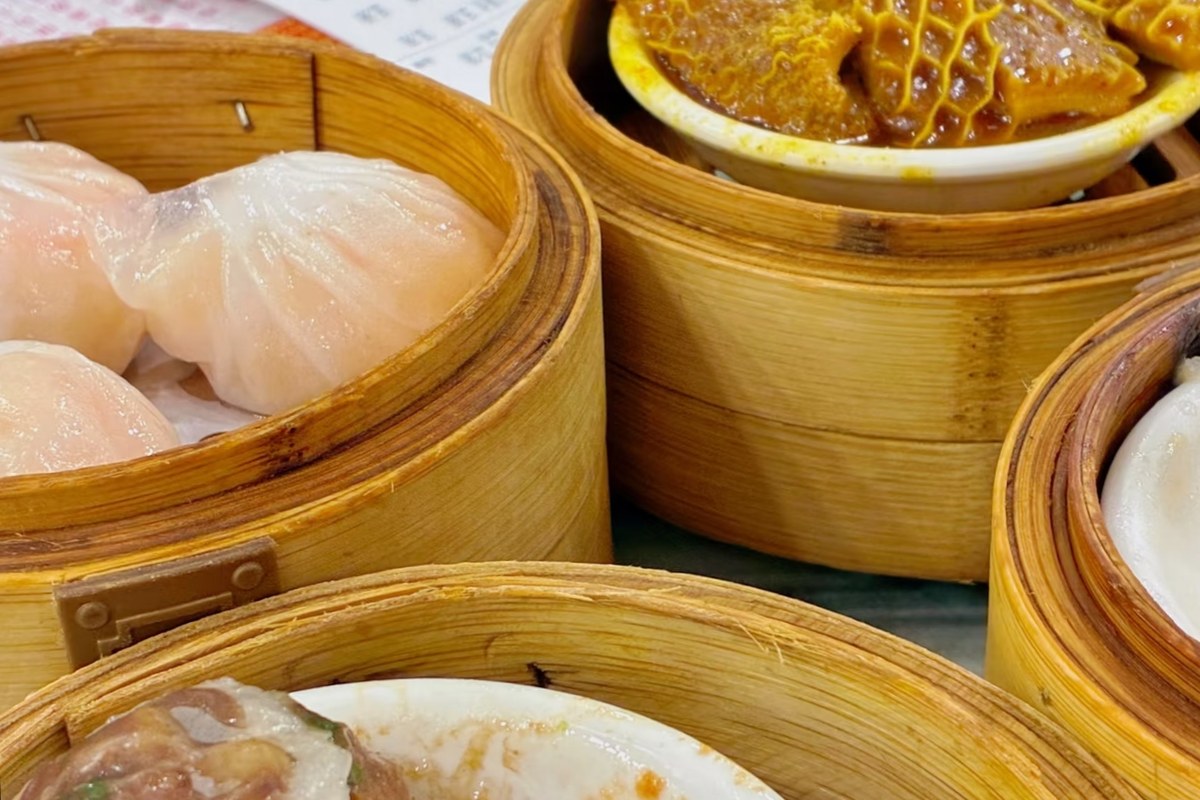
The cart comes first, before you've even decided you're hungry. You hear it before you see it — the squeak of a wheel, the rattle of stacked bamboo steamers, a voice in Cantonese calling out what's inside, singing the inventory like it's an auction. The cart stops at your table and the lids come off one by one, and that's the first thing the West never understood: at dim sum, the cart is the menu. You point at what looks good. You do not order from a laminated list, because the best stuff never survives past the first three tables.
You think you know dim sum. You've had it — frozen har gow from a Chinatown cart, three dumplings in a bamboo basket, a little soy sauce, twenty minutes, done. That's not dim sum. That's dumplings wearing dim sum's clothes. Dim sum (点心, diǎnxīn) doesn't mean "dumpling." It means "touch the heart," and the real thing is a two-hour morning built around tea, not food. The Cantonese call the whole affair yum cha (饮茶, yǐn chá) — "drink tea." The tea gets poured before anyone touches a basket, and the food is only the excuse to sit there and keep drinking it.
I grew up in Shanghai, where breakfast was a shengjianbao in hand, eaten standing up, gone in ninety seconds before the school bell. We did our own version — the soup dumplings, the pan-fried buns — and we called that dim sum. It wasn't until years later, when a Guangdong friend dragged me to a real yum cha at nine on a Sunday morning, that I understood the gap. "Sit down," he said. "Nobody eats dim sum standing up."
So sit down. Watch the room. It's loud in a way breakfast almost never is — steam hissing, chairs scraping, teapot lids rattling, a hundred conversations at once. The air smells of bamboo and jasmine tea and, underneath, the sweet edge of roasting pork. Somebody pours your tea, and if you want to say thank you, you don't say it. You tap two fingers on the table, a little bow of the knuckles — a habit the stories tie back to an emperor in disguise and a loyal servant — and nobody ever explains it to a newcomer. You learn by watching, the way you learn most of dim sum.
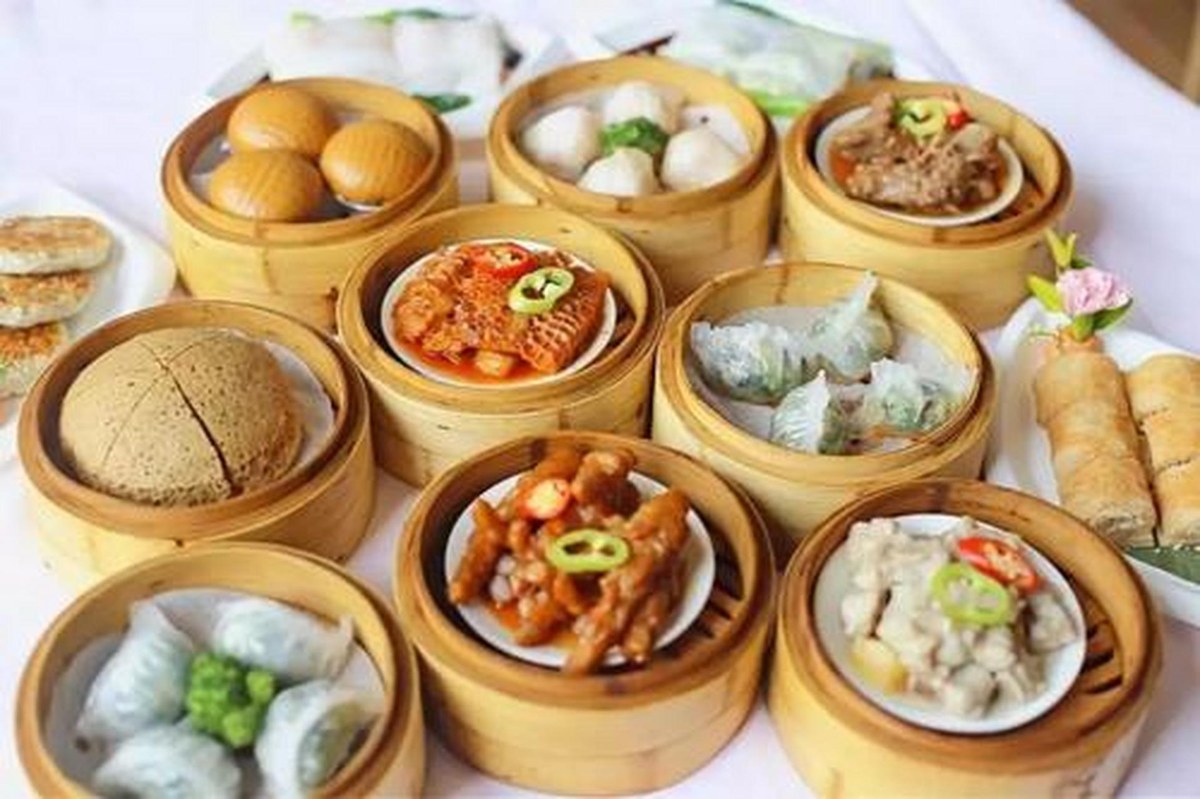
The cast is what confuses people. It isn't one dish; it's a rotating cast of small ones, and the variety is the point. Start with the steamed, because that's where the skill lives. The har gow (虾饺, xiā jiǎo) is the test: a proper one has skin so thin it's translucent, pleated into a fan, the pink of the shrimp reading through it like a secret. Twelve pleats is the flex. The siu mai (烧卖, shāo mài), open-topped and crowned with a dot of roe, presses pork and shrimp and mushroom into a little cup. The cheung fun (肠粉, cháng fěn) rolls rice noodle into silk sheets and folds them around shrimp or beef under a flood of sweet soy. Only when you've slowed down does the fried and baked stuff arrive — the char siu bao (叉烧包, chāshāo bāo) with its split top full of sweet barbecue pork, and, if you're brave, the chicken feet (凤爪, fèng zhǎo), black-bean-sauced and gelatinous, the plate that separates the tourists from everyone else.
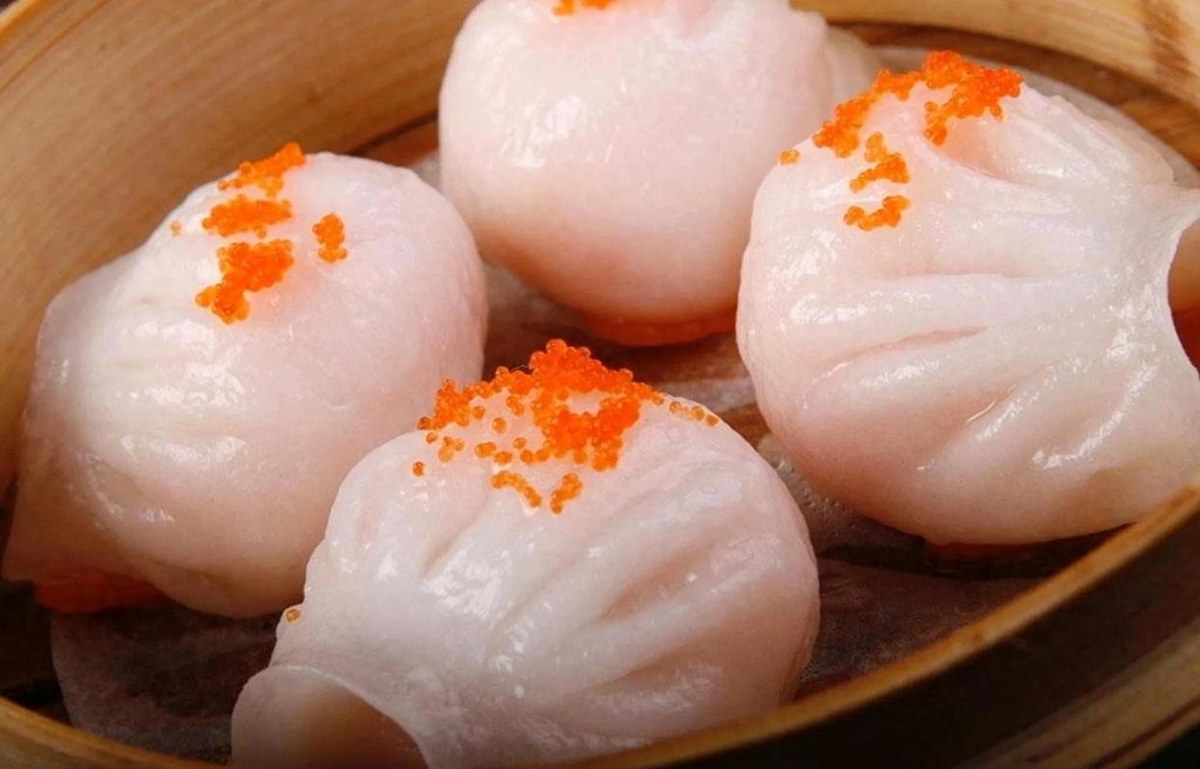
Here's where the room splits into good and bad, and it's worth being rude about it. Bad dim sum is frozen. The har gow skin cracks like it's embarrassed, the siu mai tastes of freezer and salt, the cheung fun arrives as a rubbery noodle brick. It sits in a steamer since yesterday at an all-you-can-eat place that charges by the hour. The tell is always the same: thick skins and no steam. If the basket doesn't hiss when they lift the lid, if you can't read the shrimp through the skin, if the tea comes out of a bag — get up and find a place where the carts still move.
And they still move, if you know where to look. Guangzhou claims it invented everything worth eating. Hong Kong claims it perfected everything, with better tea and faster baskets. I'm not touching that fight. What matters is the rhythm, because dim sum is the one meal I know that refuses to be rushed. You eat it in waves — steam first, then a lull while the tea gets refilled, then fried and sweet — and the lazy Susan keeps turning, everyone reaching, nobody hoarding. You order less than you think and stay longer than you planned.
The last basket, if you're smart, is the lau sa bao (流沙包, liúshā bāo), the custard bun that runs molten salted-egg yolk down your fingers the second you bite it, hot enough to be a hazard and worth it. You'll burn your mouth. Everyone does. And you'll be back next Sunday, because nobody leaves yum cha hungry — but hunger was never the thing being fed. Dim sum isn't a food you eat. It's a morning you live in, one small dish at a time, the tea still warm when you finally stand up.
💬 Comments