Dezhou Braised Chicken: The Bird Sold Through Train Windows
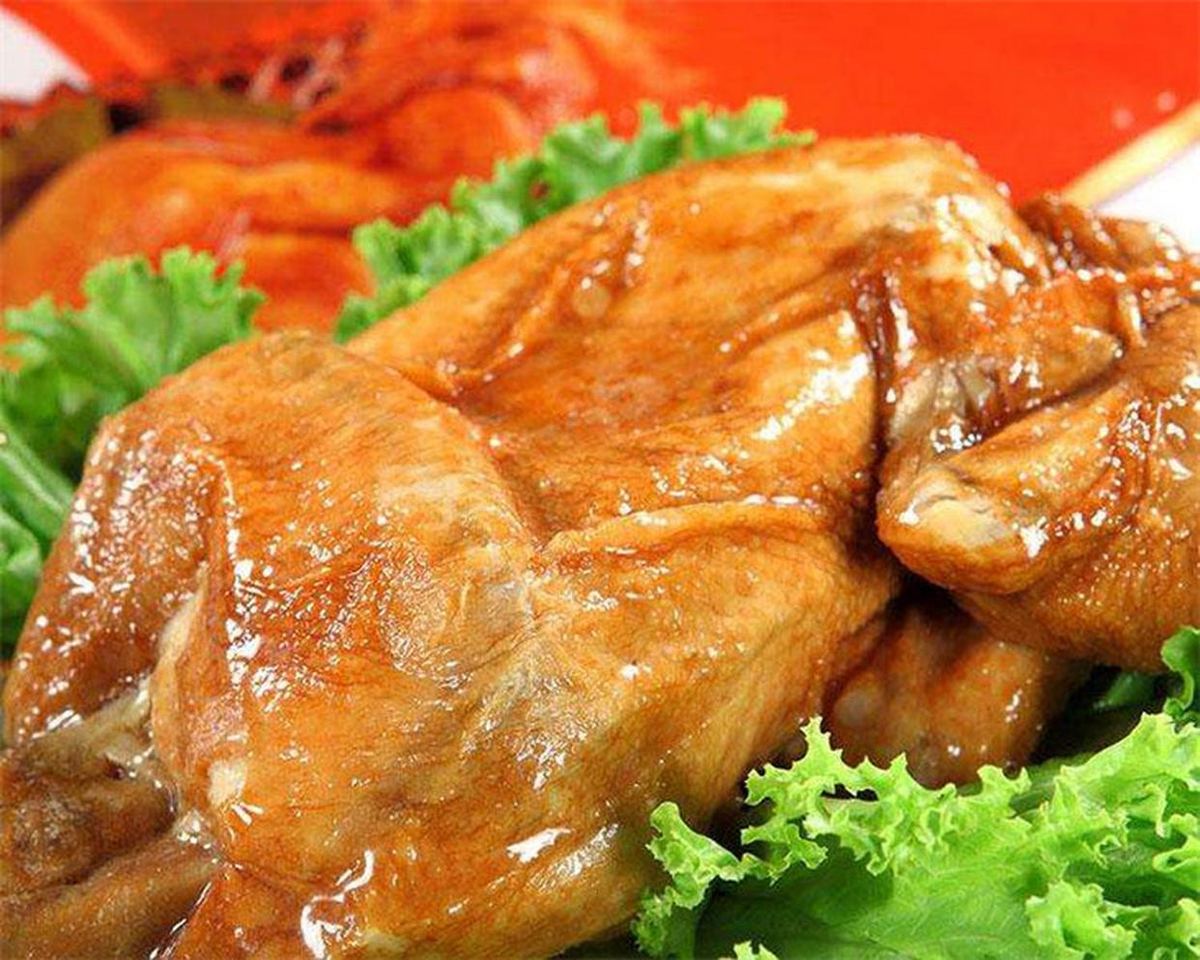
I was nine the first time I ate one. The night train from Shanghai to Beijing pulled into Dezhou a little after ten, and the platform came alive — men in padded jackets leaning in at the windows with wicker baskets, calling a single word into the dark: pájī, pájī. My mother counted coins into a stranger's palm, and a chicken came back up through the window wrapped in brown paper, still warm, tied with a loop of string.
We ate it on the lower bunk with our fingers while the train hauled out of the station. The skin tasted of star anise and something dark and caramelized underneath. The meat came away in soft slabs that left grease-prints on the paper. And the bones stayed. That is the part I never forgot. Long after we had stripped the bird half bare, the skeleton still sat in the wrapper holding the shape of a chicken, like a little wooden model of the thing we had just eaten.
This is 德州扒鸡 (Dézhōu pájī), Dezhou braised chicken, and it has been sold at that station for more than a hundred years. If China has a first "train food," this is it — a chicken and a railway that grew up together.
The bird that falls apart standing up
Order one and the first thing you notice is the pose. The chicken arrives trussed into itself: wings folded back along the ribs, legs tucked, head turned under the wing so it looks like a swallow banking in flight. It is not roasted and it is not fried. It is 扒 (pá) — a word that means to braise at a heat so low the liquid barely whispers, and to turn the food without ever lifting it roughly, so the shape survives what the meat is about to do.
Because the meat is going to surrender completely. Pull a leg and it comes free with almost no resistance, the fibres separating as if they had already agreed to it. Push a chopstick through the breast and it glides clean through. And the skin holds — gelatinous, amber, faintly sticky — while the bones stay exactly where the bird left them. A chicken that falls apart standing up. Nothing else in Chinese cooking does this so completely.
The pot that never empties
The trick is time, spice, and a pot of stock that is never thrown away.
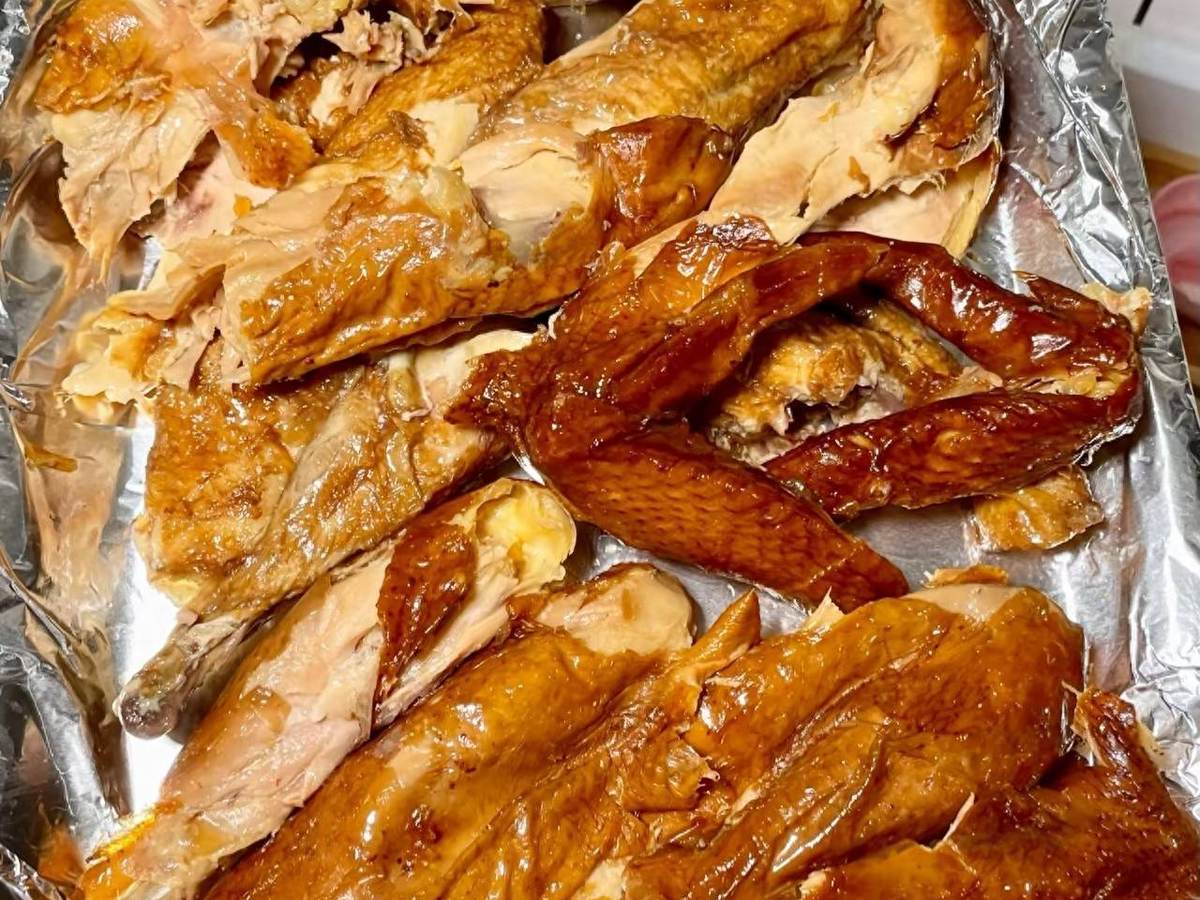
扒鸡 simmer in 老汤 (lǎo tāng), a master stock. A good shop's pot has been topped up and reused for years, sometimes decades; every chicken that goes in leaves something behind, and the next one inherits it. Into the stock goes the spice bundle — star anise, cassia bark, Sichuan pepper, clove, fennel, ginger, and a handful of things most kitchens outside China have never heard of. Clove is the tell. Too much and the whole bird tastes like a dentist's waiting room; the old cooks use it like a rumour, present but never named.
Then the chicken sits. Not boils — sits, at a temperature you can just barely not put your hand into, for hours. The collagen in the skin and joints melts into that lip-sticking jelly, the meat gives up its resistance, and the bird quietly becomes something you can take apart with two fingers. A fast, hot braise would shred it. The whole art of 扒鸡 is keeping it whole while it goes to pieces.
The accident of 1692
The story everyone in Dezhou tells: in the Kangxi era, a cook named Jia Jiancai left a pot of braised chicken on the fire and fell asleep. He woke to overcooked birds he assumed were ruined, spiced them harder to hide the mistake, and sold them anyway. They walked out of the shop. I have no idea how much of that is true, and neither does anyone else, but the shape of it feels right — this is a dish born from a mistake and perfected by people unwilling to waste good meat.
What the rest stop sells you
Now the bad news, because 扒鸡 has a counterfeit problem worse than almost any dish on this list.
The vacuum-packed brick. Every highway rest stop and airport gift shop sells 扒鸡 in a shrink-wrapped plastic shell, shelf-stable, years old. The skin is rubbery, the meat is waterlogged, and the flavour is salt — just salt, and a ghost of soy. It carries the name and none of the soul. If it doesn't smell of clove and anise when you open it, put it back.
The soy-braised impostor. Plenty of chickens are braised in soy sauce and called 扒鸡 because the colour matches. Real 扒鸡 tastes of a spice bundle and an old pot. The fake one just tastes brown. That is the whole difference, and it is enormous.
The microwave crime. Never reheat one this way. Blast it and the jelly liquefies, the skin goes slack, and you get grey mush. Dezhou people eat it at room temperature for a reason — cold, the stock sets around the meat and every bite comes away clean.
Eat it with your hands, and cold
No knife. No fork. Set the whole bird on paper and take it apart by hand — leg first, then the wings, then peel the breast off the ribs in sheets. Eat the skin with the meat; that is where the spice lives. Work the wing tips for the cartilage, which is the best three seconds in the whole chicken. If you want the traditional move, dip each piece into the jellied stock pooling underneath.
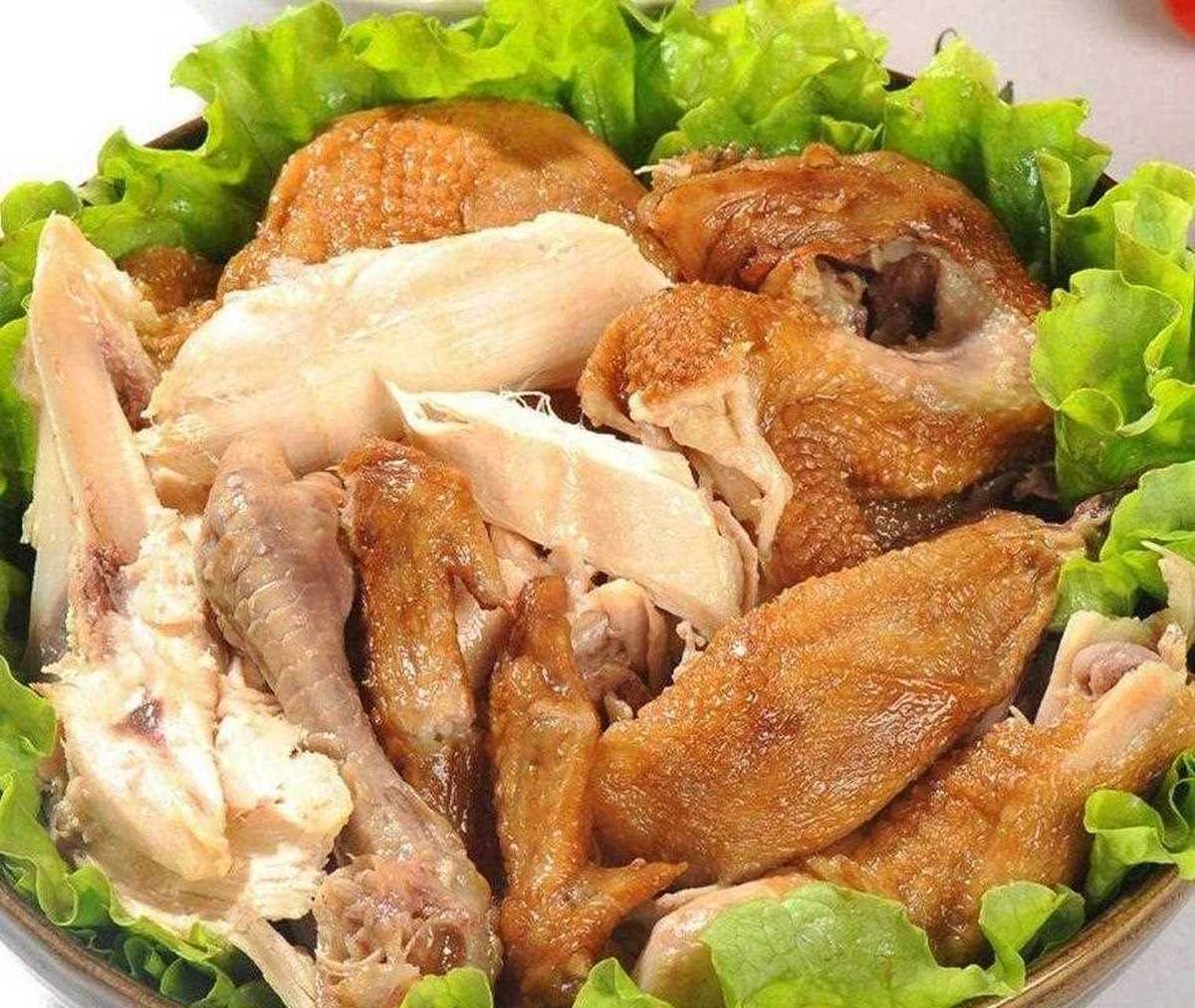
Cold 扒鸡 with a cold beer was the meal my mother packed for long train rides, and it is still the version I hunt down whenever I pass through Shandong. There is something perfect about it: a three-hundred-year-old braise that needs no plate, no heat, no cutlery, and travels better than anything sold on a modern platform. A chicken invented for a railway still tastes like the railway. Buy it at the counter, not the gift shop.
I'll save the home-cooking version for another post. Getting a whole bird to fall off the bone while the skeleton stays in one piece — the trussing, the spice bundle, and a simmer you watch for hours without ever letting it boil — is a weekend project, not a weeknight one. Recipe coming soon.
💬 Comments