Crossing-Bridge Noodles: Never Trust a Soup That Isn't Steaming
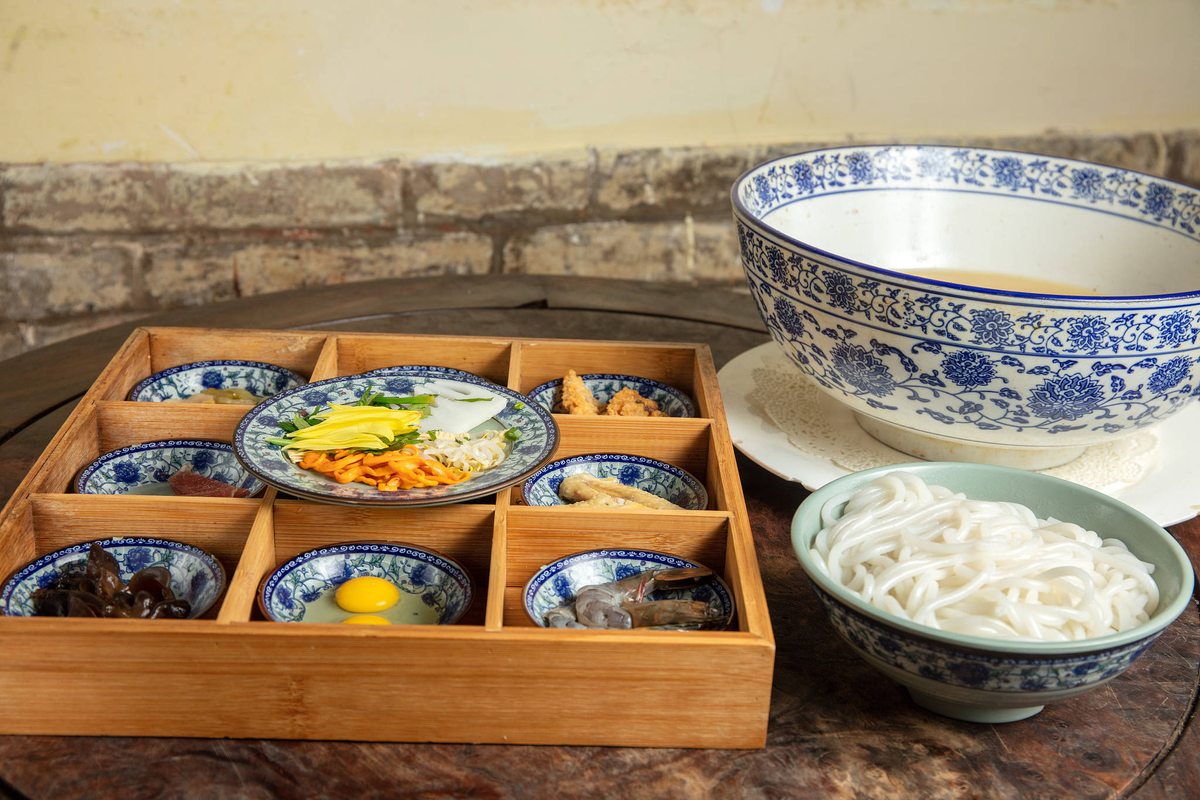
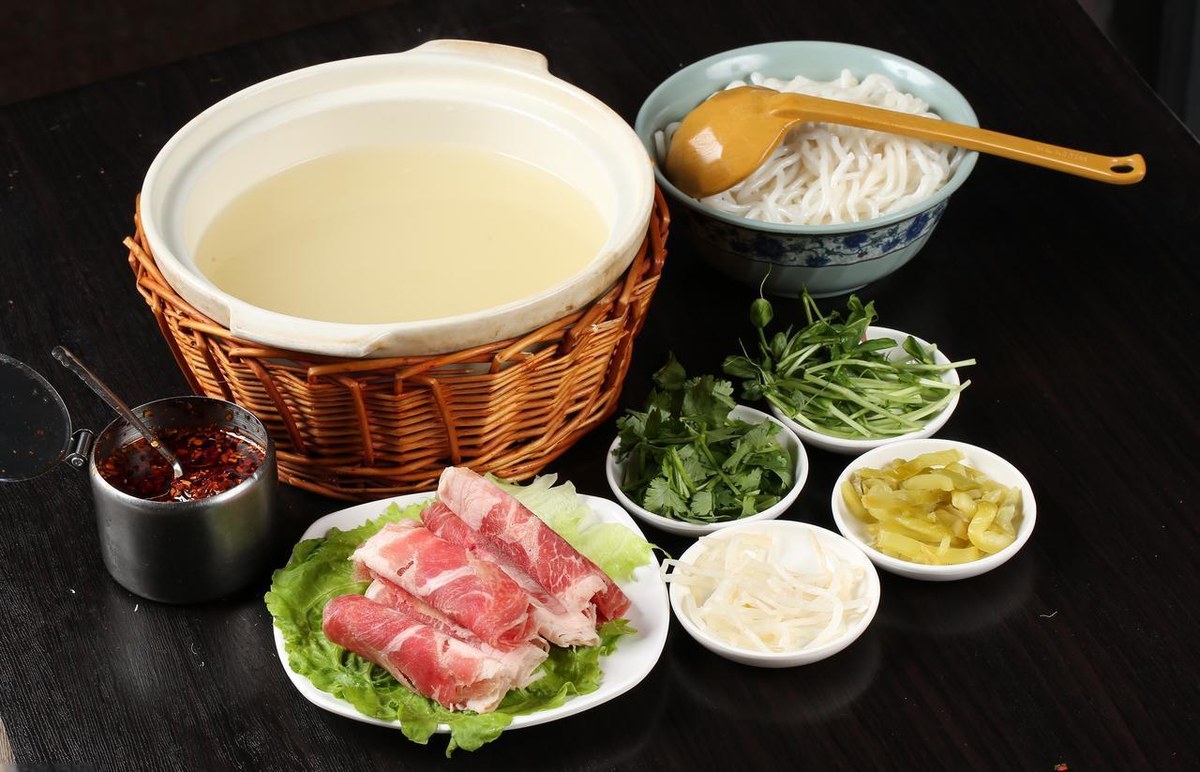
The tray lands in front of you and your first instinct is disappointment. A bowl of broth sits there and it isn't steaming. No bubbles, no shimmer, no curl of steam off the surface. It looks like something that was poured an hour ago and forgotten. Beside it: a small plate of raw pork, sliced thin as paper. A quail egg, still in its shell. A handful of greens. A fistful of fat, pale rice noodles, cool from their rinse. Then the server leans in and says one word. Wait.
Crossing-Bridge Noodles (过桥米线, guò qiáo mǐxiàn) is the rare dish that arrives unfinished on purpose, where you are the last step of the recipe. That still bowl is somewhere near boiling, held down under a lid of chicken fat. Break the surface too early, before the meat goes in, and you'll find out exactly how hot it is. I know, because I did.
The first one I ever ate was at a Yunnan shop a few minutes' walk from my old campus in Shanghai, run by a woman from Kunming who treated every table like homework. I reached for the spoon to taste the broth first, the way you would with any soup, and she moved the bowl out of my reach before my hand got there. 你先别动, she said. Don't touch it yet. Then she cracked the quail egg into the broth, and I understood that what sat in front of me was not food yet. It was a clock.
The heat under the stillness
Here's the trick, and it's pure physics. The broth is a long-simmered chicken-and-pork stock, and floating on top of it is a slick of rendered chicken fat — a lid with no hinge. The fat holds the steam down, so the surface stays glassy while the liquid underneath sits near 95°C with nothing anywhere to warn you. It even mutes the smell; you catch a faint note of chicken and scallion, nothing that shouts. It's the same reason a bowl of ramen can go from perfect to a burned lip in one careless sip, except in Yunnan somebody noticed the effect and built an entire dish on purpose around it. The missing steam is the tell. This soup isn't cooling. It's coiled.
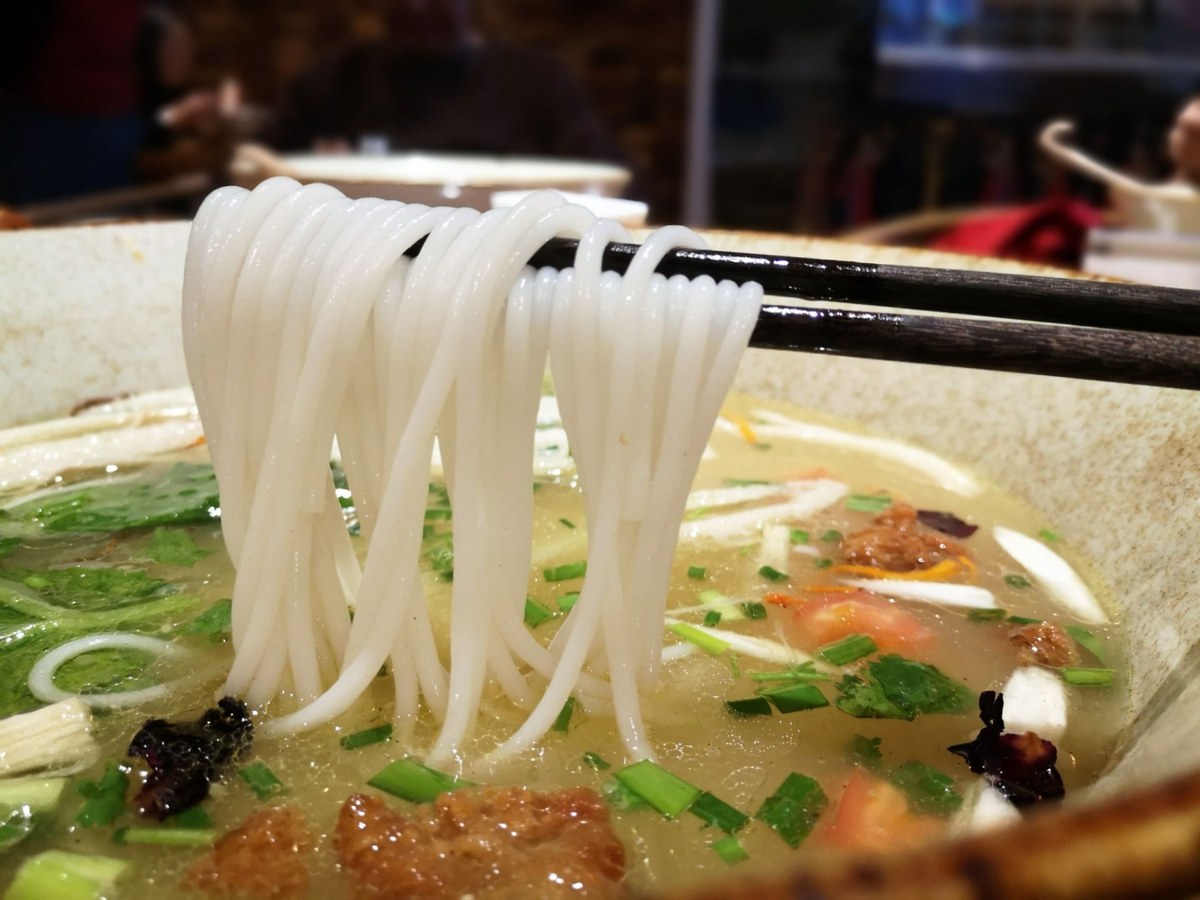
So you add things in a specific order, and the order is not decoration. The raw pork goes first, because it needs the most heat and the most seconds, swirled until it turns from pink to the colour of a cooked scallop. The egg goes next, cooking into pale ribbons. Then the pickles, the greens, whatever else came on the tray. The noodles go last, in for only as long as it takes to warm through. Dump everything in at once and you get grey broth, tough meat, and a bowl that never had a chance. The sequence is the recipe.
The first real spoonful, once the meat is in and the broth is finally yours to taste, is nothing like it looked. It's deep and faintly sweet from the bones, with a long, slow finish, and the pickled vegetables on the tray exist to cut straight through all that fat. Without them the bowl turns too rich by the halfway point. With them, you drink it down to the bottom. The noodles themselves should be slippery and a little chewy, the fresh kind, never the brittle dried ones that go soft and pasty in a minute flat.
The wife on the bridge
The name comes with a story worth one paragraph. A scholar in Mengzi, in southern Yunnan, went to study on an island in the middle of a lake. His wife carried lunch across a long bridge every day, and every day it arrived cold. Then she tried a pot of chicken soup with a thick skin of fat on top, and this time it was still scalding when she reached him. She began bringing the noodles and the raw toppings separately, finishing the bowl at his desk. 过桥米线, the noodles that crossed the bridge. A whole dish, engineered around a wife's walk to work.
What goes wrong
For every shop that does this right, there are ten that miss the point, and the failures all look the same from the table.
The lukewarm bowl. The broth arrives merely warm and never gets any hotter. You drop in the raw pork and it just sits there, grey and worried, cooking at the speed of regret. If the soup doesn't threaten you, it isn't crossing-bridge noodles. Somewhere a health inspector is glad, and everyone at the table is worse off.
The pre-assembled bowl. Plenty of restaurants now dump everything in backstage and hand you a finished noodle soup. It looks exactly like the photo on the wall, and it is a lie. The entire dish is the ninety seconds after the tray lands. Skip those ninety seconds and you've paid a premium for chicken noodle soup.
The bouillon bowl. No long-simmered stock, no fat seal, no heat that could cook anything. Instant powder and hot water with a dozen toppings arranged on top like an apology.
The ninety seconds
Everything that matters happens in the first minute and a half after the tray lands. Chopsticks in one hand, spoon in the other, and no dainty sipping. Egg first, then the pork, then whatever else came with it, then the noodles. Don't stir more than you have to — each thing wants its own moment of heat, not a bath. And eat fast, because the bowl that looked stone cold five minutes ago is now, finally, going cold for real.
My grandmother, who spent her whole life in Shanghai and never trusted any food that didn't announce itself with steam, refused to believe the broth was hot until she watched my mother yelp and grab for water. Then she finished two bowls and asked why nobody had brought her sooner. You can explain the physics of a fat seal to someone for an hour. Watching them lose the argument takes ninety seconds.
No home recipe today. This is the rare restaurant dish that's genuinely hard to beat at home, because holding broth near boiling under a fat lid takes a pot, patience, and a kitchen you don't mind steaming up. When I do write it up, I'll show you how to fake the seal without simmering a whole chicken. Coming soon.
💬 Comments