Claypot Rice: The Crust at the Bottom
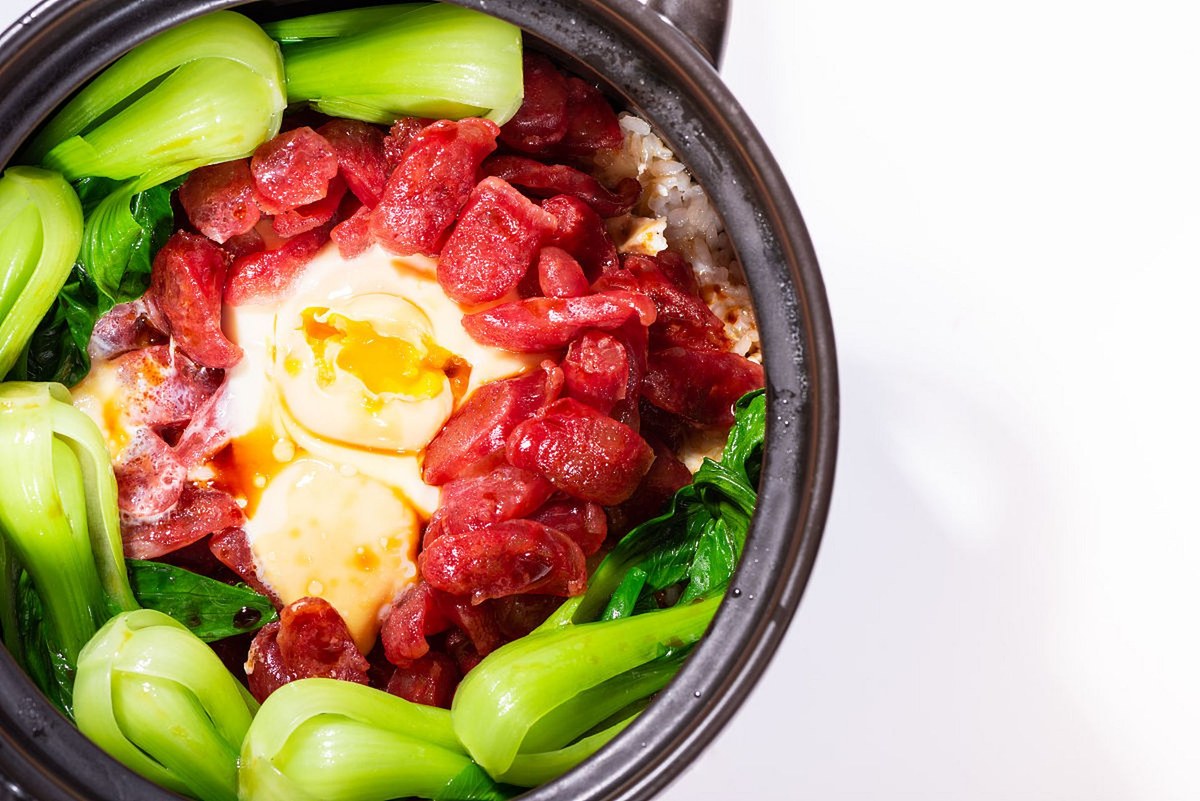
The pot lands on the table still hissing, and for a second you think it's broken. A squat clay vessel, blackened past respectability, a chip in the rim, the color of ten thousand fires. Steam pours off it like it's about to blow. Then the cook leans in with a steel spoon and does the only thing that matters: he scrapes.
You hear it before you see it. A dry, brittle scrape-scrape as the spoon works a layer of rice loose from the bottom. It comes away golden and hard, the color of good caramel, and it snaps when you bite it. That crust has a name — guoba (锅巴, guōbā) — and in a real Claypot Rice (煲仔饭, bāozǎi fàn), it is the entire point. The chicken, the sausage, the greens: all of it is an excuse to get there.
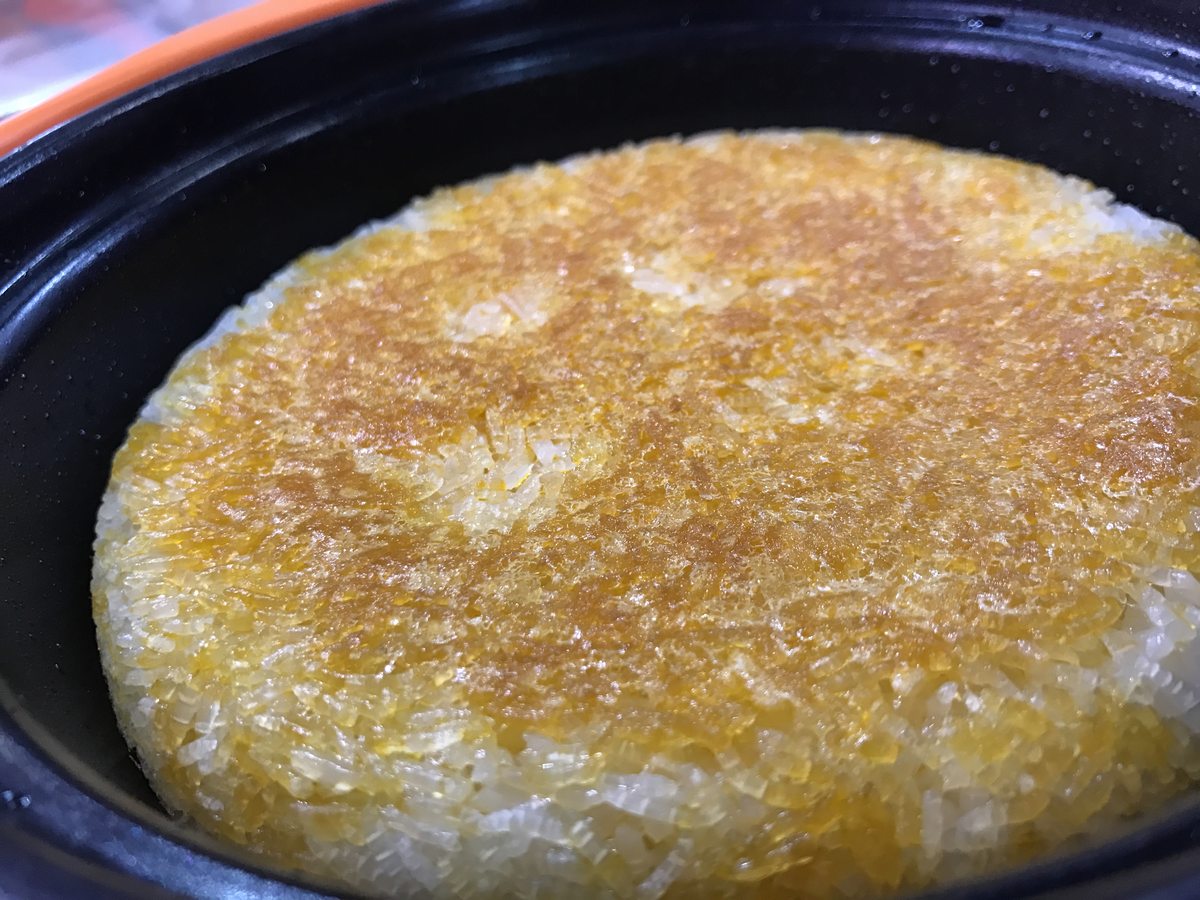
The man who made mine worked a shop the size of a hallway in Guangzhou, and he had been at it forty years. His station was a row of twenty-odd claypots sitting straight on open flame. He moved among them without looking up, the way a gardener moves among plants. Each pot got a quarter turn now and then, never the same rhythm, always by feel. He knew which one was ready by the sound the rice made. A wet crackle meant still cooking. A faint dry tick meant the crust was setting. You don't time it. You listen for it.
The pot is the whole trick. Clay is a terrible conductor and a great keeper of heat, which is exactly what you want: the rice on top steams soft and separate while the bottom layer, pressed against the clay, toasts and caramelizes into crust. It happens one grain deep. You can fake a lot in a kitchen. You cannot fake that gradient.
Then comes what goes on top, and a real claypot rice is not a casserole. It's restraint. A handful of marinated chicken. A few slices of lap cheong (腊肠, làcháng), the Cantonese sausage dense and sweet with rice wine, the color of a stop sign. Maybe a strip of cured pork belly, its fat melting down into the rice below. That fat is not wasted. It drips through the grains as the pot cooks and seasons the crust, so the best guoba in the house is always the piece sitting under the sausage.
Most shops set down a small dish of pickled green chili alongside, cold and sharp, plus a bowl of plain broth to cut the fat. Nobody explains this, and it matters. Eat a piece of that cold chili between bites of hot rice and the crust tastes sweeter. Cold against hot, sour against toasted, all in the same mouthful.
The sauce comes last, and you must not skip it. Dark sweet soy, sometimes nudged with ginger and scallion, poured in a thin ribbon around the rim so it runs down the sides and hits the hot clay, where it hisses and caramelizes. The smell in that moment — burnt sugar, toasted rice, the sweet-smoke funk of the sausage — is the dish's whole history in one breath. The history is short, because this is working-class food: rice and topping and sauce cooked in a single vessel so nothing could escape. One pot, one fire, no courses, no time.
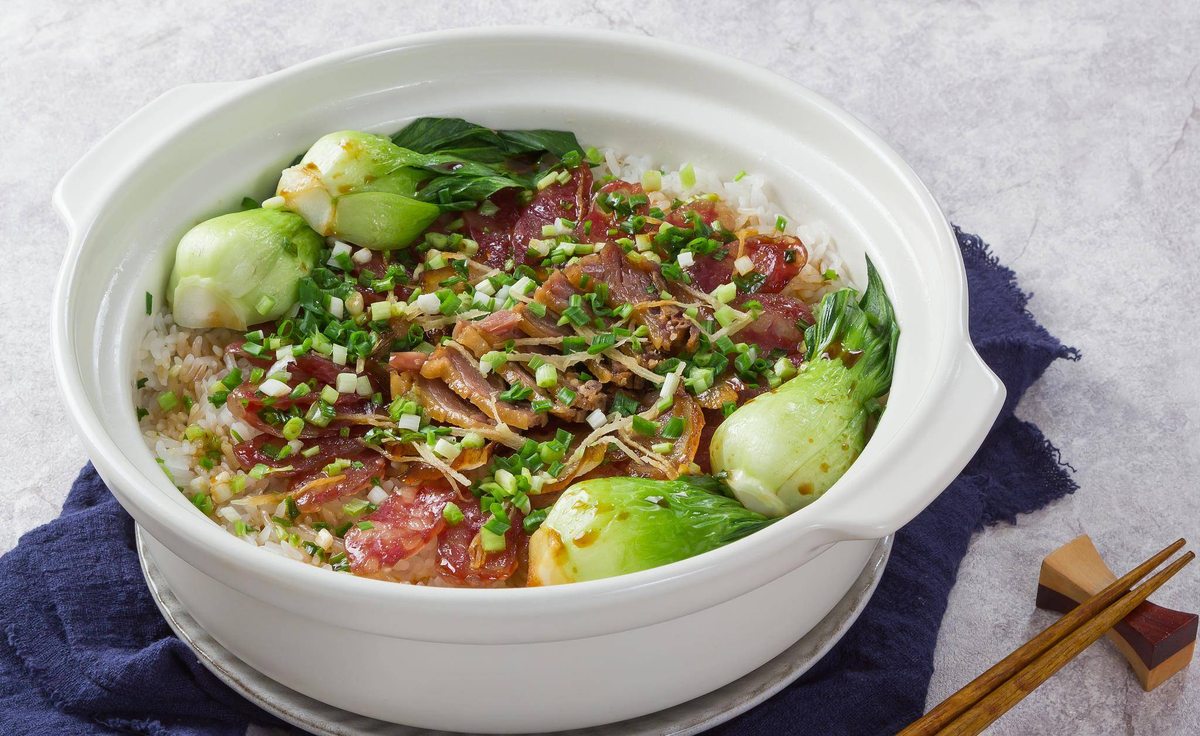
You'll know the bad version the moment it arrives. No scrape, no hiss, rice already mixed, the pot there purely for show. That is a rice bowl wearing a costume. If the bottom of the pot is just more soft rice, it was made in a rice cooker and finished under a broiler. If someone buried it under six toppings — beef, egg, shrimp, mushrooms, heaped to the brim — they have built a stew, not a pot. The crust cannot form under a crowd. Restraint isn't a style here. It is the physics of the thing.
Do not stir right away. Let it sit a minute, which is when the crust finishes setting and the rice steams off its last excess water. Then drizzle the soy down the rim, and only then dig in. Scrape from the sides first, where the crust climbs the clay and comes away in shards. Fold everything together so every spoonful has soft rice and some crunch. Save the bottom for last. The bottom is where the fat pooled and the fire worked hardest, and by the time you reach it, it should be a golden, brittle, sweet-salt wreck. You will have earned it.
I didn't grow up eating this. Shanghai is a wok city, not a claypot city, and my grandmother's stove ran either too high or too low and never in between. I found claypot rice properly as an adult, in that hallway in Guangzhou, watching the old man turn his pots by feel and scrape the bottom like he was opening a safe. I have chased the real thing ever since, and most versions I meet are rice cookers in disguise.
He's probably still there, listening for the tick. If you are ever in Guangzhou and you hear a pot that sounds like it is about to break, follow the sound. Sit down. Order the lap cheong. And when he scrapes the bottom, don't talk. Just listen. That dry scrape is forty years of doing one thing right, and it tastes exactly the way it sounds.
Out of room for today. Doing this one at home means solving the crust without clay — cast iron, a tight lid, and the last thirty seconds of heat are the whole game. That deserves its own post. Recipe coming soon.
💬 Comments