Chow Mein: Chasing Wok Hei on a Home Burner

Editor’s Note: This is the kitchen companion to Chow Mein: The Noodle That Left China and Never Looked Back. Quantities, temperatures and the failure points are below. Read the technique once before you shop.
Why Dry Noodles and a Smoking Wok Do the Work
Chow mein is noodles, soy and heat, and the heat is the part a home kitchen has to negotiate. Start with 300g of fresh egg noodles. Boil them for 30 seconds only, just long enough to separate the strands and wash the surface starch off, then drain them in a colander and shake it hard. Toss with 1 tsp of sesame oil, spread them on a tray in a single layer, and leave 10 minutes. Dry noodles are the whole game: any water left on the surface has to boil off in the wok before the noodles can brown, and while it boils off the noodles steam instead.
A domestic gas burner puts out 3 to 4 kW; the jet ring under a restaurant wok is closer to 30. That gap decides everything. A restaurant wok at 300°C flash-dries each strand in seconds, so the noodle browns before it gives up its moisture. At home, 300g of cold noodles drops the metal to around 150°C, and now you are stewing.
There are two compensations, and neither is optional. The first is batch size: 150g of noodles at a time, so the wok recovers in 30 seconds rather than two minutes. The second is preheat: three full minutes over the highest flame, with nothing in the pan, until a drop of water skates across the surface and the first wisp of smoke comes off the metal. Why this matters: the wok only holds heat in the steel itself, so the pan has to be hotter at the start than the food will ever need.
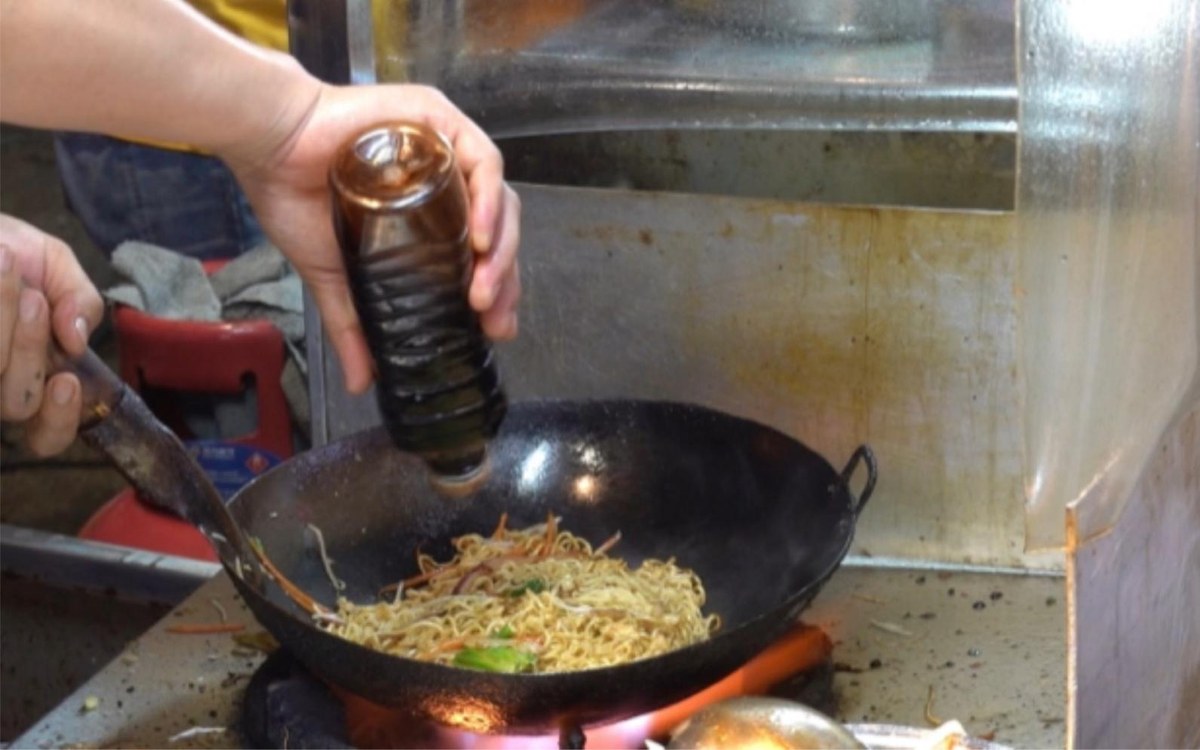
Soy goes down the side of the wok, not onto the noodles. Tilt the wok, pour 1 tbsp of light soy and 1 tsp of dark soy in a thin stream onto the bare metal above the food, and let it run down. It hits steel at 200°C and hisses, and what reaches the noodles is already partly caramelised, coating rather than soaking. Why this matters: the metal does the cooking here, not the sauce; at 200°C the soy dries and browns before it can soak in. Poured directly onto the pile, soy cools, soaks in, and the noodles go soft and uniform brown with no shine.
Then the motion. Toss and press: scoop the noodles up the far wall, let them fall back, then press the pile flat against the metal for two or three seconds before the next toss. The press is what puts noodles in contact with hot steel; the toss is what stops them scorching. Constant stirring fails because the noodles never sit still long enough to brown, and everything stays in its own steam at the bottom of the pan.
The vegetables are built for that rhythm. 150g of cabbage, shredded 5mm, goes in first and takes 90 seconds to wilt at the edges. 100g of char siu or chicken, sliced thin, is already cooked and only needs warming. 50g of bean sprouts go in for the last 30 seconds, so they keep their crunch and give up almost nothing. Two scallions: whites early with the cabbage, greens at the very end, off the heat.
Ingredients
For the noodles
- 300g fresh egg noodles (thin, 2mm)
- 1 tsp (5ml) sesame oil, for tossing
- 2 litres water, for blanching
- 1 tsp (5g) salt, for the water
For the wok
- 2 tbsp (30ml) groundnut oil, plus 1 tsp if needed
- 150g white cabbage, shredded 5mm
- 2 scallions, whites sliced 3cm, greens sliced 3cm
- 3 cloves garlic (10g), sliced thin
- 100g char siu or cooked chicken, sliced 3mm
- 50g bean sprouts, tailed
- 1 tbsp (15ml) Shaoxing wine
For the soy
- 1 tbsp (15ml) light soy sauce
- 1 tsp (5ml) dark soy sauce
- 1 tsp (4g) caster sugar
- 1/4 tsp (1g) ground white pepper
- 60ml chicken stock or water, optional
Substitution notes: Dried egg noodles, 150g, work if you boil them 3 minutes, rinse in cold water and dry them for 15 minutes rather than 10; they never brown quite as well. Leftover roast pork or ham replaces char siu, but add it later and lower the salt, since both are saltier. If you have no dark soy, use 1 tbsp of light soy plus 1 tsp of molasses or dark brown sugar, and accept a lighter colour.
Prep: Fifteen Minutes That Decide the Dish
1. Blanch and dry the noodles (12 minutes)
Bring 2 litres of water with 1 tsp of salt to a hard boil. Drop the noodles in, stir once with chopsticks, and count 30 seconds. Drain in a colander, shake hard twice, toss with 1 tsp of sesame oil, and spread on a tray in a single layer. Ten minutes in the open air is enough for the surface to go from wet to tacky.
2. Cut everything before the wok goes on (8 minutes)
Shred the cabbage 5mm, slice the scallions and separate whites from greens, slice the garlic, cut the char siu into 3mm strips. Put the soy, sugar and pepper in one small bowl and keep the two soy bottles out; you will pour from them directly.
3. Warm the plates (2 minutes)
Chow mein cools in three minutes flat. Put two plates in a 60°C oven, or run them under hot water and dry them.
4. Preheat the wok (3 minutes)
Set a 30cm carbon steel wok over the largest burner on full heat, empty, for 3 minutes. It is ready when a droplet of water skates and evaporates in one pass and the first faint smoke rises from the centre.
Step by Step: Two Batches, Eight Minutes
Step 1: Oil and cabbage (60 seconds)
Swirl 1 tbsp of groundnut oil around the hot wok; it should smoke within seconds. Add the cabbage and scallion whites and toss for 60 seconds, until the edges go translucent and a few pieces catch colour. Add the garlic and stir 10 seconds, no more, or it burns at this heat.
Step 2: First 150g of noodles (2 minutes)
Add half the noodles and immediately toss to combine, then press the pile against the wok wall for 3 seconds, toss, press again. Repeat for a full 90 seconds. You are listening for a dry sizzle; a wet hiss means the noodles were not dry enough. Add half the char siu and half the Shaoxing, toss 20 seconds.
Step 3: Soy down the side (20 seconds)
Tilt the wok away from you and pour half the light soy and half the dark soy onto the bare metal above the noodles in a thin stream. It will hiss and darken on contact. Toss four or five times, until the colour is even, then tip the first batch onto a warm plate. Wipe the wok with a folded cloth and reheat for 45 seconds.
Step 4: The second batch, same again (2 minutes)
Repeat with the remaining oil, cabbage, noodles and pork. Keep the first batch warm, uncovered, in the low oven; a covered plate steams the crust soft.
Step 5: Sprouts, greens, out (30 seconds)
With the second batch still in the wok, add the bean sprouts and scallion greens, toss for 30 seconds, and taste for salt. Tip both batches together, toss once on the plate so the darker and lighter strands mix, and serve immediately.
Key Pitfalls
The noodles steamed and clumped instead of browning. They were wet, or the wok was not hot enough. Drain and shake them twice, dry 10 minutes on a tray, and preheat the empty wok 3 minutes until it smokes before any oil goes in.
The whole dish tasted of nothing but soy. The soy went onto the noodles instead of the metal. Pour it down the side in a thin stream so it caramelises on the way, and use light soy for salt and dark soy only for colour.
The noodles broke into short pieces. They were boiled too long, or stirred rather than tossed. Thirty seconds in the water, then lift and fold with a wok spatula instead of jabbing at the pile.
The cabbage went limp and grey. It went in with the noodles instead of before them, or the wok was crowded. Cabbage first, 60 seconds, then push it up the wall and add noodles to the bare metal below.
The bean sprouts dissolved into the noodles. They cooked for two minutes rather than thirty seconds. Add them last, off the strongest heat, and toss only until they are hot through.
The garlic tasted bitter. It hit a smoking wok and stayed there. Ten seconds with the cabbage, moving constantly, is the window; add it with the second batch if unsure.
The first batch was dry and the second oily. The wok was not wiped between batches, so the second inherited burnt starch. Wipe with a folded cloth, add fresh oil, and reheat 45 seconds.
The dish was pale and looked boiled. Only light soy was used, or the sugar was left out. The 1 tsp of dark soy and 1 tsp of sugar give the strands their mahogany edge; add both with the soy.
Serving Suggestions
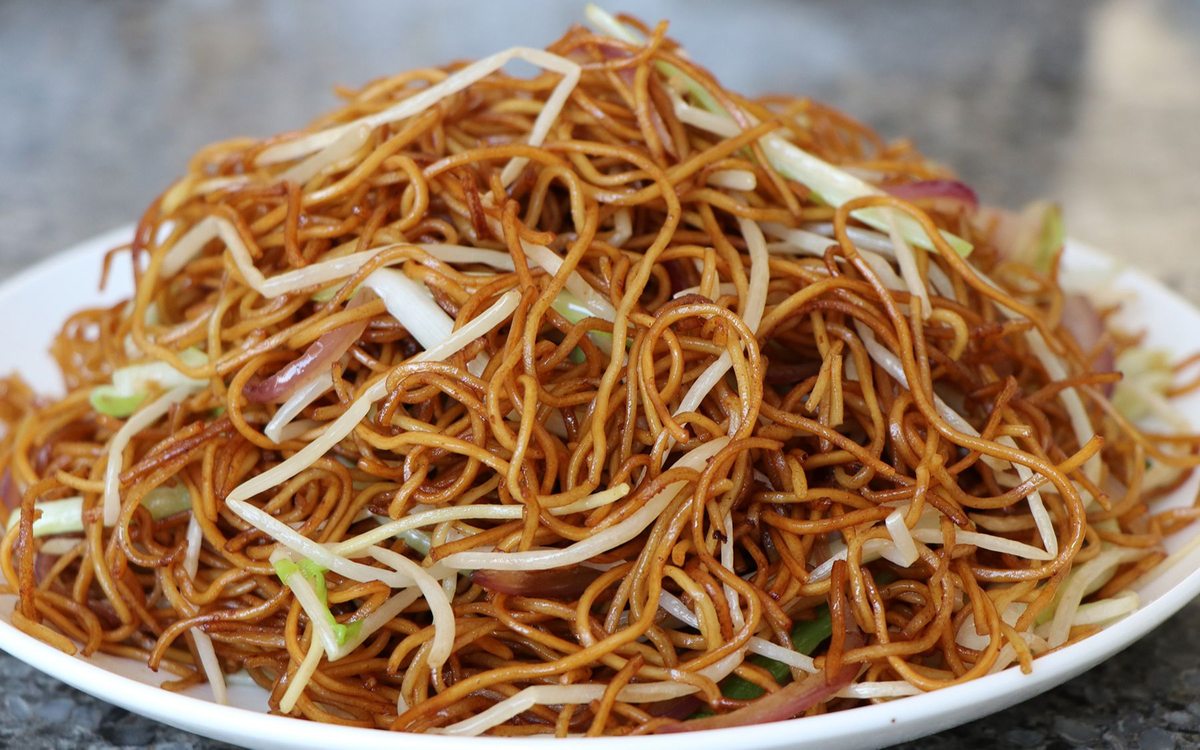
Serve on hot plates, with chilli oil and pickled green chillies on the side, and eat while the cabbage still has some snap. In Hong Kong it comes as its own meal, but at home I put a fried egg on top, crisp at the edge and soft in the middle, and call it dinner.
Cold lager or strong tea, nothing sweet. Leftovers are best refried the next day in a hot pan with a splash of water and a lid for one minute, which loosens the strands without turning them to paste. Do not microwave them; the noodles go rubbery and stay that way.
This is the companion recipe to Chow Mein: The Noodle That Left China and Never Looked Back. Read the story, then cook the dish.
💬 Comments