Chongqing Xiaomian: The Two-Ounce Bowl That Runs a City Before Nine
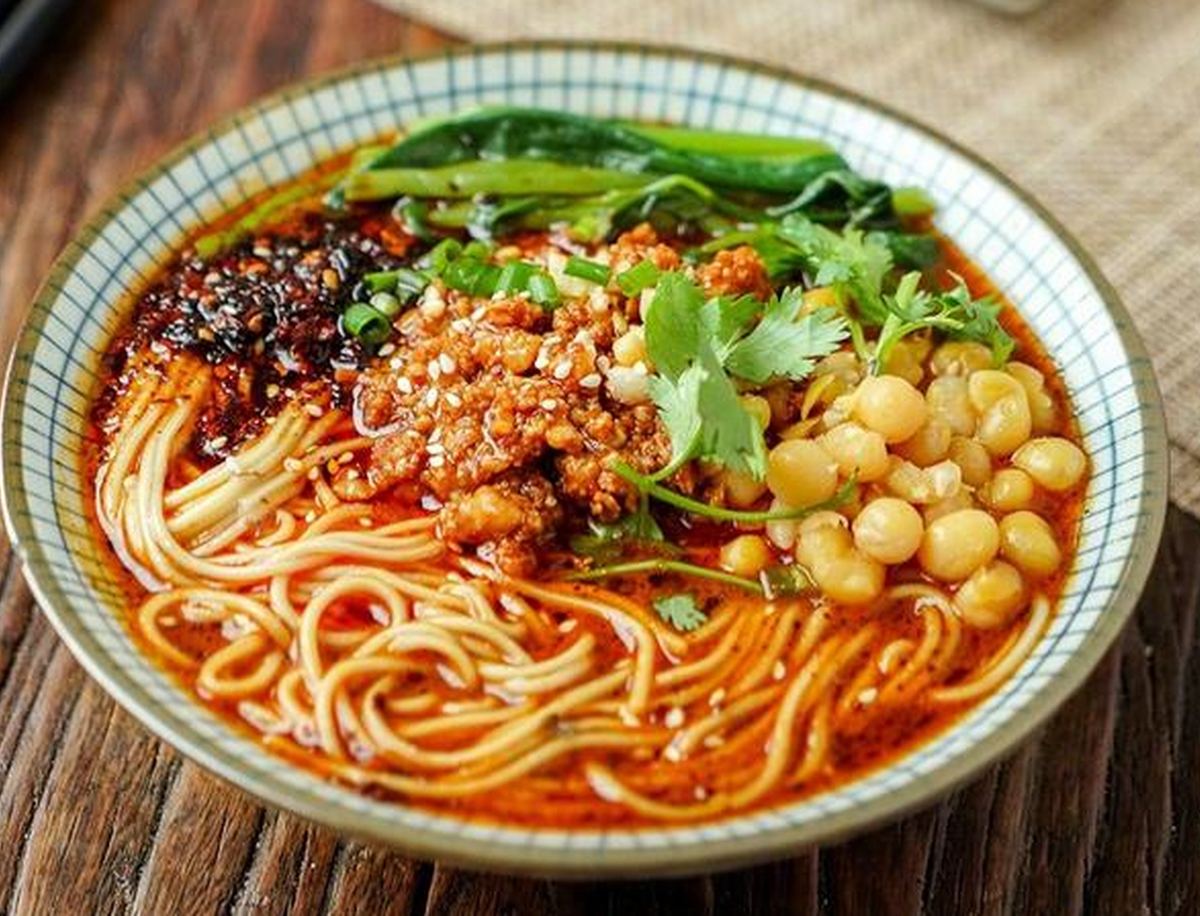
Chongqing wakes up all at once, and it wakes up in a bowl. Six forty in the morning on a residential street in the Yuzhong district, and the whole block smells of chili oil — not the bright sting of a fresh pepper, but something slower and darker, the smell of chili fried in oil until it goes the color of old lacquer. A pot of water rolls on a gas burner set on the pavement. Someone behind you yells an order into the steam, and the noodles hit the water with a sound like a slap.
You sit on a plastic stool that comes up to your knees. There is no table. There is another stool, slightly taller, and your bowl goes on that one. This is bǎndèng miàn (板凳面, "bench noodles"), and it is the least comfortable and most correct way to eat breakfast in this city.
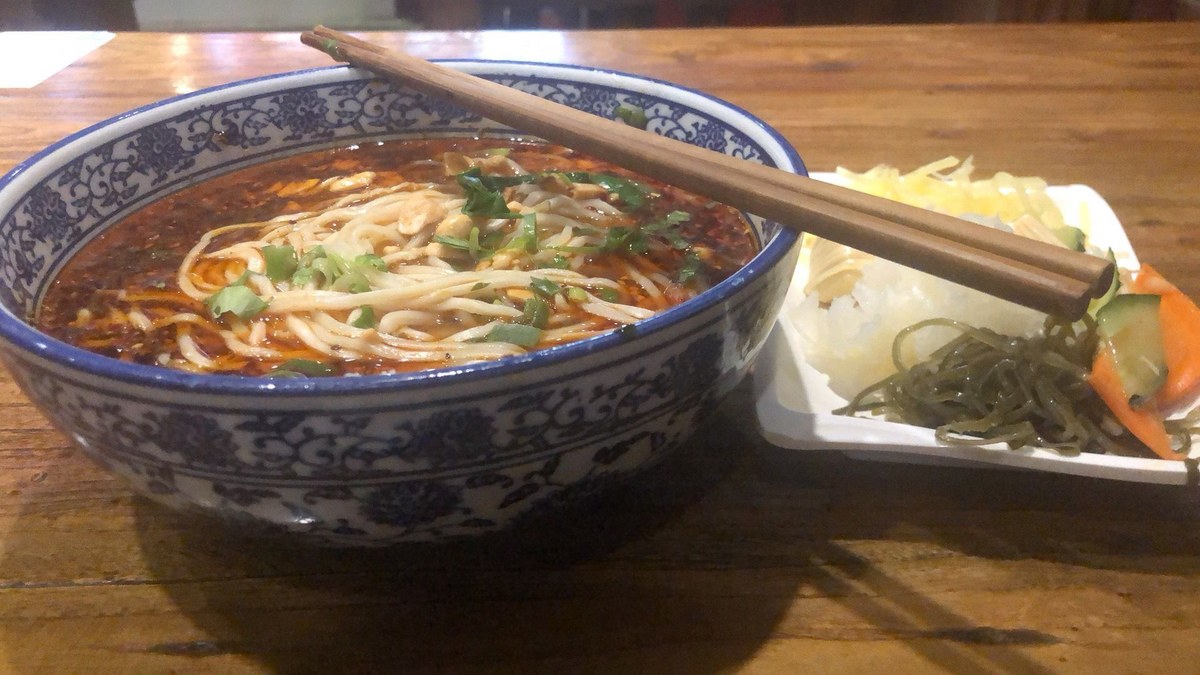
Your order is a code, and every regular has one. Two ounces is the default — three if you are hungry or hungover. Then the modifiers, rattled off in a single breath: dry, or with soup; more chili, less pepper; soft greens; extra garlic. Èr liǎng, gān liū, duō là. Two ounces, dry, heavy on the chili. The woman working the pot does not write anything down. She does not have to. By the time you finish your sentence, your bowl is already being built.
That is the part outsiders miss. The bowl is finished before the noodles are even cooked. A ladle of chili oil goes in first, then ground Sichuan pepper, garlic water, ginger water, a spoon of lard, dark soy, a pinch of MSG, chopped yácài (芽菜, preserved mustard stem), crushed peanuts, scallions. Then a splash of hot noodle water wakes all of it up, and only then do the noodles land on top, with a handful of wilted water-spinach leaves riding along.
The result is red. Genuinely, alarmingly red. And it is not soup. There are maybe two tablespoons of liquid sitting under the noodles, just enough to bind everything together, nowhere near enough to drink. That thin slick at the bottom is the entire dish. Everything else is delivery.
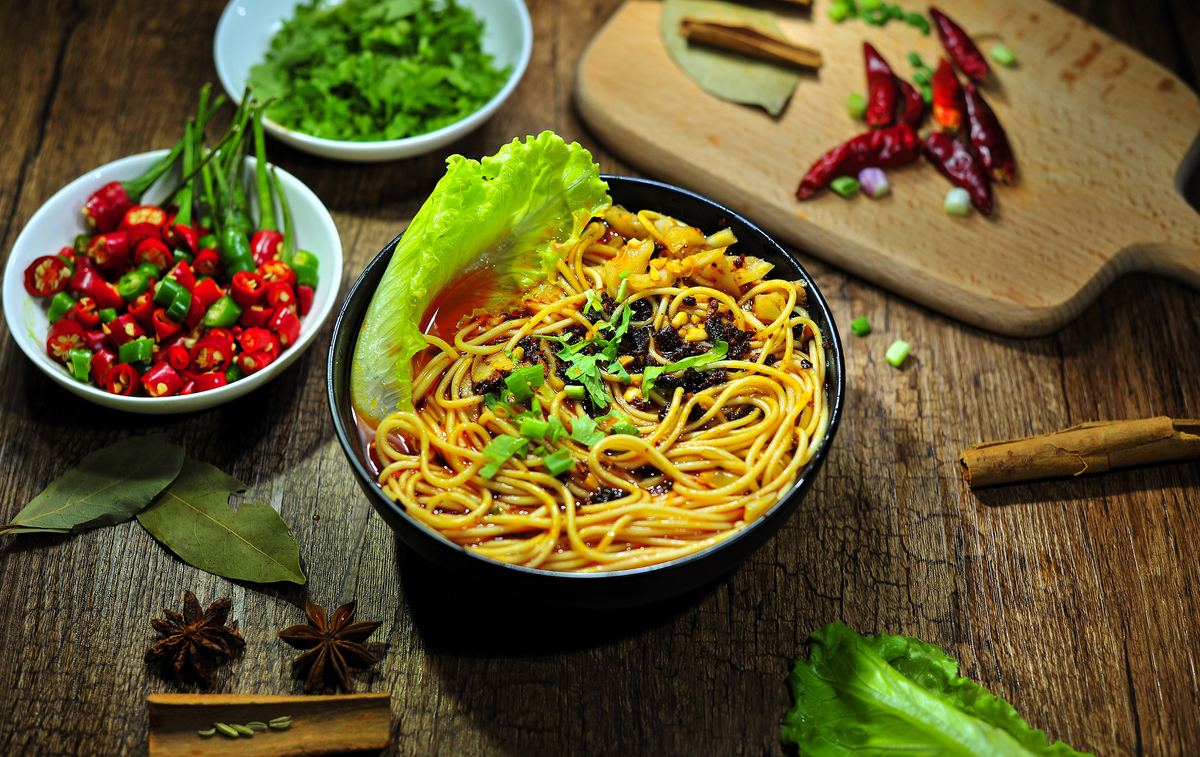
Chongqing xiaomian (重庆小面, chóngqìng xiǎomiàn) means "small noodles," and the small is literal: thin and round, made with alkaline water (碱水) so they come out springy, faintly yellow, and a little slick. They cook in under a minute. Ask for them just past raw and they keep a chew that fights back a bit. Eat slowly and they slump into paste, which is the real reason nobody in this town eats slowly.
The dish grew up on the river docks. Chongqing was a port before it was anything else, and the men hauling cargo up the Yangtze's banks needed calories — cheap, salty, fast, hot enough to make hard work feel like it was going somewhere. A bowl of seasoned noodles cost almost nothing then. It still costs almost nothing.
The plain bowl, no meat at all, is what the city actually runs on at dawn. What most outsiders picture when they say "Chongqing noodles" is usually one of the escalations. Order wānzá (豌杂面) and you get yellow peas stewed soft with minced pork. There is braised beef, there are intestines, there is a fried egg slid on top by request. All of them are still xiaomian. The base does not change. It just gets company.
Now the bad version, because you will run into it. Outside Chongqing, xiaomian usually arrives as a shallow bowl of thin red broth with thick noodles drifting in it — noodles made without alkali, boiled to soft, sitting in liquid that tastes of chili powder and nothing else. Heat without numbness is the giveaway. Real xiaomian hits your tongue, then creeps across your lips and gums and stays there a full minute after you swallow. If your mouth is not tingly and slightly numb, somebody skipped the peppercorn. If it tastes sweet — and in the mall food-court version it often does, thanks to a spoon of sesame paste — you are not eating a variation. You are eating something else with the same name.
Here is how to eat it. Get your chopsticks under the noodles and turn them over from the bottom, twenty times, without being polite about it. You are trying to lift the sediment off the floor of the bowl and coat every strand, and that takes actual work. Then eat fast, squatting or standing, in the eight minutes before the noodles soften. At the end, scrape the peanuts and the preserved mustard out of the corners. A boiled egg on the side is the sensible move. A cold beer at seven in the morning is the local one.
I learned all of this the hard way, on a work trip to Chongqing a few years back. A colleague from the local office picked me up at six thirty and drove me to a shop with no sign and no door, just a counter facing the street. I ordered by pointing and saying "not spicy." The woman at the pot put down her ladle and looked at me the way you look at a man asking for dry water. My colleague translated what I had actually wanted — two ounces, dry, heavy on the chili and the pepper — and then ate his in four minutes while I sat on a stool too low for a grown man, sweating through my shirt before eight a.m. I have ordered it that way ever since. I still sweat.
The bowl costs about a dollar. It takes eight minutes to finish. And for those eight minutes, in every neighborhood of a city of thirty million, everybody is doing the same thing at the same time — noodles up, breath in through the heat, forehead wiped with the back of a hand. Then the stools get stacked, the pot gets emptied, and Chongqing goes to work.
💬 Comments