Chongqing vs. Chengdu: The Hot Pot Argument That Never Ends
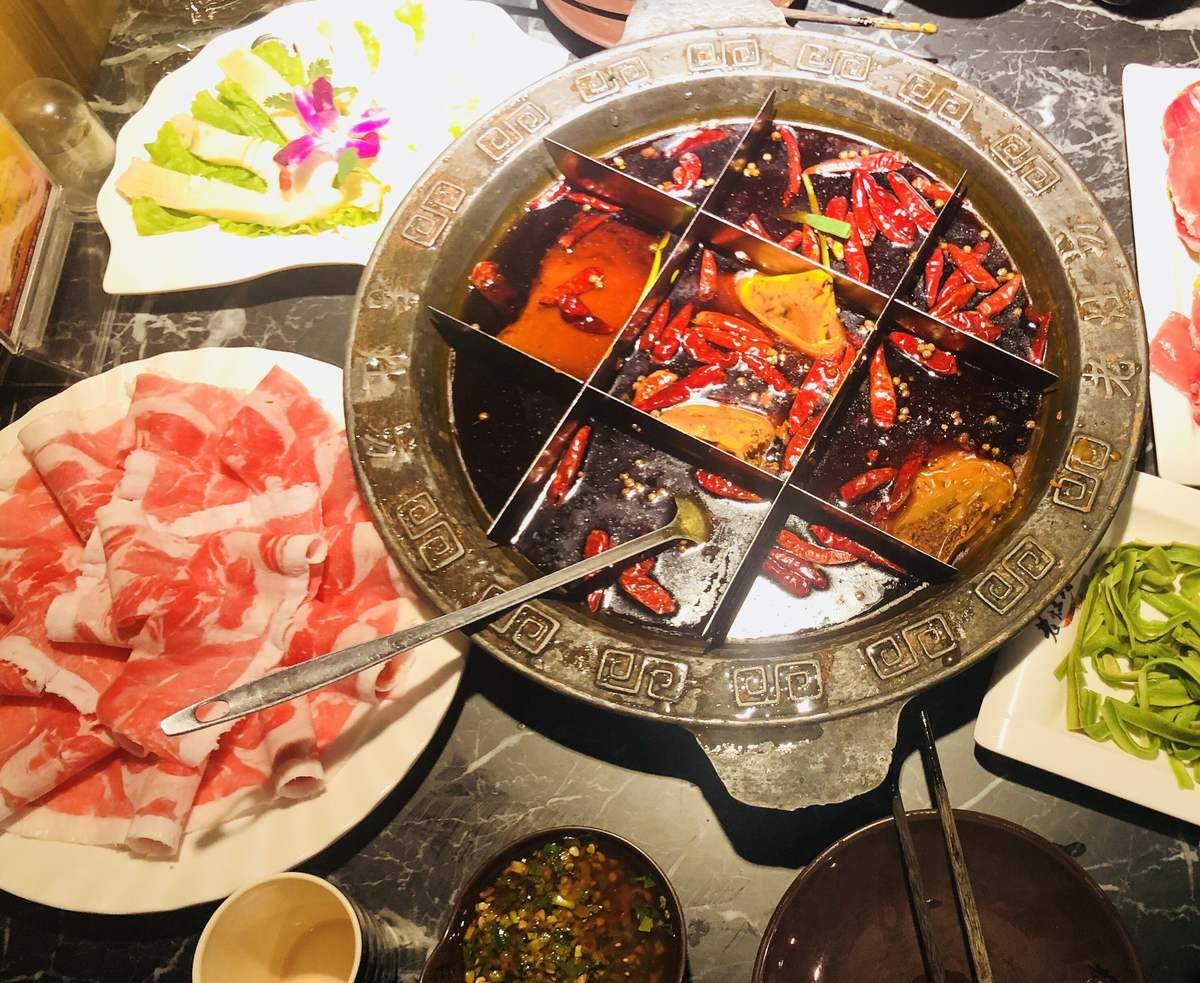
Two cauldrons, one dish, sixty-two minutes apart on the high-speed line.
In Chongqing the pot arrives already committed. A brick of beef tallow has melted into something dark and heavy, the colour of a brick wall at dusk, and the surface doesn't bubble so much as heave — slow fat blisters that break and leave a ring of red. The smell gets to the table before the pot does: charred chili, fermented broad bean, and under all of it the warm animal smell of rendered fat. A crust of dried chilies and Sichuan peppercorns floats on top like wreckage.
In Chengdu the same order comes lighter. Orange-red instead of near-black, glossy, and — this is the tell — thin enough at the edges that you can see the bottom of the pot. It smells like a spice shop instead of a butcher: cardamom, fennel, 草果, a green herbal note off fresh 花椒. The oil is rapeseed, not tallow, and it slides off the food instead of coating it.
Same dish. Same characters over the door. Ask either city which one is correct and you will lose an evening.
The fat is the whole argument
Beef tallow is solid at room temperature. That one physical fact explains most of the feud. Because the fat congeals, it clings — to tripe, to tofu skin, to the back of your throat — and it drags chili and 花椒 with it. Chongqing people have a word for this: 挂味, guà wèi, hanging the flavour. The pot isn't a soup. It's a coating.
Rapeseed oil doesn't do that. It stays liquid, delivers aroma on contact, then drains away, which means whatever you fished out has to taste like something on its own. Chengdu calls that clean. Chongqing calls it thin. Both are right, which is why the argument has run a hundred years without either side conceding a centimetre.
The history fits in a paragraph. Hot pot (火锅, huǒguō) started on the Chongqing docks at 朝天门, where bargemen and porters bought the cuts nobody else wanted — ox tripe, duck intestine, blood curd — and boiled them in cheap tallow. Chengdu took the idea inland, gentled it, added a dozen more aromatics, and served it in rooms with tablecloths. One city built a dish out of poverty. The other built a cuisine out of it. Everything since has been commentary.
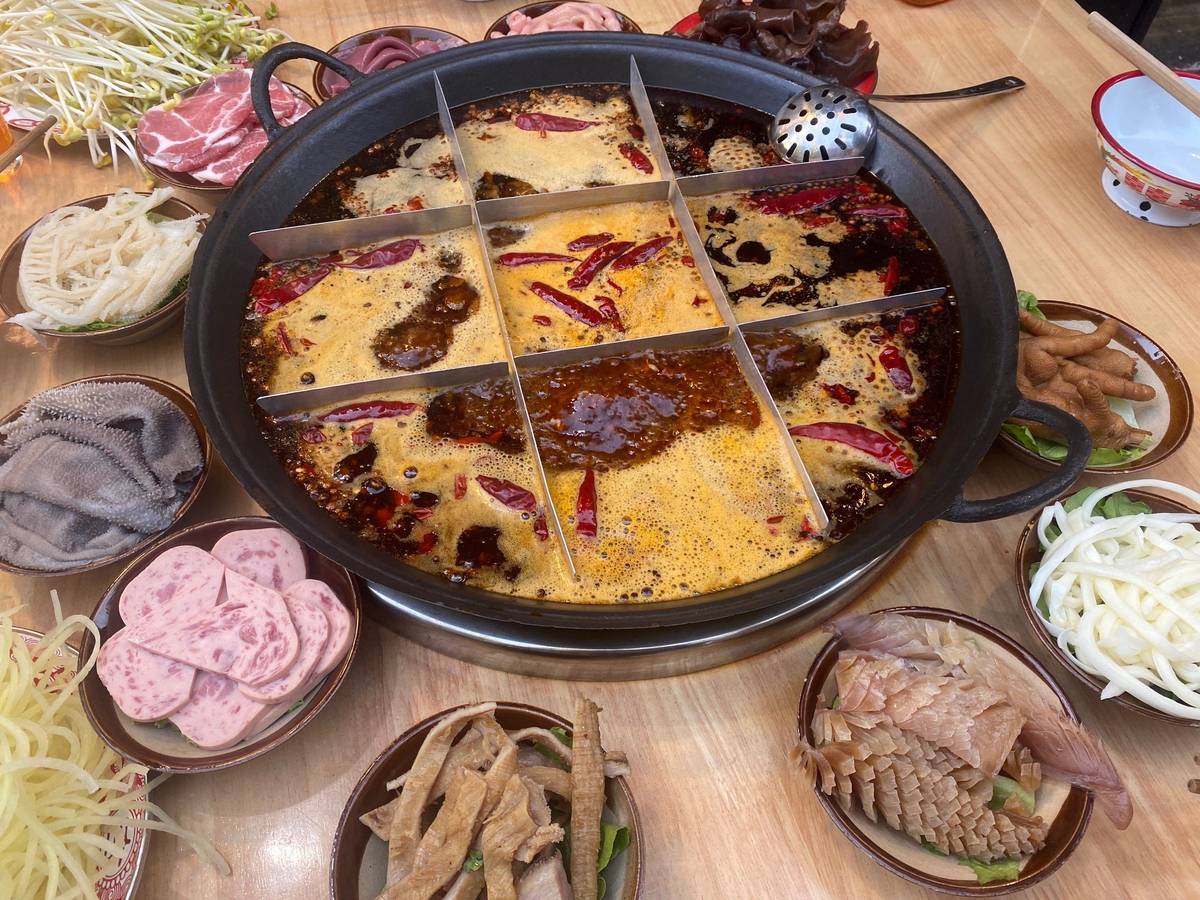
The grid is a clock
A 九宫格 (jiǔgōnggé) is not nine flavours. It's one broth split by temperature, and it's the most useful piece of quiet engineering in Chinese cooking. The centre cell sits over the strongest flame: violent, rolling, close to a hundred degrees. The cross arms run cooler. The four corners barely tremble.
So the grid becomes a timetable. Centre: 毛肚 (máodù), honeycomb tripe, seven or eight seconds, and the counting rule is 七上八下 — seven up, eight down, dip and lift, dip and lift — until the frills stiffen but haven't turned to rubber. 鸭肠, duck intestine, ten seconds and out. 黄喉, aorta, thirty. Corners: 脑花, pork brain, fifteen minutes in a basket so it doesn't dissolve; 血旺, blood curd, until it sets up firm; thick-cut pork, long and slow.
The second function is territorial. You claim a cell. Your tripe lives there. Nobody fishes in your square. In a good Chongqing restaurant the table goes quiet, and it isn't because people stopped talking — it's because everyone is watching their own compartment.
Chengdu mostly skips the grid and orders a 鸳鸯锅, the divided pot, because someone at the table always claims they can't eat spicy. In Chongqing, that person gets handed a bottle of 豆奶 and told to try anyway.
Nobody agrees on the dip either
Chongqing's dip is sesame oil and raw garlic (香油蒜泥). That's it. Maybe vinegar, maybe cilantro. Visitors assume it's a sauce and load it up; it isn't a sauce. It's a rinse. The cool oil strips excess chili off the meat and resets the tongue so the next piece registers as food instead of as pain. Ask for the 干碟 — dry chili, ground 花椒, crushed peanut, salt — when you want the numbing half of 麻辣 to arrive on its own.
Chengdu builds differently: 原汤碟, a ladle of the pot's own broth, sometimes with 折耳根 chopped in, sometimes oyster sauce. Sweetness creeps in. It's a softer philosophy in a small bowl, and if that's what you grew up on, the Chongqing version of the dip tastes like nothing at all.
What to send back
If the restaurant walks you to a sauce bar with twenty jars, turn around. Sesame paste, peanut butter, 沙茶酱, a squeeze bottle labelled "hot pot sauce": that's not Sichuan dipping, that's a chain covering for a base that tastes of nothing. The dip is supposed to be two ingredients. The pot is supposed to do the work.
Send back 番茄锅 and 菌汤锅 when they're sold to you as 四川火锅. Tomato and mushroom bases are decent soups. They are not this dish, and the reason restaurant groups push them is that they cost nothing and offend nobody.
Send back a 微辣 that arrives as a punishment. Mild in Chongqing means fewer chilies, not no chilies. If your lips aren't buzzing and your forehead isn't wet, the kitchen cooked a different dish for a different customer.
And be suspicious of a pot that reaches the table already at a hard boil. The broth should come up to temperature in front of you. A pot that arrives rolling has been sitting there, and everything in it has already given up.
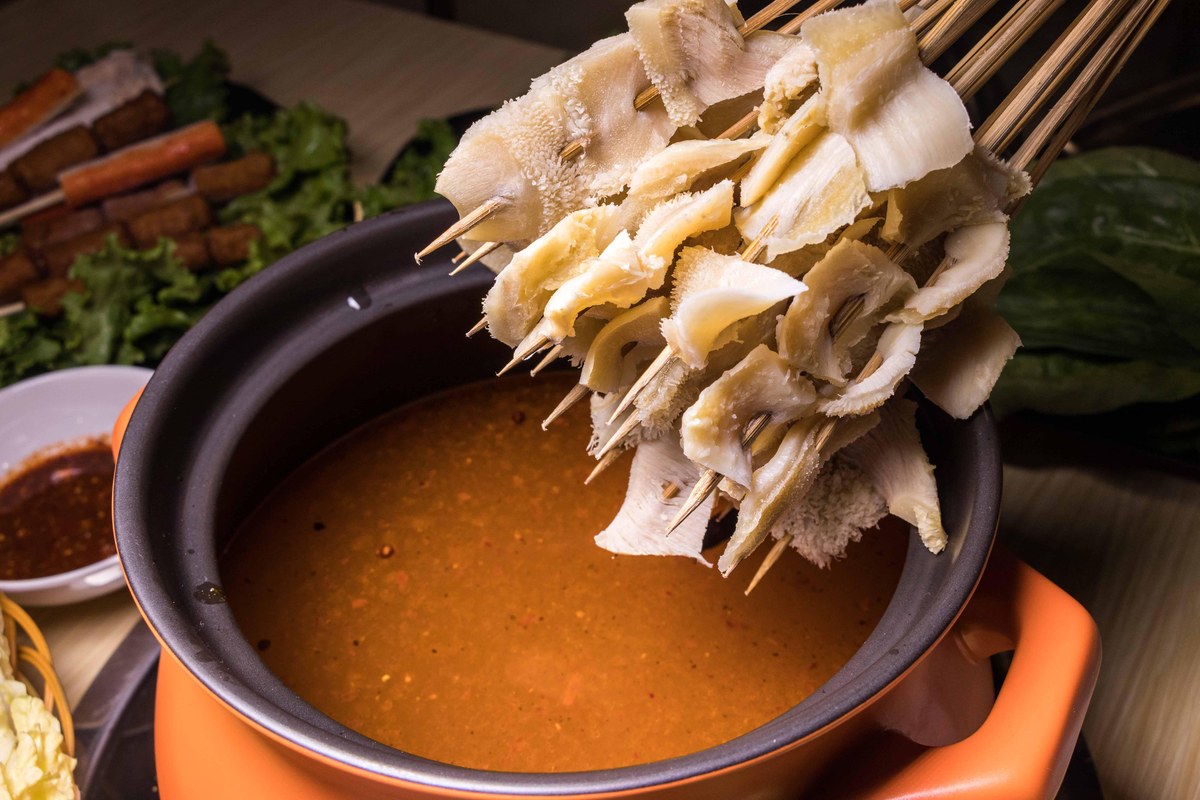
The order of operations
Offal and beef first, while the broth is clean and hottest. Tripe, intestine, aorta, thin-sliced beef — the first twenty minutes belong to protein. Then tofu skin and lotus root, which drink oil. Then, last, the leafy things, because 茼蒿 and spinach soak up every drop of tallow and turn the pot bitter. Never put potato in early. The starch clouds the broth and by the end you're eating gravy.
I learned the counting from a friend's grandmother in 万州, at a flat with a plastic tablecloth and a pot that had clearly been to war. She refused restaurant tallow — thought it was filthy — so she built hers on rapeseed oil with a fistful of dried chilies, and it was the cleanest, meanest hot pot I have eaten. Her rule for 毛肚 was not seven and eight. It was: take it out before you think you should. Fifteen years on, I still overcook it.
The train between the two cities takes sixty-two minutes. The argument is a century old and nobody has moved. The oil is still boiling when the bill arrives, and the last thing you smell on the street outside is your own coat.
💬 Comments