The 11 Chinese Pantry Staples You Actually Need — And Nothing More
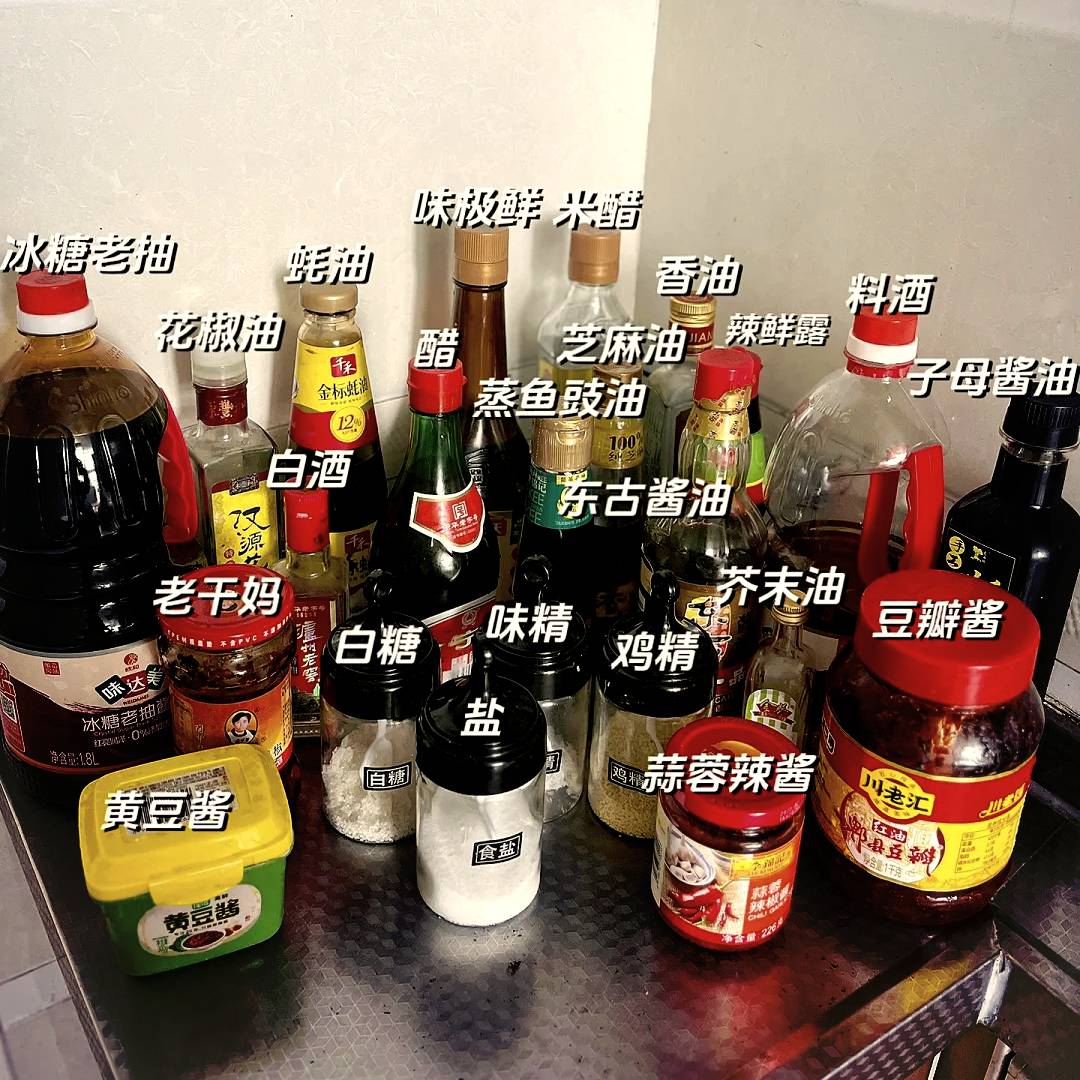
So. You want to cook Chinese food at home. You walk into an Asian supermarket, find the sauce aisle, and freeze. Soy sauce — but which one? There are twelve. Oyster sauce, hoisin sauce, fish sauce, black vinegar, rice vinegar, Chinkiang vinegar, Shaoxing wine, cooking wine, fermented bean paste, chili bean paste, doubanjiang — wait, are those last three the same thing? Then you see the dried goods: star anise, cassia bark, Sichuan peppercorns, five-spice powder, thirteen-spice powder, dried chilies in five varieties, and a bag of something labeled "sand ginger" that you're fairly certain is neither sand nor ginger.
Here's the thing: this is only the beginning. What you're looking at in a typical Chinese supermarket is maybe ten percent of what exists. Regional Chinese cuisines have their own entire pantries. A Sichuan kitchen runs on doubanjiang, fermented black beans, and chili oil. A Cantonese kitchen lives on oyster sauce, hoisin, and fermented bean curd. A Shanghainese kitchen keeps dark soy, rock sugar, and aged Shaoxing wine. Walk into a Hunanese kitchen and you'll find pickled chilies and fermented soybeans you've never heard of. None of these overlap perfectly.
But here's the good news: you don't need any of that yet.
If you're just starting to explore Chinese cooking — if you want to make kung pao chicken on a Tuesday, a simple stir-fried vegetable on Wednesday, and maybe a braised pork belly when friends come over — you need exactly eleven things. Not fifty. Not a hundred. Eleven—and nothing more.
The Core 11, In Order of Importance
1. Light Soy Sauce + Dark Soy Sauce
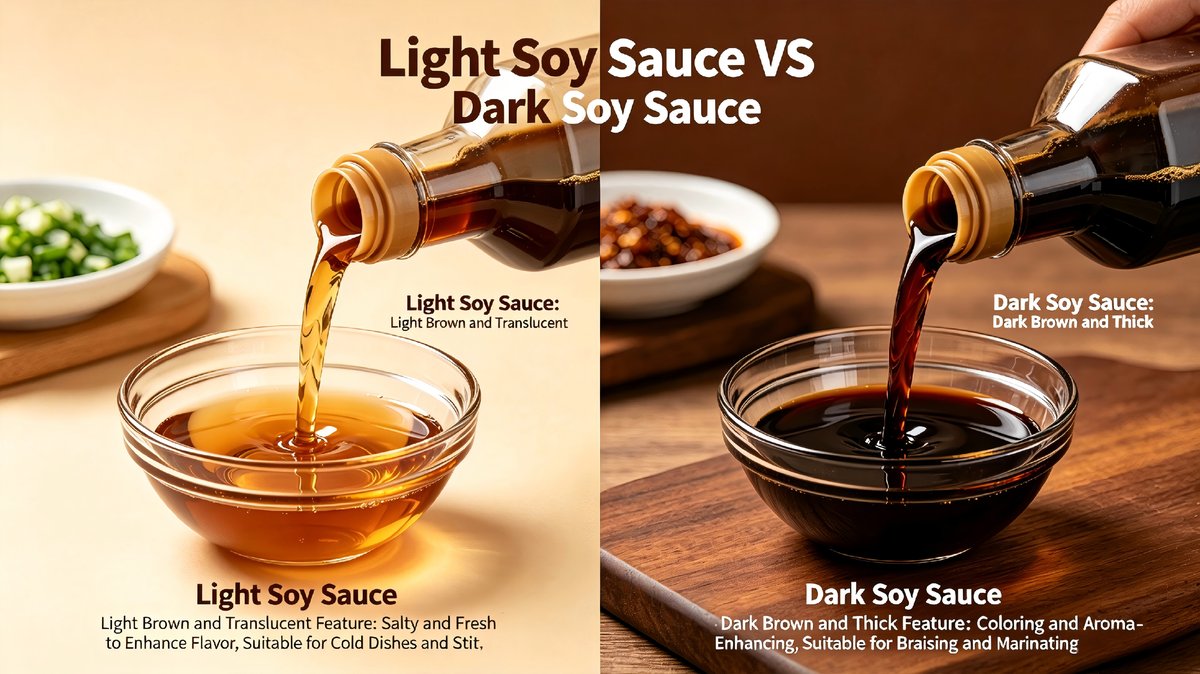
If you buy nothing else on this list, buy these two. They are the spine of Chinese cooking.
Light soy sauce (生抽, shēng chōu) is what you reach for ninety percent of the time. Thin, salty, deeply savory — it's the default seasoning liquid. You use it in stir-fries, marinades, dipping sauces, and basically any dish that needs salt and umami at the same time. If a Chinese recipe just says "soy sauce" without specifying, it means light soy.
Dark soy sauce (老抽, lǎo chōu) is thicker, slightly sweeter, and less salty. It exists for one reason: color. A tablespoon of dark soy turns pale pork belly into that glossy mahogany you see in restaurant-quality hong shao rou. It doesn't add much flavor — it's cosmetic, and it's essential for anything braised.
As an Amazon Associate, I earn from qualifying purchases.
Get both. They are not interchangeable. Light soy is the worker; dark soy is the makeup artist. Pearl River Bridge light soy and Lee Kum Kee dark soy are the standards.
2. Oyster Sauce
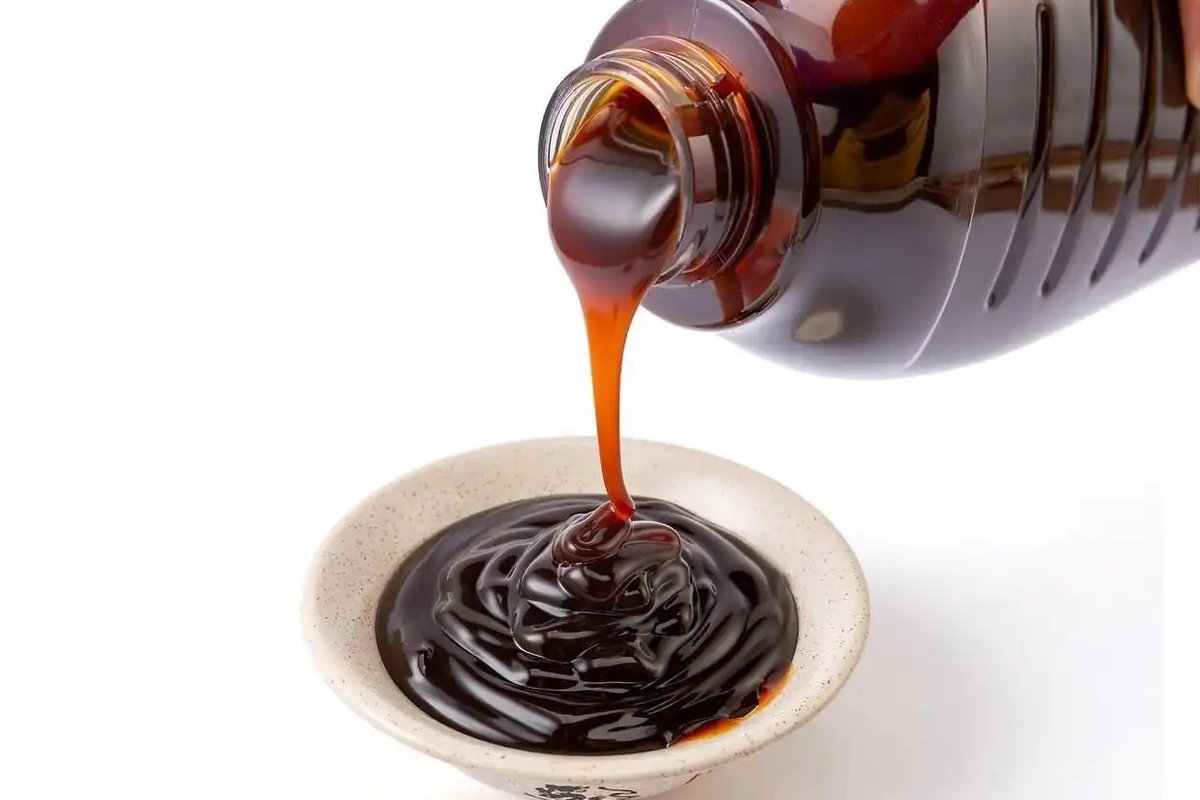
Oyster sauce (蚝油, háo yóu) is the cheat code. It's made from oyster extract, sugar, and salt, reduced to a thick, glossy brown syrup. A tablespoon transforms blanched greens into restaurant-quality vegetables. It adds depth to stir-fries without making them taste like oysters — the flavor is more "savory-sweet depth" than "seafood."
If you've ever wondered why your stir-fried bok choy doesn't taste like the one from the Chinese takeout place, this is what you're missing. Lee Kum Kee premium oyster sauce — the one with the lady in the boat on the label.
3. Shaoxing Wine
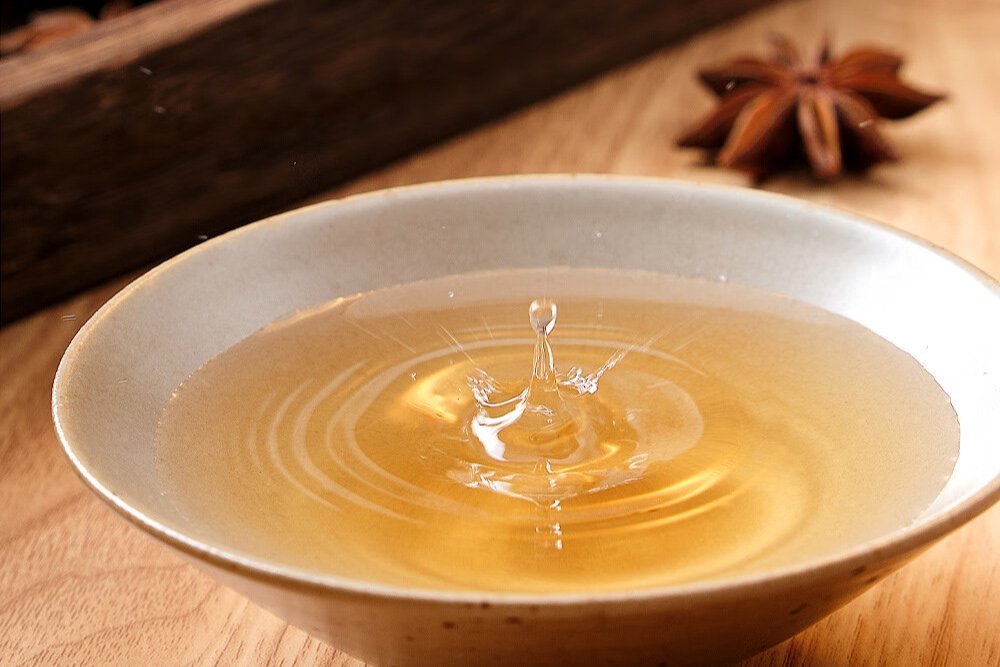
Shaoxing wine (料酒, liào jiǔ) is a fermented rice wine used the way Western cooks use dry white wine or sherry: to deglaze a pan, to lift heavy flavors, to cut through the funk of meat and fish. A splash into a hot wok just as the meat hits the oil — that sizzle-and-hiss is the sound of alcohol burning off and leaving behind something rounder and more complex.
If you don't have Shaoxing wine, dry sherry is a passable substitute. But Shaoxing wine is cheap and lasts forever in the pantry. Soeos Shaoxing cooking wine works fine.
4. Chinkiang Vinegar
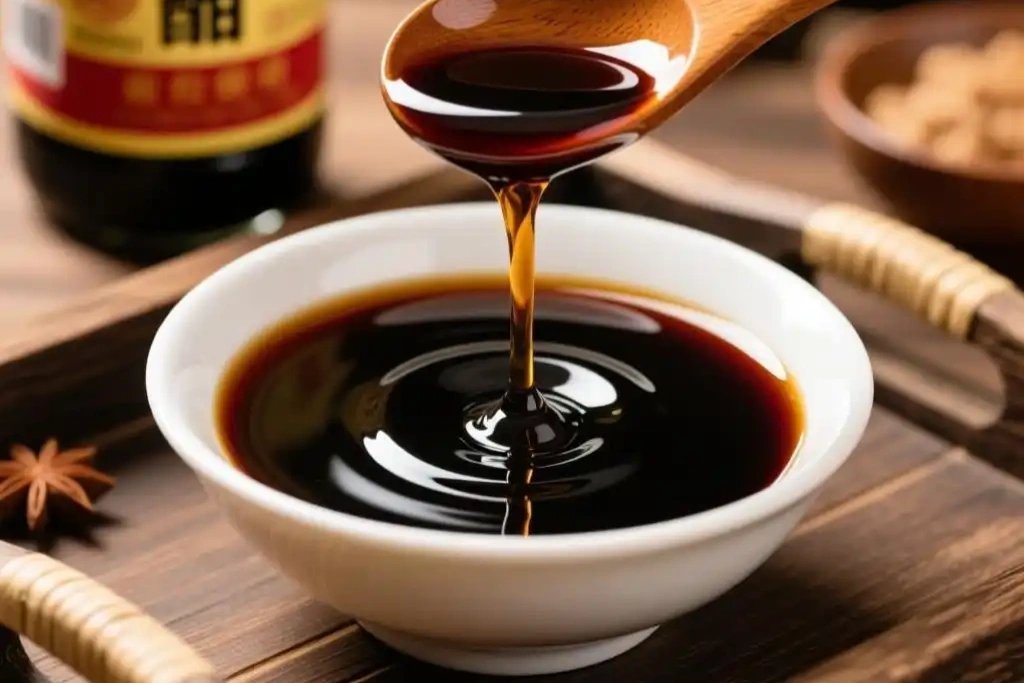
Chinkiang vinegar (镇江香醋, Zhènjiāng xiāng cù) is a black rice vinegar from Zhenjiang, a city on the Yangtze River. It's darker, maltier, and far more complex than Western vinegars — less sharp than white vinegar, less sweet than balsamic, with a smoky depth that comes from aging in clay pots. You use it in cold appetizers (especially smashed cucumber salad), in braised dishes (tang cu pai gu — sweet and sour ribs — is nothing without it), and as a dipping sauce for dumplings.
If you only own one Chinese vinegar, make it this one. Gold Plum Chinkiang vinegar is the brand every Chinese kitchen trusts.
5. Pixian Doubanjiang
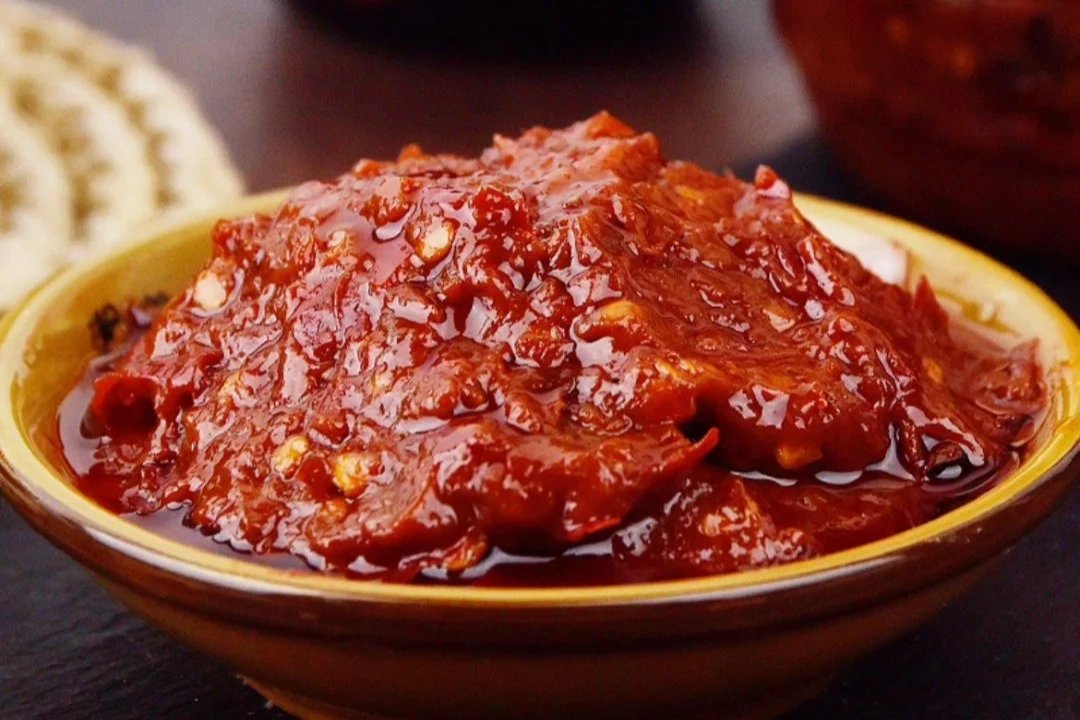
Doubanjiang (郫县豆瓣酱, Píxiàn dòubàn jiàng) is fermented broad bean paste from Pixian county in Sichuan, aged in clay jars for one to three years under the Sichuan sun. It's brick-red, deeply salty, faintly funky, and it is the single most important ingredient in Sichuan cooking. Mapo tofu, twice-cooked pork, Sichuan boiled fish — none of them exist without doubanjiang.
Here's what you need to know: doubanjiang is concentrated. You don't use half a jar; you use a tablespoon. A single jar will last you months. And hoisin sauce is not doubanjiang. Gochujang is not doubanjiang. If a recipe tells you to substitute either one, close that tab. Sichuan Pixian doubanjiang — the kind in the red-labeled jar.
6. Sichuan Peppercorns
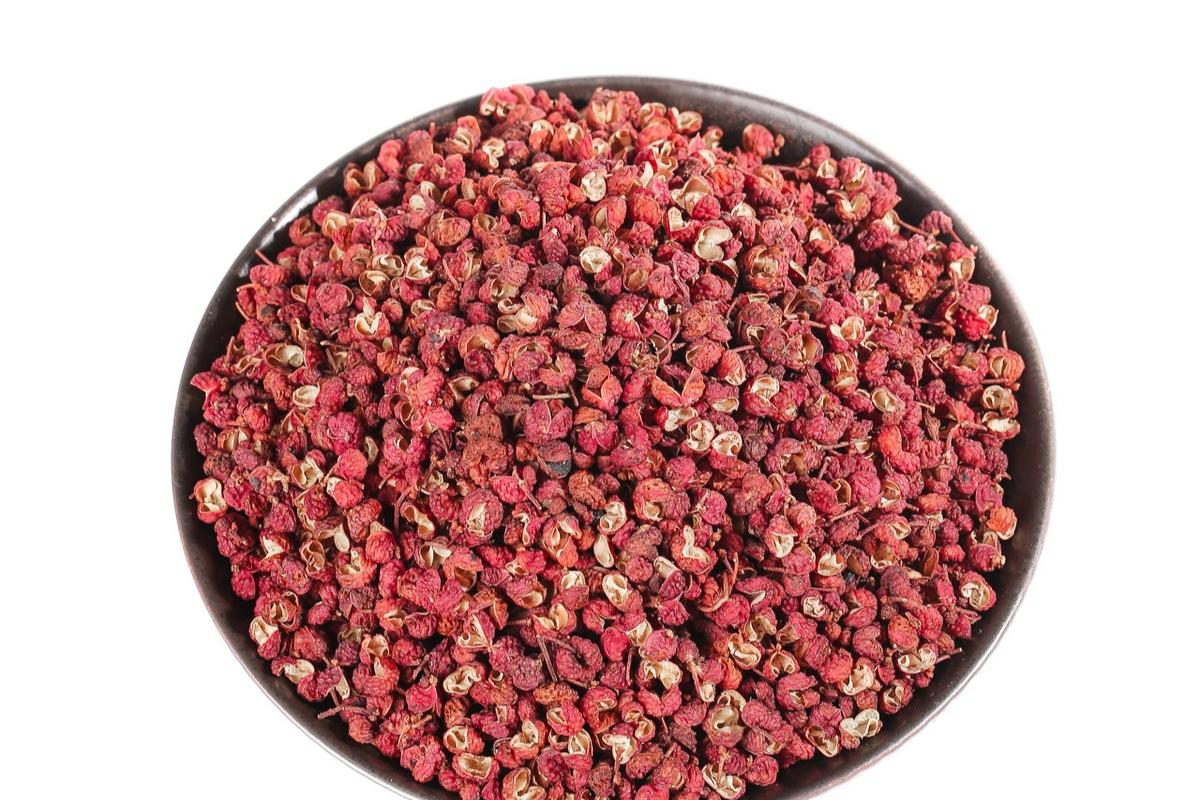
Sichuan peppercorns (花椒, huā jiāo) are not actually pepper. They're the dried husks of the prickly ash shrub, and they don't produce heat — they produce má (麻), a tingling, buzzing, numbing sensation that feels like your tongue is vibrating at 50 Hz. Combined with chili heat, it creates málà (麻辣), the signature flavor of Sichuan cuisine.
There is no substitute for this. If you're not making Sichuan food specifically, you can skip it. But if you want to cook mapo tofu or kung pao chicken the real way, you need the real thing. Buy them whole, toast them in a dry pan until fragrant, then grind. Pre-ground Sichuan peppercorn powder is a dead battery. Soeos Sichuan peppercorns are reliably good.
7. Star Anise
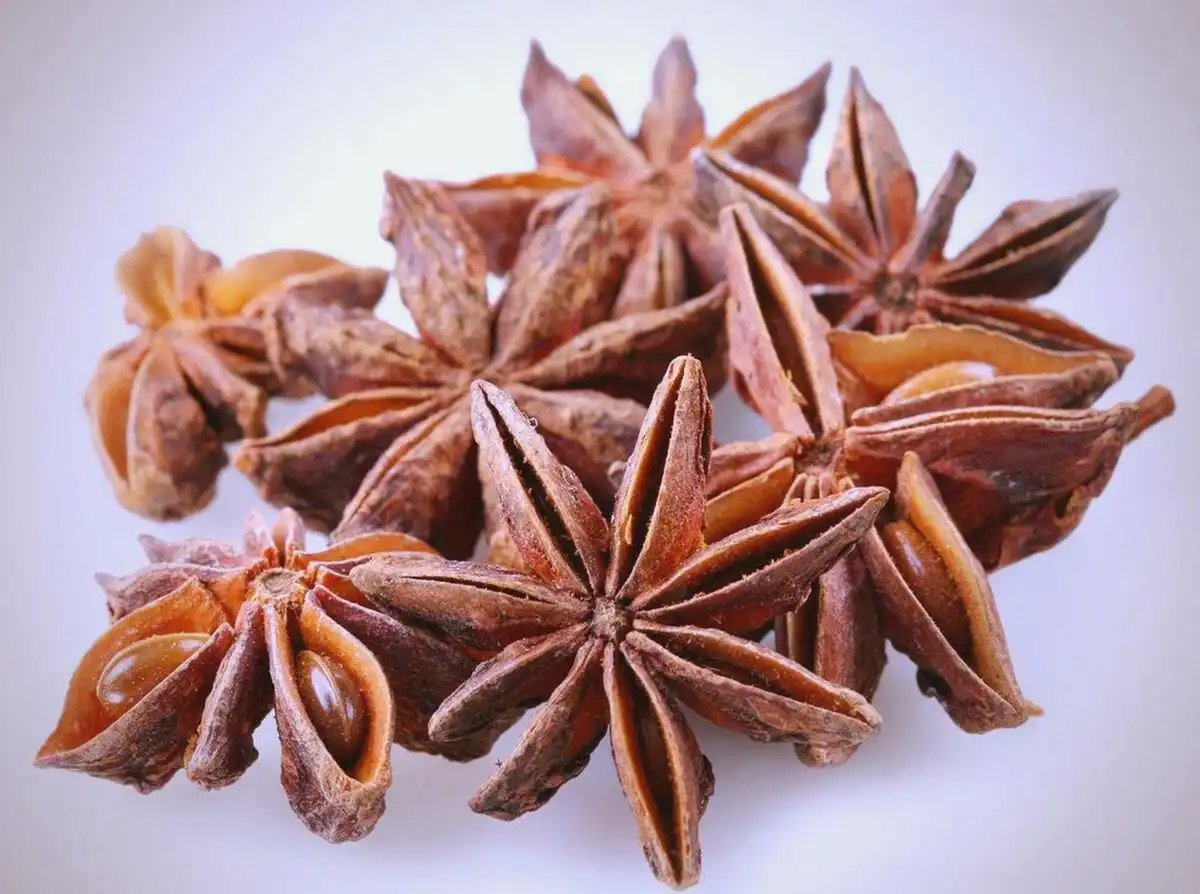
Star anise (八角, bā jiǎo) is a beautiful eight-pointed spice pod that smells like licorice and warm winter kitchens. You drop one or two whole stars into a braise — hong shao rou, beef noodle soup, soy sauce chicken — and let them infuse for hours. That's it. You don't eat them. You fish them out before serving, the same way you'd remove a bay leaf.
One bag of star anise will last you approximately three years. This is the lowest-maintenance item on the list. Soeos star anise — whole, not broken.
8. Five-Spice Powder
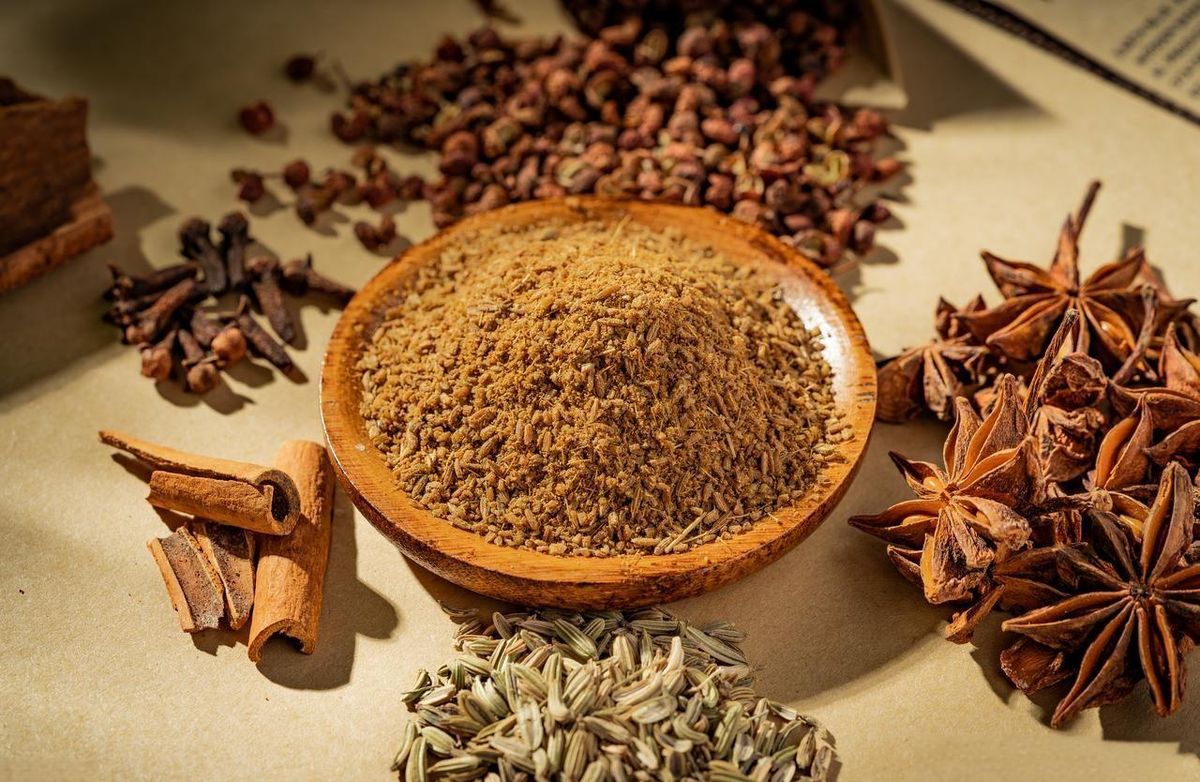
Five-spice powder (五香粉, wǔ xiāng fěn) is the lazy cook's braising shortcut. It's a pre-ground blend of star anise, cloves, Chinese cinnamon, Sichuan peppercorn, and fennel seed — the core five spices that show up in most Chinese braises and roasts. You use it for dry rubs (char siu, roast duck), for seasoning ground meat fillings (dumplings, spring rolls), and for quick braises when you don't want to fish out individual whole spices.
You'll use it maybe once every two weeks. A small bag goes a long way. NPG five-spice powder is a solid choice.
9. Cornstarch
Here's where the line between "Chinese" and "Western" pantry starts to blur. Cornstarch (淀粉, diàn fěn) does exactly the same thing in a Chinese kitchen that it does in yours: thicken sauces, coat proteins for velveting, and bind fillings. If you already have cornstarch in your pantry — and you probably do — you're done. No special Chinese version required. Roots Circle organic cornstarch if you need more.
10. Sesame Oil
Same story. Sesame oil (芝麻油, zhīma yóu) in Chinese cooking is a finishing oil — a teaspoon drizzled over cold appetizers, stirred into dumpling dipping sauce, or splashed into a bowl of noodle soup right before serving. It's never used as a cooking oil (the smoke point is too low and the flavor burns off). The way an Italian cook reaches for extra-virgin olive oil at the end of a dish is exactly how a Chinese cook uses sesame oil.
You want toasted sesame oil — dark amber, intensely nutty, and aromatic. The pale yellow "sesame oil" sold as a neutral cooking oil is not the same thing. 365 by Whole Foods toasted sesame oil does the job.
The "You Don't Need These Yet" List
Chinese supermarkets are full of things that look essential and aren't. Here's what you can safely ignore for now:
- Hoisin sauce — Useful for Cantonese roast meats and Peking duck pancakes. You won't use it more than twice a year.
- Fish sauce — Southeast Asian, not Chinese. Different cuisines, different pantries.
- Fermented black beans (douchi) — Essential for a handful of Sichuan classics (mapo tofu, steamed spare ribs). Not essential for daily cooking.
- Sesame paste — Used in dan dan noodles and a few cold dishes. Buy it when a recipe specifically calls for it.
- Sha cha sauce, hoisin, fermented bean curd, shrimp paste — These are regional specialists. Unless you're building a Cantonese or Fujianese pantry from scratch, you don't need them.
- Thirteen-spice powder — Five-spice is enough. Thirteen-spice is five-spice with extra steps.
- Chili oil — Make your own. Hot oil over chili flakes takes thirty seconds and tastes fresher than anything in a jar.
If You Only Buy…
Not ready to commit to all eleven? Here's the tiered approach:
3 items (absolute minimum): Light soy sauce, dark soy sauce, oyster sauce. With these three, you can stir-fry any vegetable, season any meat, and make a respectable braise.
6 items (the sweet spot): Add Shaoxing wine, Chinkiang vinegar, and cornstarch. Now you can deglaze, make cold appetizers, and velvet your meat like a restaurant.
9 items (Sichuan-ready): Add doubanjiang and Sichuan peppercorns. Mapo tofu, twice-cooked pork, kung pao chicken — most of the Sichuan canon opens up.
10 items (fully armed): Add star anise and five-spice powder. You can now braise pork belly, make beef noodle soup, and season dumpling fillings. There is almost no home-style Chinese dish you can't make.
A Note on Storage
Most of these items are fermented, salted, or dried — they're built to last. Soy sauce, oyster sauce, Chinkiang vinegar, and Shaoxing wine will keep for months in a cool cabinet (oyster sauce should be refrigerated after opening). Doubanjiang lasts effectively forever in the fridge — the salt content is so high that nothing can grow in it. Sichuan peppercorns and star anise should be kept in sealed containers away from light, and they'll stay potent for a year. Five-spice powder, like any ground spice, loses its edge after six months — buy the smallest bag you can find.
This is the first in a series on the Chinese kitchen. Next: The Wok — why one piece of carbon steel replaces half your cookware, and how to season it so eggs slide like they're on ice.
💬 Comments