Braised Chicken Feet: The Gelatin Window
Editor’s Note: This is the kitchen companion to Chicken Feet: Chewing Is the Whole Point. Quantities, temperatures and the failure points are below. Read the technique once before you shop.
Why Twenty Seconds of Oil Decides the Texture
Chicken feet are skin, tendon, cartilage and bone, with almost no muscle. That one fact explains what follows: there is nothing to brown the way a steak browns, and the only thing that changes is collagen, which needs time at a temperature that never quite boils.
Buy thick yellow feet from laying hens if you can find them; they carry more connective tissue than the small pale ones sold for frying. One kilogram is eighteen to twenty-two feet. Frozen is fine, thawed overnight, because ice in a joint turns to steam in hot oil.
Cut the nails first. Each claw ends in a keratin cone that no braising softens, and it holds grit. Cut straight across the knuckle with poultry shears, rub the feet with 1 tbsp of salt and 1 tbsp of cornstarch, working it into the creases, and rinse until the water runs clear.
Blanch from cold water with three slices of ginger and 1 tbsp of Shaoxing, 3 minutes at a boil, skimming the grey scum. Drain, rinse, then dry on a cloth-lined tray for 10 minutes. Why this matters: water in a crease becomes steam at 180°C, and steam throws oil out of the pan.
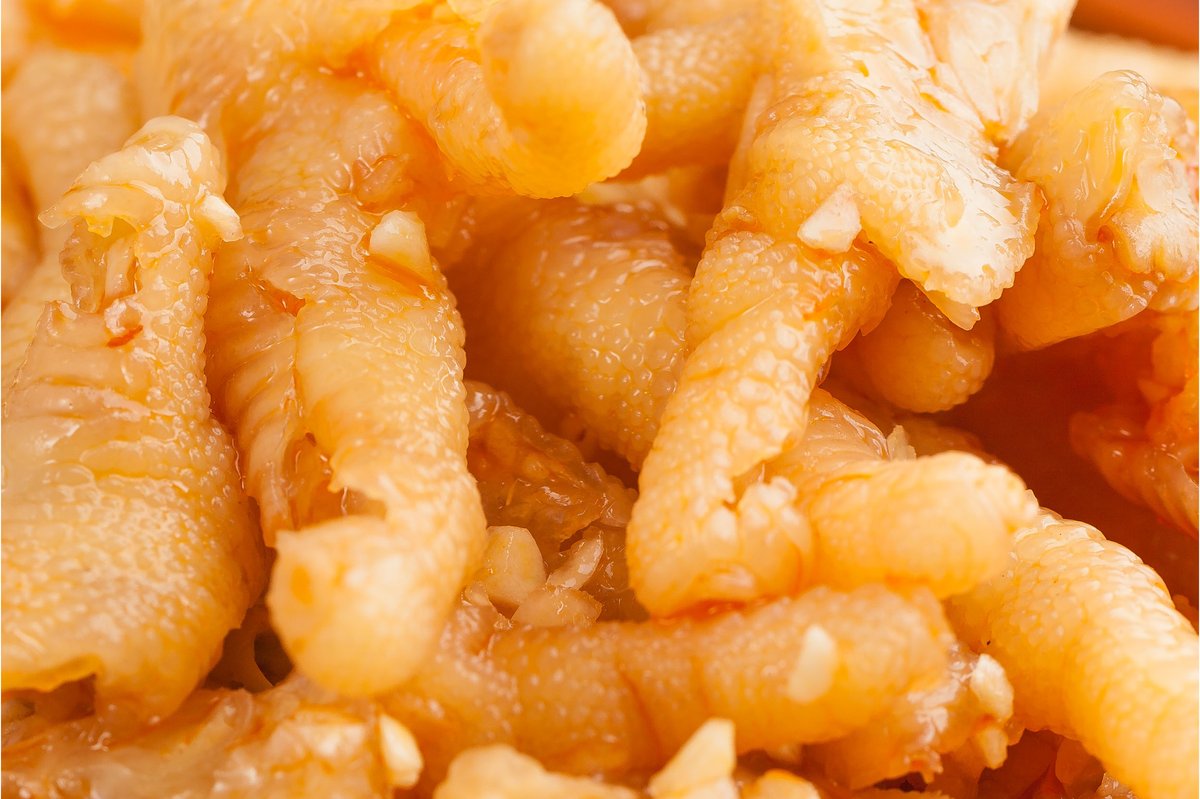
Now the oil blanch, which separates dim sum feet from a home braise. Six hundred millilitres of neutral oil at 180°C, three or four feet in on a slotted spoon, twenty seconds. The skin blisters, pales and lifts from the bone with a hard crackle. Straight into iced water for an hour, where it bloats into the tiger-skin wrinkles that hold sauce later: the surface has set while the wetter collagen beneath it contracts, so it buckles, and the cold soak fixes the shape.
You can skip it. Without the oil the skin stays smooth, the braise takes 15 minutes longer, and the feet are softer and less interesting. An air fryer at 200°C for 8 minutes blisters the skin in patches without a litre of oil.
The braise is short on liquid on purpose: 500ml of water for 1kg of feet, barely covering. 3 tbsp of light soy, 1 tbsp of dark soy, 30g of rock sugar, 2 star anise, 1 cassia stick, 3 slices of ginger, 2 tbsp of oyster sauce, 1 tbsp of Shaoxing, and no salt, since the sauce reduces by a third.
Then the window. Collagen turns to gelatin fastest between 70°C and 95°C, and it wants water and time, not a rolling boil. At a bare simmer, bubbles the size of peppercorns breaking every second or two, 60 minutes gives skin that is slippery and resistant and a tendon that still snaps. Ninety gives tendon soft and translucent, skin sliding off the bone, and a sauce that coats.
That liquid is the proof. Refrigerate it and by morning it should be a soft trembling jelly, which is what roughly 1 percent gelatin does at 4°C. If it stays watery, the simmer was too short or too hard, or the feet were the pale kind. 50g of raw peanuts go in 30 minutes before the end; added at the start they cloud the sauce with starch and drink salt.
Ingredients
Chicken feet
- 1kg chicken feet (18-22 feet), fresh or fully thawed
- 1 tbsp (15g) fine salt, for scrubbing
- 1 tbsp (10g) cornstarch, for scrubbing
- 600ml neutral oil, for the oil blanch
For the braise
- 500ml water
- 3 tbsp (45ml) light soy sauce
- 1 tbsp (15ml) dark soy sauce
- 30g rock sugar
- 2 star anise
- 1 cassia stick (about 5cm)
- 3 slices ginger (15g)
- 2 tbsp (30g) oyster sauce
- 1 tbsp (15ml) Shaoxing wine
- 50g raw peanuts, skin on
To finish
- 1 tsp (5ml) sesame oil
- 2 spring onions (30g), cut into 5cm lengths
Substitution notes: Cassia is the thick rough bark sold as cinnamon in Asian shops; if you only have thin curled quills, use two sticks and expect a sweeter perfume. No rock sugar: 25g of white sugar plus 1 tsp of honey will gloss the sauce, though the glaze is thinner. No oyster sauce: 1 tbsp of light soy with 1 tsp of sugar, and the braise loses a roundness that is hard to replace.
Frozen feet are the better buy, since fresh ones sit in the case for days. Look for yellow skin intact rather than white and bloated from soaking. Shaoxing can be replaced with dry sherry at the same quantity.
Prep: Twenty Minutes, Plus an Hour of Soaking
1. Trim and scrub the feet (8 minutes)
Cut each nail off at the knuckle with poultry shears, over the sink, because the nails fly. Rub the salt and cornstarch into the pads and the creases between the toes, then rinse for a full minute, until the feet feel squeaky rather than slimy.
2. Blanch at a boil (5 minutes)
Cover with cold water, add the ginger and Shaoxing, and bring to a boil. Hold for 3 minutes from the moment the water moves, skimming the foam. Drain and rinse each foot under the tap to wash off the scum between the toes.
3. Dry them properly (10 minutes)
Spread the feet on a cloth-lined tray, skin up, for 10 minutes, turning once. They should feel tacky, not wet. This is the step people skip, and it is the reason oil jumps.
4. Set up the ice bath (2 minutes)
Fill a large bowl with water and ice and put it beside the stove before the oil goes on. Hunting for ice while the skin browns is how twenty seconds become forty.
Step by Step: Ninety Minutes of Bare Simmer
Step 1: Oil blanch at 180°C (20 seconds, then 60 minutes in ice water)
Heat the 600ml of oil to 180°C; without a thermometer, a cube of bread should brown in about 20 seconds. Lower four feet in on a slotted spoon, hand high and the pan turned away, and count twenty. Lift them straight into the ice bath and repeat, letting the oil return to temperature between batches. After an hour they will look swollen, wrinkled and unpromising.
Step 2: Build the braise (5 minutes)
Drain the feet into a heavy pot just wide enough to hold them in two layers. Add the water, both soys, rock sugar, star anise, cassia, ginger, oyster sauce and Shaoxing. Bring to a boil, then check the level: three-quarters covered, not swimming. If they are not, add water 50ml at a time.
Step 3: Simmer for 60 to 90 minutes
Turn the heat down until the surface trembles rather than rolls, and set the lid half on. At 30 minutes, turn the feet so the top layer braises in the liquid. At 60, pull one out and bite the thickest part of the tendon: if it resists your teeth and the skin fights back, you are at the chewy end. Give the rest another 20 to 30 minutes, testing every 10. Why this matters: a hard boil drives off water and tightens the skin, and extra time will not soften it again.
Step 4: Peanuts in the last 30 minutes
Add them when 30 minutes remain. They float at first and sink as they hydrate. If yours are roasted and salted, add them 5 minutes before the end instead, or they go to paste.
Step 5: Reduce and finish (5 minutes)
Lift the feet into a warm dish. Boil the liquid hard for 4 to 5 minutes, until it coats a spoon, then stir in the sesame oil and return the feet to the pot to glaze. Scatter the spring onions. For dim sum service, pile feet and peanuts onto a plate that fits a bamboo steamer and steam for 6 minutes just before the table.
Key Pitfalls
There was grit in every bite. The nails were left on, or the creases were not scrubbed. Cut every nail at the knuckle, rub in salt and cornstarch, and rinse until the water runs clear.
The oil erupted and took the skin off my hand. The feet were wet, or still cold in the joints. Dry them for 10 minutes, thaw fully, and lower them in from arm’s length. Four at a time, never more.
The skin came out smooth instead of wrinkled. The oil was under 180°C, the feet went in wet, or they never got the cold soak. Hot dry oil sets the surface in seconds; the ice bath fixes the wrinkle.
The feet collapsed and the skin dissolved. The pot boiled rather than simmered, or they stayed in past two hours. Keep the surface trembling, test the tendon at 60 minutes, and pull the pot early.
The braising liquid never set in the fridge. Too much water, too short a braise, or the wrong feet. Reduce harder at the end, cook the full 90 minutes, and buy thick yellow feet rather than pale ones.
The sauce was too salty to eat. It reduced further than expected, and there is no salt in the recipe for a reason. Add 100ml of water and 1 tsp of sugar, simmer 5 minutes, and accept a thinner glaze.
Serving Suggestions
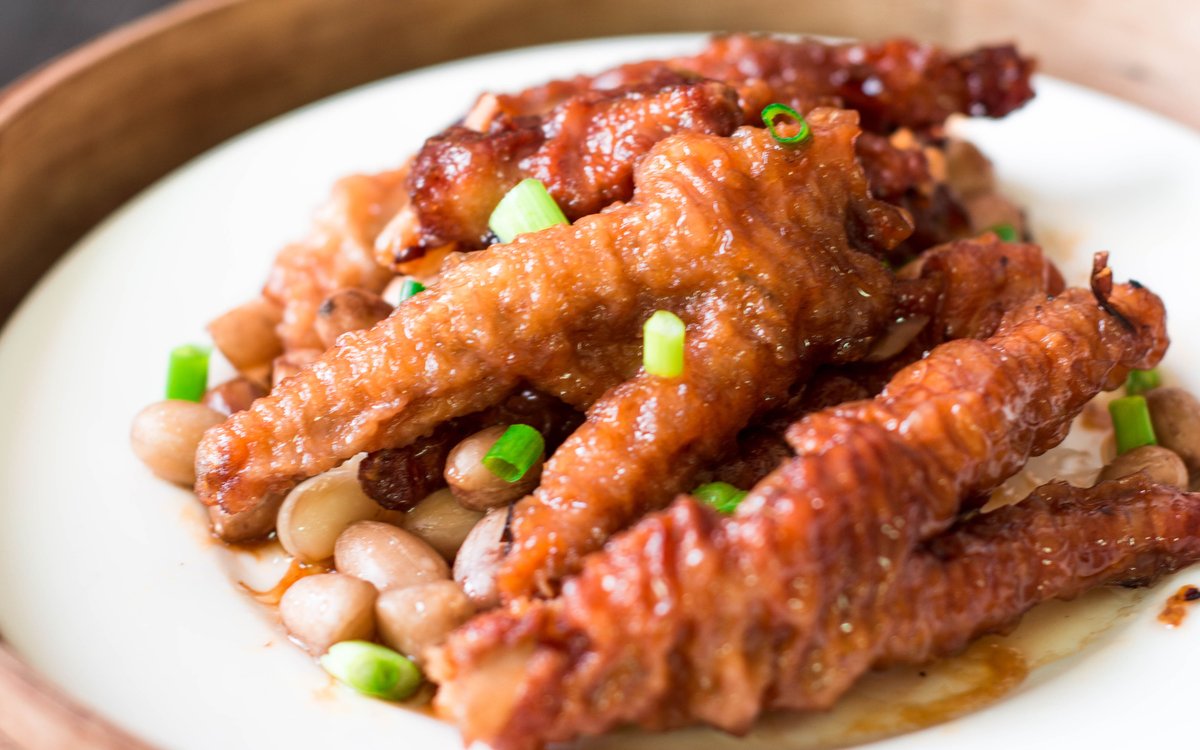
Serve them as a teahouse does: a white plate inside a bamboo steamer, feet piled over the peanuts, a spoonful of braising liquid across, and the lid on so the smell arrives before the plate. Two or three feet per person is a dim sum portion; four is a meal with rice.
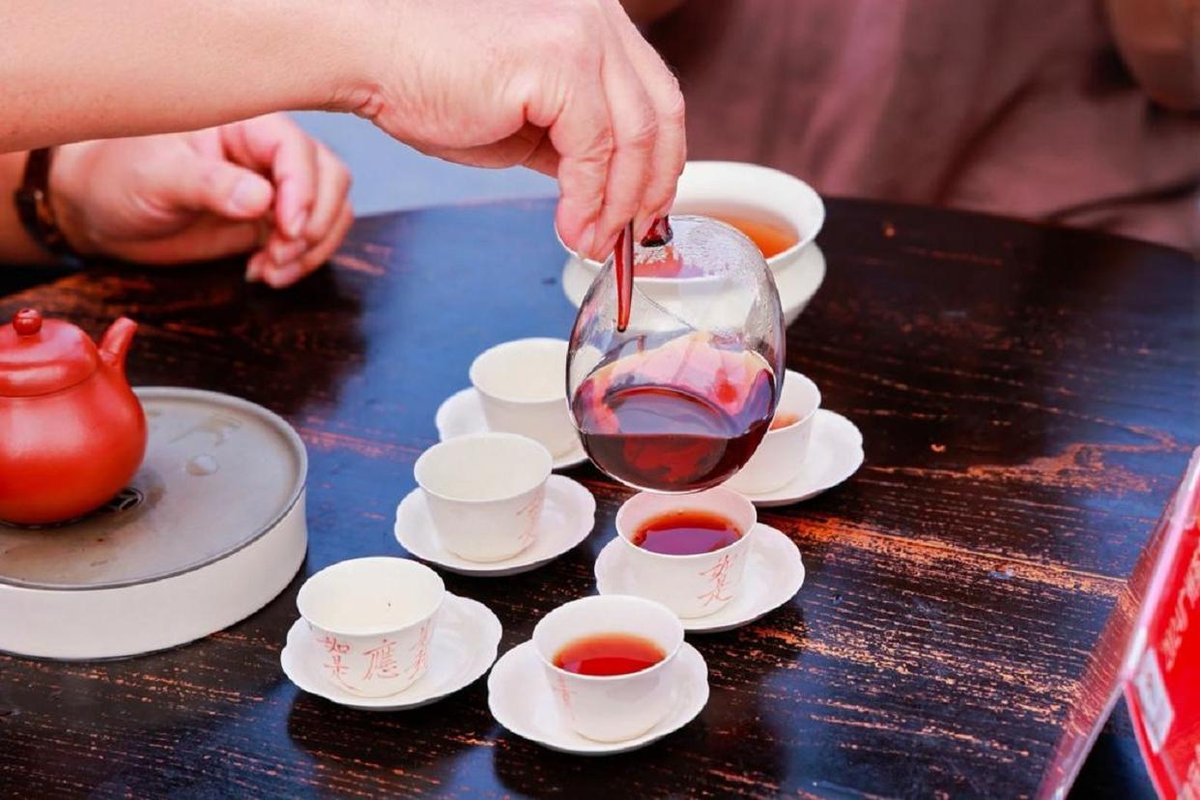
Strong dark tea, pu-erh or roasted oolong, cuts the gelatin better than water. The braise keeps four days in the fridge, where the liquid sets to a jelly worth spooning over rice. Reheat in a steamer for 8 minutes rather than a microwave, which toughens the skin.
This is the companion recipe to Chicken Feet: Chewing Is the Whole Point. Read the story, then cook the dish.
💬 Comments