Changwang Mian: Blood, Intestine, and the Breakfast Guiyang Wakes Up For
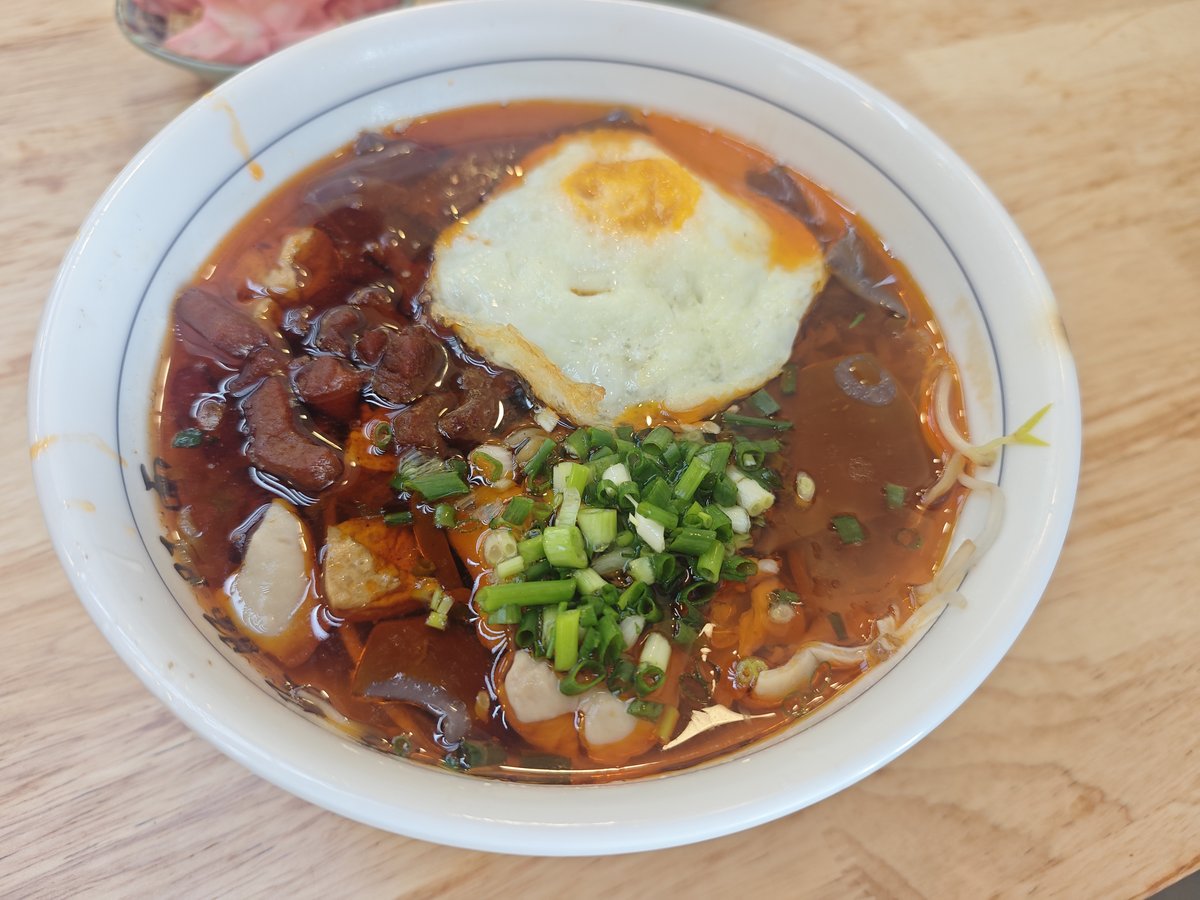
Say “pig’s blood and pig’s intestine” to a Westerner and watch the face do something. I’ve run this experiment at dinner tables in Shanghai and in California: name the toppings before you name the noodles, and somewhere around the word intestine the listener has already decided they will not be trying it. That is the wrong order.
Because in a bowl of changwang mian (肠旺面, chángwàng miàn), the two things you just flinched at are exactly the two that will bring you back tomorrow morning.
What’s actually in it
This is breakfast. Not brunch, not a weekend treat — breakfast, four or five mornings a week, for a large share of Guiyang, capital of Guizhou province in China’s southwest. The noodles are thin and springy, faintly yellow from egg and a splash of alkaline water, out of a rolling boil in under a minute.
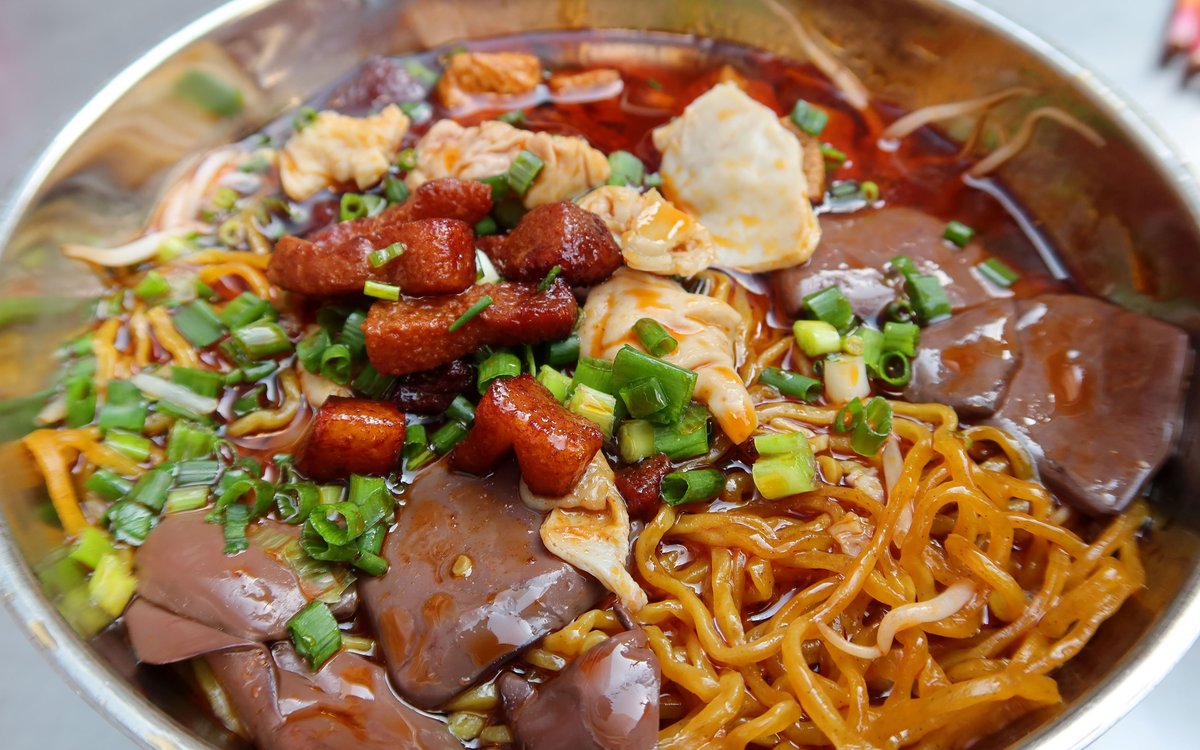
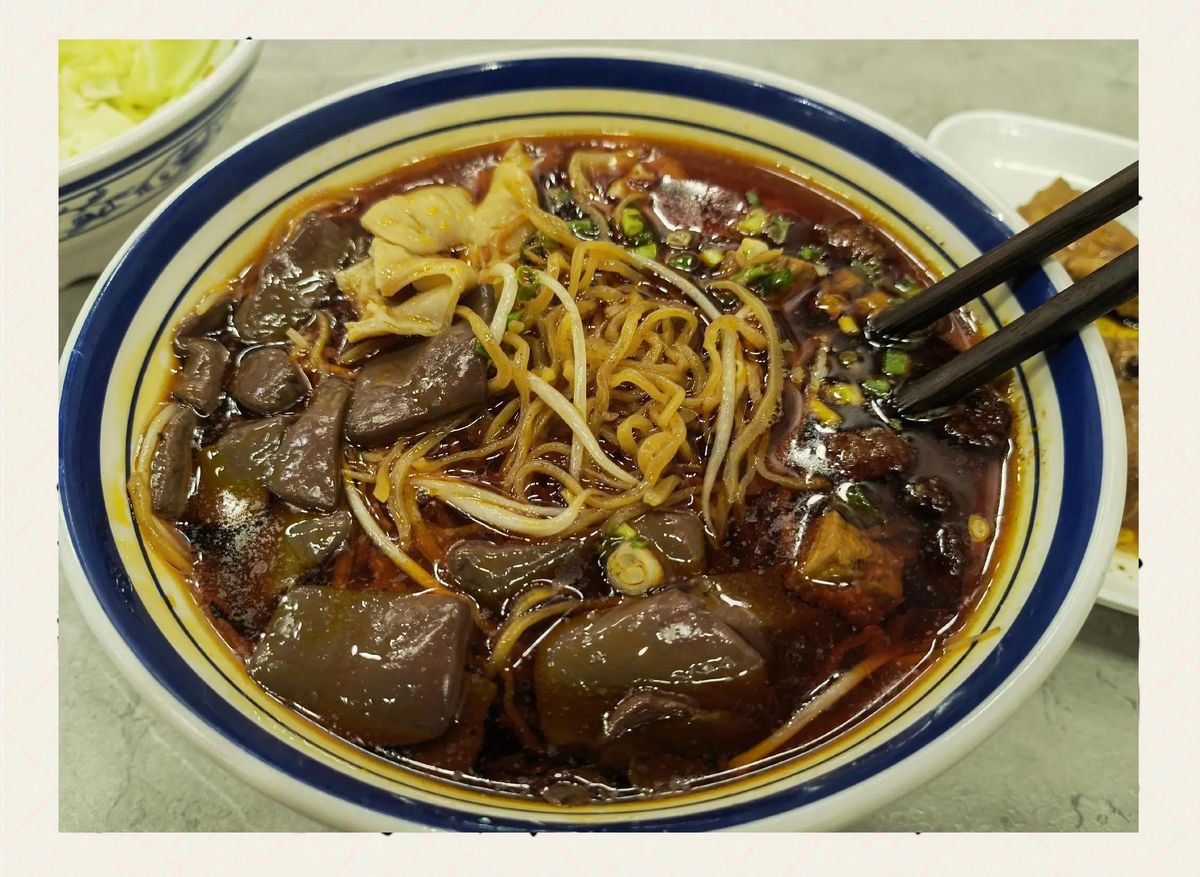
Then comes 肥肠 (féicháng), pork intestine braised for hours with ginger, star anise and a shot of baijiu until it goes soft and clean and faintly sweet, with none of the funk you are bracing for. Then 血旺 (xuěwàng), cubes of congealed pig’s blood, poached just to the point where they set — slippery, mild, closer to a soft tofu than to anything red.
And then the part nobody warns you about: 脆哨 (cuìshào), tiny dice of pork fat fried down until they are hard, dark and crunchy, somewhere between bacon bits and a rice cracker. A spoonful lands on the bowl and stays there, snapping against your teeth on every second bite.
Silk, soft, shatter
Three textures in one bowl, and that is the whole trick. The blood is silk. The intestine is a slow braise that coats your tongue. The cracklings shatter. Underneath, chewy noodles, and a broth deliberately lighter than you expect — pork bone, long and clear — so the red oil can do the talking.
That oil is the personality of Guizhou. Nobody here uses plain chili flakes. Cooks make 糍粑辣椒 (cíbā làjiāo): dried chilies soaked soft, pounded with ginger and garlic into a paste, then fried in oil until it turns deep red. The heat is rounder and fruitier than Sichuan’s, and it does not numb you. It warms the back of your throat.
The name is a pun, which is very Guiyang. 肠 for intestine, 旺 for blood, and together they sound exactly like 常旺 — “always prospering.” A bowl that costs less than a coffee and wishes you luck as you eat it.
How to spot the fake
Most changwang mian outside Guizhou is a costume. The tells are consistent.
The intestine wasn’t braised long enough. If it resists your teeth, bounces, or tastes of anything you’d rather not name, the kitchen rushed the pot. Good intestine collapses under a chopstick.
The blood came out of a box. Powdered blood set with a coagulant gives you a cube that’s rubbery and faintly metallic. Real blood is poached fresh and tastes of almost nothing but broth.
There are no cracklings. This is the loudest tell of all. A shop that skips the 脆哨 — an hour of patient frying — is telling you exactly how much effort it’s willing to spend on you.
The noodles arrive drowning. Changwang mian is not a stew. If the broth covers them completely, they’ll be paste in two minutes, and the whole design of the bowl exists to prevent that.
I’ve had the tourist version twice: once in Shanghai, once, painfully, in a Beijing mall. Both had three sad rings of intestine, no blood at all, and the same apologetic note of five-spice powder. If the menu says “pork intestine noodles” and never mentions the blood, keep walking.
Ordering it like a local
Ask for 面少汤宽 — less noodle, more broth — if you want to drink the end of the bowl, or 面多一点 if there’s a long morning ahead. Get the cracklings doubled; locals do, and the shop will not blink. Eat it the moment it lands. The noodles are still drinking, and ten minutes of conversation costs you the bowl.
About halfway through, a splash of black vinegar. That’s what Guiyang does: the acid cuts the oil and resets the chili so you taste the whole thing over again. If there’s a marinated egg on offer, take it. The yolk sitting in red oil is the best single bite in there.
My own first bowl was a bad one, at a Guizhou restaurant in Shanghai that had clearly softened the recipe for people like me. Years later a train to Guiyang fixed it. Six-forty in the morning, a counter with a dozen stools, and an old man behind it who watched me hesitate over the blood cubes, said nothing, and slid the bowl across anyway. I finished it in under ten minutes and ordered a second.
Out of space for today — I’ll save the home-cooking breakdown for another post. Doing changwang mian at home means two things nobody wants to hear: cleaning and braising intestine for the better part of an afternoon, and pounding your own 糍粑辣椒 instead of reaching for chili flakes. That deserves its own deep dive. Recipe coming soon.
💬 Comments